Skip to Content Facebook Feature Image

Disruptions at Strait of Hormuz hinder energy transport, global economy: UN report

HotTV

HotTV

HotTV

Disruptions at Strait of Hormuz hinder energy transport, global economy: UN report

2026-04-02 14:02 Last Updated At:04-03 12:50

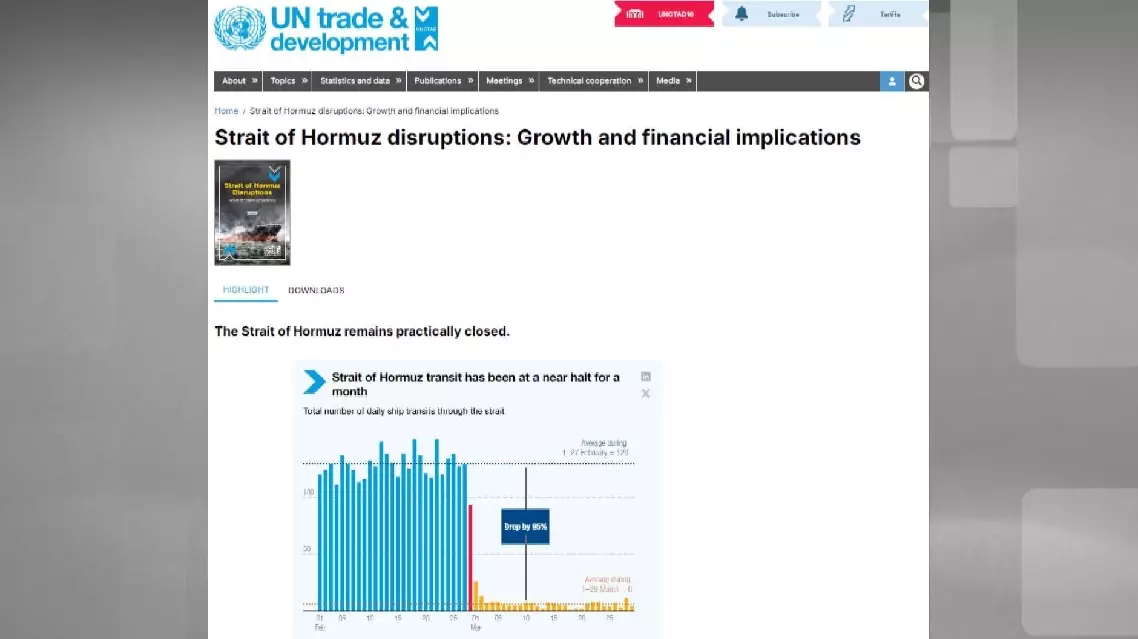
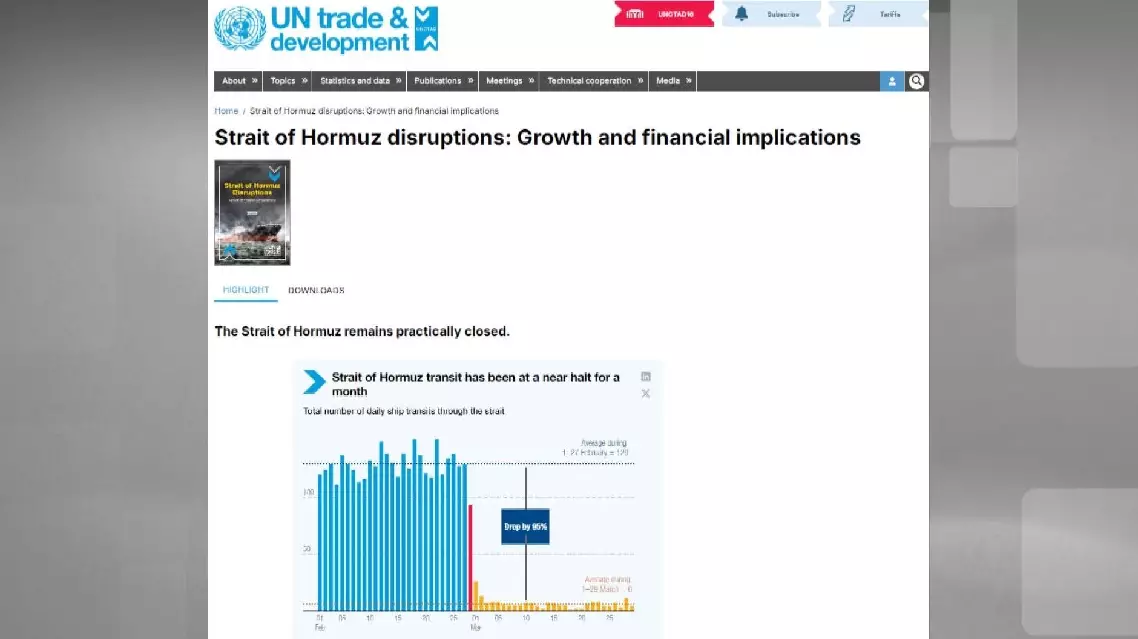
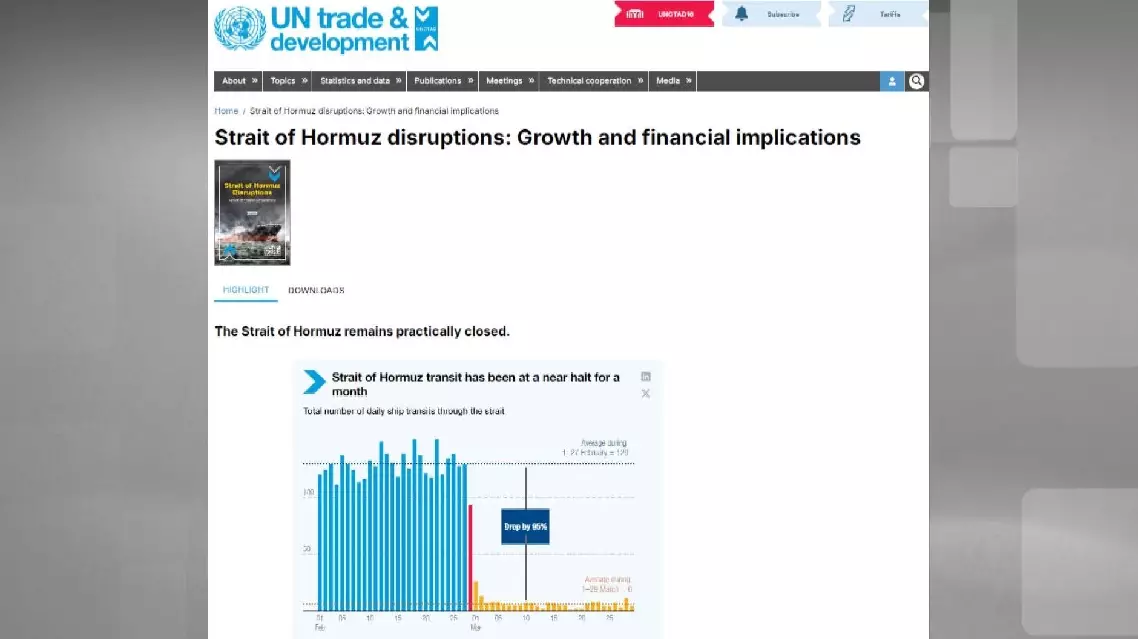
The Strait of Hormuz transit has remained "at a near halt" over the past month, disrupting energy shipment and affecting the global economy, the latest data from the UN Trade and Development (UNCTAD) showed on Wednesday.

According to the UNCTAD, the maritime traffic through the Strait of Hormuz has fallen by about 95 percent since the U.S.-Israel-Iran conflict, bringing shipping across the strait close to a standstill.

UNCTAD also forecasts that global merchandise trade growth will stand at 1.5 to 2.5 percent in 2026, slowing down from 4.7 percent in 2025.

The agency warned the halt of transit in the Strait of Hormuz could fuel inflation through higher energy prices and the cost of living.

It urged governments to adopt policies to stabilize prices and empower development banks to provide emergency financing.

To tackle the energy and economic impacts of the conflicts in the Middle East, the heads of the International Energy Agency (IEA), International Monetary Fund, and World Bank Group issued a joint statement on Wednesday, saying that they have agreed to form a coordination group to maximize their respective institutions' response to the energy and economic impacts of the ongoing crisis.

The conflicts in the Middle East have caused major disruptions to lives and livelihoods in the region and triggered one of the largest supply shortages in global energy market history, said the joint statement, adding that the three institutions are committed to working together to safeguard global economic and financial stability, strengthen energy security, and support affected countries and people.

Also on Wednesday, Fatih Birol, head of the IEA, said that about 40 key energy facilities have been damaged in the Middle East due to the conflicts, with more than 12 million barrels of oil lost.

He warned that the loss of oil supply in April will be twice the oil loss in March if the conflicts continue.

The IEA is considering a further release of strategic reserves to stabilize the market, said Birol.
Disruptions at Strait of Hormuz hinder energy transport, global economy: UN report
Disruptions at Strait of Hormuz hinder energy transport, global economy: UN report
Disruptions at Strait of Hormuz hinder energy transport, global economy: UN report
Disruptions at Strait of Hormuz hinder energy transport, global economy: UN report

Disruptions at Strait of Hormuz hinder energy transport, global economy: UN report
Disruptions at Strait of Hormuz hinder energy transport, global economy: UN report
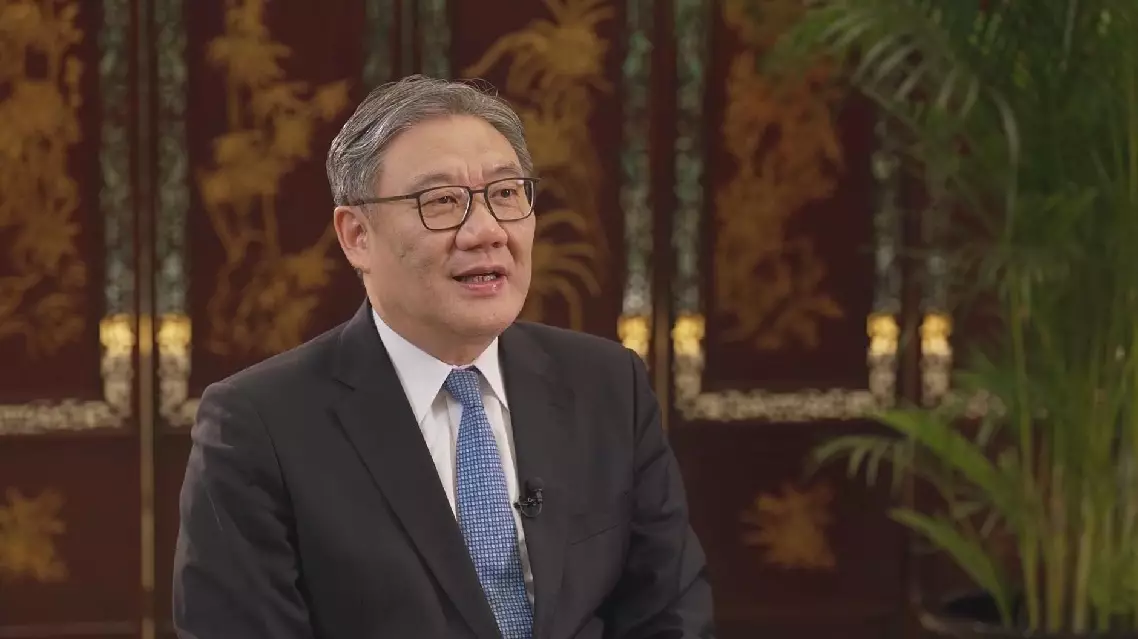
China's Minister of Commerce Wang Wentao outlined the key priorities of the 32nd Asia-Pacific Economic Cooperation (APEC) Ministers Responsible for Trade Meeting, which opened on Friday in Suzhou, East China's Jiangsu province.

In an interview with CGTN ahead of the two-day meeting, Wang said free trade, digital cooperation and green economy are high on the agenda of the meeting.

"The key areas include advancing regional economic integration and the Free Trade Area of the Asia-Pacific, supporting the World Trade Organization (WTO) in strengthening digital cooperation and developing green economy. At present, the international situation is marked by intertwined turbulence and chaos, with intensified geopolitical instability. The rise of unilateralism and protectionism poses serious challenges to the international economic and trade order, disrupting global and Asia-Pacific development. Against this backdrop, all parties have higher expectations for this trade ministers' meeting, hoping that it can build consensus and deliver outcomes," Wang said.

This year marks China's third time hosting the APEC meetings and the 35th anniversary of its membership.

By 2025, China had become the largest trading partner of 13 APEC economies. Trade between China and APEC economies reached 3.7 trillion U.S. dollars, accounting for 57.8 percent of China's total foreign trade.

China has signed 24 free trade agreements or economic and trade arrangements with 31 countries and regions, including 15 APEC economies. In recent years, China has also completed upgrades of free trade agreements with APEC economies such as Singapore and Peru.

The minister said that China has always been a firm supporter and an important contributor to APEC.

"We have actively shared our vast market and development opportunities with all parties. China's door to the world will only open wider and wider. Facing the common challenges, China will continue to fulfill its responsibilities as a major country, further deepen reform, expand high-standard opening-up, and continue to provide new opportunities for the Asia-Pacific region and the world with its new achievements in Chinese modernization," the minister said.

China's Commerce Minister outlines priorities for 32nd APEC trade ministers' meeting

China's Commerce Minister outlines priorities for 32nd APEC trade ministers' meeting

Recommended Articles