Zhang Xue, founder and owner of motorcycle brand ZXMOTO based in southwest China's Chongqing Municipality, has reflected on his remarkable journey from the status of a small-county mechanic to the global podium after a French rider used his machine to secure double victories at the World Superbike Championship (WSBK).
On March 28-29, French rider Valentin Debise, racing on ZXMOTO's 820RR-RS, won both Race 1 and Race 2 in the World SSP category at the Portimao circuit in Portugal, which runs as a support class to WSBK and features production-based bikes of 600cc or more.
This marks a historic breakthrough for Chinese high-end manufacturing, as WSBK has long been dominated by established European and Japanese marques such as Ducati and Yamaha. ZXMOTO's triumph is a powerful symbol of China's growing prowess in producing high-performance motorcycles. International media describled the Portimão result the moment where "ZXMOTO stopped being a promise and became a real threat to the historic manufacturers of the championship".
Zhang's ascent reads like a cinematic script. After graduating from a junior high school in central China's Hunan Province, he apprenticed in motorcycle repair and soon opened his own workshop.
Yet ambition pulled him onward: he sold the business, packed a modest sum of money and traveled to east China's Anhui Province to train under a professional racing coach.
"I raced for a few years until I'd spent all my own savings. Then I joined a factory in Zhejiang Province to work on motorcycle-related projects. After gaining experience there for a few years, I moved to Chongqing to start my own venture," Zhang recalled.
He co-founded Kove Moto in 2017, but later parted ways with the company due to differing visions with his partners.
In April 2024, he founded ZXMOTO, which achieved international racing glory in less than two years, a testament to Zhang's foresight, grit and unwavering commitment to excellence.
Despite having only a junior high school educational background, Zhang credits his success to an enduring passion for motorcycles and a disciplined dedication to lifelong learning.
"I've been working in this industry for decades. If you learn just one new thing every day, over time you can become as knowledgeable as a doctor. But a doctor might focus deeply on one narrow specialty. I can't afford to specialize in just one area. I need to understand the big picture. Then, for each technical component, I bring in professional engineers or teams of specialists to execute the vision with me," Zhang said.
Zhang's work ethic is equally intense.
"I take no more than five days off all year. Aside from sleeping and eating, nearly every moment of my day is about motorcycles. I've personally experienced every stage of the entire industrial chain, from project initiation, and research and development to procurement, quality control, manufacturing, and after-sales service. I know what it takes to build a great motorcycle," he said.
Looking ahead, Zhang has set ambitious goals for ZXMOTO.
"My goal is to rank ZXMOTO among the world's Top 10 motorcycle brands within ten years. Right now, we rank among China's Top 8. This year, we aim for Top 3 nationally, and within three years, we want to be the Number One in China," he said.
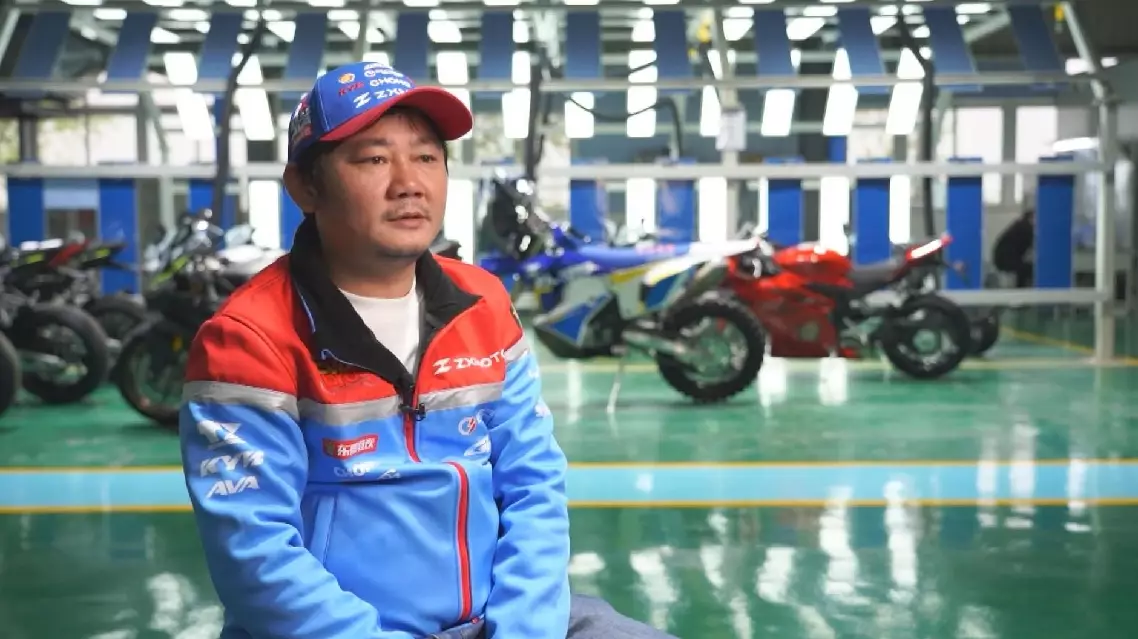
ZXMOTO founder reflects on his high-speed journey from county mechanic to global podium
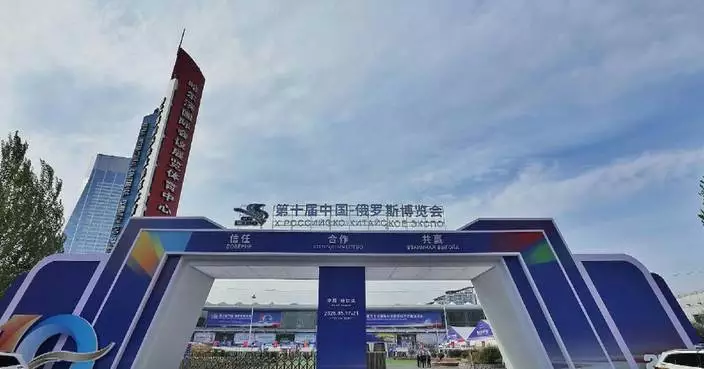
The 10th China-Russia Expo opened on Sunday in Harbin, the provincial capital of Heilongjiang in northeast China, highlighting the resilience, vitality and mutual benefits of China-Russia economic ties.
Held from May 17 to 21, this year's expo covers a floor space of 55,000 square meters, with more than 1,500 companies from 46 countries and regions taking part. Nearly 300 Russian companies are attending, while over 5,000 buyers are expected.
Since 2014, the event has attracted more than 7,200 Chinese and Russian companies and over a million visitors.
The China-Russia Expo is the largest comprehensive exhibition platform between the two countries.
President Xi Jinping and Russian President Vladimir Putin each sent congratulatory letters to the event, encouraging all sectors from both countries to seize the opportunity, make full use of their geographical proximity and economic complementarity, and further expand all-round practical cooperation.
"Leaders of the two countries have signed agreements to deepen practical cooperation, which we fully support. Russia and China stand side by side for common development, benefiting young people and all people. Such cooperation is timely and far-reaching. We are here in Harbin for the China-Russia Expo, coming from Russia's Sakha Republic. Our region is dominated by agriculture. We are seeking advanced farming technologies including irrigation equipment and harvesters. We hope to reach deals in the coming days to boost local development," said Vasiliy Petrovich Alexeev, head of Ust-Aidan Region of the Russian Federation.
"We are greatly inspired by the congratulatory letters from the heads of state of China and Russia. We will keep building targeted and efficient cooperation platforms, and smooth channels for sub-national exchanges between China and Russia," said Chen Shijun, president of Heilongjiang Council for the Promotion of International Trade.
China-Russia trade volume has surpassed 200 billion U.S. dollars for three consecutive years. China has been Russia's largest trading partner for 16 years running.
In the first quarter of this year, bilateral trade volume hit 60 billion U.S. dollars, a year-on-year increase of more than 14 percent.
This year's Expo features eight major exhibition zones. Beyond the exhibition halls, Russian delegations have also conducted field visits to Chinese companies. A delegation from the Republic of Buryatia visited one of northeast China's largest building materials distribution centers to explore potential areas of cooperation.
"Regular China-Russia economic and trade events continuously bring fresh cooperation opportunities for both sides. This field trip to Xilong Building Materials Market has helped us explore more practical directions and modes for bilateral cooperation," said Alexei Tsydenov, head of the Republic of Buryatia of the Russian Federation.
"Relying on Buryatia's abundant mineral resources and sound logistics conditions, we plan to build industrial parks focusing on home building materials, mineral resources and energy sectors in Russia. We will introduce advanced Chinese technologies and management models to drive coordinated industrial upgrading between the two countries," said Wu Jinrong, vice president of Harbin Xilong International Trade and Logistics Park.
From everyday consumer goods to advanced helicopters, and from mineral resources to intelligent robotics, China-Russia cooperation now spans a wide range of sectors. Economic ties and people-to-people exchanges between the two countries continue to advance toward higher-quality development and broader prospects.
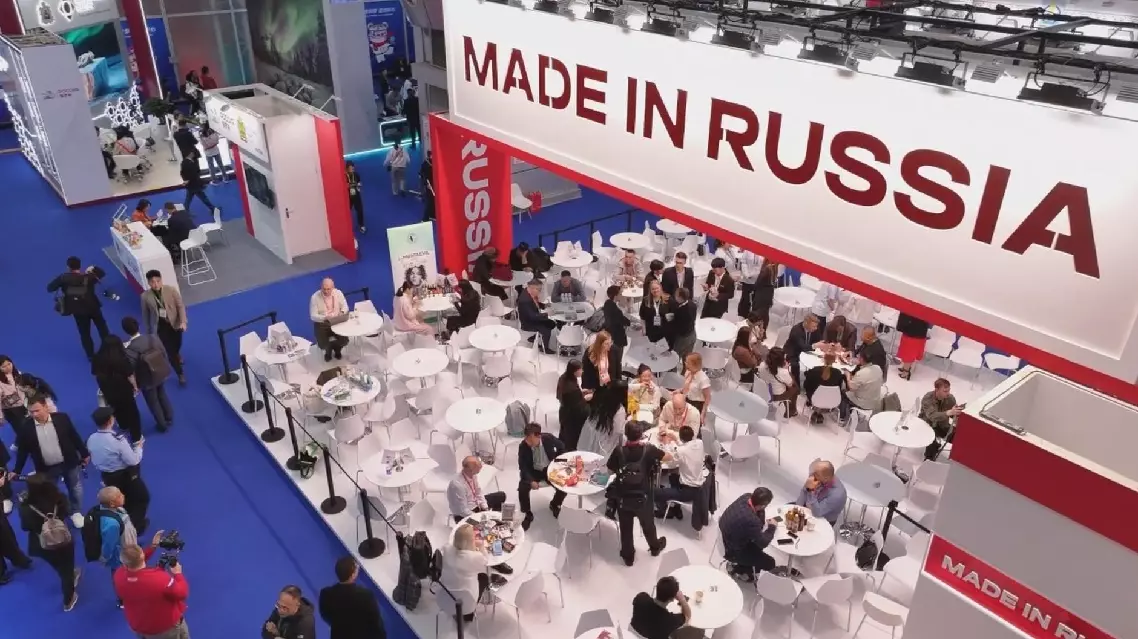
China-Russia Expo promotes trust, cooperation, mutual benefit