NEW YORK--(BUSINESS WIRE)--Apr 2, 2026--
Kalshi today announced the addition of Stephanie Cutter as policy advisor. Cutter is Managing Partner of Precision Strategies, a global strategic communications agency, and a seasoned political strategist with decades of political, policy, and communications experience advising top Democrats, including President Barack Obama. Cutter comes on board as the company continues on its steep growth trajectory, both to drive its data-driven storytelling and deepen its relationships in D.C. and across the country.
This press release features multimedia. View the full release here: https://www.businesswire.com/news/home/20260402165500/en/
Founded in 2018, Kalshi is the world’s largest prediction market. Prediction markets harness the power of the wisdom of the crowds, creating data that can effectively complement polling and expert opinion. Kalshi offers financial markets on the outcome of real world events such as elections, macroeconomic signals, sports, and more. It’s widely credited with building prediction markets into a regulated asset class and building a safe, legal, regulated platform for millions of traders in America. Political campaigns and politicians ranging from Leader Hakeem Jeffries to Mayor Zohran Mamdani are embracing Kalshi at an astronomical rate, often referencing their “Kalshi odds.”
"I've spent my career at the intersection of media, politics, and business, where noise and polarization often obscure the truth. Data cuts through that. Kalshi gives millions of Americans a data-driven alternative to opinion and guesswork — and they do it responsibly. In a world drowning in opinion, prediction markets are one of the few places where the data has real skin in the game — and I want to help Kalshi own that story."
At Precision, Cutter has revolutionized the integration of data-driven communications with a campaign-style approach, connecting with audiences and mobilizing people to action. Cutter has worked with a wide range of clients, from Fortune 50 companies to news networks, movie studios, and sports leagues and legends.
Kalshi co-founder and CEO Tarek Mansour: “Stephanie Cutter is the person you want on your team. She understands better than most how to cut through the noise and get your message to the right people. I’m excited to learn from her.”
Before starting Precision, Stephanie served in top government and political roles, rising to become one of the most seasoned, accomplished and forward leaning strategists of her generation. Described as “one of the most prominent voices in the [Democratic] party, and one of its top strategists” by Politico, Stephanie has crafted high-level communications for two U.S. Presidents, U.S. Senate leaders, and every Democratic presidential nominee since 2004.
About Kalshi
Founded in 2018, Kalshi is the world’s largest prediction market. Prediction markets provide accurate, real-time information on the likelihood of events, making humanity more informed about the future. Kalshi is credited with legalizing and establishing prediction markets as a financial asset class. It’s the leading safe and regulated platform trusted by millions of people in America. To learn more about Kalshi, visit www.kalshi.com.

Stephanie Cutter Joins Kalshi as Policy Advisor
ARAFAT, Saudi Arabia (AP) — Muslim pilgrims from around the world congregated on Mount Arafat in Saudi Arabia on Tuesday, the second official day of the annual Islamic pilgrimage, considered the pinnacle of the Hajj.
Despite the sweltering heat, the pilgrims gathered on the rocky hill and surrounding plain for intense prayers and worship that often mark a spiritual peak for them. They fervently murmured prayers and poured their hearts out in supplications. Many raised their hands in worship. It is common for pilgrims on that day, some with tears streaming down their faces, to ask God for forgiveness, mercy, blessings and good health.
The Hajj, one of the Five Pillars of Islam, is required once in a lifetime for every Muslim who can afford it and is physically able to perform it.
For pilgrims, the Hajj, performed over several days, can be a deeply moving spiritual experience and a chance to seek God’s forgiveness and the erasure of past sins. As they brave the intense heat to perform religious rituals, many pilgrims have been using umbrellas for shade.
A Saudi official said on Friday that more than 1.5 million pilgrims have arrived in the country from abroad.
This year, Muslims have been pouring into Saudi Arabia for the Hajj against the backdrop of a tenuous ceasefire in the Iran war and related uncertainty in the region.
The U.S. military said Monday that it carried out “self-defense” strikes in southern Iran, including on missile launch sites and boats used to lay mines, even as President Donald Trump said on social media that negotiations with Tehran were “proceeding nicely." Iran on Tuesday denounced the most recent U.S. strikes as a sign of “bad faith and unreliability” as negotiations pressed on toward a possible deal to end the war.
For many, performing the Hajj can be a realization of a lifelong dream as they spend years hoping and praying to one day be able to undertake the pilgrimage or saving up money and waiting for a permit to embark on the trip.
“This happens once in a lifetime,” Mohammad Asal, an Egyptian pilgrim, said. “People here have prepared their prayers, hoping that God will respond to them, because we know that ... the most important ritual of the Hajj is being in Arafat.”
The Hajj brings together large numbers of Muslims of diverse races, ethnicities, languages and socioeconomic classes, creating a sense of unity for many. It’s a mass, communal experience, with Muslims performing rituals together. But it is also deeply personal, as every pilgrim brings their own yearnings and experiences.
“It was incredible,” Ahmed Sufyan, a pilgrim from the United States, said on Tuesday. “The unity and peace that we feel is something I’ve never experienced before,” he added via WhatsApp.
“Our wishes are many,” Mohammad Obaid, a Sudanese pilgrim, said, adding he was praying for Sudan and Muslims everywhere.
Fam reported from Winter Park, Florida.
Associated Press religion coverage receives support through the AP’s collaboration with The Conversation US, with funding from Lilly Endowment Inc. The AP is solely responsible for this content.
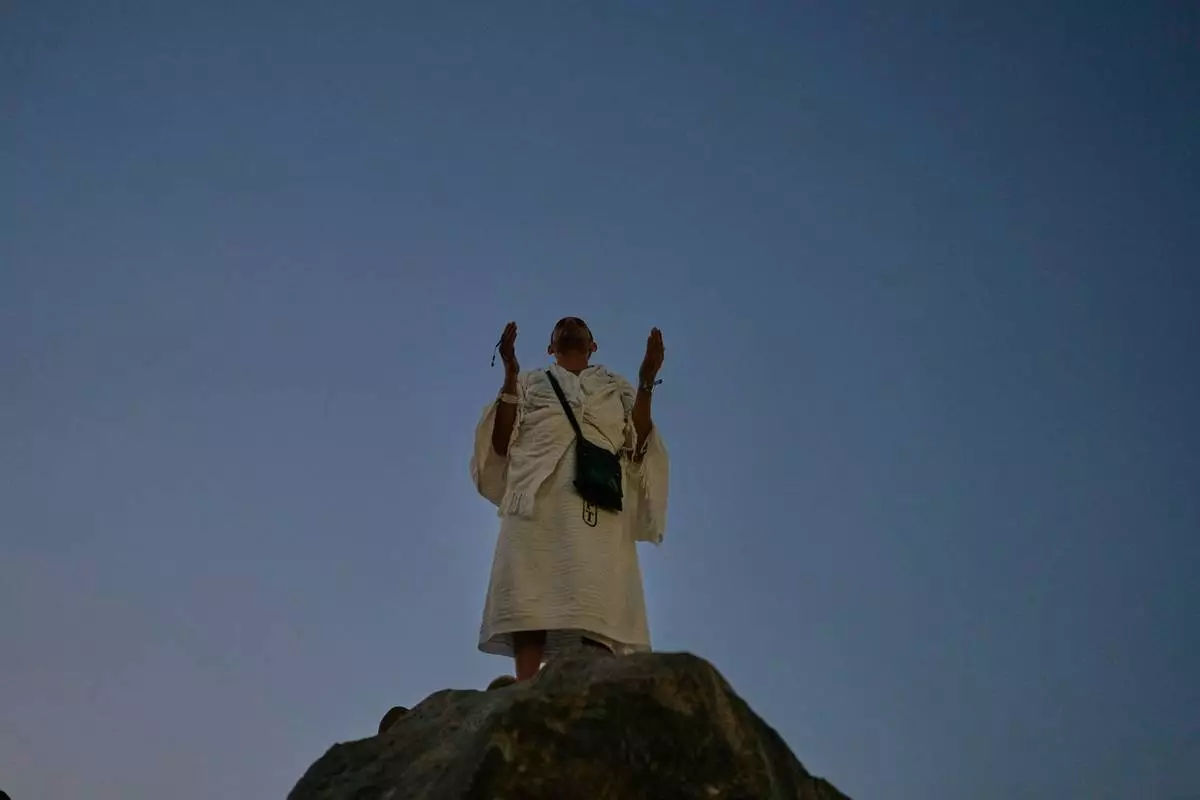
A Muslim pilgrim pray atop of the rocky hill known as the Mountain of Mercy, on the Plain of Arafat, during the annual Hajj pilgrimage near the holy city of Mecca, Saudi Arabia, Tuesday, May 26, 2026. (AP Photo/Altaf Qadri)
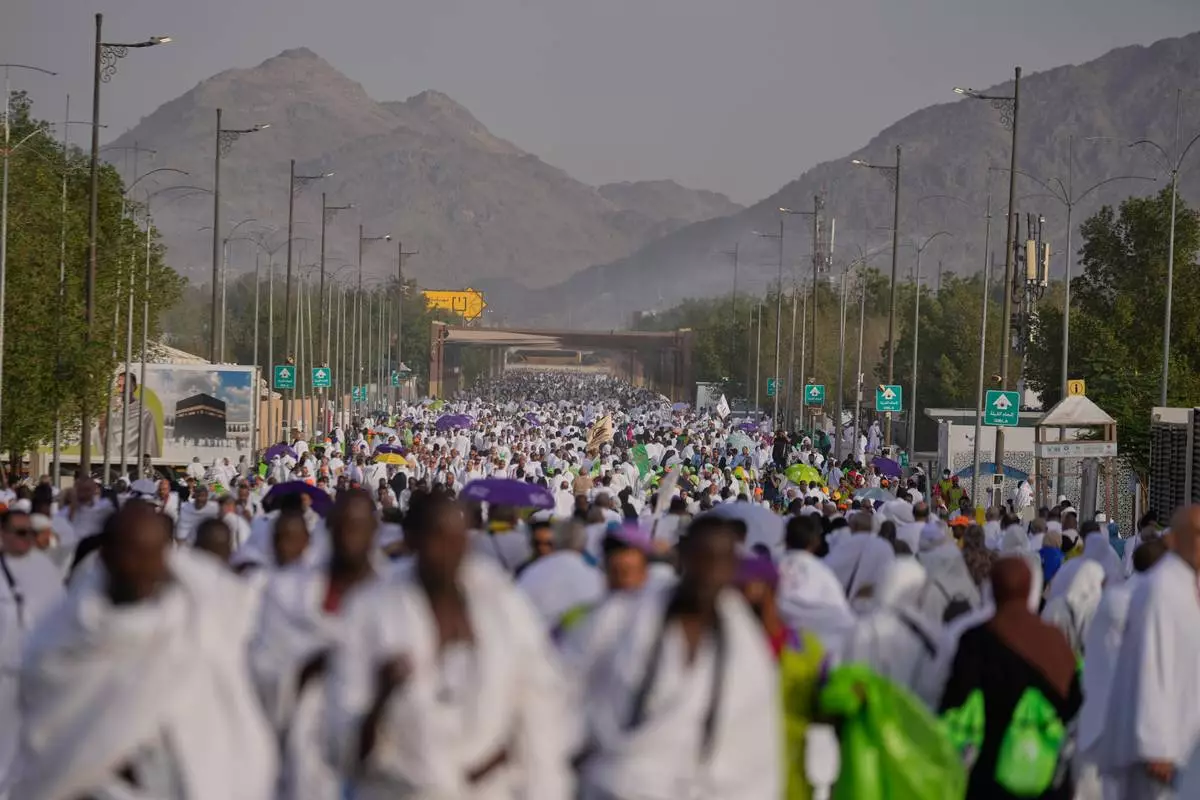
Muslim pilgrims walk towards the rocky hill known as the Mountain of Mercy, on the Plain of Arafat, during the annual Hajj pilgrimage near the holy city of Mecca, Saudi Arabia, Tuesday, May 26, 2026. (AP Photo/Altaf Qadri)
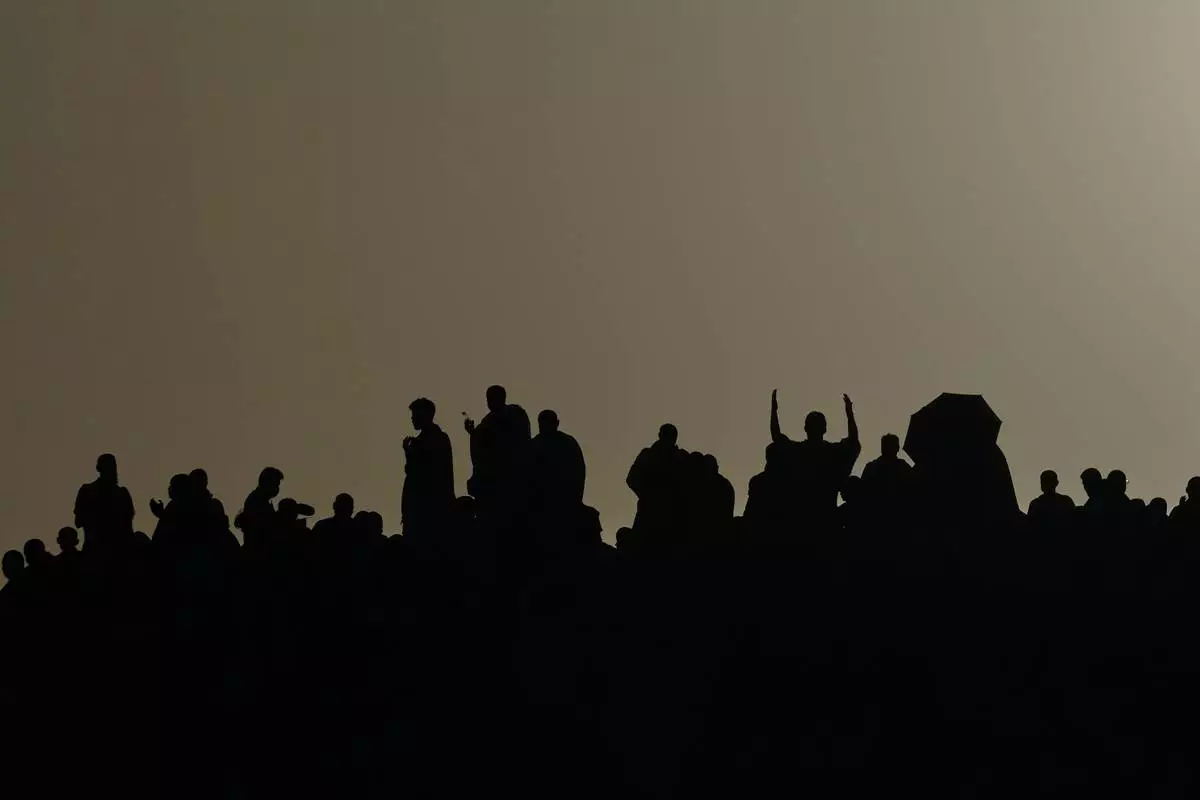
Muslim pilgrims are silhouetted as they pray at top of the rocky hill known as the Mountain of Mercy, on the Plain of Arafat, during the annual Hajj pilgrimage near the holy city of Mecca, Saudi Arabia, Tuesday, May 26, 2026. (AP Photo/Altaf Qadri)
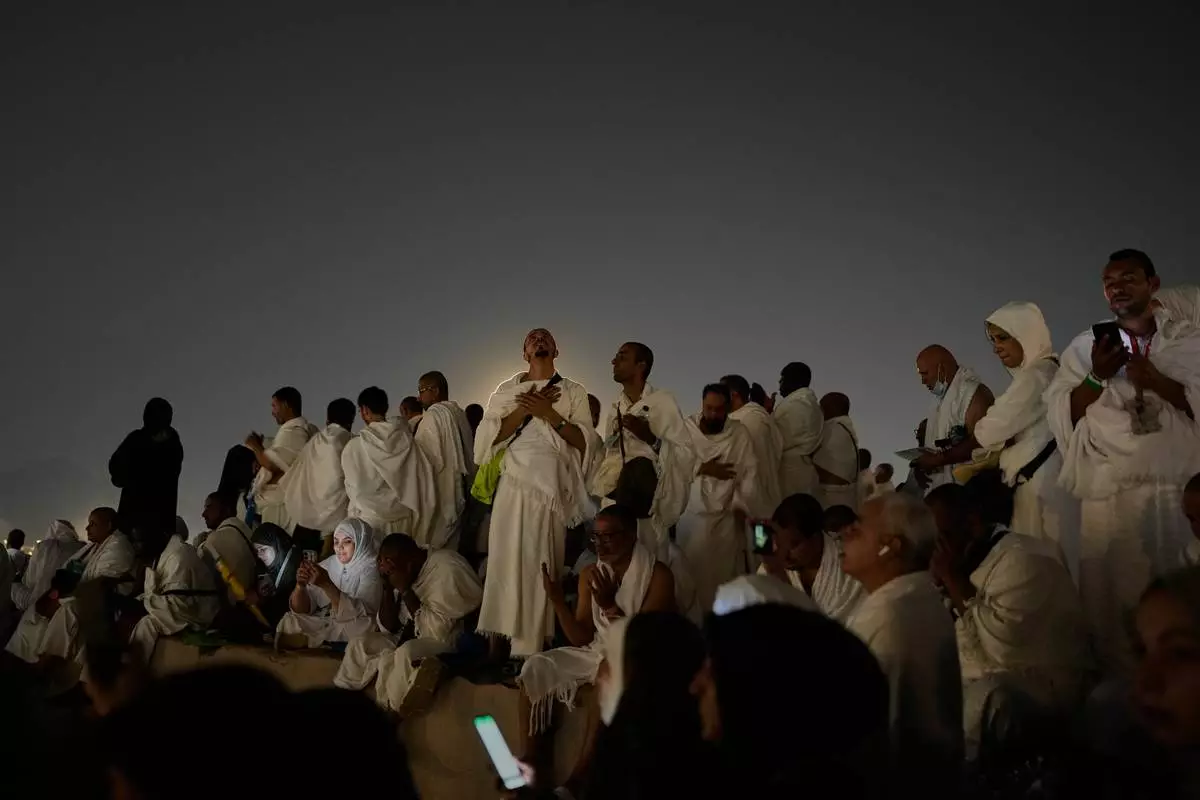
Muslim pilgrims pray at top of the rocky hill known as the Mountain of Mercy, on the Plain of Arafat, during the annual Hajj pilgrimage near the holy city of Mecca, Saudi Arabia, Tuesday, May 26, 2026. (AP Photo/Altaf Qadri)
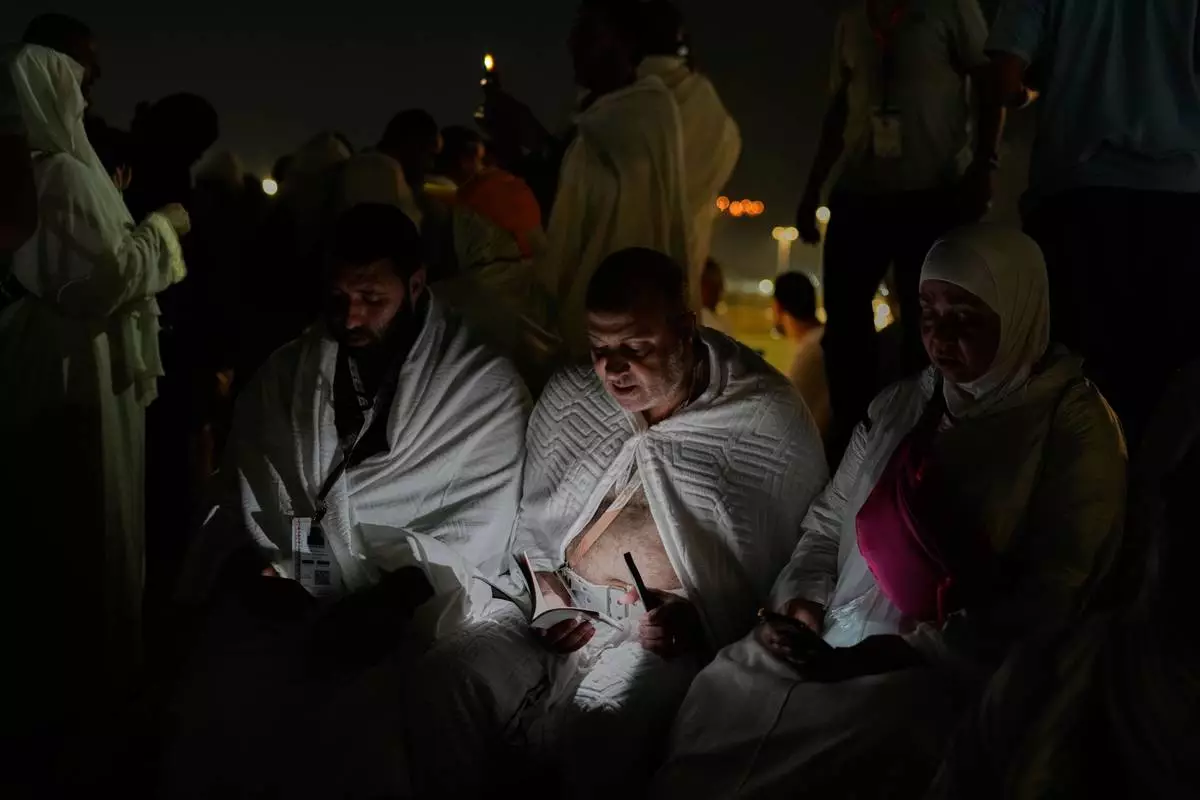
Muslim pilgrims read a copy of Islam's holy book Quran atop of the rocky hill known as the Mountain of Mercy, on the Plain of Arafat, during the annual Hajj pilgrimage near the holy city of Mecca, Saudi Arabia, Tuesday, May 26, 2026. (AP Photo/Altaf Qadri)