Humanitarian organizations and displaced people in Gaza are expressing deep concern over Israel's approval of a law allowing the execution of Palestinian prisoners, calling it a blow to international humanitarian law and a setback to the long-standing peace process.
Israel's parliament on Monday approved a bill making the death penalty the default punishment for Palestinians convicted of "terrorism," a move that has drawn international criticism.
The legislation, introduced by members of Israel's far-right coalition government, passed with 62 votes in favor, 48 against, and one abstention. It applies only to Palestinians convicted of killing Israelis, not to Israelis who kill Palestinians, and mandates execution for attackers who kill with the intent of negating the existence of the State of Israel.
The Palestinian Authority said the law contradicts the Fourth Geneva Convention on the Protection of Civilian Persons in Time of War.
The legislation has also drawn widespread criticism from international organizations.
"We are aware of these reports, in line with our principle of neutrality. We do not comment on or play a role in public debates. Generally speaking, what we can say, in any armed conflict, all persons accused or, and brought to trial must benefit from a series of procedural safeguards and fundamental guarantees that are designed to ensure that individuals receive a fair trial and are protected from being deprived unlawfully or arbitrarily of their fundamental human rights and freedoms. In all times, detainees must be treated humanely with respect to their life health and dignity," said Amani Al Naouq, spokesperson for the International Committee of the Red Cross in Gaza.
Human rights observers have condemned the law, emphasizing that it applies only to Palestinians and not Israelis.
"The Israeli Knesset's approval of a law allowing the execution of Palestinian prisoners is an extremely dangerous decision that directly threatens the lives of thousands of Palestinians, including those who will be tried or have already been tried retroactively. There are provisions in the law that allow for the retrial of Palestinian detainees retroactively, subject to unanimous court approval. This is a racist and fascist law," said Mustafa Ibrahim, chairman of the board of Al-Dameer Association for Human Rights.
Families of those Palestinian prisoners who are already held in Israeli jails are deeply concerned about the fate of their loved ones.
"We hope this arbitrary and unjust decision, which calls for the execution of prisoners in Israeli jails, will be prevented. As families of prisoners, we feel deep fear following this unjust decision, worried that it could actually be implemented," said Basma Haboub, wife of a Palestinian prisoner.
"We reject the decision to execute prisoners, and we call on the Arab and Islamic world, as well as governments, to take action against it. These prisoners were unjustly detained and have been subjected to the most severe forms of torture," said Hamed Al-Batniji, a displaced Palestinian.
Under the law, courts can impose the death penalty even if prosecutors do not request it, and a unanimous judicial decision is not required.
The law does not cover militants involved in the Hamas-led Oct 7 attack on southern Israel. A separate bill creating a special tribunal for those cases is being advanced.
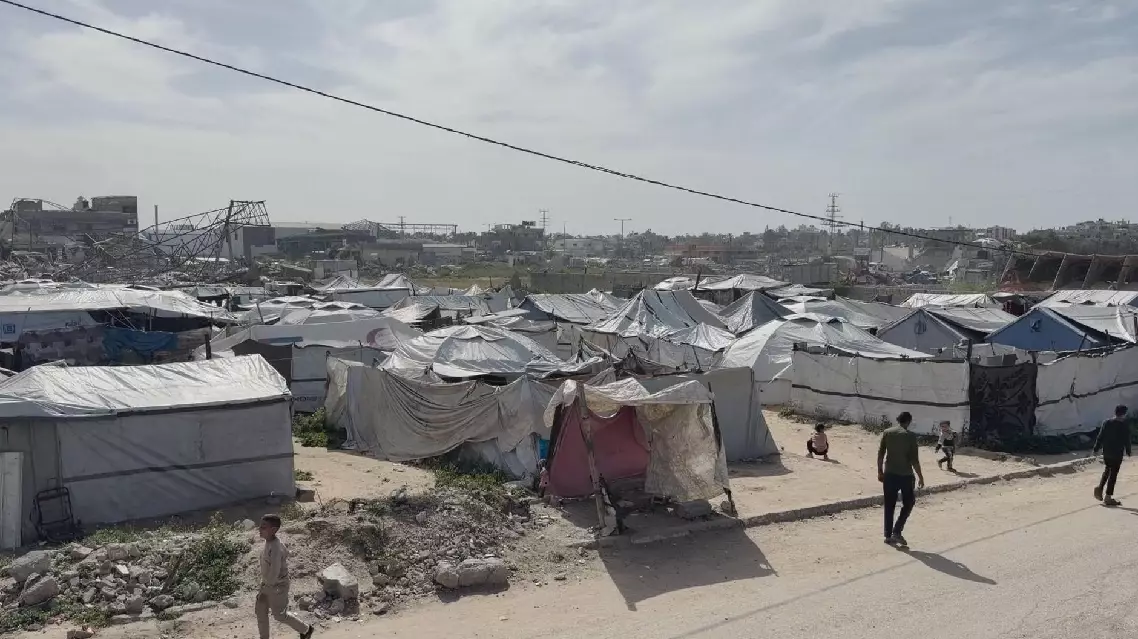
Palestinians alarmed by Israeli parliament's approval of death penalty law