China's economic growth target of 4.5 to 5 percent for 2026 reflects the country's shift from speed to sustainability and from quantity to quality, said a senior European business executive of a global energy tech company.
Gianni Di Giovanni, chairman of Eni China BV, described the target, which was set in the government work report adopted during the fourth session of the 14th National People's Congress in March, as "deliberate," citing the European and U.S.targets, in an interview with China Global Television Network (CGTN).
"China is not slowing down. China is upgrading. This is the real answer to your question. The 2026 GDP target of 4.5 to 5 percent is deliberate, not conservative. Don't forget that in Europe, we will register at least one percent, and in the United States, two percent in 2026. So, it's a big deal. It reflects a shift from speed to sustainability, from quantity to quality," said Di Giovanni, also vice president of the European Union Chamber of Commerce in China.
Di Giovanni noted that China prioritizes stability and structural transformation as a new growth model is coming into being.
"In a world of lower growth, geopolitical tensions, and fragmented trade, pushing for high headline growth would be risky. Instead, China is prioritizing stability and structural transformation. We see it clearly: double-digit growth in high-tech investment, massive expansion in renewables, AI, and digital sectors becoming core drivers. This is a new growth model. China is moving away from infrastructure, heavy [industry] expansion, low-cost exports, toward innovation, green energy, and high-value manufacturing. At the same time, this reflects strategic patience because today's challenging demographics, inequality and global realignment require time, not speed. It is no longer about growing fast. It is about growing right," he said.
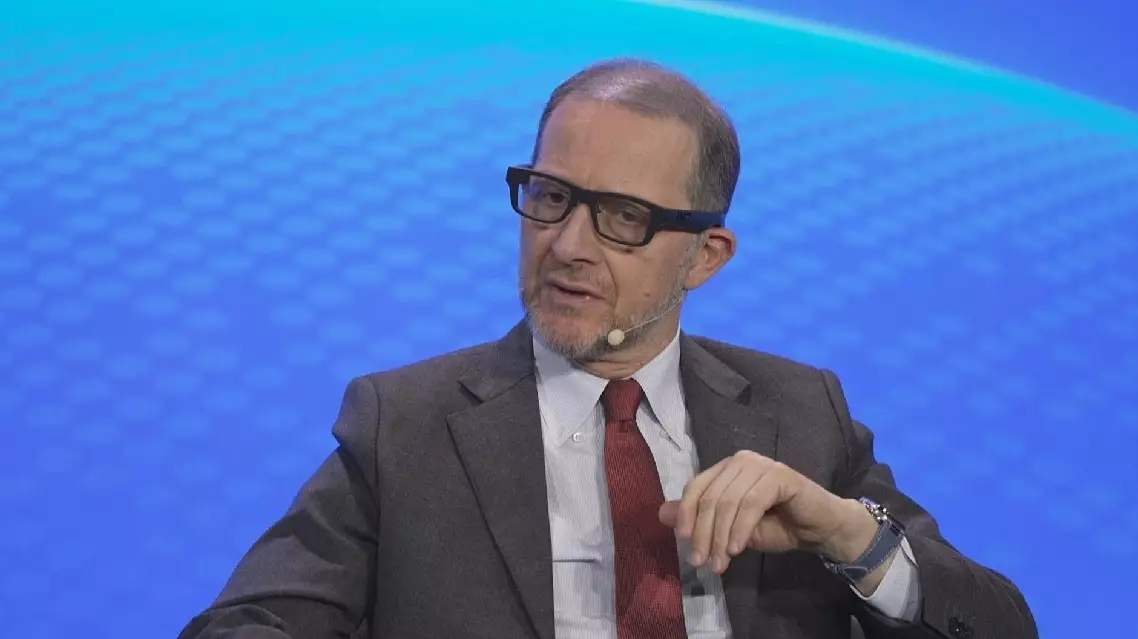
China's growth target reflects focus shift from speed to sustainability: European business executive
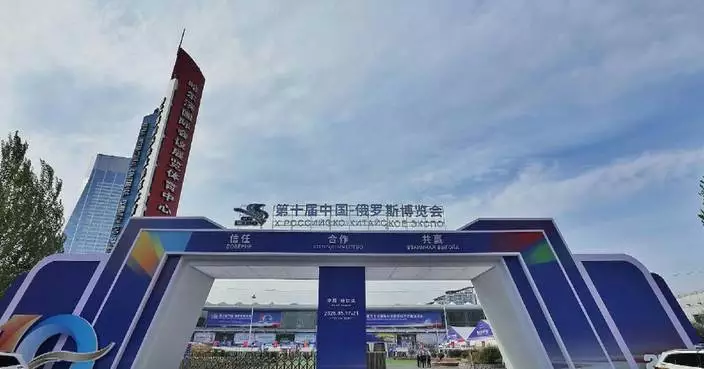
The 10th China-Russia Expo opened on Sunday in Harbin, the provincial capital of Heilongjiang in northeast China, highlighting the resilience, vitality and mutual benefits of China-Russia economic ties.
Held from May 17 to 21, this year's expo covers a floor space of 55,000 square meters, with more than 1,500 companies from 46 countries and regions taking part. Nearly 300 Russian companies are attending, while over 5,000 buyers are expected.
Since 2014, the event has attracted more than 7,200 Chinese and Russian companies and over a million visitors.
The China-Russia Expo is the largest comprehensive exhibition platform between the two countries.
President Xi Jinping and Russian President Vladimir Putin each sent congratulatory letters to the event, encouraging all sectors from both countries to seize the opportunity, make full use of their geographical proximity and economic complementarity, and further expand all-round practical cooperation.
"Leaders of the two countries have signed agreements to deepen practical cooperation, which we fully support. Russia and China stand side by side for common development, benefiting young people and all people. Such cooperation is timely and far-reaching. We are here in Harbin for the China-Russia Expo, coming from Russia's Sakha Republic. Our region is dominated by agriculture. We are seeking advanced farming technologies including irrigation equipment and harvesters. We hope to reach deals in the coming days to boost local development," said Vasiliy Petrovich Alexeev, head of Ust-Aidan Region of the Russian Federation.
"We are greatly inspired by the congratulatory letters from the heads of state of China and Russia. We will keep building targeted and efficient cooperation platforms, and smooth channels for sub-national exchanges between China and Russia," said Chen Shijun, president of Heilongjiang Council for the Promotion of International Trade.
China-Russia trade volume has surpassed 200 billion U.S. dollars for three consecutive years. China has been Russia's largest trading partner for 16 years running.
In the first quarter of this year, bilateral trade volume hit 60 billion U.S. dollars, a year-on-year increase of more than 14 percent.
This year's Expo features eight major exhibition zones. Beyond the exhibition halls, Russian delegations have also conducted field visits to Chinese companies. A delegation from the Republic of Buryatia visited one of northeast China's largest building materials distribution centers to explore potential areas of cooperation.
"Regular China-Russia economic and trade events continuously bring fresh cooperation opportunities for both sides. This field trip to Xilong Building Materials Market has helped us explore more practical directions and modes for bilateral cooperation," said Alexei Tsydenov, head of the Republic of Buryatia of the Russian Federation.
"Relying on Buryatia's abundant mineral resources and sound logistics conditions, we plan to build industrial parks focusing on home building materials, mineral resources and energy sectors in Russia. We will introduce advanced Chinese technologies and management models to drive coordinated industrial upgrading between the two countries," said Wu Jinrong, vice president of Harbin Xilong International Trade and Logistics Park.
From everyday consumer goods to advanced helicopters, and from mineral resources to intelligent robotics, China-Russia cooperation now spans a wide range of sectors. Economic ties and people-to-people exchanges between the two countries continue to advance toward higher-quality development and broader prospects.
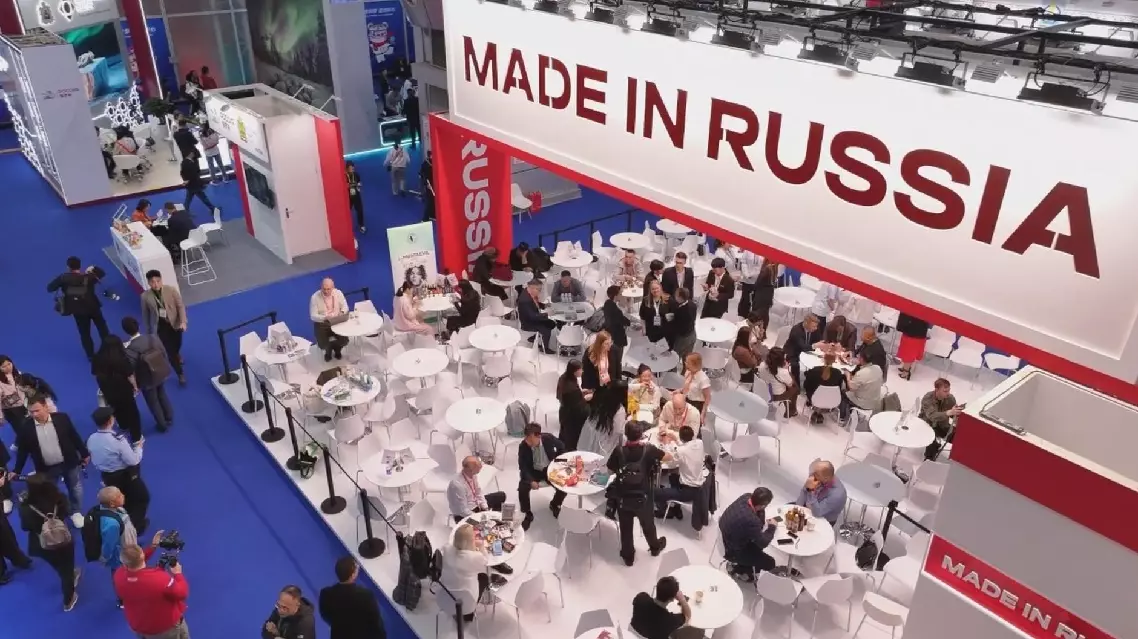
China-Russia Expo promotes trust, cooperation, mutual benefit