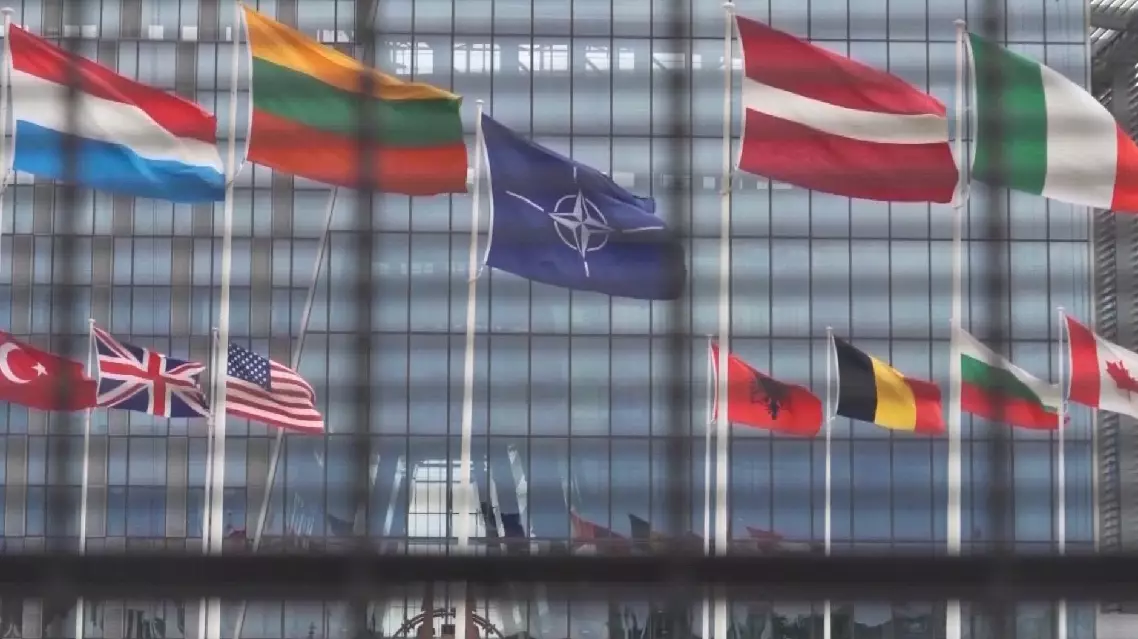
A former senior NATO official has cautioned that withdrawing from the alliance would not serve U.S. interests, following President Donald Trump's renewed threat to pull America out of the transatlantic security pact.
Trump said Wednesday that he is "strongly considering" withdrawing the United States from NATO after the alliance declined to join the attacks on Iran.
Several European capitals reportedly rebuffed the request, saying such a move would be impossible while the conflict was ongoing, with some officials arguing the confrontation was "not our war." French Minister Delegate for the Armed Forces Alice Rufo said NATO is a military alliance focused on the security of territories in the Euro-Atlantic area and is not intended to conduct operations in the Strait of Hormuz.
When asked whether he would reconsider American membership following the conflict, he said the question was "beyond reconsideration", adding: "I was never swayed by NATO. I always knew they were a paper tiger."
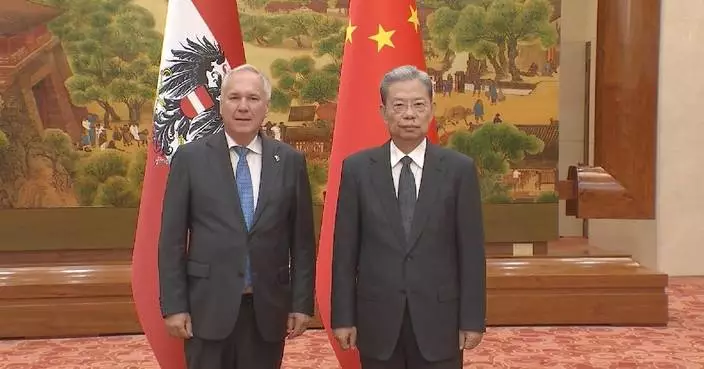
In an interview with China Global Television Network, Jamie Shea, former NATO Deputy Assistant Secretary General for Emerging Security Challenges, called for restraint from Washington, stressing that the United States relies on European partnership to advance its global interests.
"Let's hope that cool heads prevail, because clearly it's not in the U.S. interest to withdraw from NATO. The U.S. needs its bases in Europe to protect its power. It needs allies to support it around the world, which they (European countries) normally do when they're consulted in advance and treated as real partners. And the U.S. has already given NATO a clear plan: From now to the end of the decade, to rebalance the alliance more 50-50 in terms of what Europeans contribute and what Americans contribute. And I would hope that over the next couple of days, we can start to deescalate all of this," said Shea.
Shea warned that Trump's threat was "unwise and dramatic," stressing that U.S. bases in Europe and allied support remain vital. He noted that NATO has already set a plan to rebalance contributions 50-50 by the end of the decade, and cautioned that Europe’s push for greater autonomy should proceed gradually, not in response to crisis.
"It's clear that if the United States would be foolhardy to abandon NATO altogether, that shift, which I mentioned, towards more European self-reliance, has been ongoing for a while. But of course, it's better done in a calm atmosphere and gradually than in response to a crisis because President Trump now wants to do something unwise and dramatic. Who knows when it comes to the future U.S. role in NATO, it's best done as a part of the transatlantic partnership than as a result of the U.S. retreating back into isolation," he said.
Multiple European countries have distanced themselves from the conflict with Iran. UK Prime Minister Keir Starmer said Monday his country would not be dragged in "whatever the pressure and whoever it’s coming from," while Spain closed its airspace to flights linked to U.S. and Israeli strikes.
Trump's threat marks the most serious challenge to NATO's cohesion since its founding in 1949, raising questions about the future of the transatlantic alliance.
Former NATO official warns against US withdrawal amid Trump's criticism of alliance