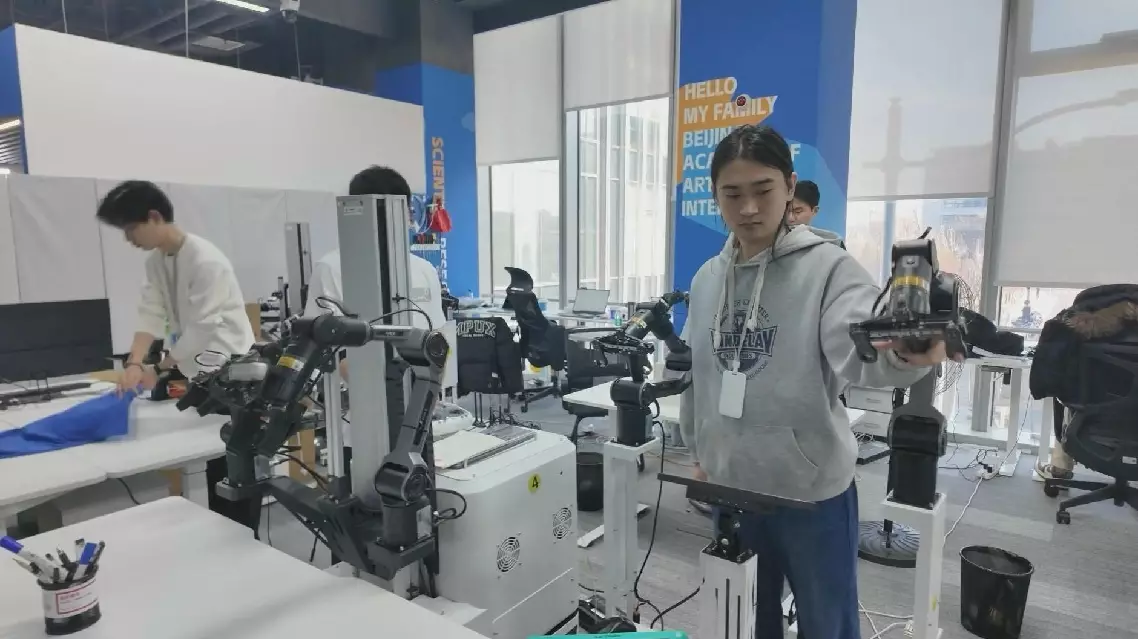
China has been working to establish industrial standards for humanoid robots and embodied artificial intelligence (AI), aiming to facilitate dataset sharing and reuse across the industry in order to accelerate industrial development and promote technological application.
While humanoid robots and embodied AI are undergoing rapid growth in China, the lack of unified industrial standards has made it difficult for open-source datasets to be shared among producers, largely due to the wide diversity of robot configurations.
"The formats of datasets for embodied AI are currently inconsistent and not standardized, leading different parties to develop their own isolated systems. This makes it difficult to accumulate high-quality datasets effectively. The lack of high-quality data, in turn, prevents the development of robot models from making breakthroughs. Only when datasets are standardized can high-quality data truly enhance embodied AI models across all types of robot configurations in the industry," said Wang Zhongyuan, president of the Beijing Academy of AI (BAAI).
In February, China took a significant step toward regulating its rapidly growing humanoid robotics industry, with the release of the country's first national standard system covering the entire industrial chain and lifecycle of humanoid robots and embodied AI.
The standard system, unveiled at the annual meeting of Humanoid Robots and Embodied Intelligence Standardization (HEIS) in Beijing, comprises six key components: basic commonality, brain-like and intelligent computing, limbs and components, complete machines and systems, application, and safety and ethics.
An initial list of 52 key standards was also released during the meeting.
"The 52 standards we've released this year are, to put it metaphorically, just like a thatched shed. Perhaps by next year, with the release of several hundred standards, we will gradually turn it into a solid house, and eventually into a villa. Only then will the industry become truly robust," said Jiang Lei, deputy director of the HEIS technical committee under the Ministry of Industry and Information Technology.
China pushes for industrial standards to accelerate humanoid robotics, embodied AI development
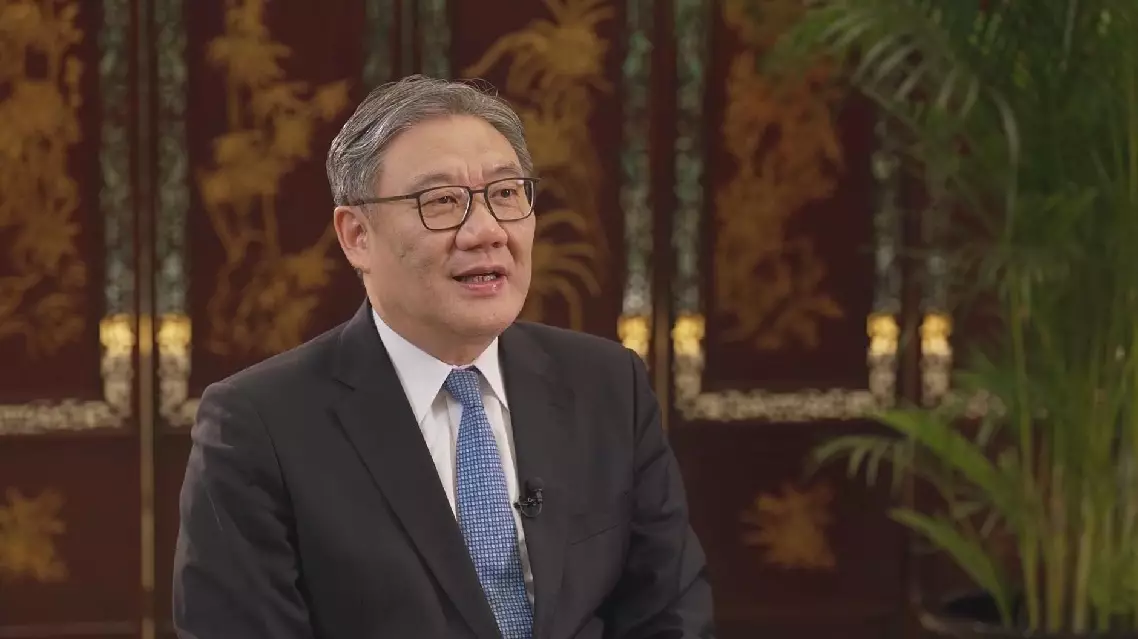
China's Minister of Commerce Wang Wentao outlined the key priorities of the 32nd Asia-Pacific Economic Cooperation (APEC) Ministers Responsible for Trade Meeting, which opened on Friday in Suzhou, East China's Jiangsu province.
In an interview with CGTN ahead of the two-day meeting, Wang said free trade, digital cooperation and green economy are high on the agenda of the meeting.
"The key areas include advancing regional economic integration and the Free Trade Area of the Asia-Pacific, supporting the World Trade Organization (WTO) in strengthening digital cooperation and developing green economy. At present, the international situation is marked by intertwined turbulence and chaos, with intensified geopolitical instability. The rise of unilateralism and protectionism poses serious challenges to the international economic and trade order, disrupting global and Asia-Pacific development. Against this backdrop, all parties have higher expectations for this trade ministers' meeting, hoping that it can build consensus and deliver outcomes," Wang said.
This year marks China's third time hosting the APEC meetings and the 35th anniversary of its membership.
By 2025, China had become the largest trading partner of 13 APEC economies. Trade between China and APEC economies reached 3.7 trillion U.S. dollars, accounting for 57.8 percent of China's total foreign trade.
China has signed 24 free trade agreements or economic and trade arrangements with 31 countries and regions, including 15 APEC economies. In recent years, China has also completed upgrades of free trade agreements with APEC economies such as Singapore and Peru.
The minister said that China has always been a firm supporter and an important contributor to APEC.
"We have actively shared our vast market and development opportunities with all parties. China's door to the world will only open wider and wider. Facing the common challenges, China will continue to fulfill its responsibilities as a major country, further deepen reform, expand high-standard opening-up, and continue to provide new opportunities for the Asia-Pacific region and the world with its new achievements in Chinese modernization," the minister said.
China's Commerce Minister outlines priorities for 32nd APEC trade ministers' meeting