Skip to Content Facebook Feature Image

Analysis by avalanche experts questions decisions by guides on deadly California backcountry trip

News

Analysis by avalanche experts questions decisions by guides on deadly California backcountry trip
News

News

Analysis by avalanche experts questions decisions by guides on deadly California backcountry trip

2026-04-07 05:27 Last Updated At:05:30

Two months after the deadliest avalanche in modern California history, an analysis by leading U.S. experts questions the guides’ decision to lead such a large group through dangerous terrain amid avalanche warnings.

The backcountry skiers were traveling in a tightly packed line when the tour leaders with Blackbird Mountain Guides should have spaced them out to reduce the risk, according to the report prepared by the Sierra Avalanche Center, which was published Saturday on the National Avalanche Center site.

“Exposing only one person at a time to avalanche terrain is an accepted best practice for backcountry travel,” the report said. “Analysis of past avalanche accidents has indicated that larger group sizes (4 or more people) have higher chances of being caught in avalanches.”

Nine backcountry skiers were killed by the avalanche Feb. 17 in California’s Sierra Nevada when a massive wall of snow plunged down a slope near Lake Tahoe. Six others survived.

The report also noted that several members of the group wore avalanche air bag backpacks, but none of the lifesaving equipment was deployed during the tragedy.

Blackbird said Monday that an investigation is ongoing.

“The report does not reflect the full scope of what transpired and does not include all of the facts and information currently under review,” the company said in an email. “We are cooperating fully with authorities and will share more when it is appropriate and based on verified and confirmed findings.”

The report said the group of 15 was traveling through the potential path of an avalanche near Castle Peak following a period of intense snowfall when a slide was likely.

The avalanche center has no enforcement powers. Its reports typically provide safety guidance.

The Nevada County Sheriff’s Office is conducting a criminal investigation and state workplace regulators are investigating the company's decisions leading up to the avalanche.

The avalanche struck on the last day of the skiers’ three-day tour, when the group decided to end the trip early and leave the huts where they had slept to avoid another impending snowstorm.

The avalanche center said in its report that it relied heavily on the accounts of two skiers, Jim Hamilton and Anton Auzans, who survived and talked to The New York Times about what they witnessed. Both skiers said they had taken basic avalanche safety classes and had only been on a handful of backcountry skiing trips before that fateful day.

Both men said the guides met behind closed doors, and it was unclear if they knew about the warning that a human-caused avalanche was very likely before heading out from the huts, which they noted had internet service. The men told the Times that the women’s and men’s groups were combined that morning with four guides.

Before the last milelong climb, Hamilton struggled to get his boot in his binding and fell behind. Thirteen skiers, mostly women, were bunched together behind the lead guides as they crossed avalanche terrain. Auzans was just behind them when the avalanche hit, the newspaper reported. He was swept away but managed to dig himself out. Moments later, Hamilton and the guide reached them and scrambled to try to unbury people.

The center noted the other survivors may have different details and information that may give a more complete picture if they ever choose to share their stories. Among the dead were three veteran guides and six women who were part of a close-knit group of friends who were experienced backcountry skiers.

Jess Weaver, a spokesperson for the group of female friends on the trip, said the survivors and the families of those who died are not doing interviews at this time. Another skier who survived has not spoken publicly.

Avalanche expert Dale Atkins said the group broke a “golden rule” of spreading out during backcountry travel by staying packed together as they moved through an avalanche zone. But Atkins added that keeping the group together while traveling through safer terrain made sense, given the poor visibility that day and the risk of people getting lost if they were too spread out.

“Did they mess up? A lot of people will say, ‘Yes,’” said Atkins, who has been involved in mountain rescues and avalanche forecasting and research in Colorado for five decades. “I’m not so sure about that. You want to keep the group together. But you don’t keep the group together on an avalanche slope. I suspect the guides in the group didn’t realize they were in an avalanche path.”

Atkins had similar comments about the decision to ski out during the storm: In hindsight, the skiers should have stayed put until the danger lessened. Yet in the moment, the guides might have thought that getting out of the mountains quickly made sense, he said.

“A lot of armchair quarterbacks, if they were in the middle of the storm out there, they might have made a similar decision,” he said. “Tragically for these people and their families, there’s no do-over.”

Associated Press journalists Matthew Brown in Billings, Montana, and Julie Watson in San Diego contributed to this report.
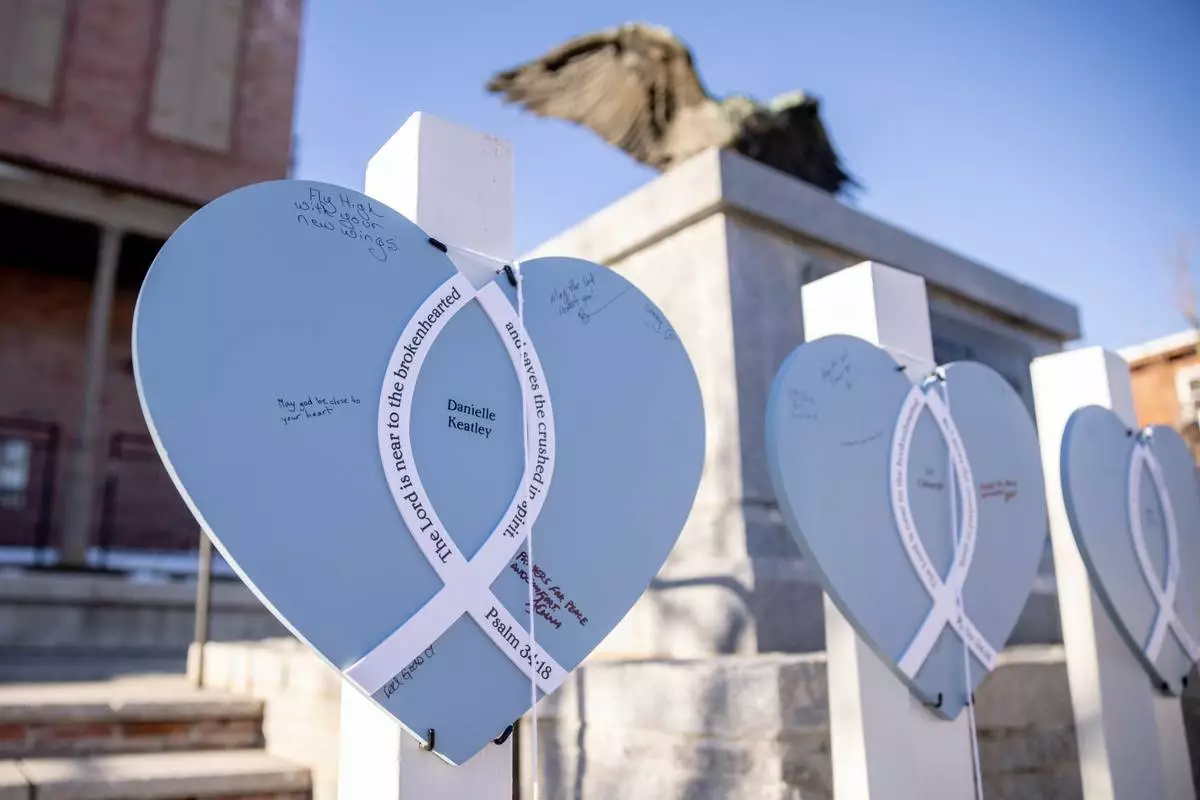
FILE - A memorial is seen at the Victory Highway Eagle in Downtown Truckee ahead of a vigil for the nine Castle Peak avalanche victims in Truckee, Calif., Sunday, Feb. 22, 2026. (Stephen Lam/San Francisco Chronicle via AP, File)
FILE - A memorial is seen at the Victory Highway Eagle in Downtown Truckee ahead of a vigil for the nine Castle Peak avalanche victims in Truckee, Calif., Sunday, Feb. 22, 2026. (Stephen Lam/San Francisco Chronicle via AP, File)

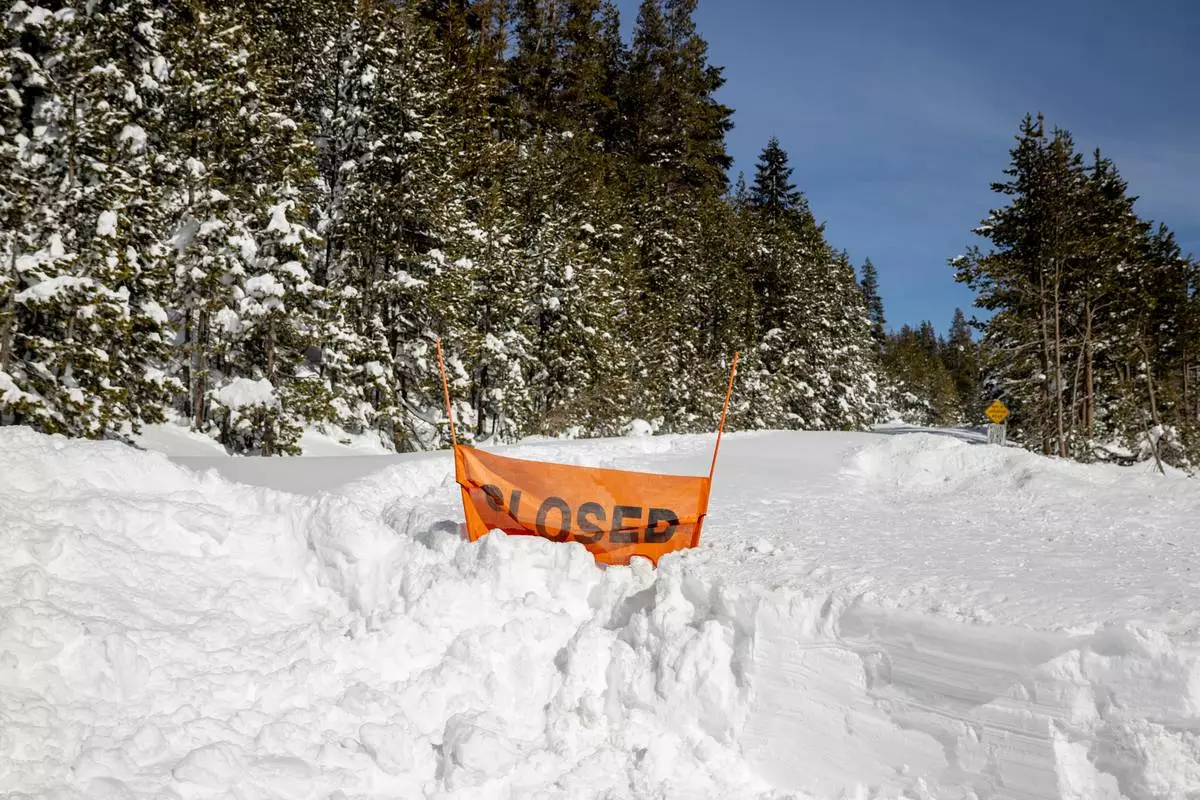
FILE - A closed sign is partially buried at the entrance to the Castle Peak trailhead in Soda Springs, Calif., Friday, Feb. 20, 2026. (Stephen Lam/San Francisco Chronicle via AP, File)
FILE - A closed sign is partially buried at the entrance to the Castle Peak trailhead in Soda Springs, Calif., Friday, Feb. 20, 2026. (Stephen Lam/San Francisco Chronicle via AP, File)
NEW YORK (AP) — Catchers were far more successful than batters through Major League Baseball's first full week of challenges to robot umpires, led by the Detroit Tigers and Dillon Dingler.

The overall success rate in the Automated Ball-Strike System was 55.2% (299 of 542), with fielding teams winning 59.7% of challenges (175 of 293), including 60.4% by catchers (169 of 280).

“I like it a little more. I was pretty staunch against it, which I still may be to some degree,” New York Yankees manager Aaron Boone said.

There were just 13 challenges by pitchers, who won six. Batters were successful on 49.8% (124 of 249).

“I think it’s fun. It’s its own game inside the game, almost," Tampa Bay catcher Hunter Feduccia said.

Success rate was up from 49.5% last year at Triple-A, where defense won 53.7% and batters 49.5%

Detroit won the highest percentage of calls at 75% (15 of 20) while Arizona was at 71%, and Baltimore and Cincinnati both 67%.

Minnesota called for the most challenges with 32, winning 20 for a 63% success rate. Texas had the fewest, winning 4 of 10.

Cleveland was the least successful at 32%, with Washington at 38% and St. Louis and Texas at 40%

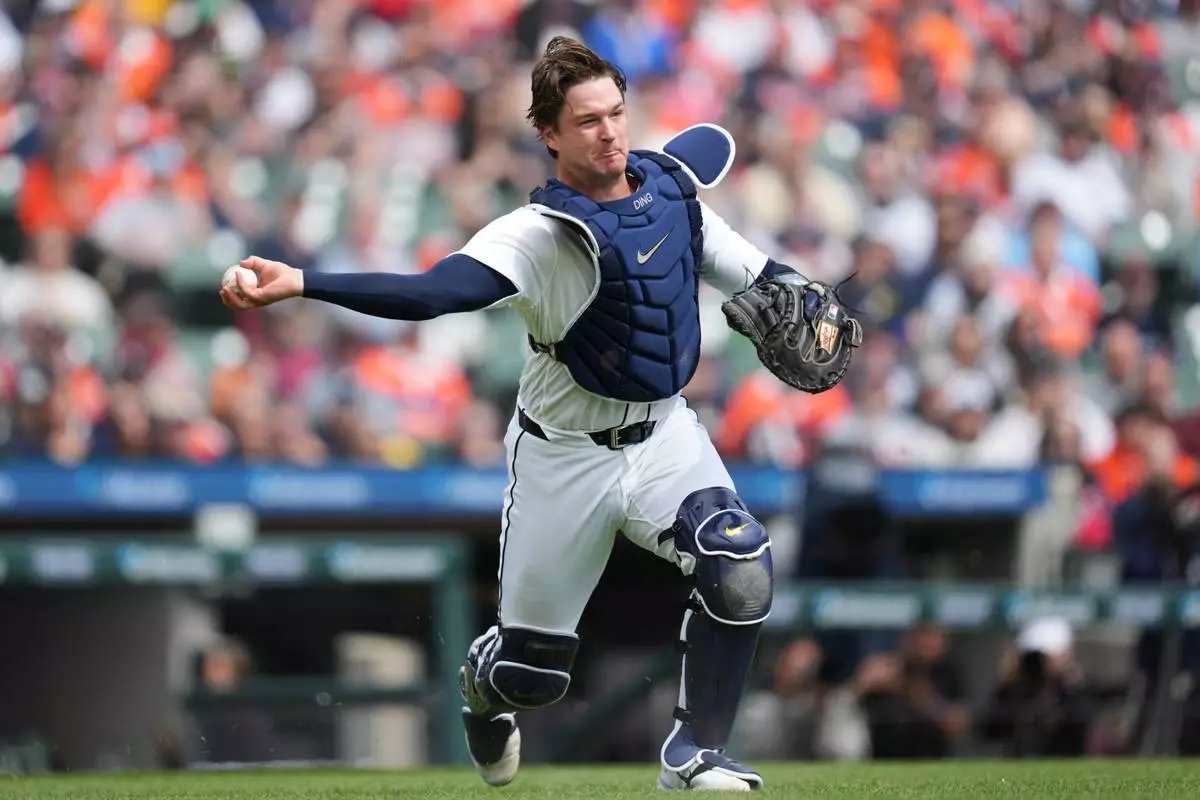
Detroit catchers were 8-0, with seven wins by Dingler.

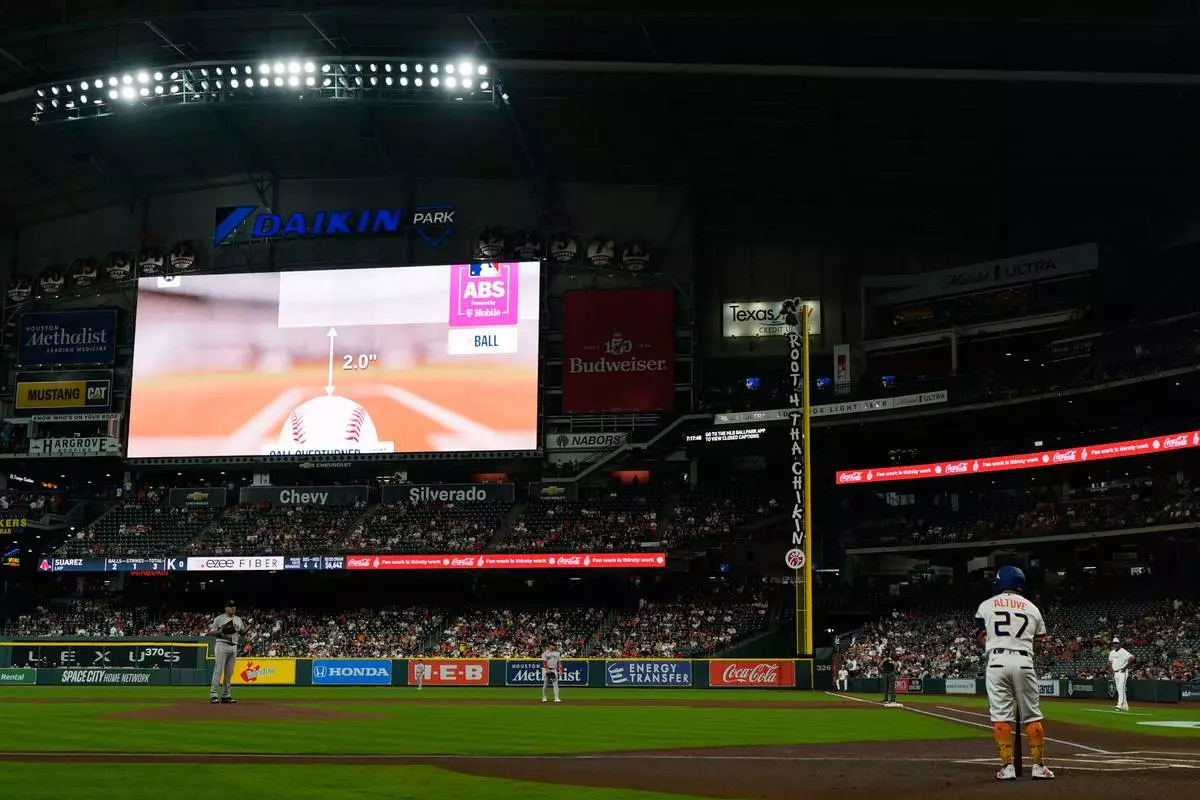
ABS' impact could be seen when Atlanta played at Arizona last Thursday. The Braves were ahead 2-1 when the Diamondbacks' Ryne Nelson threw a 3-2 curveball on the upper, outside corner to Ozzie Albies that was called a strike by Malachi Moore. Albies challenged and headed toward first even before ABS showed the pitch missed the strike zone by 1.1 inches. The walk started an eight-run rally in a 17-2 romp.

“In some of these games, it’s had a more of a swinging effect on outcomes of at-bats and how things change than maybe even you thought,” Miami manager Clayton McCullough said.

Logan O’Hoppe of the Los Angeles Angels had the most victories, successful on 10 of 12. The Marlins’ Agustín Ramírez won 7 of 9 and the Los Angeles Dodgers’ Will Smith 8 of 11.

Seattle’s Cal Raleigh won 4 of 9 and the Athletics’ Shea Langeliers 3 of 9.

Among batters, Mark Vientos of the New York Mets and Iván Herrera both went 3-0. Mike Trout of the Los Angeles Angels was 3-1 along with Philadelphia's Kyle Schwarber and Tampa Bay's Jake Fraley.

Colorado's Hunter Goodman and Washington's Luis García Jr. were both 0 for 3.

Boone said Yankees staff and players daily review challenges made and opportunities missed.

Players still are getting used to ABS. Washington's Jorbit Vivas tapped his helmet signaling for an appeal on March 31 when the Nationals already had exhausted their two challenges.

Among umpires, Mike Estabrook had 11 of 12 calls overturned (91.7%), Andy Fletcher had 15 of 17 (88.2%), Ron Kulpa and Paul Clemons each 7 of 9 (77.8%) and Chris Segal 10 of 13 (76.9%), according to taptochallenge.com.

Will Little had just 1 of 10 calls reversed while Erich Bacchus was perfect with no overturned calls in five challenges. Others with low overturn rates with at least five challenges included Emil Jiménez (1 of 5), Jordan Baker (2 of 8), Ryan Additon and Nick Mahrley (both 2 of 7) and David Rackley (3 of 10).

Offense again lagged through the first 139 games of the 2,430-game season.

The .234 big league batting average is down from .239 through 12 days last year (including the two games in Japan), when it finished at .245. The average usually increases as the weather warms. The full-season low of .237 was set in 1968.

Runs per game averaged 8.8, up from 8.7, and stolen bases dropped to 1.4 per game from 1.6

Average fastball velocity is 94.6 mph, up from 94.1 mph through the first full week last year. The final figure increased in each of the last five seasons to a record 94.5 mph in 2025. It was 91.9 mph when MLB first started tracking in 2008.

“I wish I was facing the same pitching as I did my rookie year back when guys were throwing 88-mile-an-hour sinkers over the plate," said 33-year-old Cleveland catcher Austin Hedges. “That pitch doesn’t exist anymore.”

The average time of a nine-inning game is 2 hours, 43 minutes, up from 2:37 at this point last year, when it finished at 2:38.

Pitch clock violations averaged 0.17 per game, down from 0.22 through 139 games last year.

MLB's average crowd of 31,725 through 138 dates was up 1.5% over 31,255 for the same period last year.

AP Sports Writers Dan Gelston and Steve Megargee, and AP freelance writer Tom Withers contributed to this report.

AP MLB: https://apnews.com/MLB

Houston Astros' Jose Altuve (27) watches a replay of the Automated Ball-Strike Challenge System (ABS) during the first inning of a baseball game against the Boston Red Sox in Houston, Monday, March 30, 2026. (AP Photo/Ashley Landis)

Houston Astros' Jose Altuve (27) watches a replay of the Automated Ball-Strike Challenge System (ABS) during the first inning of a baseball game against the Boston Red Sox in Houston, Monday, March 30, 2026. (AP Photo/Ashley Landis)

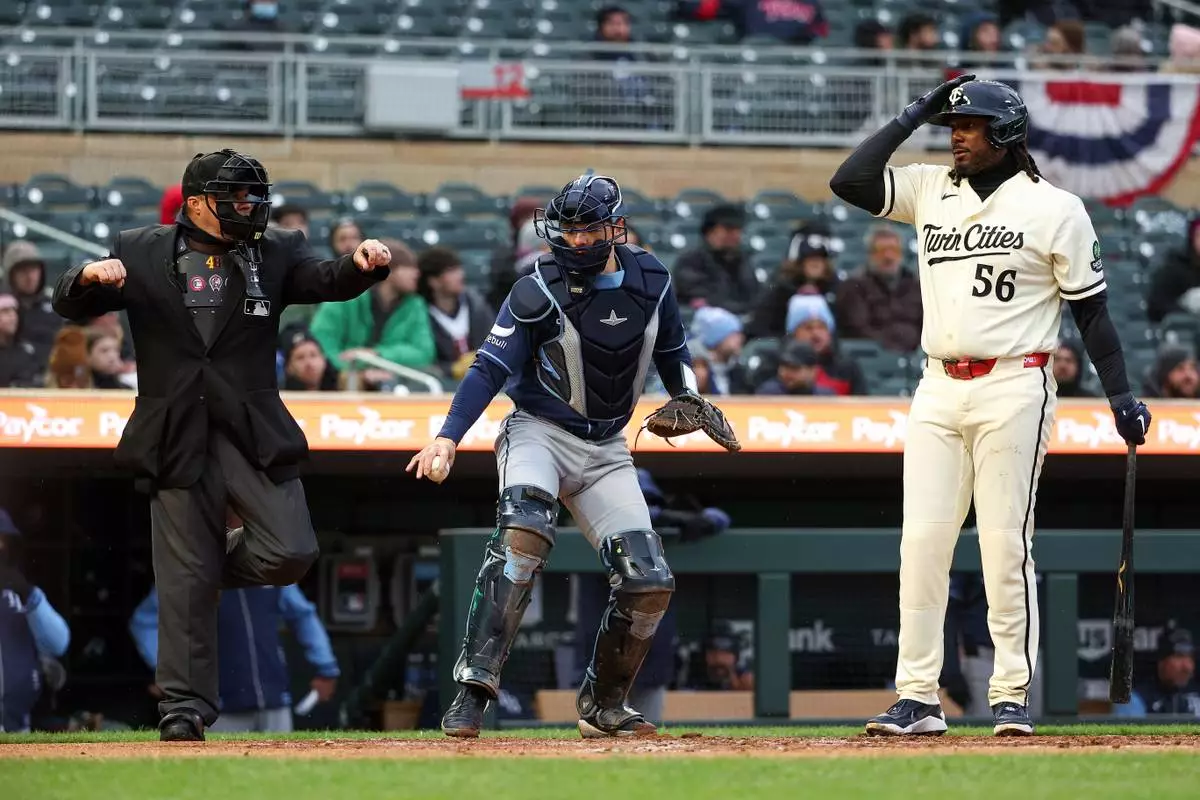
Minnesota Twins' Josh Bell, right, signals for an ABS challenge on a called third strike, which was upheld, during the first inning of baseball game against the Tampa Bay Rays, Saturday, April 4, 2026, in Minneapolis. (AP Photo/Matt Krohn)

Minnesota Twins' Josh Bell, right, signals for an ABS challenge on a called third strike, which was upheld, during the first inning of baseball game against the Tampa Bay Rays, Saturday, April 4, 2026, in Minneapolis. (AP Photo/Matt Krohn)

Detroit Tigers catcher Dillon Dingler throws to first base for an out on a St. Louis Cardinals' Victor Scott II bunt in the first inning of a baseball game Saturday, April 4, 2026, in Detroit. (AP Photo/Paul Sancya)

Detroit Tigers catcher Dillon Dingler throws to first base for an out on a St. Louis Cardinals' Victor Scott II bunt in the first inning of a baseball game Saturday, April 4, 2026, in Detroit. (AP Photo/Paul Sancya)

Recommended Articles