Skip to Content Facebook Feature Image

Appeals court lets Iowa enforce book ban and restrictions on LGBTQ+ topics in K-6 classes

News

Appeals court lets Iowa enforce book ban and restrictions on LGBTQ+ topics in K-6 classes
News

News

Appeals court lets Iowa enforce book ban and restrictions on LGBTQ+ topics in K-6 classes

2026-04-07 05:32 Last Updated At:05:40

DES MOINES, Iowa (AP) — Iowa can enforce a law that restricts teachers from talking about LGBTQ+ topics with students in kindergarten through the sixth grade and bans some books in libraries and classrooms, an appellate court said Monday.

The decision for now vacates a lower court judge's temporary blocks on the law.

The measure was first approved by Republican majorities in the Iowa House and Senate and GOP Gov. Kim Reynolds in 2023, which they said reinforced age-appropriate education in kindergarten through 12th grades. It’s been a back-and-forth battle in the courts in the three years since lawsuits were filed by the Iowa State Education Association, major publishing houses and bestselling authors, as well as an LGBTQ+ advocacy organization, Iowa Safe Schools.

The law was in effect for part of the 2024-2025 school year until last March, when a federal judge reissued a temporary block on the book ban provision, which prohibits books containing specific sex acts from appearing in school libraries or classrooms. In a separate decision in May, U.S. District Judge Stephen Locher said Iowa could restrict mandatory instruction on gender identity and sexual orientation in schools up through the sixth grade but could not enforce the restriction on any “program” or “promotion,” saying those terms were too broad.

Iowa asked the U.S. Eighth Circuit Court of Appeals to overturn both decisions, which a three-judge panel did Monday. The cases will continue in the district court while the law is in effect.

“This is a huge win for Iowa parents,” Iowa’s Republican Attorney General Brenna Bird said in a statement. “Parents should always know that school is a safe place for their children to learn, not be concerned they are being indoctrinated with inappropriate sexual materials and philosophies.”

Iowa’s measure was enacted in 2023 amid a wave of similar legislation around the country, driven by Republican lawmakers, to prohibit discussion of LGBTQ+ identities and restrict the use of restrooms in schools. Many of those laws prompted court challenges. The decision comes as Trump's administration said Monday it has terminated agreements adopted under previous administrations that upheld rights and protections for transgender students.

The Iowa law states that K-12 school libraries cannot include materials with descriptions or visual depictions of six different sex acts. The state's defense argued that the law outlines the restrictions explicitly and that the state, in its mission of advancing children's education, has legitimate reason to ensure public school materials are appropriate.

But the teachers union, as well as publishers and authors, have maintained that the law is overly broad, reaching “far beyond obscenity to prohibit any book with any description of a sex act for any age,” their lawsuit stated. Plus, they argued, libraries are places of voluntary learning, not existing exclusively to advance the school's educational mission.

The appeals court sided with the state, saying the restrictions are not amorphous and the books in a school library can be considered part of the school's curriculum. For that reason, the court notes that the claims from the authors and publishers that the law infringes on First Amendment rights will likely not hold up.

The ruling also said: “The First Amendment does not guarantee students the right to access books of their choosing at taxpayer expense."

The law also prohibits “any program, curriculum, test, survey, questionnaire, promotion, or instruction relating to gender identity or sexual orientation." Attorneys for the state maintained that that text, as written, means mandatory school curriculum. Opponents argued the law is vague enough to limit any information accessed or activity engaged in at the school.

"Reading the plain language," the appeals court decision said, “we cannot say the State’s assertion is wrong.”

Locher's decision last May had granted a partial injunction, saying the state could restrict such topics when it comes to curriculum, tests, surveys, questionnaires or instruction but not any “program” or “promotion.”

Locher laid out specifically what that meant: “Students in grades six and below must be allowed to join Gender Sexuality Alliances (‘GSAs’) and other student groups relating to gender identity and/or sexual orientation.” And the district, teachers and students “must be permitted to advertise” those groups.

In vacating Locher's partial block, the appeals court said Locher wrongly focused on the two words — program and promotion — in interpreting "an expansive view of the law's scope.”

Because Iowa Safe Schools and the students asked the court to block the law on face value, not because of specific claims that it infringed on their rights, the appeals court said their complaint will likely fail on merits.

The appeals court also said the state could enforce a provision that requires school administrators to notify parents if a student makes a social transition, and wants to go by a different pronoun or name at school.

The decisions Monday are a setback but “not the end of the fight,” said Nathan Maxwell, senior attorney at Lambda Legal, one of the legal organizations representing Iowa Safe Schools.

It “is a cruel and unconstitutional law that silences LGBTQ+ children, erases their existence from classrooms, and forces educators to expose vulnerable students to potential harm at home," Maxwell said. "We will continue to use every legal tool available to protect these young people.”

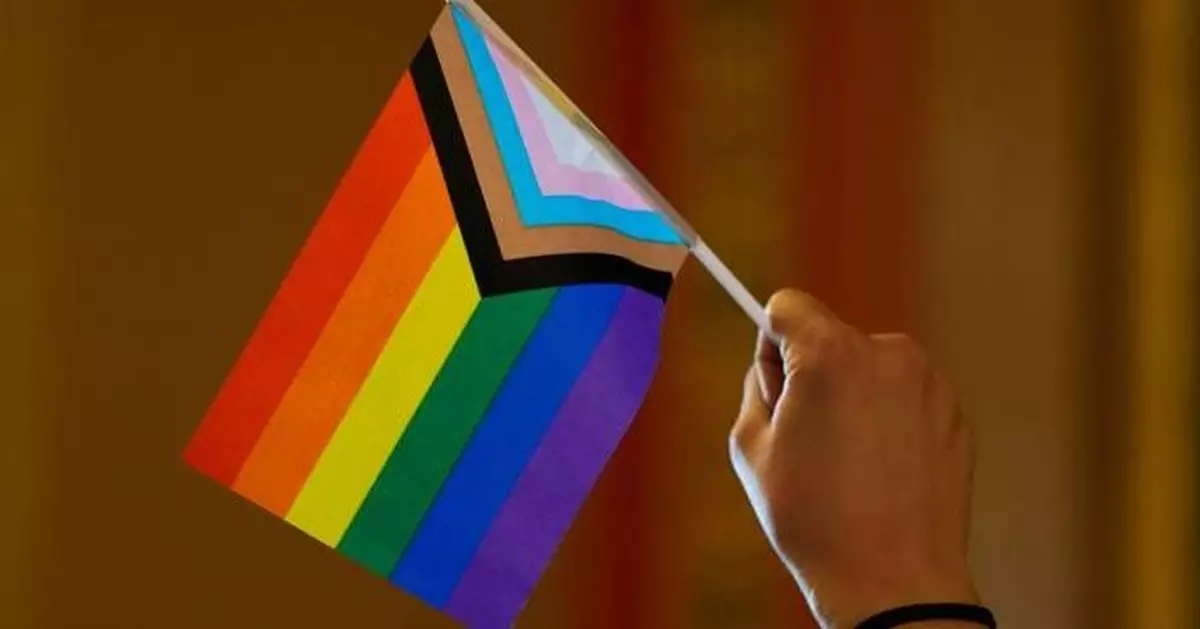
FILE - An LGBTQ+ rights supporter holds a flag in the hallway outside an Iowa House Judiciary subcommittee hearing, Jan. 31, 2024, at the Statehouse, in Des Moines, Iowa. (AP Photo/Charlie Neibergall, File)
FILE - An LGBTQ+ rights supporter holds a flag in the hallway outside an Iowa House Judiciary subcommittee hearing, Jan. 31, 2024, at the Statehouse, in Des Moines, Iowa. (AP Photo/Charlie Neibergall, File)

Two months after the deadliest avalanche in modern California history, an analysis by leading U.S. experts questions the guides’ decision to lead such a large group through dangerous terrain amid avalanche warnings.

The backcountry skiers were traveling in a tightly packed line when the tour leaders with Blackbird Mountain Guides should have spaced them out to reduce the risk, according to the report prepared by the Sierra Avalanche Center, which was published Saturday on the National Avalanche Center site.

“Exposing only one person at a time to avalanche terrain is an accepted best practice for backcountry travel,” the report said. “Analysis of past avalanche accidents has indicated that larger group sizes (4 or more people) have higher chances of being caught in avalanches.”

Nine backcountry skiers were killed by the avalanche Feb. 17 in California’s Sierra Nevada when a massive wall of snow plunged down a slope near Lake Tahoe. Six others survived.

The report also noted that several members of the group wore avalanche air bag backpacks, but none of the lifesaving equipment was deployed during the tragedy.

Blackbird said Monday that an investigation is ongoing.

“The report does not reflect the full scope of what transpired and does not include all of the facts and information currently under review,” the company said in an email. “We are cooperating fully with authorities and will share more when it is appropriate and based on verified and confirmed findings.”

The report said the group of 15 was traveling through the potential path of an avalanche near Castle Peak following a period of intense snowfall when a slide was likely.

The avalanche center has no enforcement powers. Its reports typically provide safety guidance.

The Nevada County Sheriff’s Office is conducting a criminal investigation and state workplace regulators are investigating the company's decisions leading up to the avalanche.

The avalanche struck on the last day of the skiers’ three-day tour, when the group decided to end the trip early and leave the huts where they had slept to avoid another impending snowstorm.

The avalanche center said in its report that it relied heavily on the accounts of two skiers, Jim Hamilton and Anton Auzans, who survived and talked to The New York Times about what they witnessed. Both skiers said they had taken basic avalanche safety classes and had only been on a handful of backcountry skiing trips before that fateful day.

Both men said the guides met behind closed doors, and it was unclear if they knew about the warning that a human-caused avalanche was very likely before heading out from the huts, which they noted had internet service. The men told the Times that the women’s and men’s groups were combined that morning with four guides.

Before the last milelong climb, Hamilton struggled to get his boot in his binding and fell behind. Thirteen skiers, mostly women, were bunched together behind the lead guides as they crossed avalanche terrain. Auzans was just behind them when the avalanche hit, the newspaper reported. He was swept away but managed to dig himself out. Moments later, Hamilton and the guide reached them and scrambled to try to unbury people.

The center noted the other survivors may have different details and information that may give a more complete picture if they ever choose to share their stories. Among the dead were three veteran guides and six women who were part of a close-knit group of friends who were experienced backcountry skiers.

Jess Weaver, a spokesperson for the group of female friends on the trip, said the survivors and the families of those who died are not doing interviews at this time. Another skier who survived has not spoken publicly.

Avalanche expert Dale Atkins said the group broke a “golden rule” of spreading out during backcountry travel by staying packed together as they moved through an avalanche zone. But Atkins added that keeping the group together while traveling through safer terrain made sense, given the poor visibility that day and the risk of people getting lost if they were too spread out.

“Did they mess up? A lot of people will say, ‘Yes,’” said Atkins, who has been involved in mountain rescues and avalanche forecasting and research in Colorado for five decades. “I’m not so sure about that. You want to keep the group together. But you don’t keep the group together on an avalanche slope. I suspect the guides in the group didn’t realize they were in an avalanche path.”

Atkins had similar comments about the decision to ski out during the storm: In hindsight, the skiers should have stayed put until the danger lessened. Yet in the moment, the guides might have thought that getting out of the mountains quickly made sense, he said.

“A lot of armchair quarterbacks, if they were in the middle of the storm out there, they might have made a similar decision,” he said. “Tragically for these people and their families, there’s no do-over.”

Associated Press journalists Matthew Brown in Billings, Montana, and Julie Watson in San Diego contributed to this report.

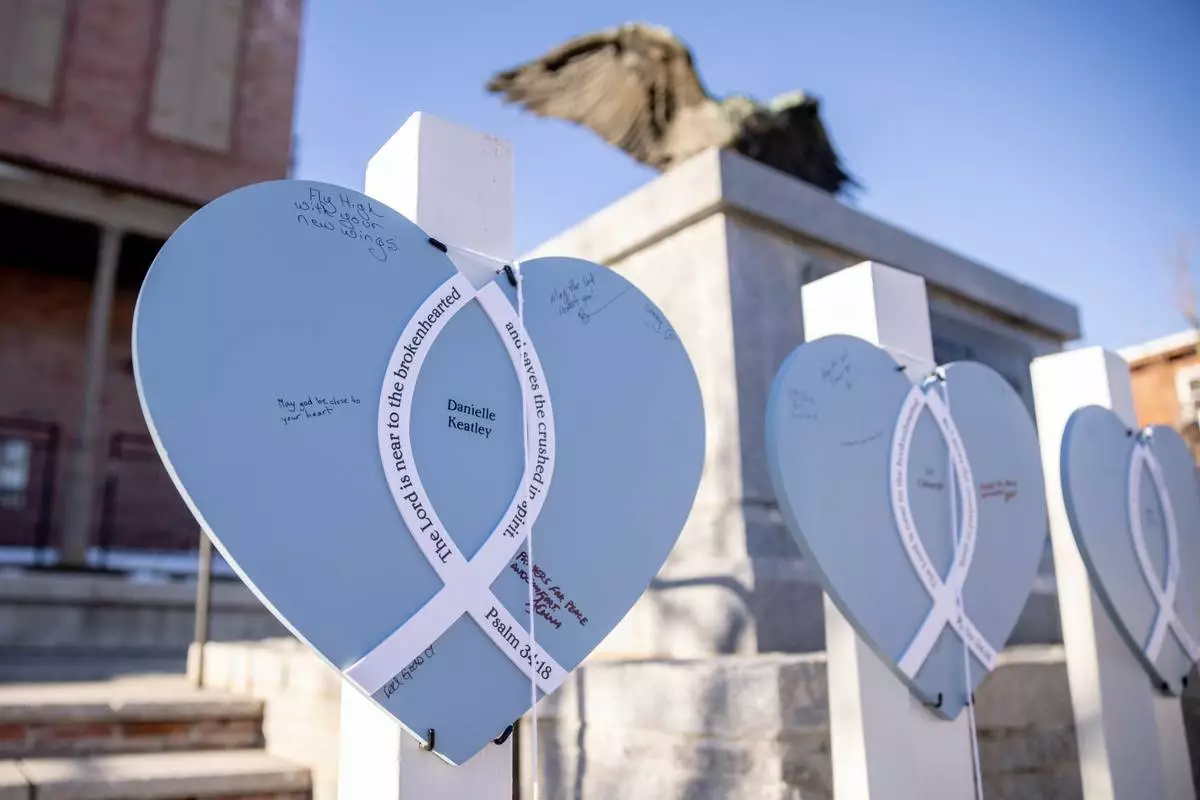
FILE - A memorial is seen at the Victory Highway Eagle in Downtown Truckee ahead of a vigil for the nine Castle Peak avalanche victims in Truckee, Calif., Sunday, Feb. 22, 2026. (Stephen Lam/San Francisco Chronicle via AP, File)

FILE - A memorial is seen at the Victory Highway Eagle in Downtown Truckee ahead of a vigil for the nine Castle Peak avalanche victims in Truckee, Calif., Sunday, Feb. 22, 2026. (Stephen Lam/San Francisco Chronicle via AP, File)

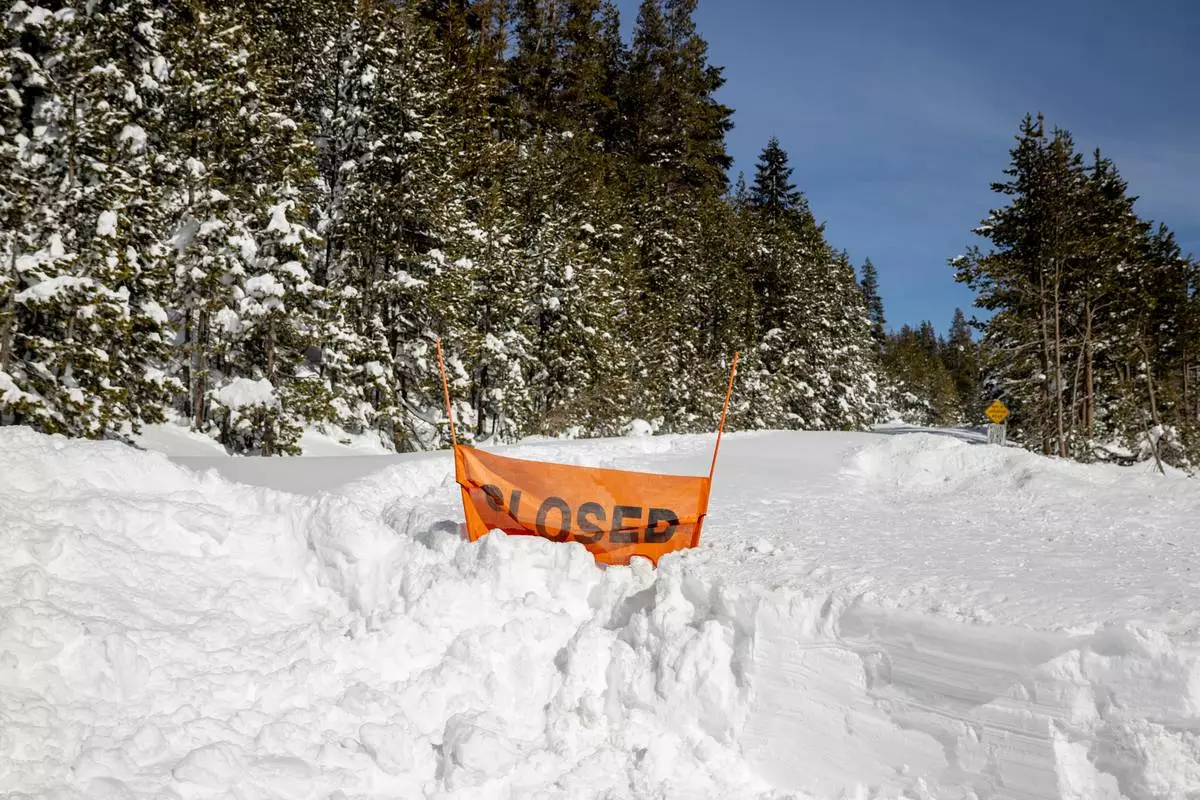
FILE - A closed sign is partially buried at the entrance to the Castle Peak trailhead in Soda Springs, Calif., Friday, Feb. 20, 2026. (Stephen Lam/San Francisco Chronicle via AP, File)

FILE - A closed sign is partially buried at the entrance to the Castle Peak trailhead in Soda Springs, Calif., Friday, Feb. 20, 2026. (Stephen Lam/San Francisco Chronicle via AP, File)

Recommended Articles