China on Tuesday put its deepest offshore wind farm into full-capacity operation, marking breakthroughs in deep-water construction, large-scale turbine integration and precision installation technologies, according to state-owned China Huaneng Group.
The project is located roughly 70 kilometers off the northern coast of east China's Shandong Peninsula in the northern Yellow Sea. Situated in waters between 52 and 56 meters deep, it is China's deepest commercial offshore wind project.
It has a total installed capacity of 504 megawatts, featuring 42 sets of 12-megawatt wind turbines.
The project overcame challenges including complex deep-sea geology, frequent extreme sea conditions and long-distance offshore construction.
Innovations include the application of four-pile jacket foundation structures up to 83.9 meters tall, the tallest of their kind in China, to ensure safe and stable operation of the turbines in the complex deep-sea geological environment.
"With China's BeiDou Navigation Satellite System, we developed high-precision positioning technology to achieve millimeter-level accuracy in seabed pile driving. Supported by intelligent auxiliary sinking technology, the pile-sinking operation time for a single turbine was shortened from 48 hours to 29 hours. At full capacity, the wind farm will generate approximately 1.7 billion kilowatt-hours of electricity annually, which is enough to save about 500,000 tonnes of standard coal per year," said project manager Wang Jinshou with China Huaneng Group Co., Ltd.
In addition, collaborative technology combining drones and artificial magnetic fields enabled workers to complete the laying of 95.6 kilometers of ultra-long submarine cables.
The project was connected to the grid for electricity generation on January 7.
With vast onshore wind farms across its northern and western regions and rapidly expanding offshore projects along the eastern coastline, China's wind energy not only provides clean electricity to millions of households but also plays a crucial role in reducing carbon emissions.
China's newly installed and cumulative offshore wind power capacity both accounted for more than half of the global total, according to data released by the Ministry of Natural Resources in March this year.
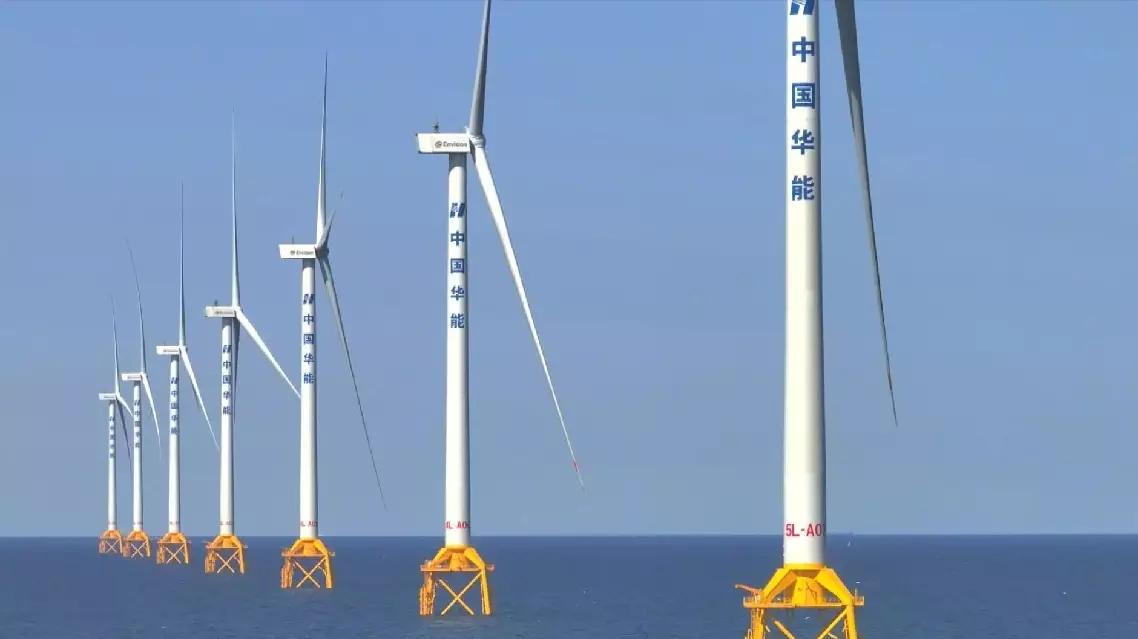
China's deepest offshore wind farm enters full-capacity operation
Preliminary findings indicate that Israeli tank fire and a Hezbollah explosive were likely responsible for the deaths of three Indonesian peacekeepers in Lebanon last week, a UN spokesperson said at a daily briefing on Tuesday.
The UN Interim Force in Lebanon (UNIFIL) shared the initial findings of its inquiry with the governments of Indonesia, Israel and Lebanon, said Stephane Dujarric, chief spokesman for UN Secretary-General Antonio Guterres.
He said these are preliminary findings based on initial physical evidence, adding that a full UN investigation continues.
The spokesman said that all actors must fulfill their obligations to ensure the safety and security of peacekeepers at all times. The inviolability of UN installations must be respected.
"These incidents are unacceptable. We have requested with the relevant parties that the cases be investigated and prosecuted by national authorities to bring the perpetrators to justice and ensure criminal accountability for crimes against peacekeepers. Attacks on United Nations peacekeepers may constitute war crimes under international law," said Dujarric.
The three Indonesian peacekeepers were killed in two separate incidents in southern Lebanon in late March. A UN investigation determined that one died when Israeli tank fire struck a UNIFIL position on March 29. The next day, two others were killed when an explosion of unknown origin destroyed their vehicle in a logistics convoy near Bani Hayyan. Initial findings pointed to a roadside blast.
UNIFIL paid tribute to the life and work of the fallen peacekeepers in an April 2 ceremony at Rafik Hariri International Airport, Beirut, before their remains were repatriated.
The three peacekeepers were posthumously awarded medals in recognition of their dedicated service to UNIFIL's mission in southern Lebanon.
On Saturday, the remains of the three fallen Indonesian peacekeepers arrived at Soekarno-Hatta International Airport where they were received with honors by Indonesian President Prabowo Subianto before being transferred to their respective hometowns for final rites.
The secretary-general earlier condemned the killings, extended his deepest condolences to the families of the fallen peacekeepers and to the government of Indonesia, while expressing appreciation for the courage and service of all men and women serving with UNIFIL.
The UN Security Council, which mandated the UNIFIL mission, also condemned the attacks in a statement, offering condolences to the victims' families and to Indonesia. Council members reaffirmed their full support for UNIFIL.

Israeli tank fire, Hezbollah explosive likely killed 3 UN peacekeepers in Lebanon: spokesperson