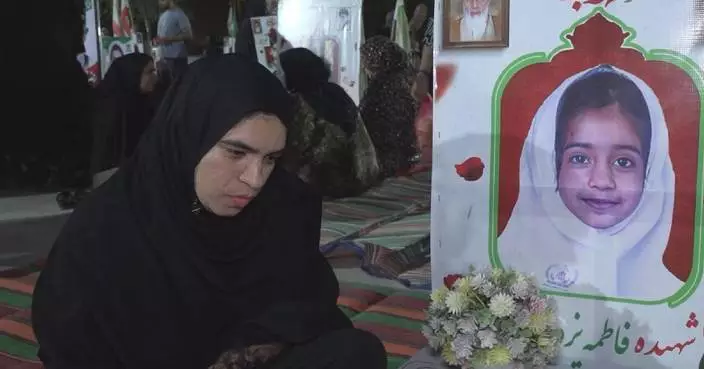
Two buildings at Tehran's Sharif University of Technology were reduced to rubble after an U.S.-Israeli attack on Monday.
Teaching equipment, experimental instruments, and study materials were seen buried in the ruins of the Information and Communication Technology Center (AICTC) and its neighboring building of Department of Philosophy of Science.
Around the demolished site, posters have been hung on strings following the attack, reading "Trump's help has come" -- a scornful reference to comments made by the U.S. president on January 13, when he told Iranians: "Help is on the way."
"The enemy wants either for Iran to surrender and submit to bullying, or for Iran to be destroyed. When the enemy seeks to destroy a nation, one of its primary targets is that nation's industrial capacity, with the aim of preventing its development. History has shown that whenever a nation seeks independence and development, those 'world aggressors' will stand in its way," said Abolfazl, a student.
In spite of the devastation, the university insists that it and the country will prevail against aggression.
"We will rebuild the country and we will make it even better. We are showing the buildings to the media to let the people know that our enemies do not want Iran to succeed, develop, or progress," Sharif University president Masoud Tajrishi said to the press.
Iranian officials said this attack was not an isolated incident but a continuation of the April 3 attack on Shahid Beheshti University.
The Iranian side stressed that deliberate attacks on research institutions and universities clearly violate international humanitarian law, constitute war crimes, and pose a serious threat to international peace and security.
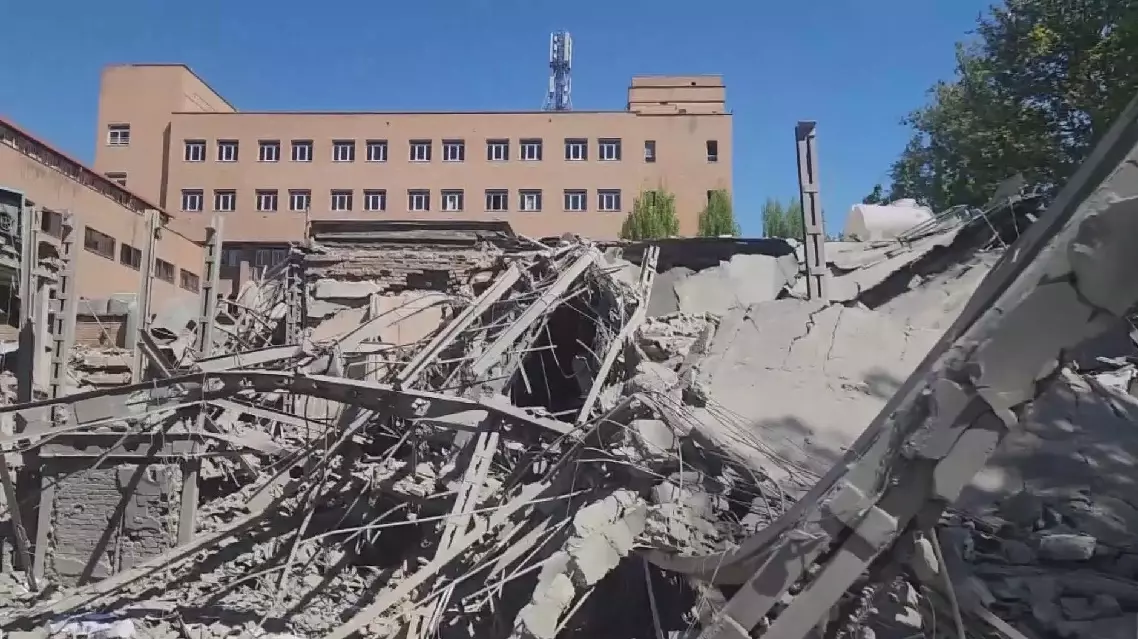
Debris strewn across razed data center of Sharif University of Technology after U.S.-Israeli attack
Saudi Arabia and Pakistan have reaffirmed that they will not seek normalization of ties with Israel, rejecting U.S. President Donald Trump's call for the two countries to join the Abraham Accords.
Saudi Arabia's position on the Palestinian issue remains unchanged, a Saudi source told Al Arabiya TV on Monday.
The source affirmed the need for "an irreversible pathway to a Palestinian state".
The remarks came after U.S. President Donald Trump urged Muslim-majority and regional countries to normalize relations with Israel and join the Abraham Accords before the U.S. reaches a peace agreement with Iran.
Saudi Arabia has repeatedly said it would not normalize relations with Israel without the establishment of a Palestinian state.
Pakistani Defense Minister Khawaja Asif said on Tuesday that Pakistan will not join any agreement to normalize ties with Israel, adding that the country will not accept any deal that "conflicts with its fundamental ideologies".
Trump on Monday urged Saudi Arabia, Qatar, Egypt, Jordan, Turkey and Pakistan -- countries involved in mediating U.S.-Iran talks -- to immediately join the Abraham Accords, warning that otherwise they should not participate in the mediation.
He added that if a U.S.-Iran deal is reached, Iran should also join the agreement.
The Abraham Accords, brokered by the United States in 2020 during Trump's first term, were established between the Israeli government and Arab countries including the United Arab Emirates, Bahrain, Sudan and Morocco, aimed at rapidly advancing the normalization of relations between Israel and Arab countries.
Before the outbreak of the latest round of Israeli-Palestinian conflict in October 2023, the United States had been pushing for normalization between Saudi Arabia and Israel.
After the conflict erupted, Saudi Arabia suspended normalization talks with Israel.

Saudi Arabia, Pakistan reject Trump's Abraham Accords demand