Skip to Content Facebook Feature Image

Inside a huge compound on Thailand-Cambodia border where 10,000 workers scammed people globally

News

Inside a huge compound on Thailand-Cambodia border where 10,000 workers scammed people globally
News

News

Inside a huge compound on Thailand-Cambodia border where 10,000 workers scammed people globally

2026-04-07 23:59 Last Updated At:04-08 00:10

O'SMACH, Cambodia (AP) — I have often used the word industrial-scale in my own writing to describe the scam compounds that dot the region.

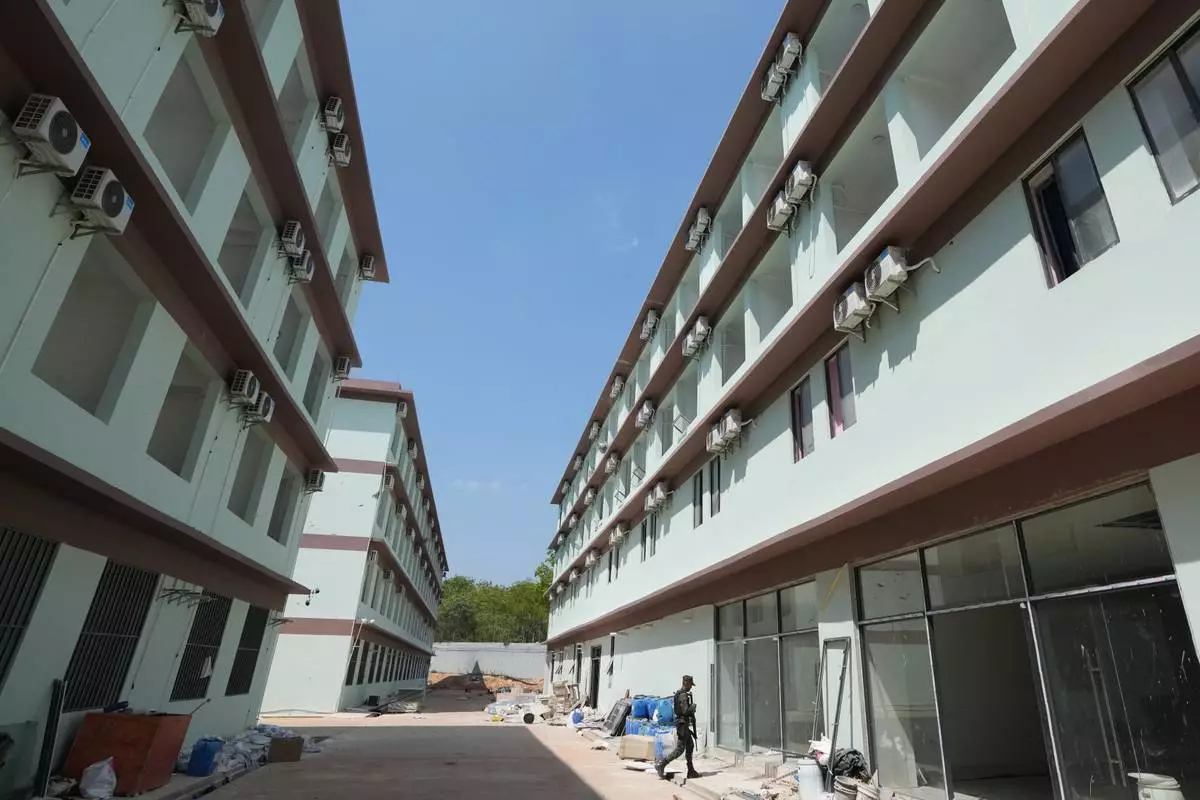
But the weight of that phrase truly sunk in at the O’Smach Resort complex that we visited Tuesday. Thailand's military, which conducted a tour for the media, said that the whole area encompasses around 197 acres (80 hectares), equivalent to 150 American football fields.

More Images
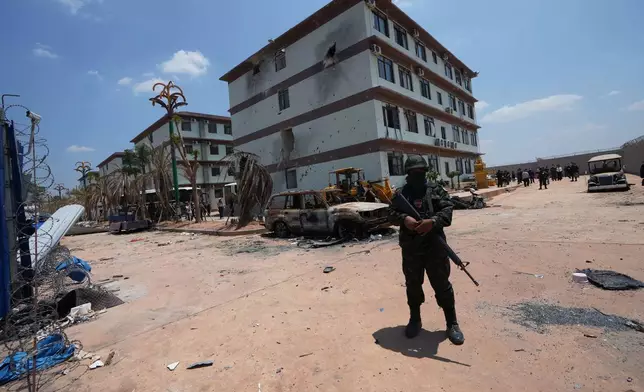
A Thai soldier guards outside the scam compound in O'Smach, Cambodia, Tuesday, April 7, 2026. (AP Photo/Sakchai Lalit)
A Thai soldier guards outside the scam compound in O'Smach, Cambodia, Tuesday, April 7, 2026. (AP Photo/Sakchai Lalit)

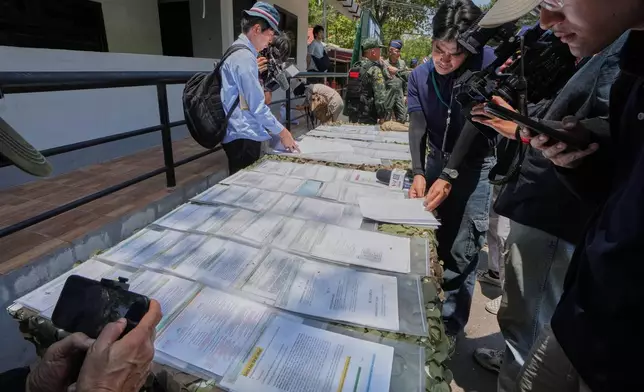
Journalist review scam scripts in Surin, Thailand, Tuesday, April 7, 2026. (AP Photo/Sakchai Lalit)

Journalist review scam scripts in Surin, Thailand, Tuesday, April 7, 2026. (AP Photo/Sakchai Lalit)

Thai soldier stand front of word motto at work station in scam compound in O'Smach, Cambodia, Tuesday, April 7, 2026. (AP Photo/Sakchai Lalit)
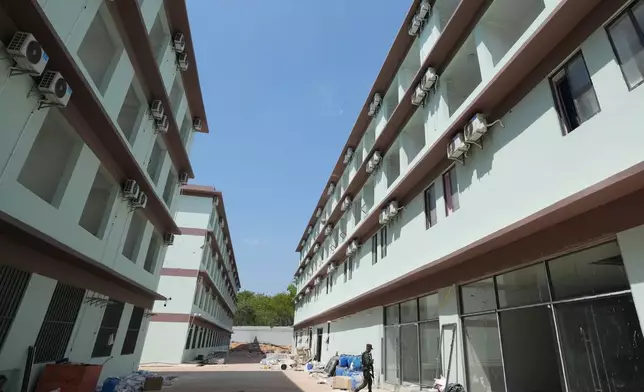
Thai soldier stand front of word motto at work station in scam compound in O'Smach, Cambodia, Tuesday, April 7, 2026. (AP Photo/Sakchai Lalit)

A Thai soldier guards outside the scam compound in O'Smach, Cambodia, Tuesday, April 7, 2026. (AP Photo/Sakchai Lalit)
A Thai soldier guards outside the scam compound in O'Smach, Cambodia, Tuesday, April 7, 2026. (AP Photo/Sakchai Lalit)

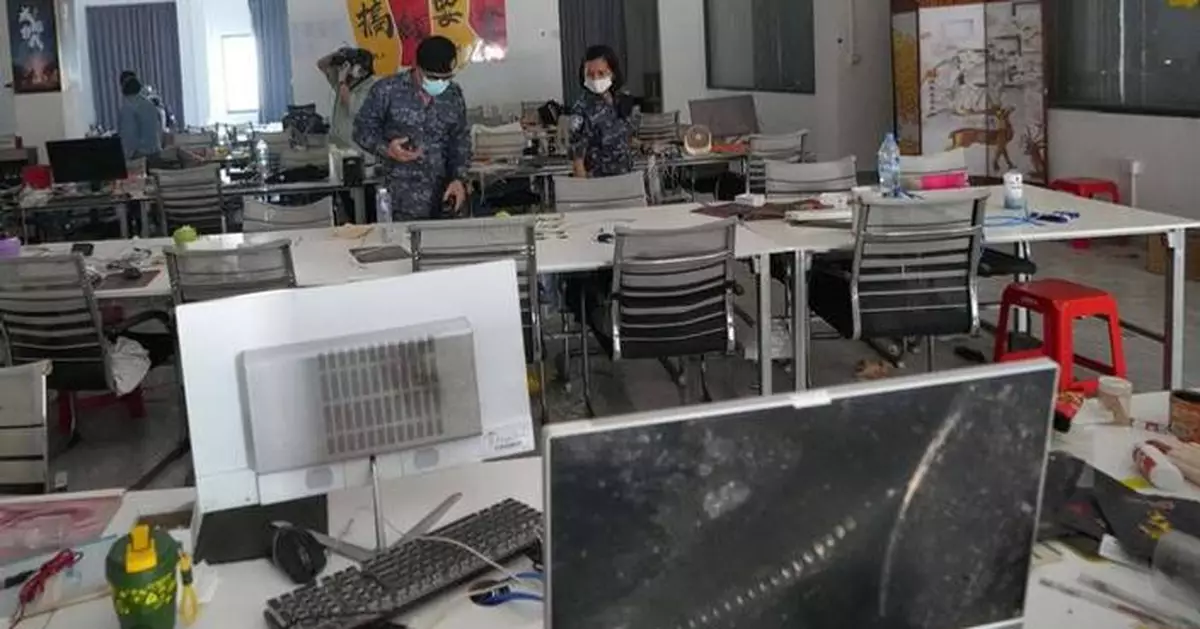
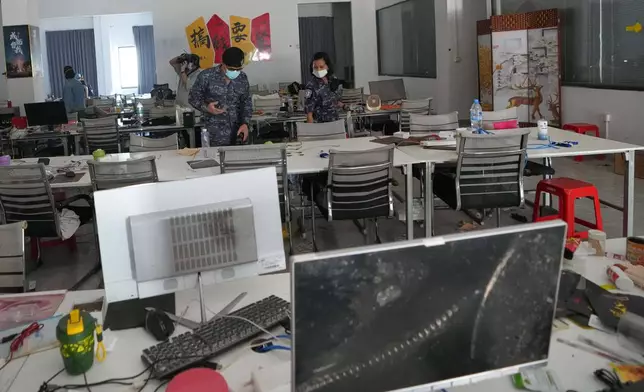
Thai soldiers inspect a work station at the scam compound in O'Smach, Cambodia, Tuesday, April 7, 2026. (AP Photo/Sakchai Lalit)

Thai soldiers inspect a work station at the scam compound in O'Smach, Cambodia, Tuesday, April 7, 2026. (AP Photo/Sakchai Lalit)

It wasn't my first time at a scam center, but its scale dwarfed anything I had seen before.

From my base in Southeast Asia, I have followed this issue for the past few years, watching its scale only grow larger and larger.

Scam compounds have mushroomed across Southeast Asia since the pandemic. Inside these industrial-scale complexes, workers attempt to lure unsuspecting targets from countries all across the world in sophisticated online-based scams. The latest estimates from the U.N. office on Human Rights are that around 300,000 workers are caught up in the industry regionally.

Thailand’s military invited journalists back to the huge scam complex that it had seized in December during its border conflict with Cambodia. The military said that it had taken the area in response to the Cambodian side using it as a base of operations for launching attacks.

The complex was called the O’Smach Resort, owned by Cambodian politician Ly Yong Phat, who faces U.S. sanctions for rights abuses in the very same complex. It's unclear, however, whether the new construction also belongs to Ly. Throughout the massive grounds of the self-contained town, there were signs of construction. Piles of bricks and construction cranes sat waiting for workers to finish the job.

The military also took us to the premises where workers likely scammed Americans. FBI data released Tuesday shows that Americans lost near $21 billion to scams in 2025 alone.

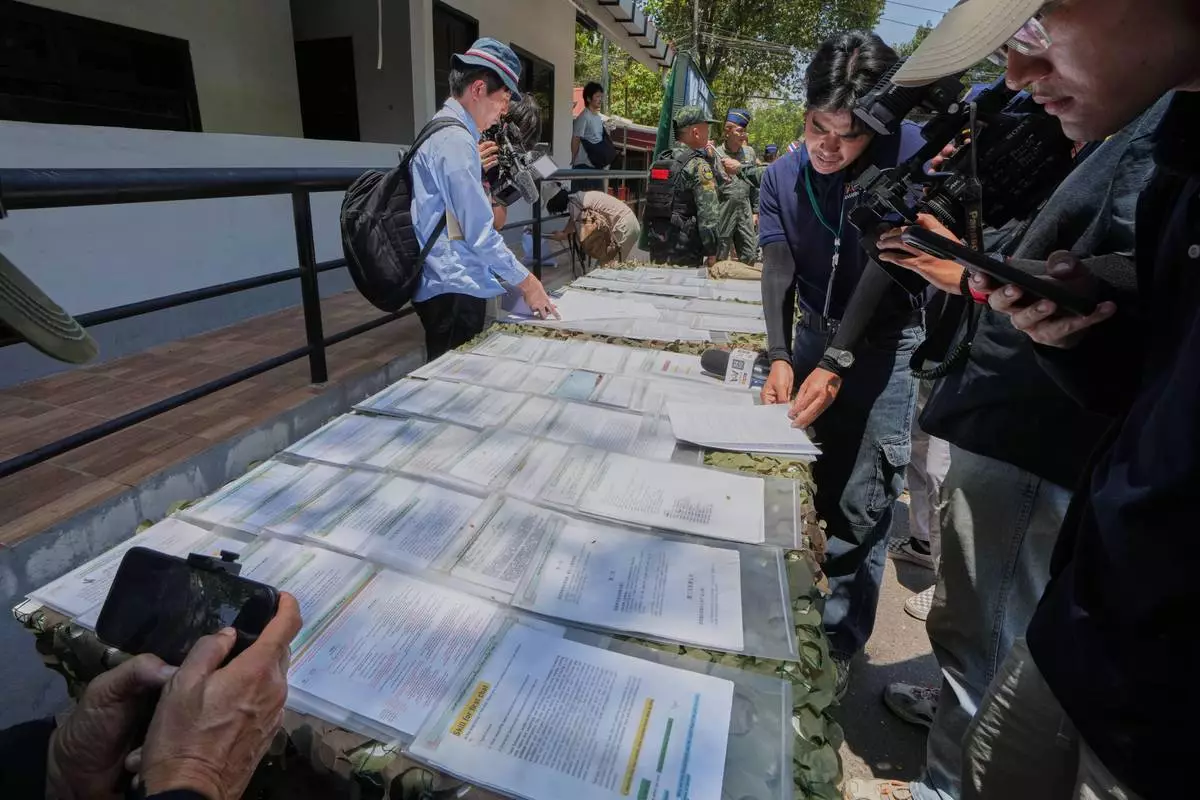
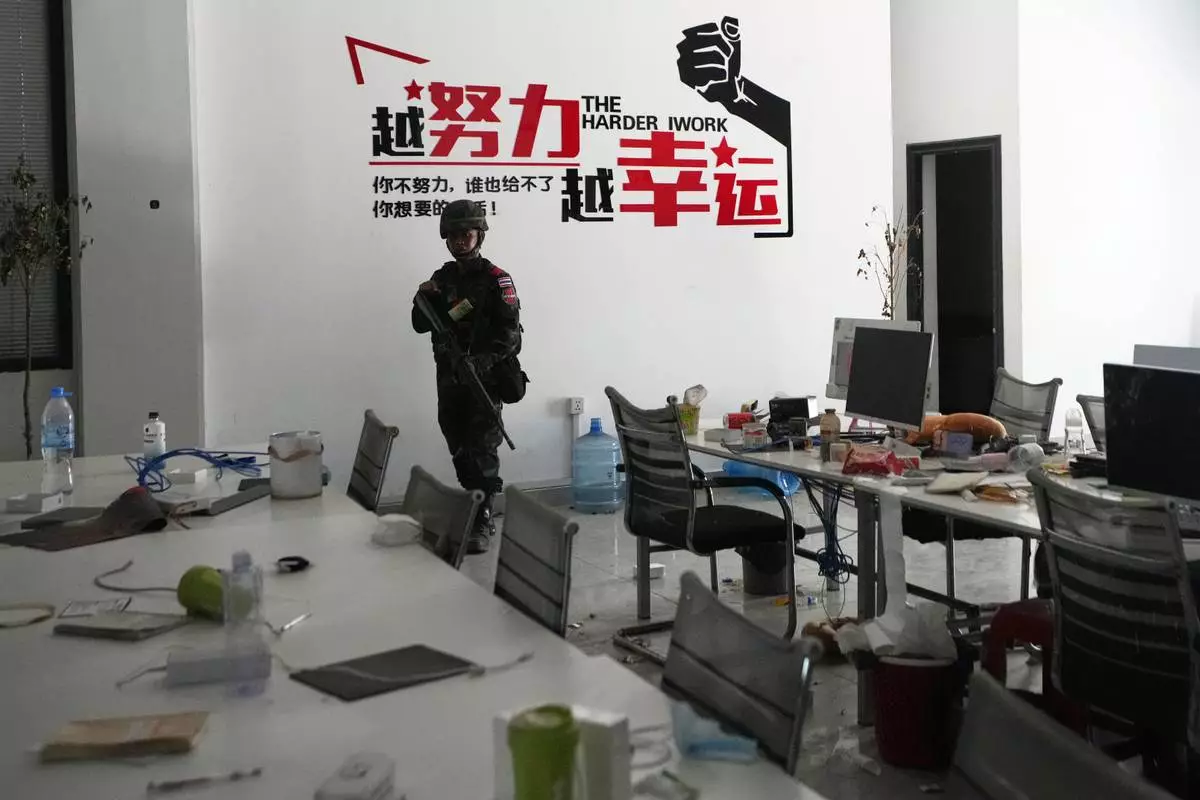
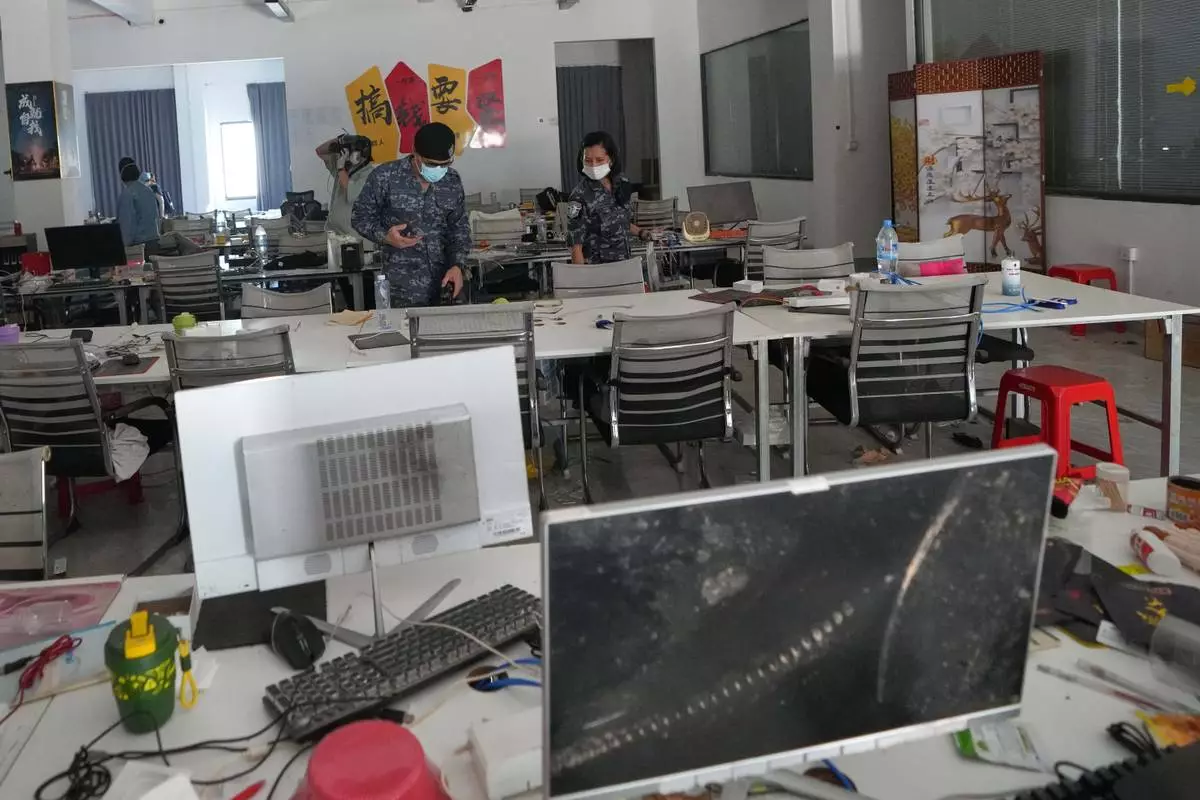
On the desks inside the four-story office building were still snacks from the previous users, as well as scripts and notes in Chinese on each aspect of the scam. American SIM cards were scattered on the surface as well.

There was an elaborate backstory to target the Americans. One of the scripts on the desk was 24 pages of an in-depth character sketch of a woman named Mila who had earned a lot of money on the gold options trading market.

But the script went further. Mila had lost her husband to leukemia when their daughter was just a baby. It constructed memories of her childhood, such as her getting bullied by other girls, and then her parents sending her to South Africa to live with her uncle in order to be in a healthier environment.

There’s 157 buildings, 29 of which were buildings that housed the scam companies and their offices. The rest included massive dorm complexes, and more luxurious accommodations that included apartments and three-story villas. The military officials said that they estimated at least 10,000 people were living there.

There was also a variety of Chinese restaurants, catering to people who wanted spicy Hunan cuisine, or southern Shaxian cuisine, or hot and sour rice noodles, a Sichuanese classic.

While Thailand and Cambodia have vowed to tackle the problem, the scale of the problem is far more global.

“Every country of the world has to join together to solve this problem, (we) cannot do it alone with Cambodia and Thailand,” said Air Chief Marshal Prapas Sornchaidee, who was one of the officials leading the tour.
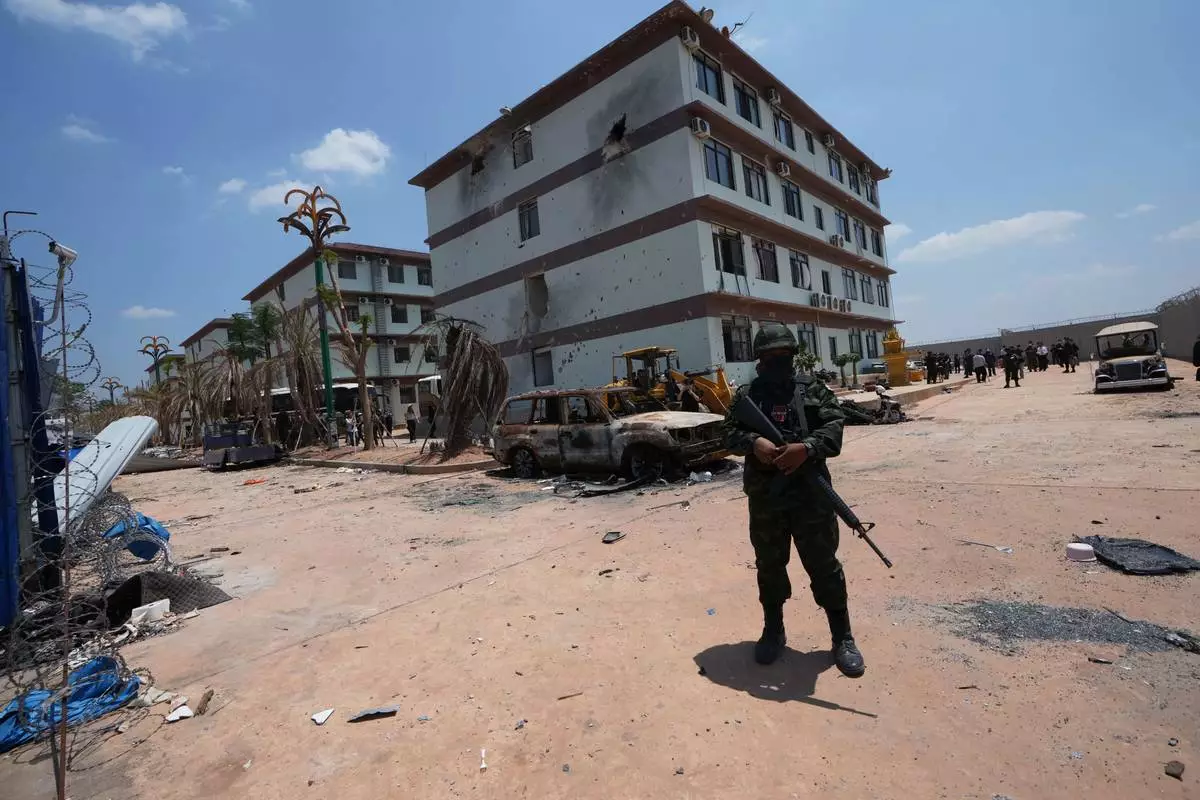
A Thai soldier guards outside the scam compound in O'Smach, Cambodia, Tuesday, April 7, 2026. (AP Photo/Sakchai Lalit)
A Thai soldier guards outside the scam compound in O'Smach, Cambodia, Tuesday, April 7, 2026. (AP Photo/Sakchai Lalit)

Journalist review scam scripts in Surin, Thailand, Tuesday, April 7, 2026. (AP Photo/Sakchai Lalit)
Journalist review scam scripts in Surin, Thailand, Tuesday, April 7, 2026. (AP Photo/Sakchai Lalit)

Thai soldier stand front of word motto at work station in scam compound in O'Smach, Cambodia, Tuesday, April 7, 2026. (AP Photo/Sakchai Lalit)
Thai soldier stand front of word motto at work station in scam compound in O'Smach, Cambodia, Tuesday, April 7, 2026. (AP Photo/Sakchai Lalit)

A Thai soldier guards outside the scam compound in O'Smach, Cambodia, Tuesday, April 7, 2026. (AP Photo/Sakchai Lalit)
A Thai soldier guards outside the scam compound in O'Smach, Cambodia, Tuesday, April 7, 2026. (AP Photo/Sakchai Lalit)

Thai soldiers inspect a work station at the scam compound in O'Smach, Cambodia, Tuesday, April 7, 2026. (AP Photo/Sakchai Lalit)


Thai soldiers inspect a work station at the scam compound in O'Smach, Cambodia, Tuesday, April 7, 2026. (AP Photo/Sakchai Lalit)

HONOLULU (AP) — An attempted murder trial is wrapping up for an anesthesiologist accused of trying to kill his wife during a cliff-side hike near a popular scenic lookout in Hawaii, with closing arguments expected Tuesday.

The trial started last month, nearly a year after Gerhardt and Arielle Konig went on a hike on the Pali Puka trail in Honolulu that ended with her bloodied and screaming that he tried to kill her. Gerhardt Konig has pleaded not guilty.

EDITOR’S NOTE: This story includes discussion of domestic violence. If you or someone you know needs help, please call the national domestic violence hotline: 1-800-799-7233 in the U.S.

The couple were on a weekend trip to Hawaii's capital city for her birthday in March 2025 while their two young sons stayed home on Maui. Near a lookout offering sweeping views, Gerhardt Konig, 47 — upset about his wife's relationship with a coworker — tried to push her off the steep trail, bashed her head with a rock and attempted to stab her with a syringe, prosecutors said.

The trial, with testimony livestreamed by Court TV, has aired the couple's marital problems leading up to the hike, along with their versions of what happened on the trail.

Gerhardt Konig testified that his wife was having an affair, which he confirmed by unlocking her phone while she slept. The relationship, which Arielle Konig characterized as an “emotional affair” involving flirty messages with a coworker, came up during the hike.

Arielle Konig testified that her husband grabbed her and moved her toward the cliff's edge, but she threw herself on the ground in an attempt to hold on. He straddled her and had a syringe in his hand, she said, but she batted it away. She bit his forearm and squeezed his testicles in attempt to get him off her, she said.

Her husband denied pushing her toward the edge and testified that she hit him with a rock on the side of his face. He wrestled the rock away and hit her with it twice in self-defense, he said.

He denied having any syringes on the mountain, or trying to stab her. His defense attorney told jurors no syringe was found at the scene.

Two hikers who heard Arielle Konig's screams helped her get down the trail.

Pali Puka, which means “pierced cliff” in Hawaiian, leads to a hole in a rock ridge through which hikers can look out over the forest to see the ocean. The trail is closed because state officials have deemed it unsafe, but hikers often enter through a small clearing, ignoring a warning sign that reads: “Area Closed! Do not go beyond this sign.”

Gerhardt Konig testified that as he watched his wife crawl away, he believed his marriage and career were over, and he decided to jump to his death. But first, he called his adult son from a previous marriage. The son told authorities that his father said he "tried to kill your stepmom” — a confession Gerhardt Konig denied having made.

He spent hours on the mountain before deciding to come down and surrender to police.

His wife has since filed for divorce.

FILE - Hawaii doctor Gerhardt Konig appears before a judge via video during an arraignment hearing after being indicted on allegation of attempting to kill his wife, April 7, 2025, in Honolulu. (AP Photo/Marco Garcia, File)

FILE - Hawaii doctor Gerhardt Konig appears before a judge via video during an arraignment hearing after being indicted on allegation of attempting to kill his wife, April 7, 2025, in Honolulu. (AP Photo/Marco Garcia, File)

Recommended Articles