The number of black-necked cranes has been significantly rising in China due to the country's efforts in setting up nature reserves and sustainable protection.
As the world's only crane that grows and breeds on plateau, this type of large bird belongs to China's first-class protected species and is listed as near-threatened.
In summer, they breed in marsh meadows at elevations of 3,000 to 5,000 meters on the Qinghai-Tibet Plateau; while in winter, they migrate south to overwinter in places like southwest China's Yunnan and Guizhou provinces.
Usually living in pairs or family groups, black-necked cranes mainly eat aquatic plants, insects, fish, and agricultural crops. They are extremely faithful to their partners and often remain together for life.
Each clutch contains two eggs, incubated alternately by both the male and female. When baby black-necked crane is precocial, it will follow its parents to learn foraging and migration.
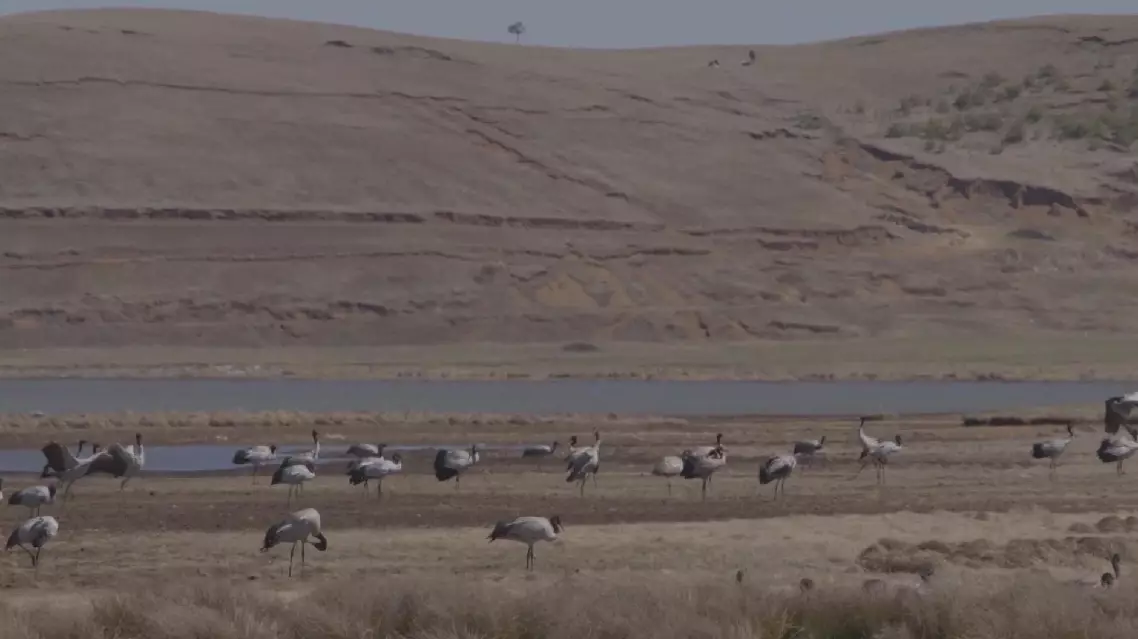
Black-necked cranes rebound as China boosts biodiversity efforts
China's Shenzhou-23 crewed spaceship blasted off from the Jiuquan Satellite Launch Center in the country's northwest on Sunday, sending three astronauts to its orbiting space station.
The spaceship, atop a Long March-2F carrier rocket, lifted off from the launch site at 23:08 Beijing Time (15:08 GMT).
The crew members consist of mission commander Zhu Yangzhu, and fellow astronauts Zhang Zhiyuan and Lai Ka-ying, who is also the first astronaut from China's Hong Kong Special Administrative Region.
In another notable first, one of the crew members is set to undertake a year-long stay aboard the space station, double the usual duration of previous Shenzhou missions.
After entering orbit, the Shenzhou-23 spaceship will perform a fast automated rendezvous and docking with the radial port of the space station core module Tianhe, forming a combination of three modules and three spacecraft.
Shenzhou-23 marks the 40th flight of China's manned spaceflight program and the seventh manned flight mission since the Tiangong space station entered its application and development phase in late 2022.
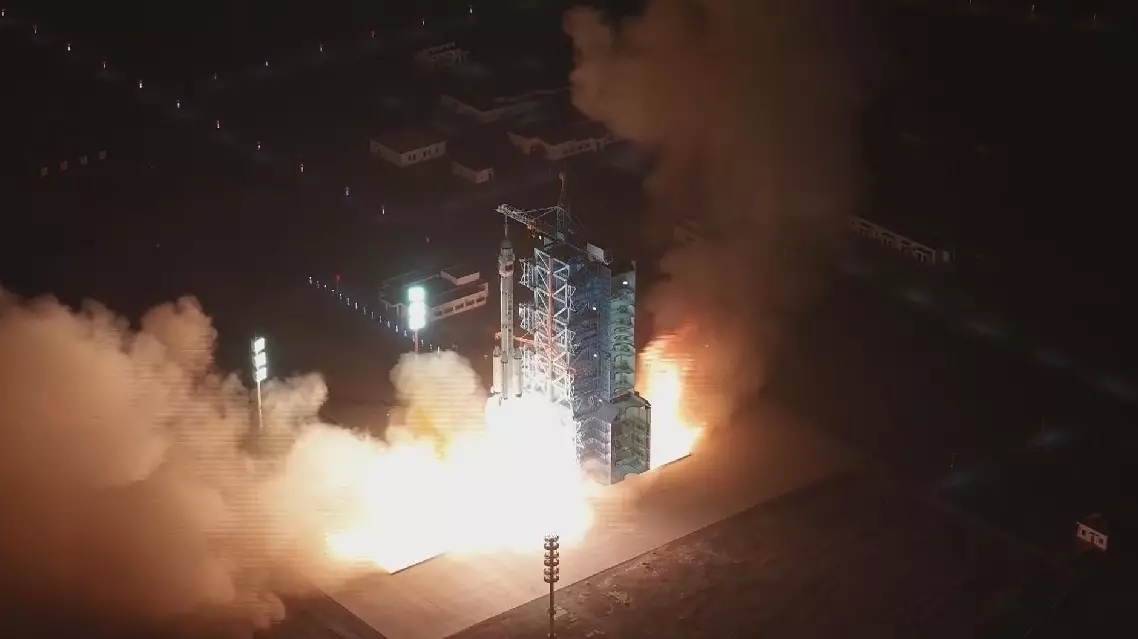
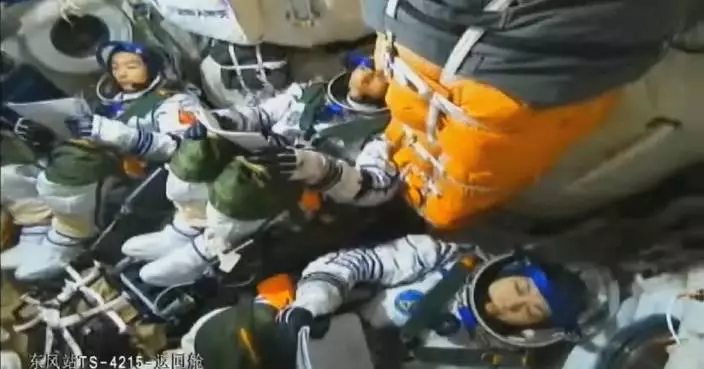
China launches Shenzhou-23 manned spaceship