Skip to Content Facebook Feature Image

The Masters has players from 23 countries. The world ranking is one reason for the global growth

Sport

The Masters has players from 23 countries. The world ranking is one reason for the global growth
Sport

Sport

The Masters has players from 23 countries. The world ranking is one reason for the global growth

2026-04-08 01:27 Last Updated At:01:30

AUGUSTA, Ga. (AP) — Bernhard Langer was reminded of his place in history this week, unrelated to the 68-year-old German looking stately as ever in his Masters green jacket as a two-time champion.

It was 40 years ago — April 6, 1986, to be exact — the “Sony Ranking” was introduced.

What began as a list in 1968 for IMG founder Mark McCormack's “World of Professional Golf” annual got the attention of the R&A as it was reviewing criteria for the British Open. It was officially introduced at the 1986 Masters.

The headline that week proclaimed, “Europeans Top Golf Rankings.”

Langer was No. 1 in world, followed by Seve Ballesteros and Sandy Lyle. The leading American was Tom Watson at No. 4. Jack Nicklaus, considered to be past his prime at age 46, checked in at No. 33. By the end of the week, Nicklaus famously won his sixth Masters and 18th professional major.

“It was time to have something like that because international golfers were excluded from tournaments like the Masters, the U.S. Open and the PGA Championship,” Langer said under the big oak tree next to the Augusta National clubhouse.

"Only two or three of us got in," he said. “In Europe, I had to win the money list to get in the Masters. And we had more than one good golfer.”

It wasn't perfect then, and probably isn't now. It's nigh impossible to measure the runner-up of this week's Token Homemate Cup on the Japan Golf Tour against whoever finishes 15th at Augusta.

But it was a start, and its influence is greater now than anyone might have imagined.

Every major championship uses the Official World Golf Ranking an an integral part of its criteria. The Masters and British Open take the top 50, the U.S. Open takes the top 60. The PGA Championship uses invitations in a bid to have everyone from the top 100.

The Sony Rankings — yes, it had a corporate sponsor — became the Official World Golf Ranking when the major tours and the four majors formed a board in 1997. Now the OWGR has 25 tours around the world, the most recent addition being Saudi-funded LIV Golf.

Whether LIV Golf should get more points awarded to more than the top 10 players is a debate as endless as deciding whether the PGA Tour gets too much weight.

But there is no doubt that OWGR has been critical to opening the borders beyond American golf.

The U.S. Open had only three foreign-born champions from 1926 through 1993 — Gary Player of South Africa, Tony Jacklin of England and David Graham of Australia. Starting with Ernie Els of South Africa in 1994, 13 of the last 32 champions were international players.

Padraig Harrington in 2008 became the first European in 78 years to win the PGA Championship when he won at Oakland Hills in 2008.

It wasn't a matter of getting better. It was a matter of getting an opportunity. That much should have been made clear during the 1980s when Europe began its dominance in the Ryder Cup.

More than his own three-week reign atop the world ranking, Langer said it created more paths. Ballesteros, Langer and Lyle combined for six majors in the seven years before the ranking began in somewhat an official capacity.

“That helped open it up, especially in the majors, to some international golfers who Americans never heard of or didn't know much about,” he said. “It's different now with the media. But it was an important step in the right direction. Was it perfect? Maybe not. But it was a good way to get the best field.”

That was mainly for the majors. More hurdles came from the PGA Tour, which always had the best collection of players. The requirement under former Commissioner Deane Beman was a minimum of 15 events for membership.

Europe required 11 events. Top players with a global eye often played the occasional event in Japan and Australia, and the travel and time took a toll.

“We didn't go on boats,” Langer said with a smile, “but we didn't go on private jets.”

Langer recalled that 11 top Europeans asked Beman to reduce the PGA Tour requirement to 12 events and “he wouldn't budge.”

So much has changed.

The man behind the math for years was London-based Tony Greer, and his original plan was to prioritize tournaments into four sections. The four majors received the most weight, followed by most PGA Tour and top European Tour events, on down to lesser events around the world.

There have been changes over the years, most notably going from a three-year rolling period to a two-year system in 1995, and recently expanding the strength-of-field to include everyone playing, not just the top 200 players.

The 40th year of world ranking has Scottie Scheffler on top — he has been No. 1 a total of 185 weeks, trailing only Tiger Woods (683 weeks) and Greg Norman (331). There are five Americans and five Europeans in the top 10. All are on the PGA Tour.

Perhaps the best measure is the Masters, which has a 91-man field from 23 countries. The week the world ranking began, the 88-man field came from 11 countries.
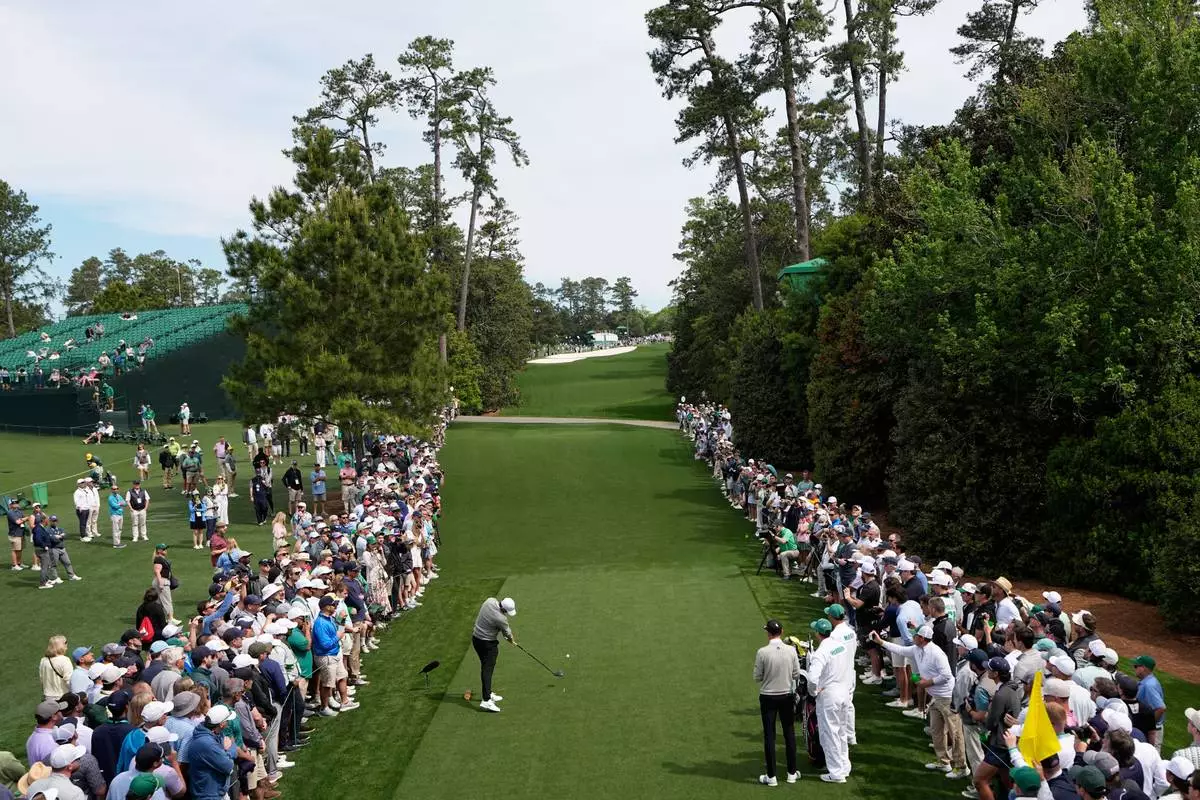
Rory McIlroy, of Northern Ireland, hits his tee shot on the 18th hole during a practice round ahead of the Masters golf tournament at the Augusta National Golf Club, Tuesday, April 7, 2026, in Augusta, Ga. (AP Photo/David J. Phillip)
Rory McIlroy, of Northern Ireland, hits his tee shot on the 18th hole during a practice round ahead of the Masters golf tournament at the Augusta National Golf Club, Tuesday, April 7, 2026, in Augusta, Ga. (AP Photo/David J. Phillip)
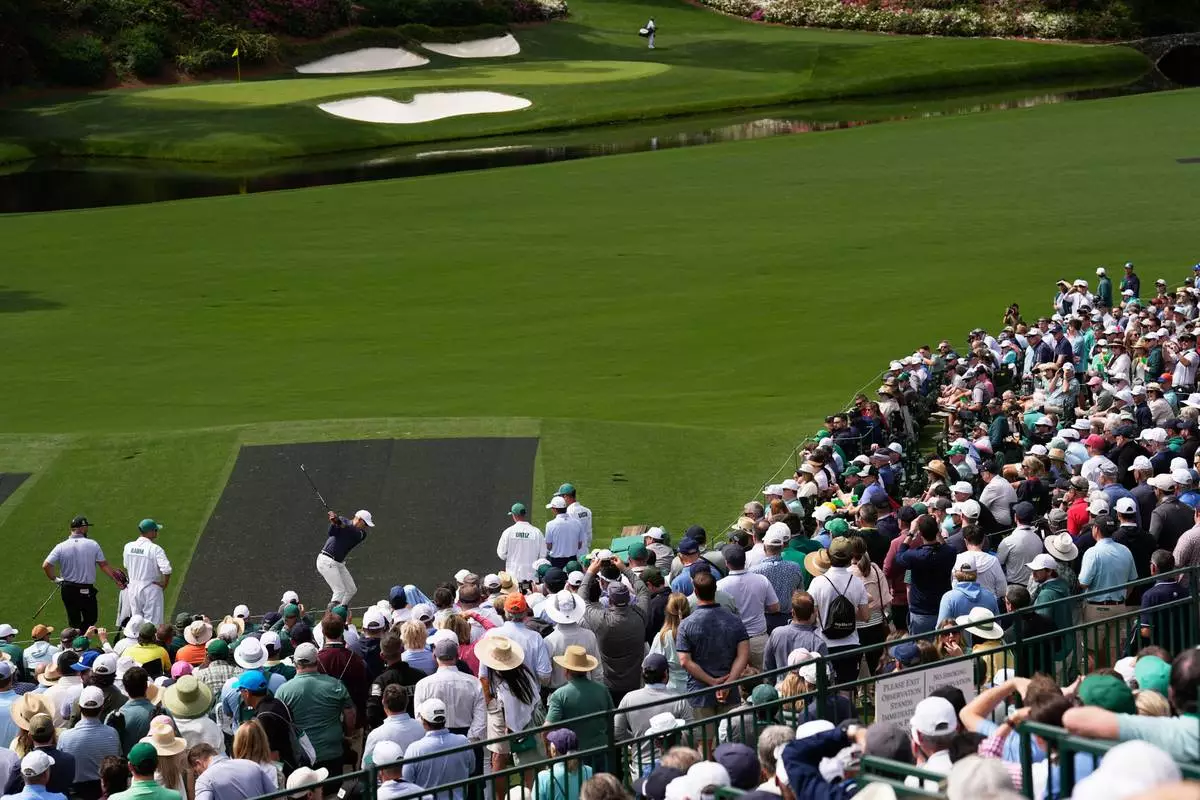
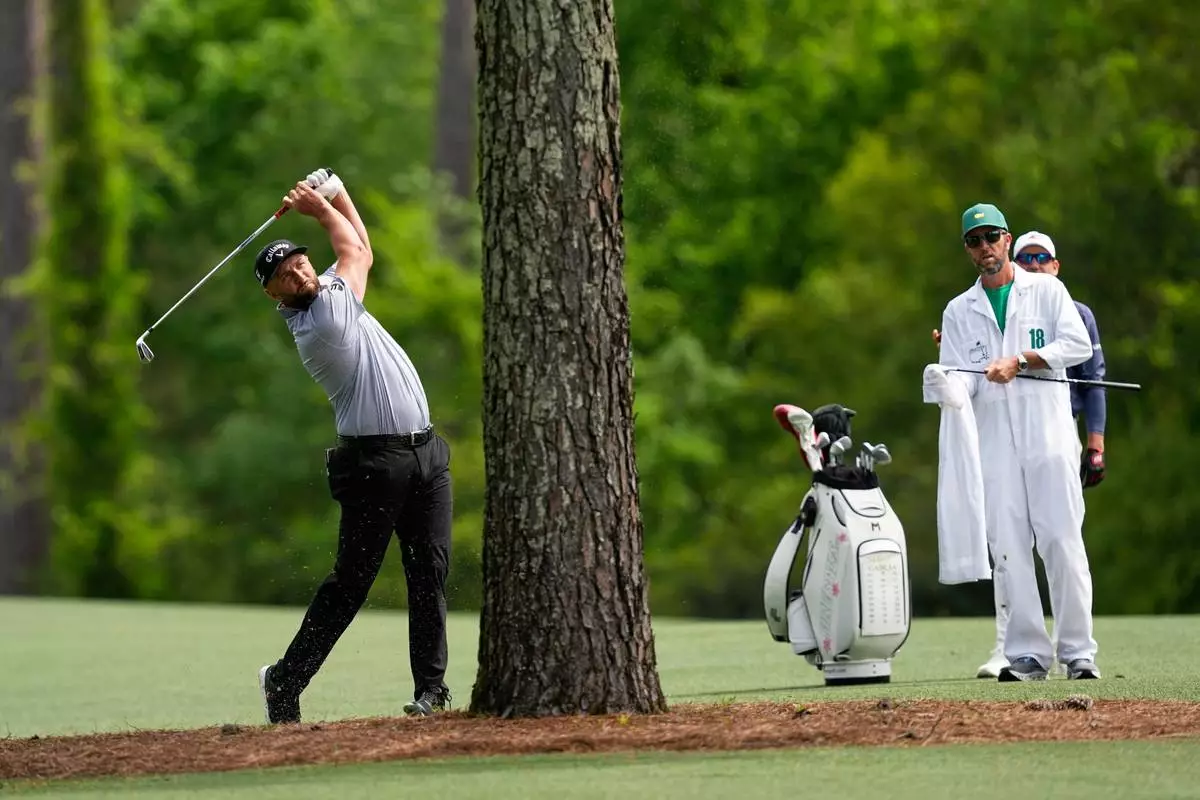
Jon Rahm, of Spain, hits from the fairway on the 11th hole during a practice round ahead of the Masters golf tournament at the Augusta National Golf Club, Tuesday, April 7, 2026, in Augusta, Ga. (AP Photo/David J. Phillip)
Jon Rahm, of Spain, hits from the fairway on the 11th hole during a practice round ahead of the Masters golf tournament at the Augusta National Golf Club, Tuesday, April 7, 2026, in Augusta, Ga. (AP Photo/David J. Phillip)
Sergio Garcia, of Spain, hits his tee shot on the 12th hole during a practice round ahead of the Masters golf tournament at the Augusta National Golf Club, Tuesday, April 7, 2026, in Augusta, Ga. (AP Photo/David J. Phillip)

Sergio Garcia, of Spain, hits his tee shot on the 12th hole during a practice round ahead of the Masters golf tournament at the Augusta National Golf Club, Tuesday, April 7, 2026, in Augusta, Ga. (AP Photo/David J. Phillip)

WASHINGTON (AP) — President Donald Trump has repeatedly pushed back deadlines for Iran to cut a deal or open the Strait of Hormuz, but his latest deadline for Tuesday came with his most perilous threat yet: “a whole civilization will die tonight, never to be brought back again.”

Trump's previous deadline was weeks ago, but it was postponed several times as the Republican president oscillated between heated threats, announced delays and proclamations that the negotiations were going well, sometimes in the same statement.

That was true in Trump's Truth Social post before his Tuesday 8 p.m. ET deadline. After threatening a “whole civilization," Trump said Iran's new leaders were more reasonable and “maybe something revolutionarily wonderful can happen, WHO KNOWS?”

Officials involved in diplomatic efforts said talks continued, but it was unclear if a deal would be reached by the deadline, which Trump has suggested was final. Trump raised the ante on his threats from Monday.

“They’ll have no bridges," he wrote. “They’ll have no power plants. They’ll have no anything.”

U.N. Secretary-General António Guterres warned the U.S. that attacks on civilian infrastructure are banned under international law, according to his office. Trump, speaking with reporters, said he's “not at all” concerned about committing war crimes with such attacks.

So how did Trump's deadline delays and threats escalate over the last weeks?

On March 21, Trump posted on Truth Social that the U.S. would “hit and obliterate” Iranian power plants if it did not fully reopen the strait within 48 hours.

Iran had until the evening of March 23.

Then 12 hours before the deadline, Trump took to Truth Social to share what seemed good news: that both countries had productive conversations toward concluding the conflict.

He wrote that he had instructed the Pentagon to postpone any strikes on Iranian power plants and energy infrastructure for five days, to give more time for talks.

That pushed the deadline out to the end of that week.

Before that deadline, on March 26, Trump doubled down on his threats on Truth Social: “They better get serious soon, before it is too late, because once that happens, there is NO TURNING BACK, and it won’t be pretty!”

But later that day, he extended the deadline for 10 more days, to April 6 at 8 p.m. Eastern, and said on Truth Social that negotiations were “going very well.”

On March 30, Trump put out a mixed statement: celebrating progress in the talks with Iran while also expanding his threatened bombing if a deal wasn't “shortly reached,” adding that “it probably will be."

“We will conclude our lovely ‘stay’ in Iran by blowing up and completely obliterating all of their Electric Generating Plants, Oil Wells and Kharg Island (and possibly all desalinization plants!),” he wrote.

It's unclear how soon “shortly reached” meant for Trump, but a deal was not made as the deadline loomed.

“Remember when I gave Iran ten days to MAKE A DEAL or OPEN UP THE HORMUZ STRAIT," Trump said in a Truth Social post on Saturday, "Time is running out - 48 hours before all Hell will reign down on them.” He meant rain down.

As the deadline approached, his posts had doubled down on his threats until Sunday, when Trump pushed it again in an expletive-filled post.

“Tuesday will be Power Plant Day, and Bridge Day, all wrapped up in one, in Iran. There will be nothing like it!!! Open the F——-in’ Strait, you crazy bastards, or you’ll be living in Hell,” Trump said on Truth Social, followed by another post that specified 8 p.m. as the deadline.

Trump then suggested on Monday that Tuesday's deadline would be final, saying he'd already given Iran enough extensions.

“The entire country can be taken out in one night, and that night might be tomorrow night,” Trump said. “We have a plan, because of the power of our military, where every bridge in Iran will be decimated by 12 o’clock tomorrow night.”

By Tuesday morning, Trump had sent his statement saying “a whole civilization will die tonight,” to which he added that “I don’t want that to happen, but it probably will.”

Mojtaba Ferdousi Pour, head of Iran’s diplomatic mission in Cairo, said Iran no longer trusts the Trump administration after the U.S. bombed the Islamic Republic twice during previous rounds of talks.

“We only accept an end of the war with guarantees that we won’t be attacked again,” he told The Associated Press.

The talks were continuing as the 8 p.m. Tuesday deadline — 3:30 a.m. Wednesday in Iran — ticked closer.

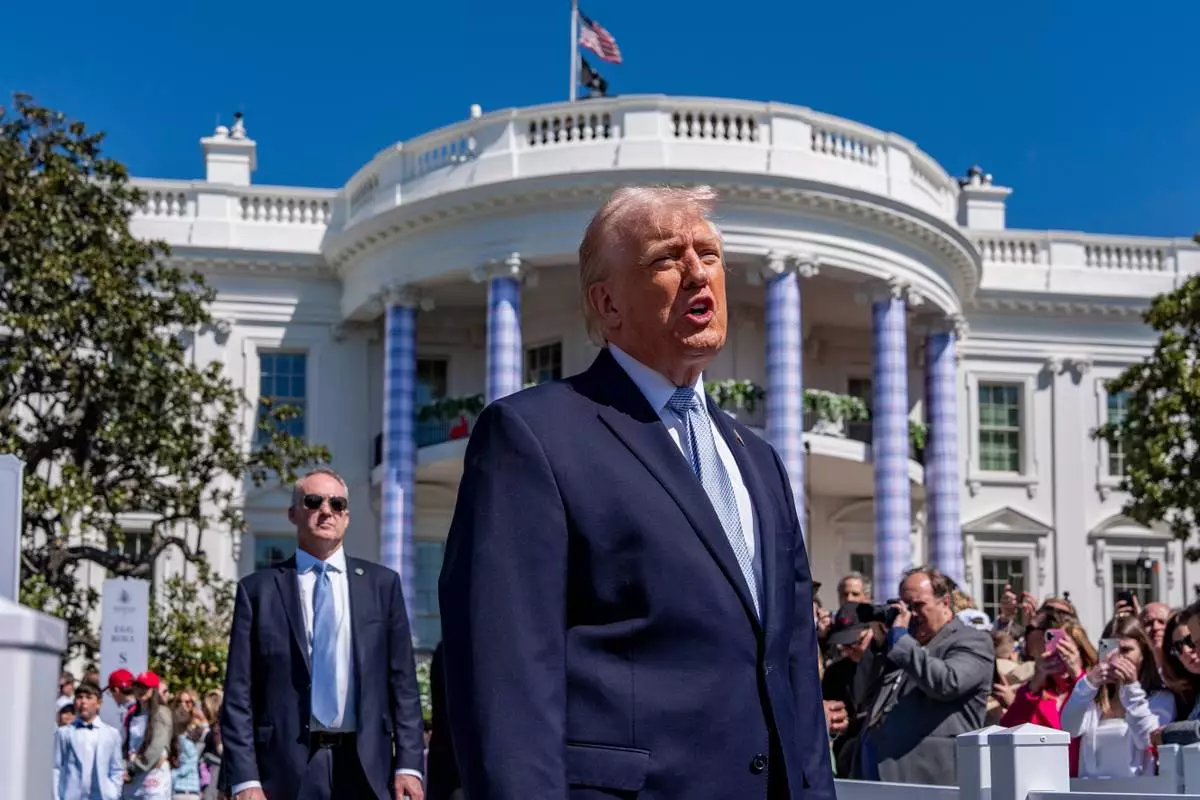
President Donald Trump speaks to the crowd during the White House Easter Egg Roll on the South Lawn of the White House, Monday, April 6, 2026, in Washington. (AP Photo/Alex Brandon)

President Donald Trump speaks to the crowd during the White House Easter Egg Roll on the South Lawn of the White House, Monday, April 6, 2026, in Washington. (AP Photo/Alex Brandon)

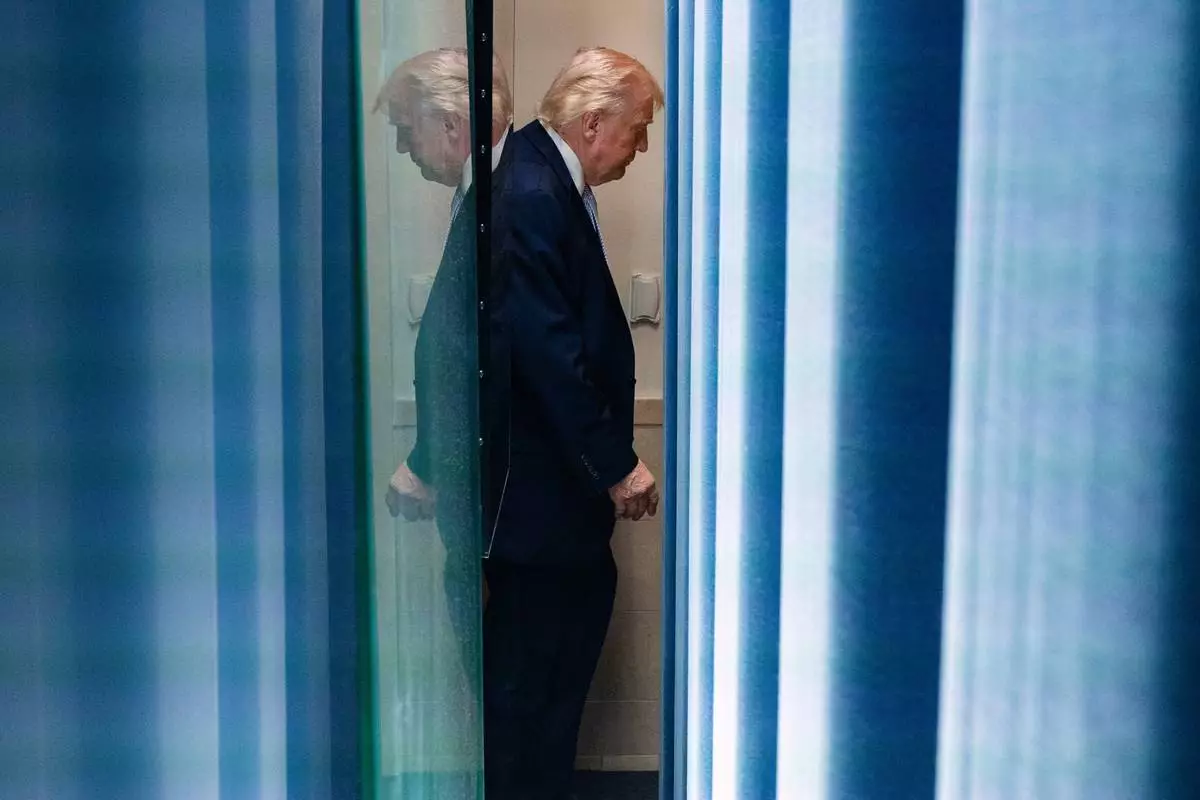
President Donald Trump departs after speaking with reporters in the James Brady Press Briefing Room at the White House, Monday, April 6, 2026, in Washington. (AP Photo/Alex Brandon)

President Donald Trump departs after speaking with reporters in the James Brady Press Briefing Room at the White House, Monday, April 6, 2026, in Washington. (AP Photo/Alex Brandon)

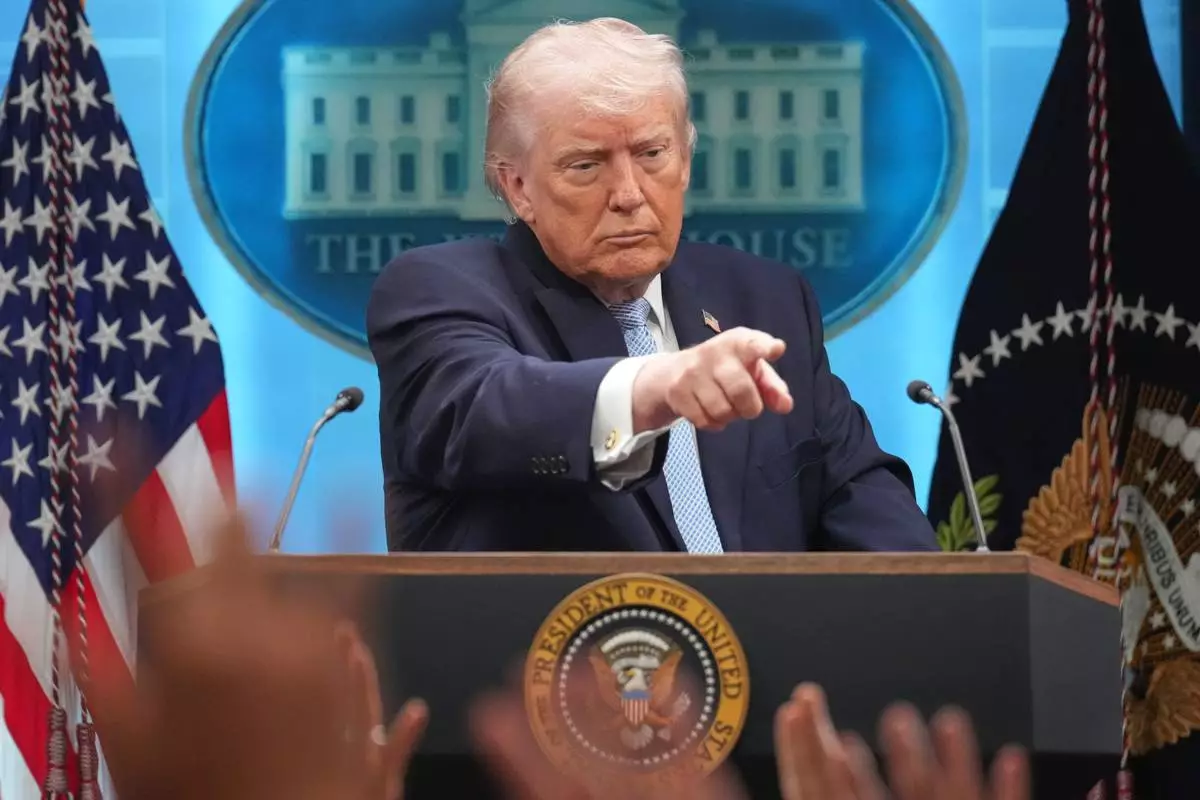
President Donald Trump speaks with reporters during a news conference in the James Brady Press Briefing Room at the White House, Monday, April 6, 2026, in Washington. (AP Photo/Mark Schiefelbein)

President Donald Trump speaks with reporters during a news conference in the James Brady Press Briefing Room at the White House, Monday, April 6, 2026, in Washington. (AP Photo/Mark Schiefelbein)

Recommended Articles