Delta Air Lines announced Tuesday it is raising checked baggage fees, part of a broader wave of U.S. carriers responding to higher jet fuel prices tied to the war in the Middle East.
Beginning Wednesday, most passengers on domestic and short-haul international routes will pay $10 more for their first and second checked bags, and $50 more to check a third. That brings the fees to $45 for the first bag, $55 for the second and $200 for the third, according to Delta.
“These updates are part of Delta’s ongoing review of pricing across its business and reflect the impact of evolving global conditions and industry dynamics,” the carrier said in a statement.
The change marks Delta's first increase in checked baggage fees on domestic routes in two years. Fees for long-haul international flights are not affected.
CEO Ed Bastian told investors last month that the jump in jet fuel prices had already added about $400 million to Delta's operating expenses since the conflict began on Feb. 28. Executives at United Airlines and American Airlines reported similar increases.
The average price for a gallon of jet fuel in Chicago, Houston, Los Angeles and New York was $4.69 on Monday, up from $2.50 just before the war, according to Argus Media. The energy market intelligence company’s U.S. Jet Fuel Index tracks average prices across those major hubs.
Delta said complimentary bags will still be available to customers flying in premium cabins, active-duty military personnel, eligible co-branded credit card holders and members of certain loyalty tiers.
The carrier's move follows similar announcements from United and JetBlue, both of which raised baggage fees last week while maintaining complimentary first checked bags for some customers.
Airlines around the world have been grappling with volatile oil markets as fighting near the Strait of Hormuz — where roughly a fifth of the world's oil passes — disrupts global supplies. Because jet fuel is refined from crude oil, swings in energy prices quickly feed into a carrier’s costs. Fuel typically ranks as the second-largest expense after labor.
In addition to raising ticket prices, analysts say U.S. carriers are more likely to lean on ancillary fees to offset the higher expenses, while many non-U.S. carriers are responding by adding or increasing fuel surcharges.
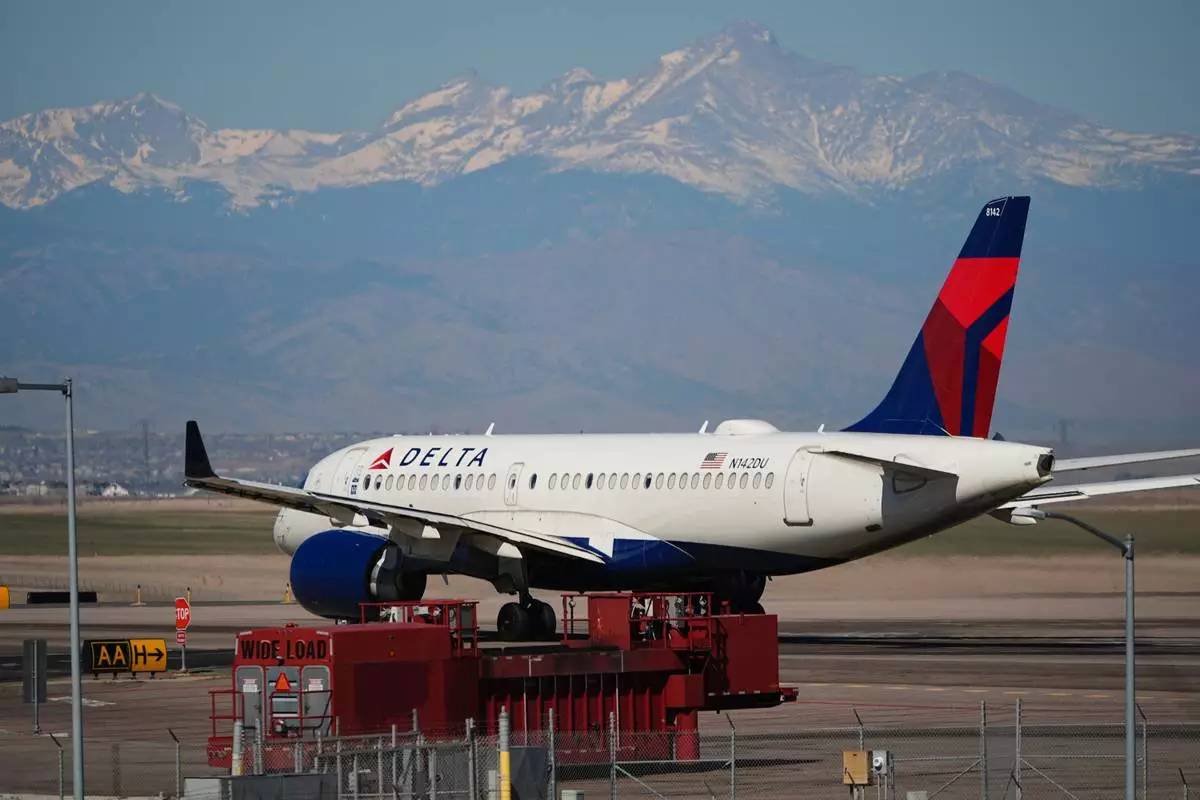
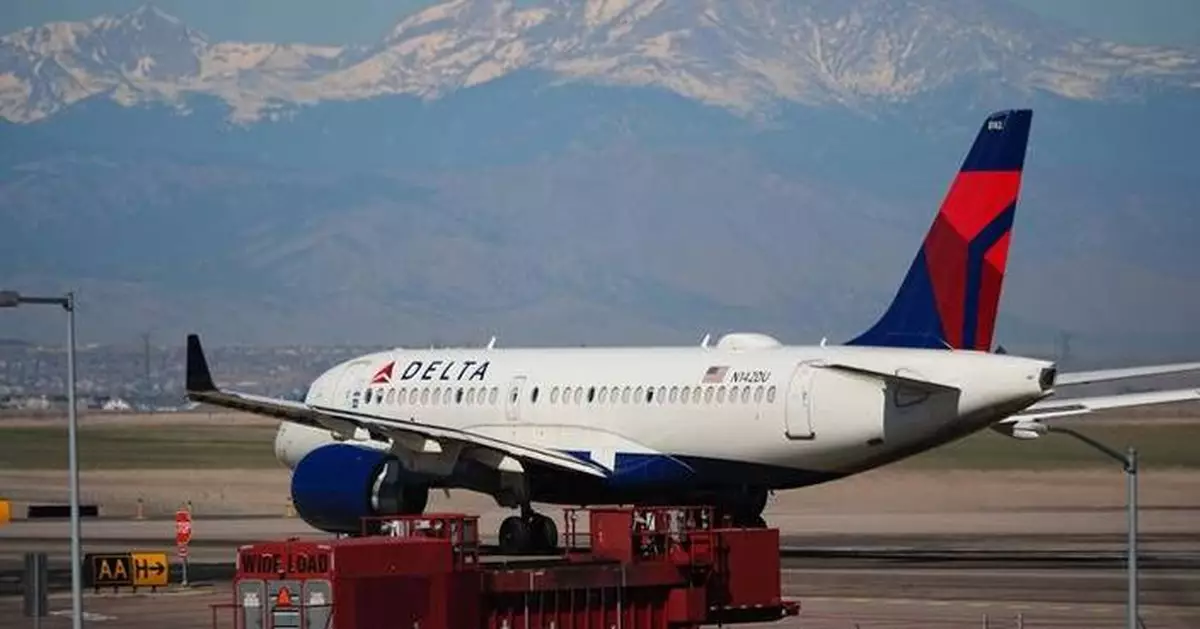
FILE - A Delta Airlines jetliner taxis to a runway for take off from Denver International Airport, March 20, 2026, in Denver. (AP Photo/David Zalubowski, File)
TEHRAN, Iran (AP) — U.S. President Donald Trump threatened Tuesday that a “whole civilization will die tonight” if Iran fails to meet his latest deadline to strike a deal that includes reopening the Strait of Hormuz, while the Islamic Republic urged young people to form human chains around power plants and other potential targets.
Tehran’s representative at the U.N said the threats “constitute incitement to war crimes and potentially genocide.” Amir-Saeid Iravani said Iran would "take immediate and proportionate reciprocal measures” if Trump launches devastating strikes.
Even before the deadline, airstrikes hit two bridges and a train station, and the U.S. hit military infrastructure on Kharg Island. It was the second time American forces struck the island, a key hub for Iranian oil production.
Since the war began, Trump has repeatedly imposed deadlines linked to threats, only to extend them. But the president insisted this one is final and will expire at 8 p.m. in Washington without a major diplomatic breakthrough.
He has also offered contradictory statements about what might actually happen.
Trump has made reopening the strait — through which a fifth of the world’s oil transits in peacetime — part of avoiding wider attacks and suggested that the waterway is not as vital to U.S. oil interests as it is to other countries. He has also said he would be willing to deploy ground troops to seize Iranian oil, while maintaining that major combat operations in that country could soon conclude.
That means the next moves by the U.S. are largely a mystery, even as rhetoric on both sides has reached a fever pitch.
Meanwhile, Iran’s president said 14 million people, including himself, have volunteered to fight. That's despite Trump threatening that U.S. forces could wipe out all bridges in Iran in a matter of hours and reduce all power plants to smoking rubble in roughly the same time frame. He also suggested the entire country could be wiped off the map.
It was not clear if the latest airstrikes were linked to Trump’s threats to widen the civilian target list. At least two of the targets were connected to Iran’s rail network, and Israeli Prime Minister Benjamin Netanyahu said Israeli warplanes struck bridges and railways in Iran.
Tehran fired on Israel and Saudi Arabia, prompting the temporary closure of a major bridge.
While Iran cannot match the sophistication of U.S. and Israeli weaponry or their dominance in the air, its chokehold on the strait is roiling the world economy and raising the pressure on Trump both at home and abroad to find a way out of the standoff.
Officials involved in diplomatic efforts said talks were ongoing, but Iran has rejected the latest American proposal.
“A whole civilization will die tonight, never to be brought back again,” if a deal isn’t reached, Trump said in an online post Tuesday morning. But he also seemed to keep open the possibility of an off-ramp, saying that “maybe something revolutionarily wonderful can happen.”
Earlier, Iranian official Alireza Rahimi issued a video message calling on “all young people, athletes, artists, students and university students and their professors” to form human chains around power plants.
Iranians have formed human chains in the past around nuclear sites at times of heightened tensions with the West. State media posted videos online that showed hundreds of flag-waving people massed at two bridges and at a power plant hundreds of kilometers (miles) from Tehran, though it was not clear how widespread the practice was.
President Masoud Pezeshkian posted on X that 14 million Iranians had answered campaigns urging people to volunteer to fight — and said he would join them — while a Revolutionary Guard general urged parents to send their children to man checkpoints.
The Guard warned that Iran would “deprive the U.S. and its allies of the region’s oil and gas for years” and expand its attacks across the Gulf region if Trump carries out his threat.
In Tehran, the mood was bleak. A young teacher said that many opponents of Iran's Islamic system had hoped Trump's attacks would quickly topple it.
As the war drags on, she fears U.S. and Israeli strikes will spread chaos.
“If we don’t have the internet, and if we don’t have electricity, water, and gas, we’re really going back to the Stone Age, as Trump said,” she told The Associated Press, speaking on the condition of anonymity for her safety.
French Foreign Minister Jean-Noël Barrot joined a growing chorus of international voices saying that attacks targeting civilian and energy infrastructure could constitute a war crime.
Such cases are notoriously difficult to prosecute, though, and Trump says he’s “not at all” concerned about committing war crimes.
Volker Türk, the U.N. high commissioner for human rights, said he deplored the rhetoric being used over the last two weeks “by all parties, including the latest threats to annihilate a whole civilization and to target civilian infrastructure.”
Intense airstrikes pounded Tehran, including in residential neighborhoods. In the past, such strikes have targeted Iranian government and security officials.
The Israeli military said it attacked an Iranian petrochemical site in Shiraz, the second day in a row it hit such a facility. The military later said it also struck bridges in Tehran, Karaj, Tabriz, Kashan and Qom that were being used by Iranian forces to transport weapons and military equipment.
A U.S. official, who spoke on condition of anonymity to discuss sensitive military operations, described the strikes on Kharg Island as hitting targets previously struck and not directed at oil infrastructure.
Earlier in the war, American forces hit air defenses, a radar site, an airport and a hovercraft base there, according to satellite analysis by the Institute for the Study of War and the American Enterprise Institute’s Critical Threats Project.
Saudi Arabia said it intercepted seven ballistic missiles and four drones launched by Iran.
Saudi Arabia temporarily closed the King Fahd Causeway, the only road connection between Bahrain, home to the U.S. Navy’s 5th Fleet, and the Arabian Peninsula. Iran also fired on Israel.
More than 1,900 people have been killed in Iran since the war began, but the government has not updated the toll for days.
In Lebanon, where Israel is fighting Iran-backed Hezbollah militants, more than 1,500 people have been killed. and more than 1 million people have been displaced. Eleven Israeli soldiers have died there.
In Gulf Arab states and the occupied West Bank, more than two dozen people have died, while 23 have been reported dead in Israel, and 13 U.S. service members have been killed.
Iran effectively blocked shipping through the strait after Israel and the U.S. attacked in February. That, and Iran’s attacks on the energy infrastructure of its Gulf Arab neighbors, have sent oil prices skyrocketing, raising the price of gasoline, food and other basics far beyond the Middle East.
Tehran has rejected a 45-day ceasefire proposal, saying it wants a permanent end to the war. But as Trump's deadline neared, an official said indirect communications between the United States and Iran remained underway. Mediators from Pakistan, Egypt and Turkey “are racing against time” to reach a compromise before the deadline, the official said.
He said Iran has linked the reopening of the Strait of Hormuz to sanctions relief, and the U.S. was open to easing some sanctions, especially on Iran's oil sector, in part to stabilize the global oil market.
The official spoke on condition of anonymity to discuss ongoing diplomacy.
Gambrell reported from Dubai, United Arab Emirates. Corder reported from The Hague, Netherlands, and Magdy reported from Cairo. Associated Press writers David Rising in Bangkok; John Leicester in Paris; Rod McGuirk in Melbourne, Australia; Natalie Melzer in Jerusalem; and Konstantin Toropin, Seung Min Kim, Michelle Price and Will Weissert in Washington contributed to this report.
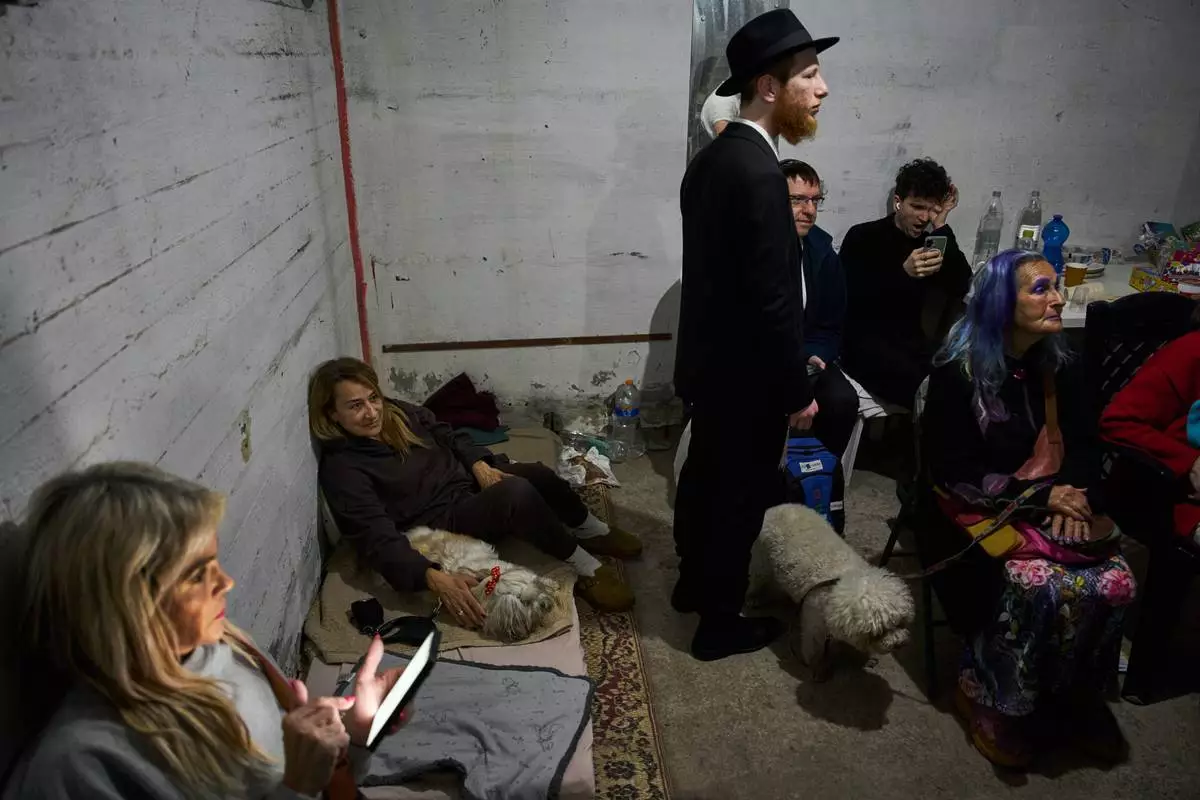
People take cover in a bomb shelter as air raid sirens warn of incoming Iranian missile strikes in Ramat Gan, Israel, Tuesday, April 7, 2026. (AP Photo/Oded Balilty)
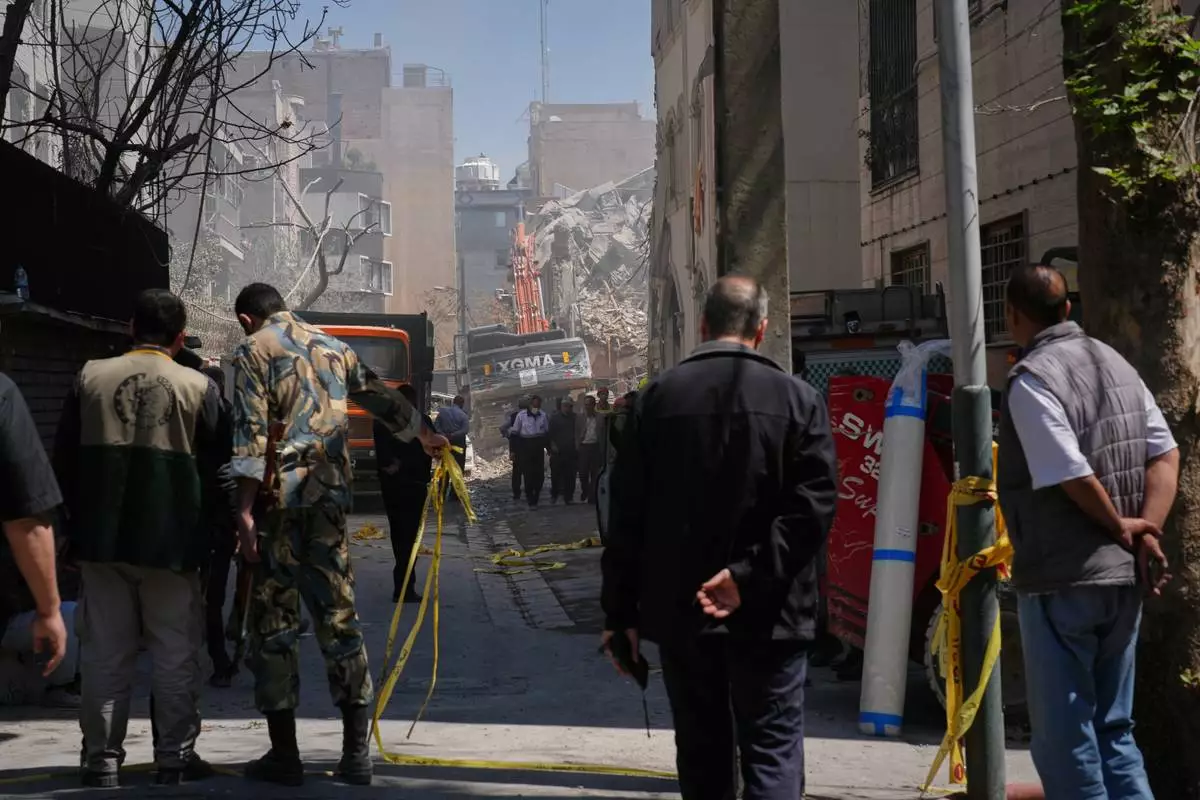
Bystanders watch from a distance as rescue teams and first responders work at the site of a strike that, according to a security official at the scene, destroyed half of the Khorasaniha Synagogue and nearby residential buildings in Tehran, Iran, Tuesday, April 7, 2026. (AP Photo/Francisco Seco)
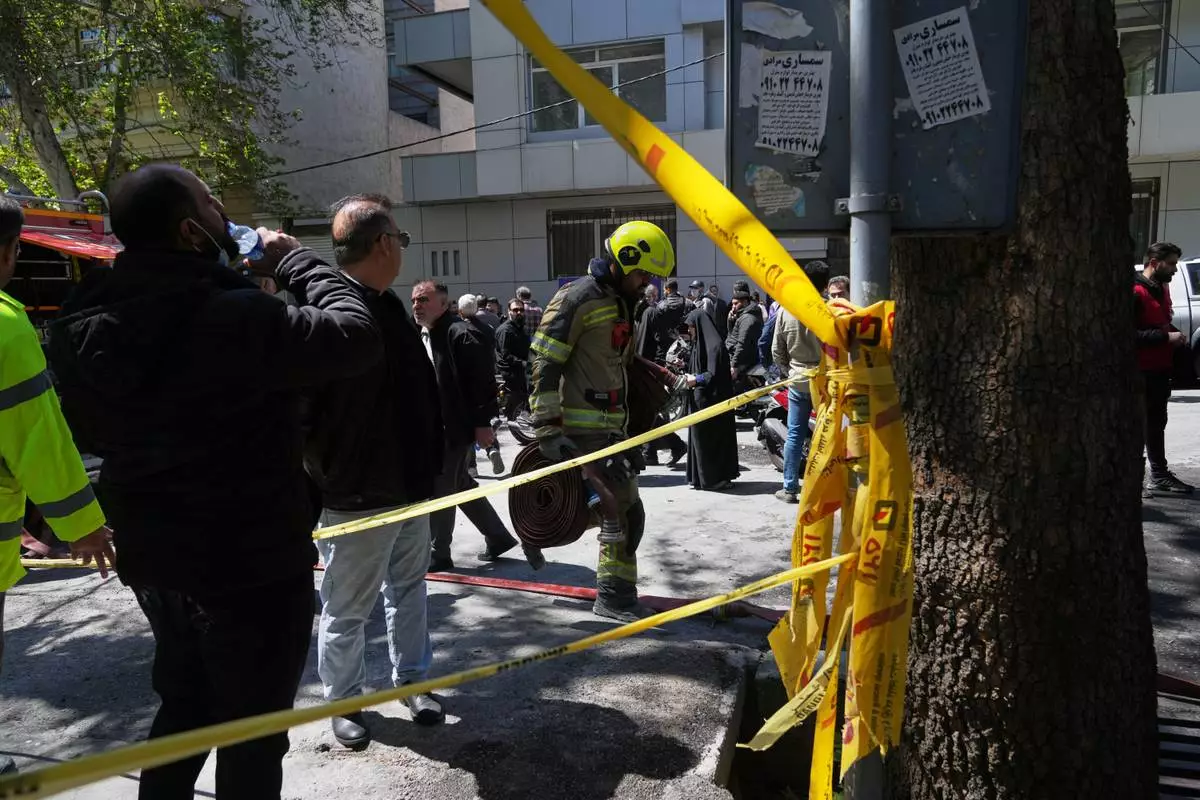
A first responder leaves the site of a strike that, according to a security official at the scene, destroyed half of the Khorasaniha Synagogue and nearby residential buildings in Tehran, Iran, Tuesday, April 7, 2026. (AP Photo/Francisco Seco)
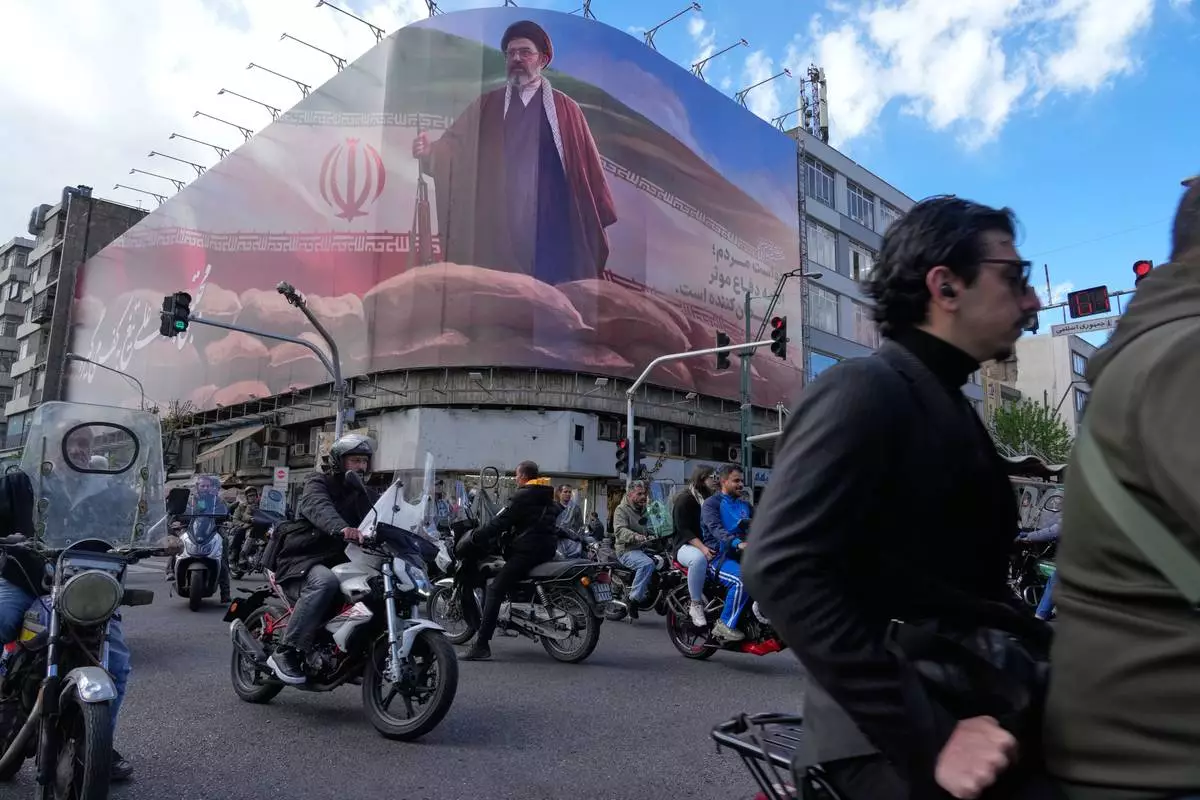
People drive their motorbikes past a billboard that shows a graphic depicting Iran's Supreme Leader Ayatollah Mojtaba Khamenei in downtown Tehran, Iran, Monday, April 6, 2026. (AP Photo/Vahid Salemi)
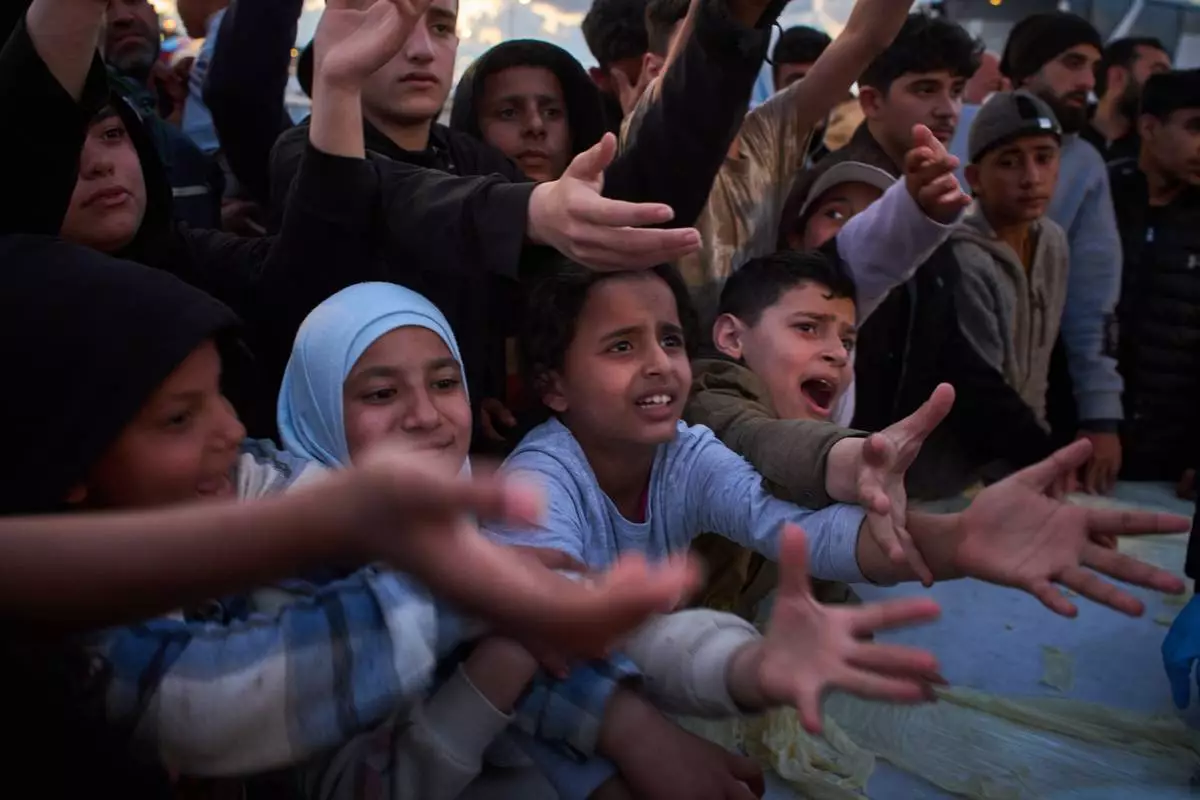
Displaced people wait to receive donated food beside the tents they use as shelters after fleeing Israeli bombardment in southern Lebanon, in Beirut, Lebanon, Monday, April 6, 2026. (AP Photo/Emilio Morenatti)
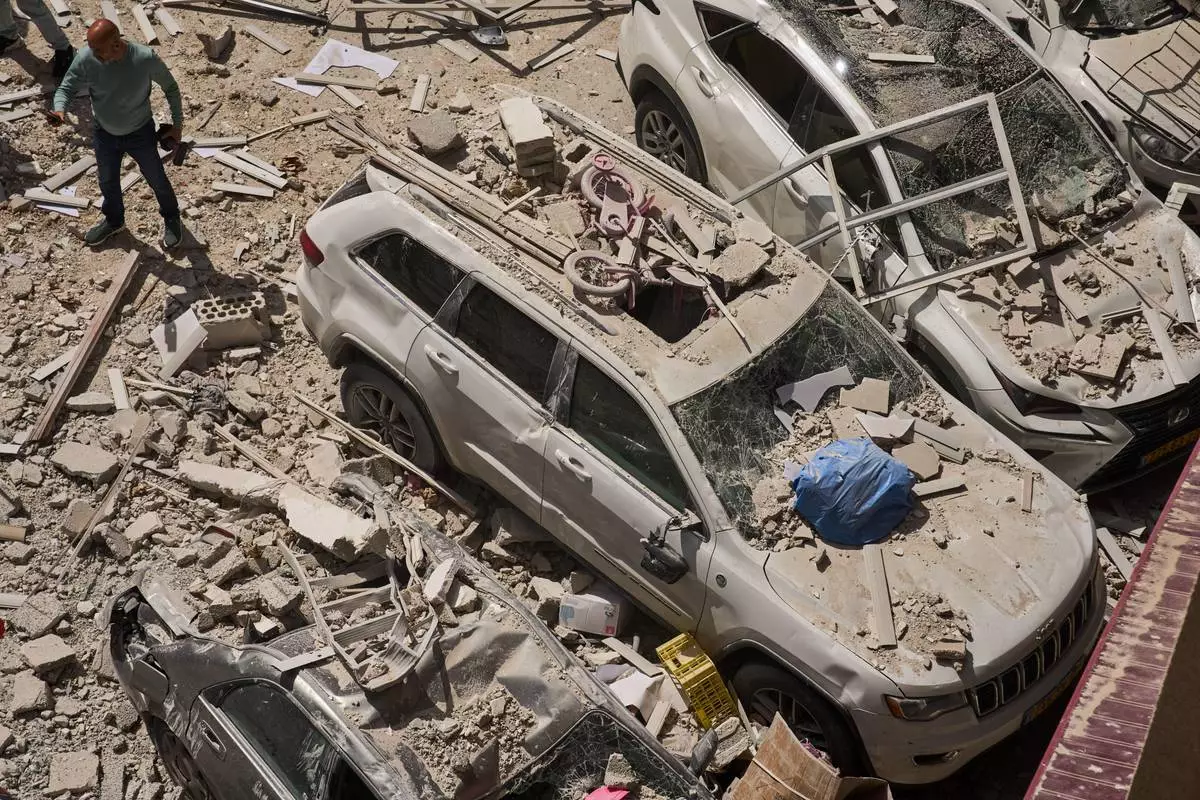
A man inspects the damage to cars and an apartment building struck by an Iranian missile in Ramat Gan, Israel, Monday, April 6, 2026. (AP Photo/Oded Balilty)