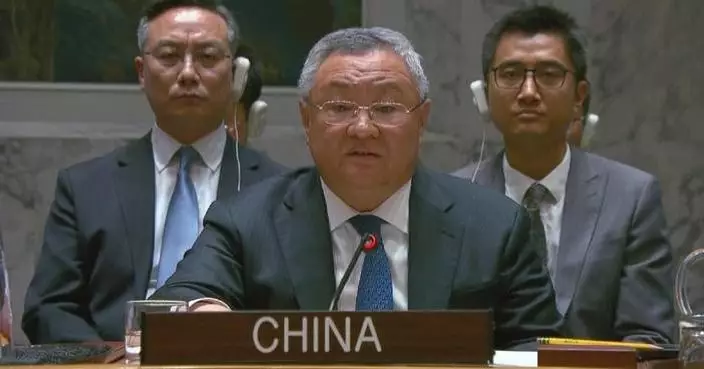
China vetoed a draft UN resolution calling on countries concerned to coordinate defensive measures in the Strait of Hormuz on Tuesday as the resolution is "unbalanced" and "extremely dangerous" against the current background, said the country's ambassador to the UN.
The 15-member Security Council voted 11 in favor of the draft resolution presented by Bahrain. China and Russia voted against it, while Colombia and Pakistan abstained.
In his explanation of China's vote on the draft resolution, Fu Cong, China's permanent representative to the United Nations, said the conflict in Iran and its spillover effects continue to deal a heavy blow to regional and global peace and stability, hitting the global economy and causing increasingly widespread disruptions.
Under the current circumstances, the ambassador said, the draft resolution should clearly identify the root causes of the conflict, seek appropriate solutions to address the root causes and ensure the safety and security of shipping lanes, and strive to promote dialogue and achieve peace.
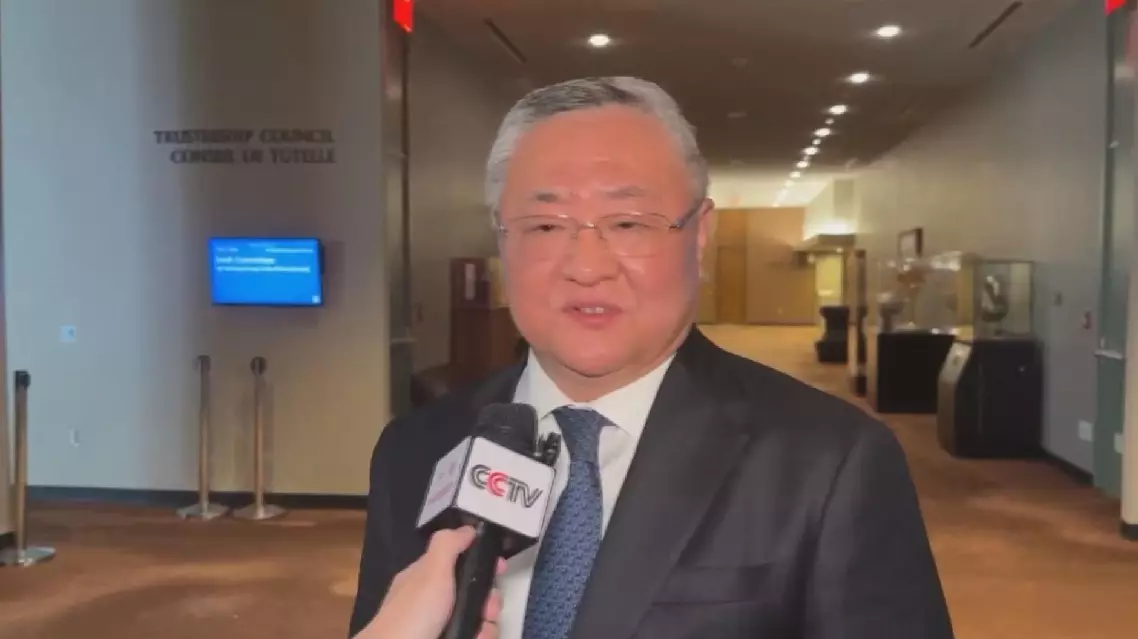
"You have seen that China has vetoed this resolution. We don't think the resolution is balanced and it doesn't solve and it doesn't even touch upon the root cause of the situation, and then, in a very unbalanced manner, only accuses Iran. And also I want to emphasize, in particular, the timing is very bad. We all heard what the U.S. president has said. And against this background, we think it is extremely dangerous for the Security Council to adopt a resolution like this," he said, speaking to press after the vote.
Iranian Ambassador to the UN Amir Saeid Iravani said China and Russia's vetoes prevented the Security Council from being misused to legitimize aggression.
Bahrain emphasized that the Strait of Hormuz is crucial to global energy, food, and supply chain security, and that current threats to shipping pose a real risk to regional and global stability, asserting that it is therefore necessary to uphold freedom of navigation through Security Council action.
The United States, on the other hand, focused on Iran's influence on the safety of the strait, arguing that its actions threaten global trade and supply chains. It said that even if the resolution fails to pass, it will continue to work with its allies to ensure navigation in the strait.
Russia argued that the draft resolution was unbalanced, unilaterally attributing responsibility to Iran while ignoring the root causes of the current situation in the Middle East, particularly the military strikes against Iran.
Iran blamed the resolution as politically motivated, accusing it of having problems on factual, legal, and political levels while characterizing Iran's actions as a threat without mentioning the context of the conflict.
Israel and the United States launched joint attacks on Tehran and several other Iranian cities on Feb. 28, killing Iran's then Supreme Leader Ali Khamenei, along with senior military commanders and civilians. Iran responded with waves of missile and drone strikes against Israel and U.S. assets in the Middle East, while tightening control over the Strait of Hormuz by restricting passage to vessels belonging to or affiliated with Israel and the United States.
China vetoes UN resolution on Hormuz as it is "unbalanced": envoy