LONDON--(BUSINESS WIRE)--Apr 8, 2026--
Motive, the AI platform for physical operations, today launched Motive Analytics, an AI-powered analytics solution built directly into the Motive Dashboard that unifies data across safety, fuel, maintenance, telematics and more to help teams in the UK make faster, better decisions. By automating reports and centralising information, Motive Analytics can help reduce spreadsheets and manual analysis. Teams can quickly see where attention is needed, uncover trends early and take action that can improve safety, boost productivity and lower costs.
This press release features multimedia. View the full release here: https://www.businesswire.com/news/home/20260408303260/en/
The solution also includes AI Answers, a conversational AI designed for physical operations. Like ChatGPT, it’s designed to understand natural language questions and instantly surface answers from the data Motive brings together across an organisation’s operations. Simply by asking questions in their own words—such as ‘Which drivers had the most idling time last week?’ or ‘What was our average vehicle downtime last month?’—teams can receive easy-to-understand answers and visualisations.
Safety, operations and finance teams in the UK often struggle to gain a complete view of their operations because they rely on disconnected legacy tools that cannot keep pace with growing complexity or connect data across the business in real time. Critical insights are buried in spreadsheets, and by the time data analytics teams deliver reports, the data is often outdated. Teams don’t have the insights they need to quickly identify risks or opportunities and make fast decisions. Motive Analytics is designed to help solve this with a new integrated analytics experience that gives teams real-time answers—no coding required.
‘Across the UK, organisations are drowning in fleet data but starved of clarity,’ said Nyanya Joof, Regional VP of UK Markets at Motive. ‘AI-powered Motive Analytics is designed to bring all of an organisation’s key operational data into one easy-to-digest view so teams can move from reactive reporting to proactive decision-making that can improve safety and protect margins.’
Motive Analytics is designed to help UK teams:
From fleet safety to fuel efficiency to tracking and telematics, Motive Analytics can help safety and operations teams quickly see what’s happening and take action right away. Learn more about the Motiveplatform and how it can help UK teams reduce fleet costs, improve safety and optimise performance. Read more about Motive Analytics in our blog post.
About Motive
Motive empowers the people who run physical operations with tools to make their work safer, more productive and more profitable. For the first time, safety, operations and finance teams can manage their workers, vehicles, equipment and fleet-related spend in a single system. Motive serves nearly 100,000 customers from small businesses to Fortune 500 enterprises such as Halliburton, KONE, Komatsu, NBC Universal and Maersk across a wide range of industries including transport and logistics, construction, energy, field services, manufacturing, agriculture, food and beverage, retail, waste services and the public sector.
Visit gomotive.com to learn more.

PARIS (AP) — Novak Djokovic placed ice packs around his neck and on top of his head during changeovers to keep cool amid the Paris heat wave at the French Open on Wednesday.
The 39-year-old Djokovic was pushed by 74th-ranked French player Valentin Royer — who is 15 years younger than him — for more than 3½ hours before he reached the third round with a 6-3, 6-2, 6-7 (7), 6-3 victory.
For the fourth straight day of this year’s tournament, the temperature rose beyond 32 degrees Celsius (90 Fahrenheit).
When Djokovic won a key point early in the fourth set with a forehand that he whipped around the net post from far off the court, the 24-time Grand Slam champion waved his arms toward the crowd inside Court Philippe-Chatrier.
Djokovic wasted a chance to close the match out earlier when he missed a backhand long in the third-set tiebreaker then required four more match points in his final service game before a forehand from Royer finally landed in the net to conclude a long rally.
Before arriving in Paris, Royer had earned only one tour-level win across 11 tournaments he played this season.
Djokovic came to Roland Garros with questions over his form after getting beat in his only clay-court match before the tournament. He lost to Croatian qualifier Dino Prizmic at the Italian Open after two months out due to a right shoulder injury.
But Djokovic is playing himself back into form after coming back from a set down to beat Giovanni Mpetshi Perricard, another Frenchman, in a first-round match that lasted nearly three hours.
Djokovic improved to 14-0 in his career against Frenchmen at Roland Garros and reached the third round in Paris for a 21st straight year. He raised the Coupe des Mousquetaires trophy in 2016, 2021 and 2023.
One duo of Djokovic fans inside the main stadium held up a sign with a goat on it — for “Greatest of All Time” — that read “39 is the new 29.”
Up next for Djokovic is potentially a bigger test against either 19-year-old Brazilian Joao Fonseca or the 20-year-old Prizmic, who were playing later. Fonseca has been touted as a future Grand Slam contender, while Djokovic himself pointed to big things ahead for Prizmic after their meeting in Rome.
Later, second-seeded Alexander Zverev was playing Tomas Machac in the night session.
Elena Rybakina, this year’s Australian Open winner, was beaten by Ukrainian opponent Yuliia Starodubtseva 3-6, 6-1, 7-6 (4).
Also advancing were in-form Ukrainians Elina Svitolina and Marta Kostyuk, who are coming off trophies at the Madrid Open and Italian Open, respectively.
The seventh-seeded Svitolina beat Kaitlin Quevedo 6-0, 6-4 to extend her winning streak to eight matches. The 15th-seeded Kostyuk beat Katie Volynets 6-7 (4), 6-3, 6-3 to extend her winning streak to 13 matches.
Four-time champion Iga Swiatek improved her career record at Roland Garros to 42-3 by eliminating 35th-ranked Sara Bejlek 6-2, 6-3.
Swiatek won Roland Garros in 2020, 2022, 2023 and 2024.
Swiatek next faces Magda Linette in the first all-Polish meeting at Roland Garros in the professional era (since 1968). Linette eliminated 2017 champion Jelena Ostapenko 6-2, 2-6, 6-2.
Also, 11th-seeded Belinda Bencic beat American opponent Caty McNally 6-4, 6-0.
AP tennis: https://apnews.com/hub/tennis
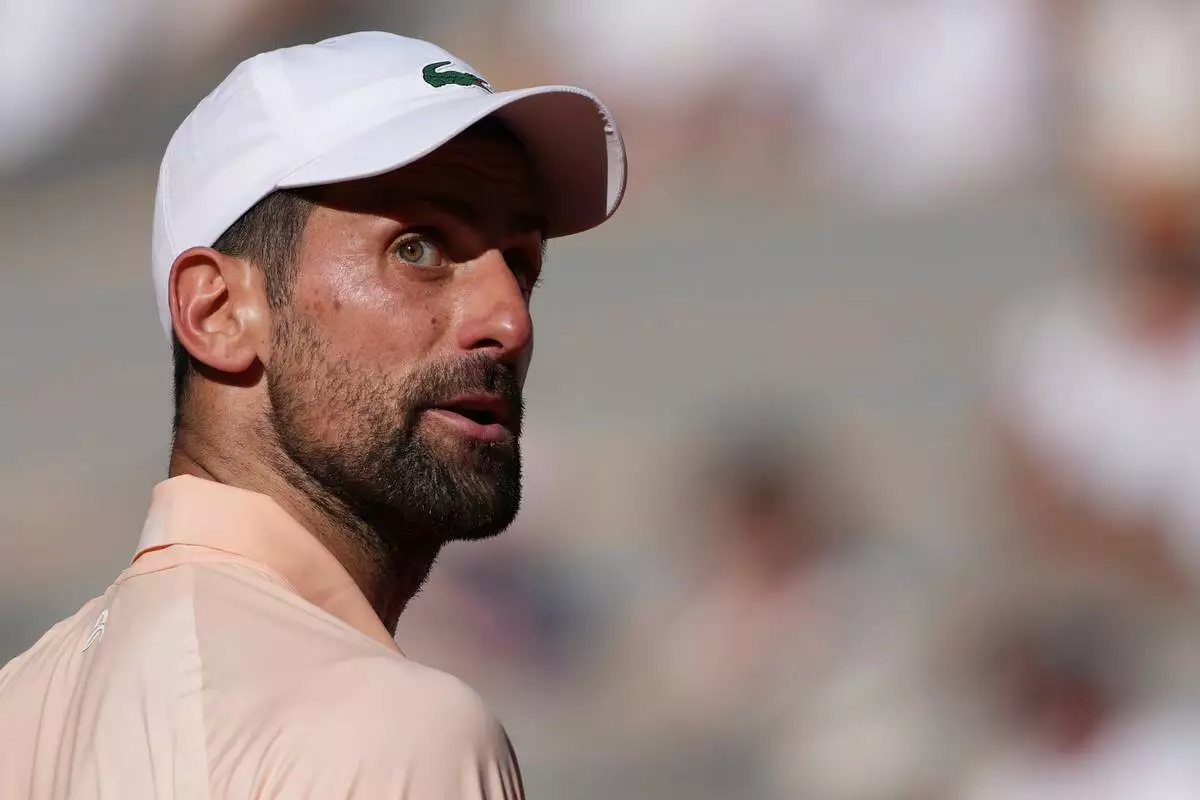
Novak Djokovic of Serbia reacts as he plays against Valentin Royer of France during their second round men's singles tennis match at the French Open tennis tournament in Paris, Wednesday, May 27, 2026. (AP Photo/Thibault Camus)
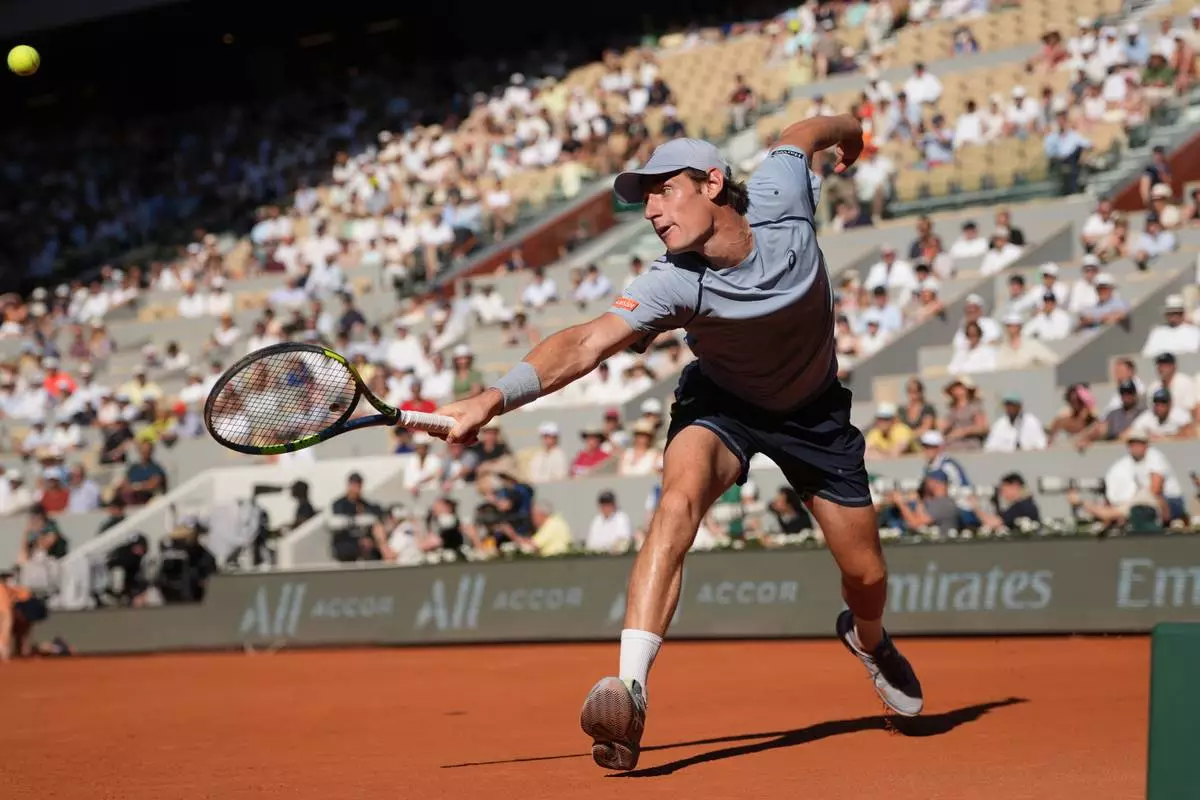
Valentin Royer of France returns to Novak Djokovic of Serbia during their second round men's singles tennis match at the French Open tennis tournament in Paris, Wednesday, May 27, 2026. (AP Photo/Thibault Camus)
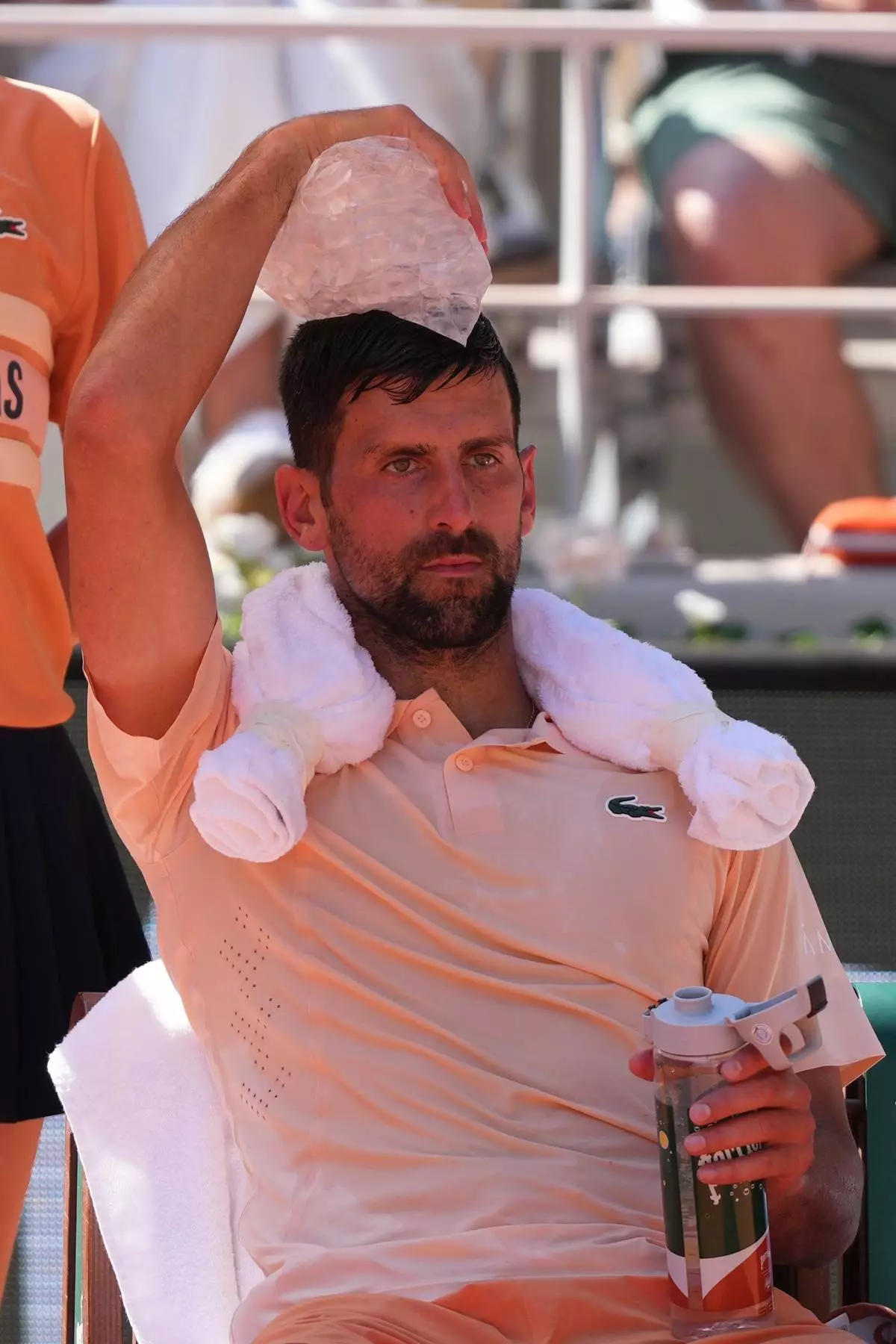
Novak Djokovic of Serbia cools himself with the ice during a break of the second round men's singles tennis match against Valentin Royer of France at the French Open tennis tournament in Paris, Wednesday, May 27, 2026. (AP Photo/Thibault Camus)
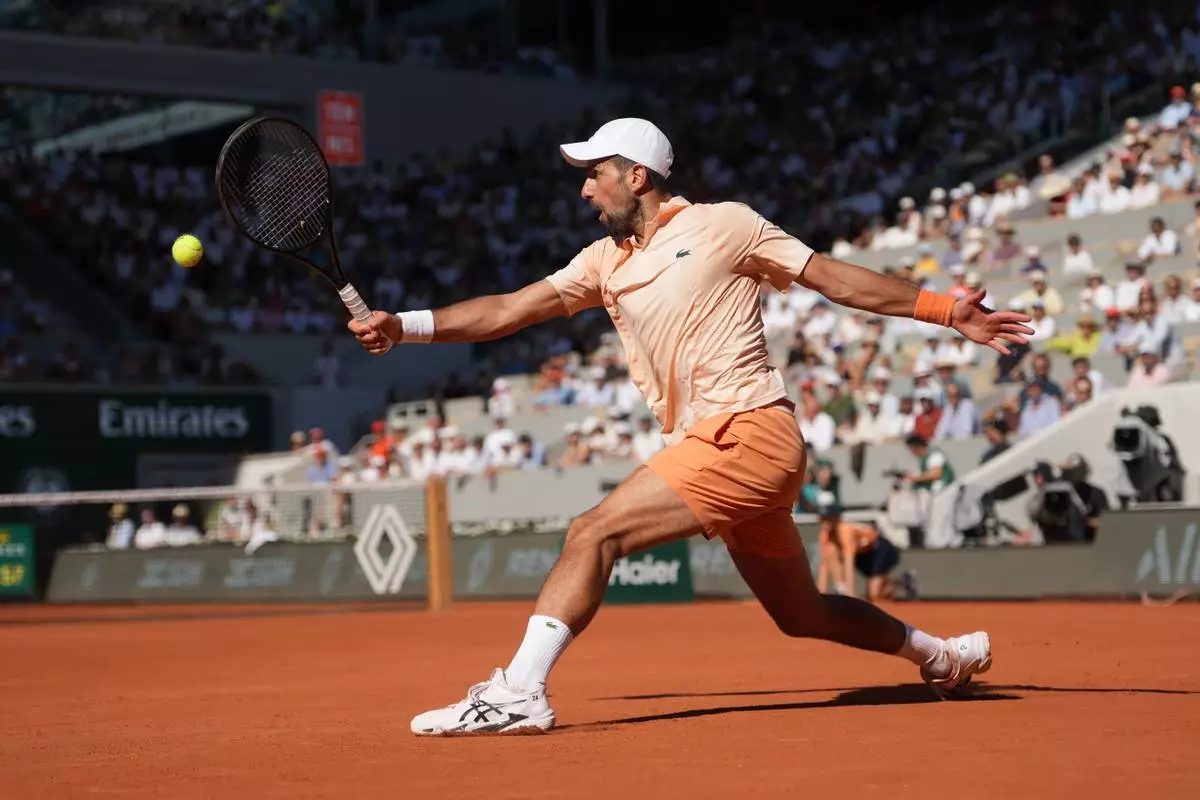
Novak Djokovic of Serbia returns to Valentin Royer of France during their second round men's singles tennis match at the French Open tennis tournament in Paris, Wednesday, May 27, 2026. (AP Photo/Thibault Camus)
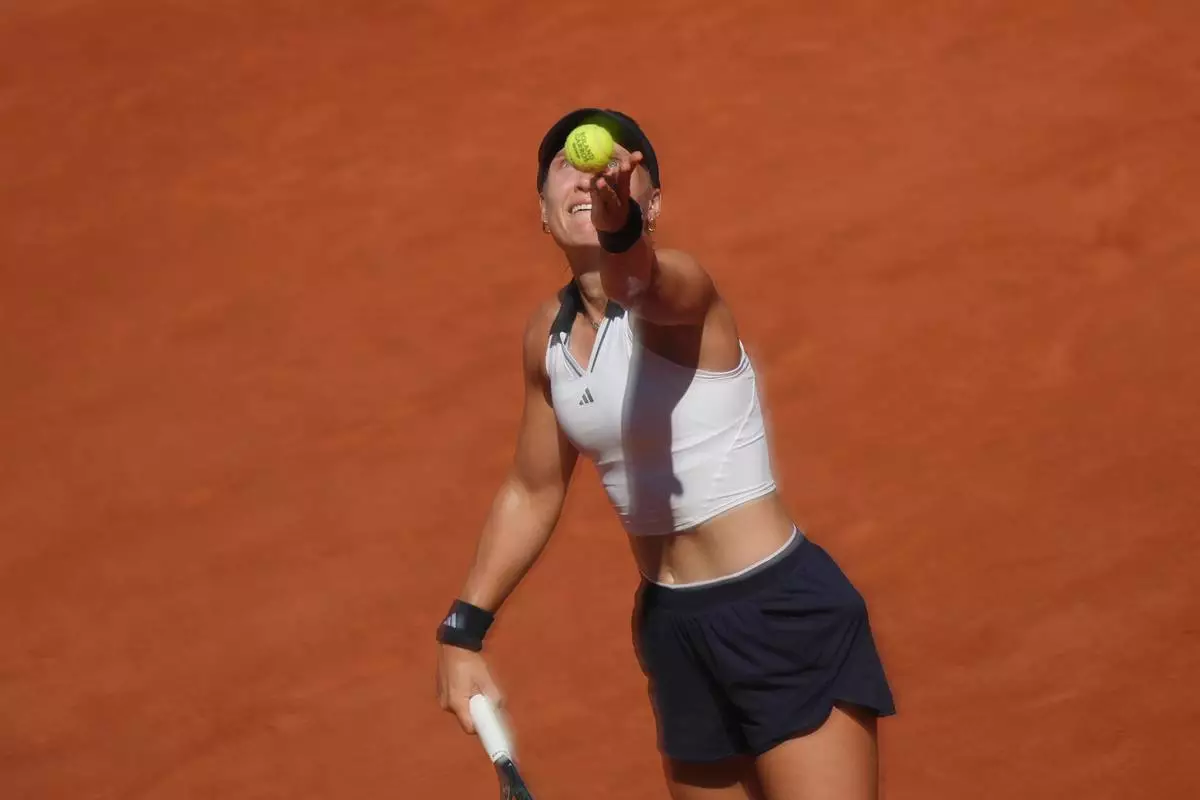
Yuliia Starodubtseva of Ukraine serves to Elena Rybakina of Kazakhstan during their second round women's singles tennis match at the French Open tennis tournament in Paris, Wednesday, May 27, 2026. (AP Photo/Aurelien Morissard)
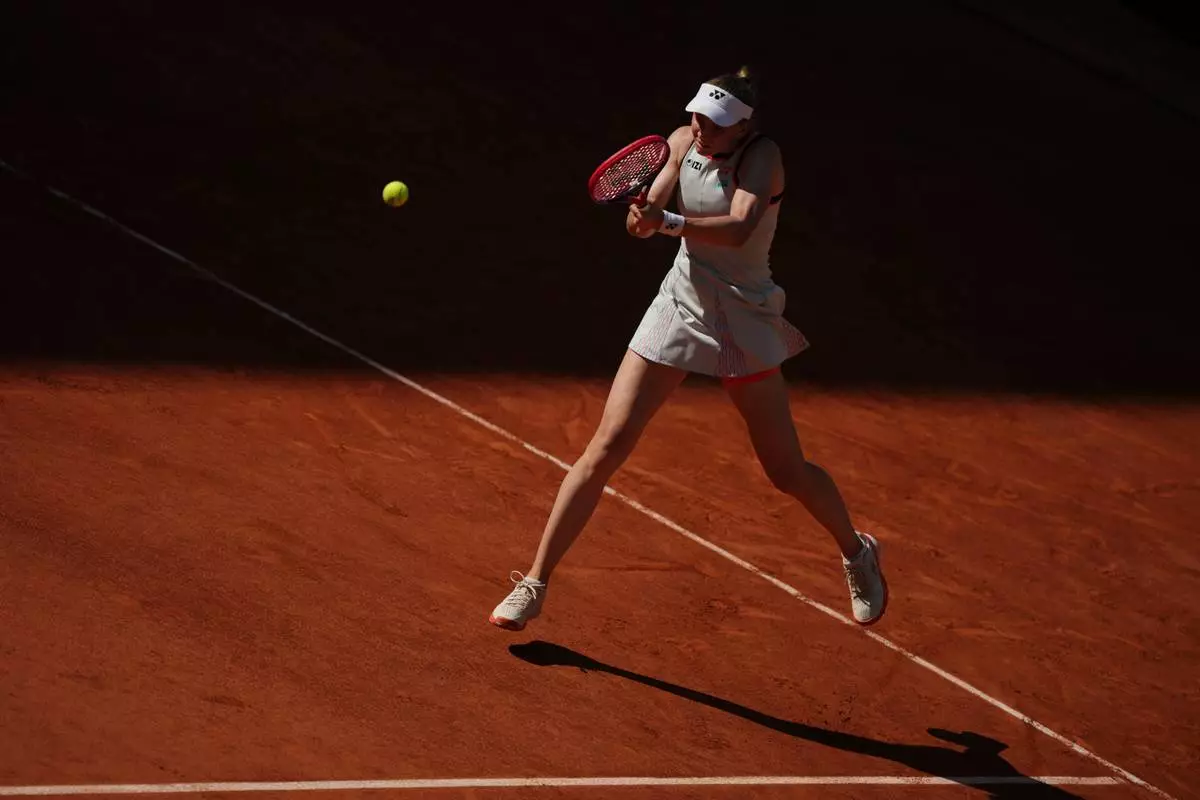
Elena Rybakina of Kazakhstan returns to Yuliia Starodubtseva of Ukraine during their second round women's singles tennis match at the French Open tennis tournament in Paris, Wednesday, May 27, 2026. (AP Photo/Aurelien Morissard)
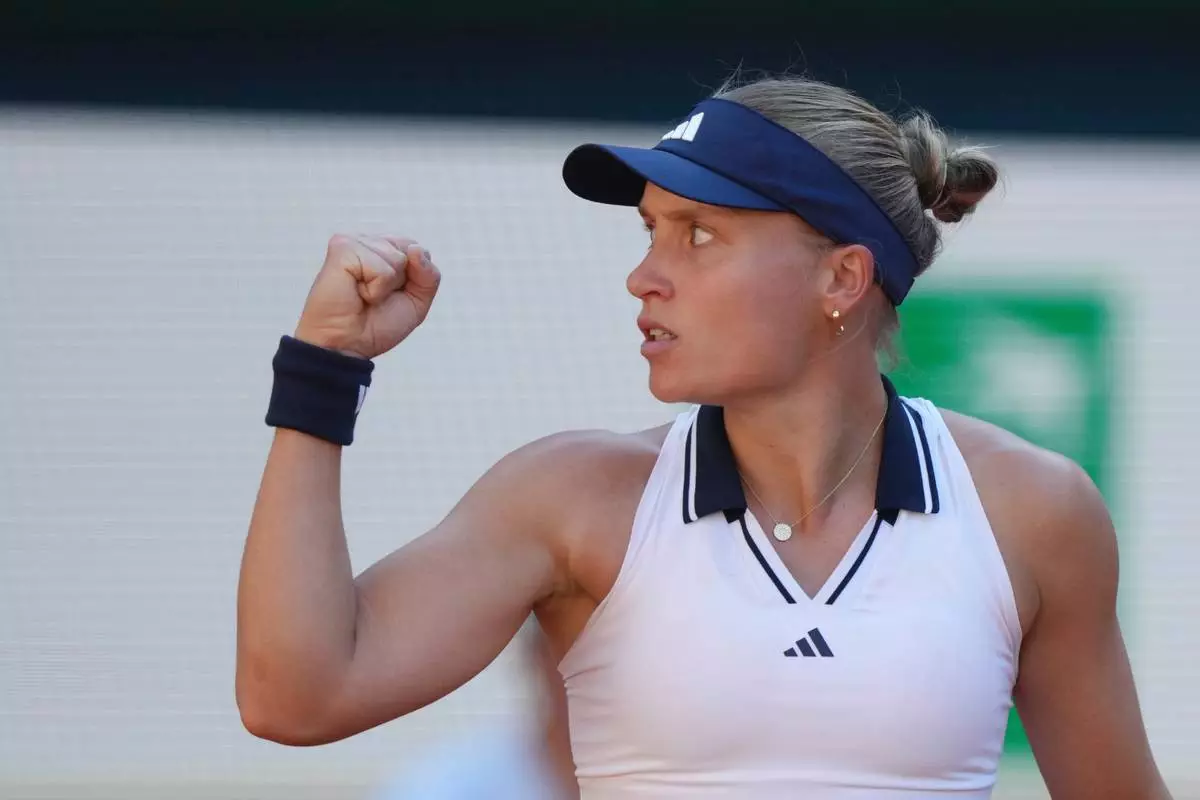
Yuliia Starodubtseva of Ukraine reacts as she plays against Elena Rybakina of Kazakhstan during their second round women's singles tennis match at the French Open tennis tournament in Paris, Wednesday, May 27, 2026. (AP Photo/Aurelien Morissard)
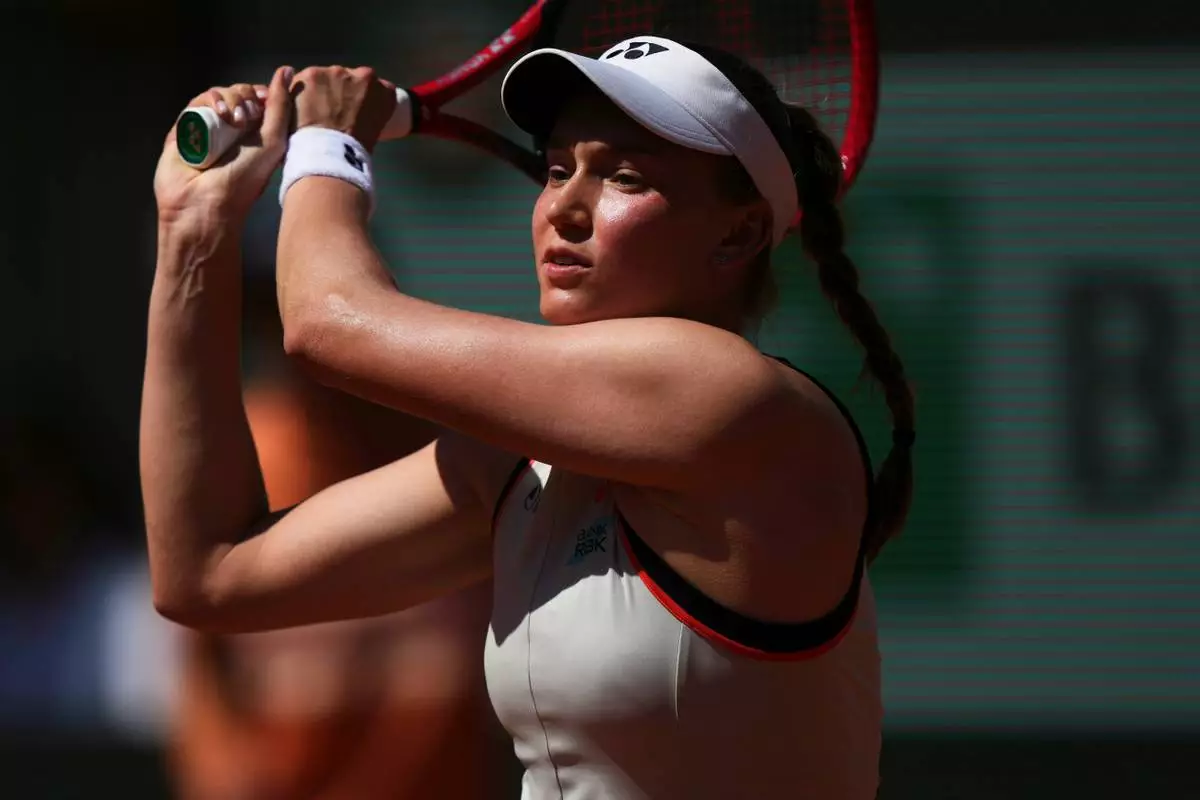
Elena Rybakina of Kazakhstan returns to Yuliia Starodubtseva of Ukraine during their second round women's singles tennis match at the French Open tennis tournament in Paris, Wednesday, May 27, 2026. (AP Photo/Aurelien Morissard)
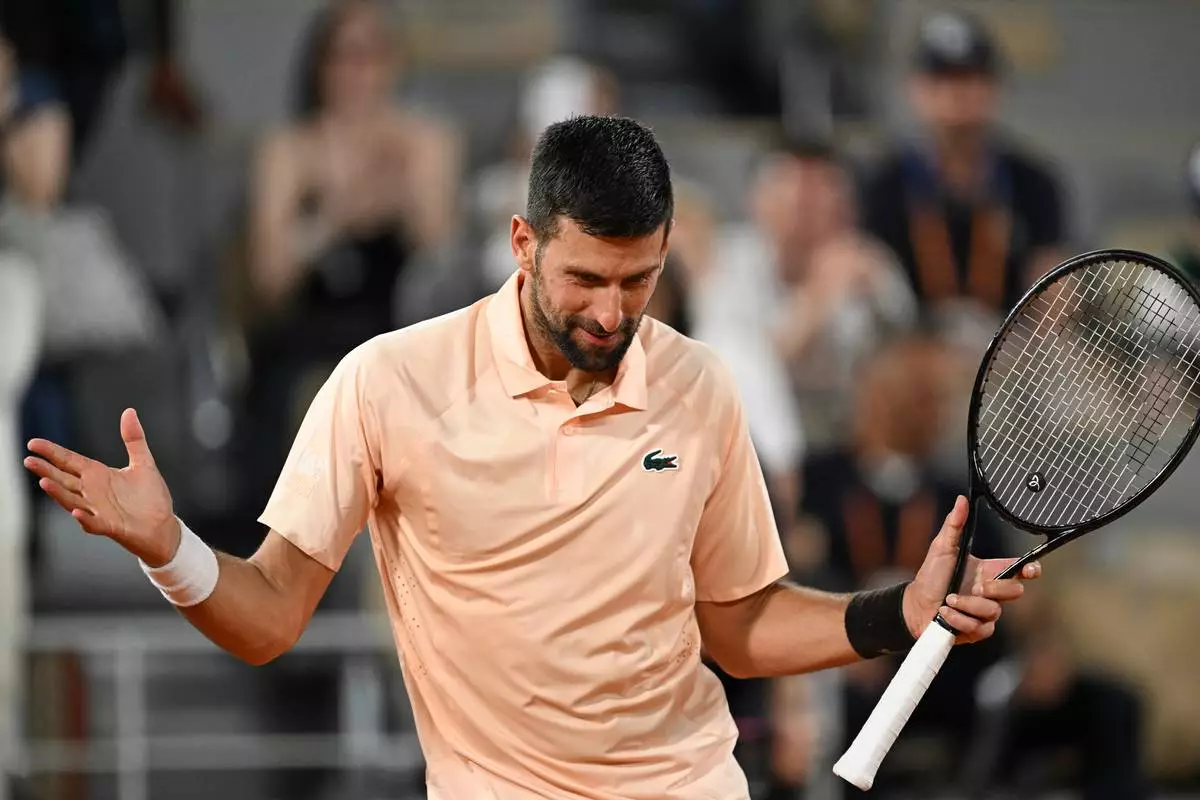
Novak Djokovic of Serbia celebrates after winning the first round men's singles tennis match against against Giovanni Mpetshi Perricard of France at the French Open tennis tournament in Paris, Sunday, May 24, 2026. (AP Photo/Emma Da Silva)
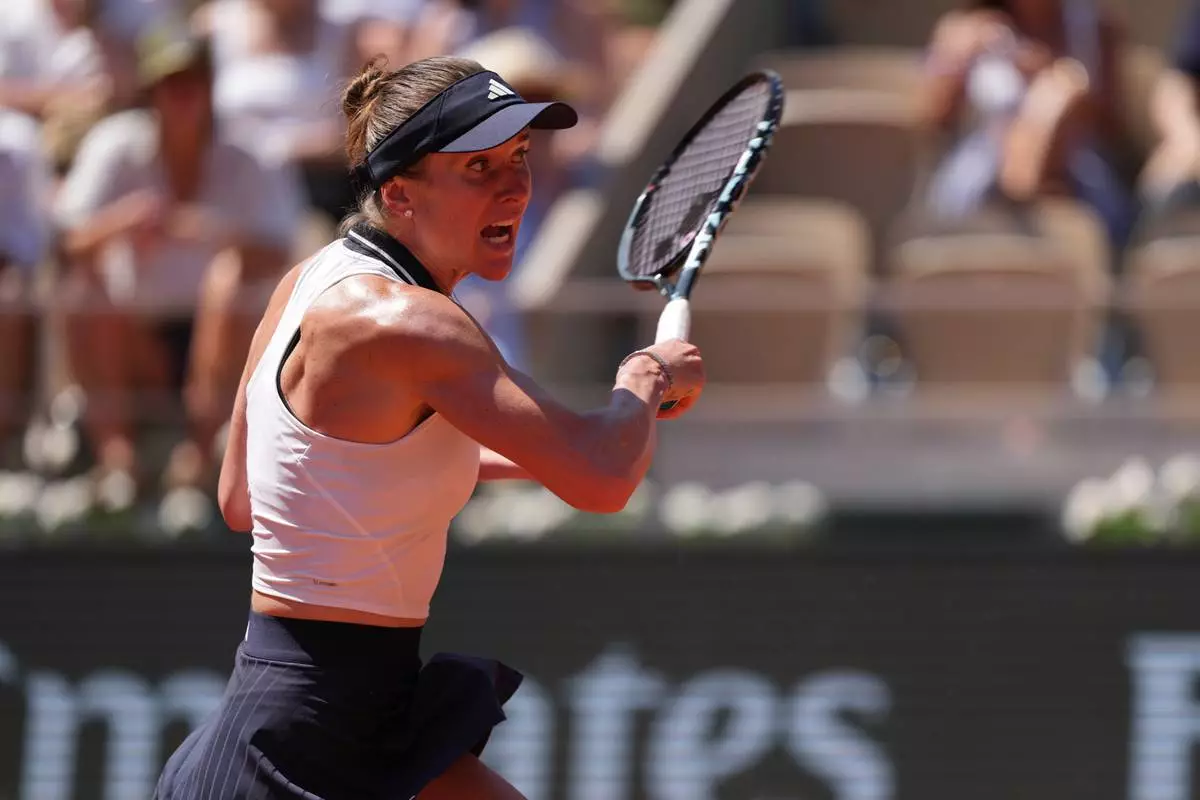
Elina Svitolina of Ukraine returns to Kaitlin Quevedo of Spain during their second round women's singles tennis match at the French Open tennis tournament in Paris, Wednesday, May 27, 2026. (AP Photo/Thibault Camus)
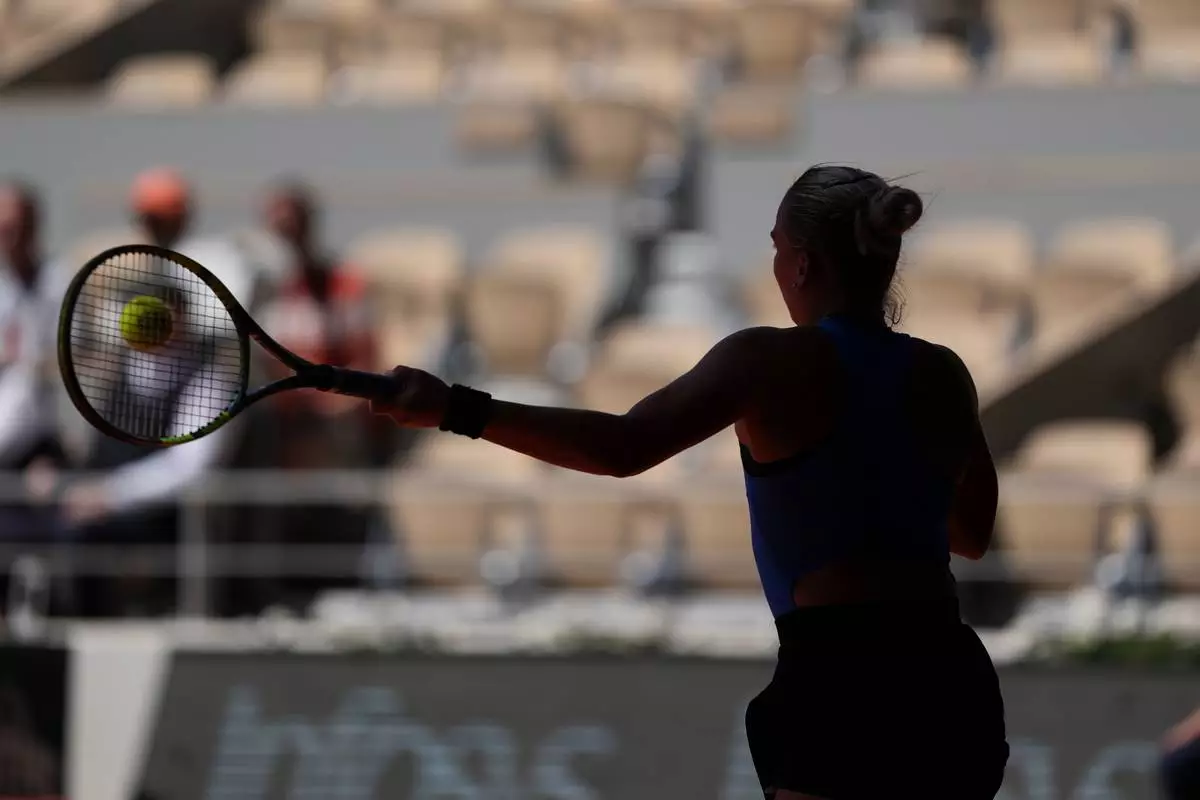
Sara Bejlek of the Czech Republic returns to Iga Swiatek of Poland during their second round women's singles tennis match at the French Open tennis tournament in Paris, Wednesday, May 27, 2026. (AP Photo/Thibault Camus)
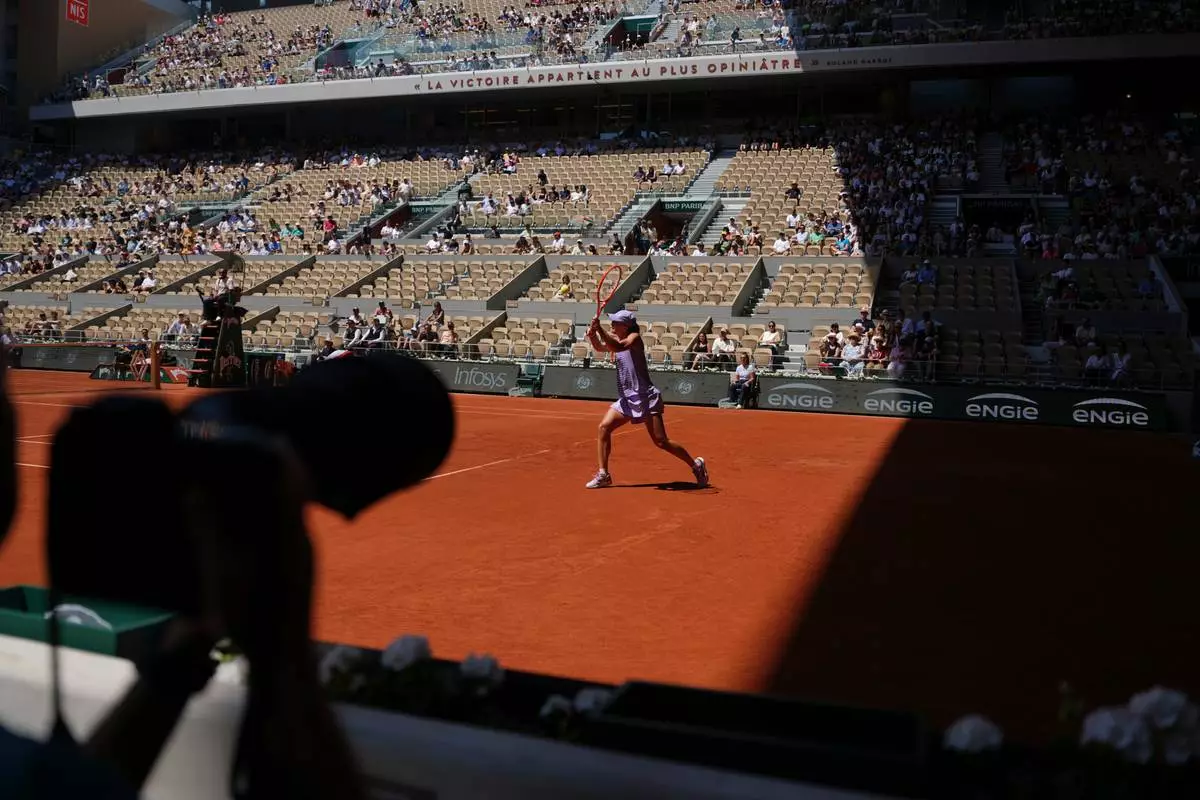
Iga Swiatek of Poland returns to Sara Bejlek of the Czech Republic during their second round women's singles tennis match at the French Open tennis tournament in Paris, Wednesday, May 27, 2026. (AP Photo/Thibault Camus)
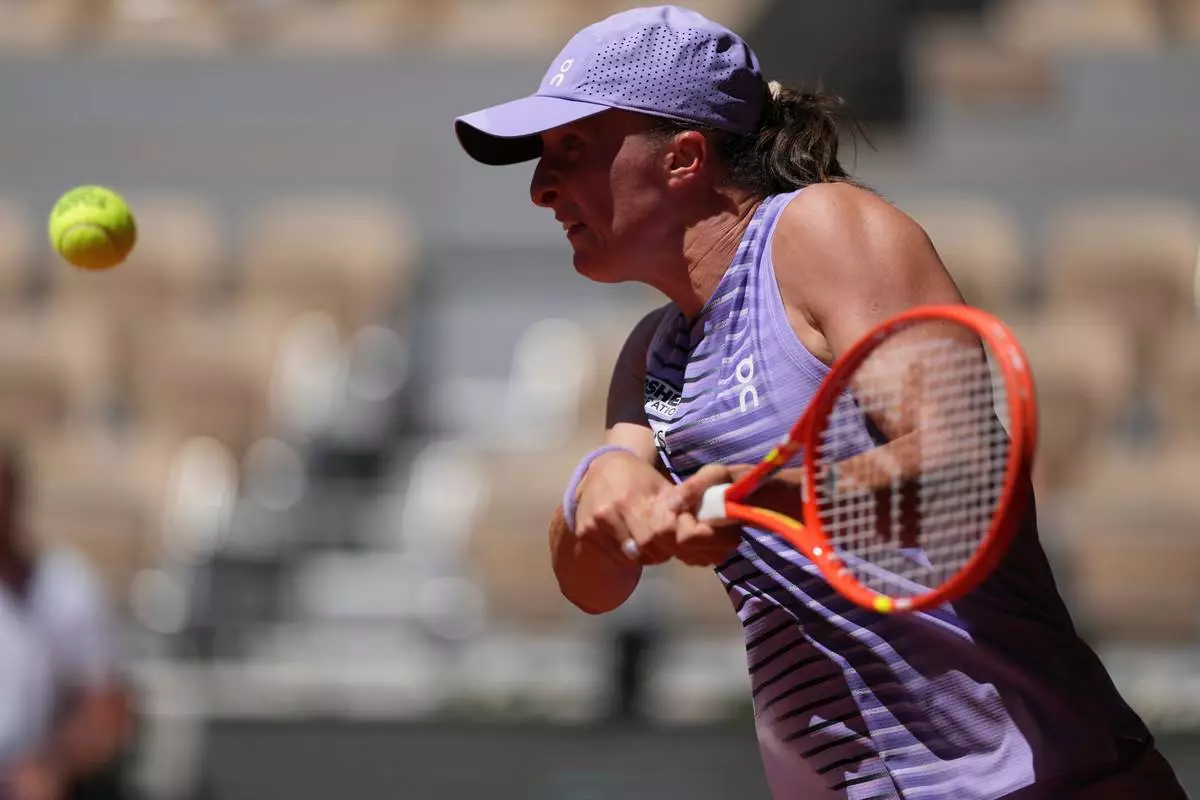
Iga Swiatek of Poland returns to Sara Bejlek of the Czech Republic during their second round women's singles tennis match at the French Open tennis tournament in Paris, Wednesday, May 27, 2026. (AP Photo/Thibault Camus)