Several crested ibises were spotted engaging in intense battle over a prime nesting site in Hanzhong City of northwest China's Shaanxi Province.
Crested ibises have recently entered their breeding season in Shaanxi Province. According to experts, the birds are extremely selective in choosing nesting sites, and the competition for prime locations is largely driven by the continuous growth of their population.
In a tense and dramatic showdown, four of these wading birds were caught on camera fighting for a nest high up in the trees.
Three of the birds, with their iconic red crest and long black beak, confronted each other aggressively, circling the nest and attacking each other with their beaks. Meanwhile, the fourth bird waited on a nearby branch, watching intently for the right moment to strike.
Suddenly, a fifth crested ibis joined the battle. With swift precision, it landed on the branch and drove away one of the exhausted competitors, immediately joining the intense battle.
The crested ibis was in the past widely distributed across East Asia and Russia's Siberia. It was thought to be extinct in China until seven wild birds were observed in Yangxian County, Shaanxi, in 1981, a discovery that prompted captive breeding and enhanced protection of the species.
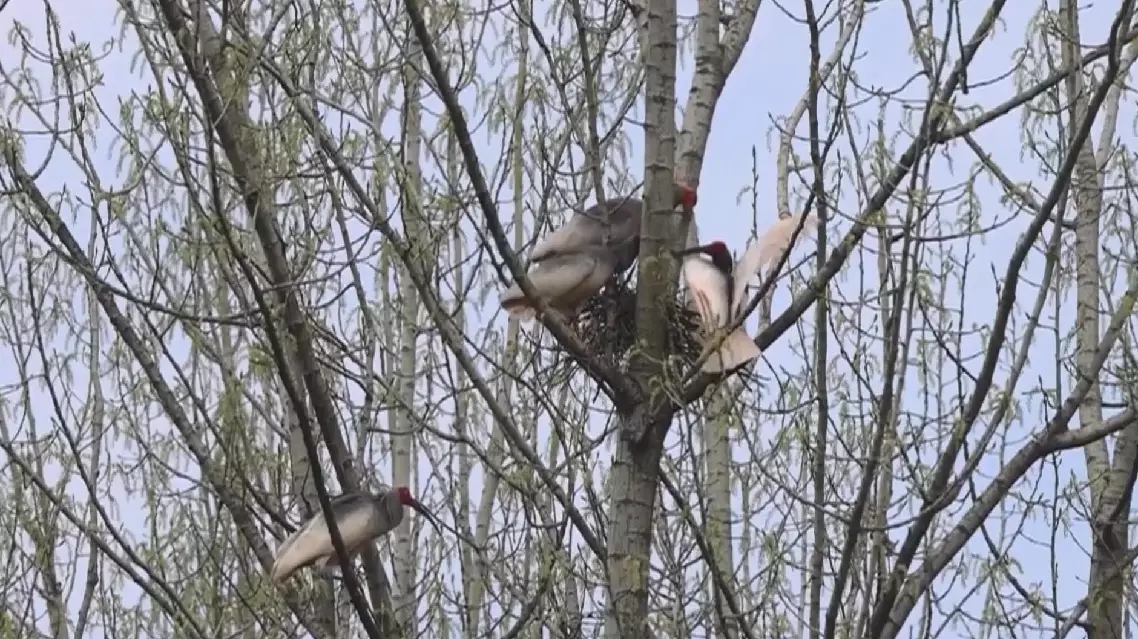
Crested ibises spotted fighting for nest
Local authorities across China are looking to capitalize on the seasonal attractions of spring time, aiming to entice visitors to enjoy scenic landscapes and offering up wider tourism activities to unlock fresh economic potential.
As temperatures rise across China, blossoming floral scenery in both urban and rural areas is revitalizing the tourism market, creating a demand for visitor experiences as more people are keen to head outdoors.
Innovative initiatives are creating diverse new consumption scenarios, and a thriving 'flower economy' is taking shape, transforming seasonal flower viewing into a much more comprehensive consumption ecosystem that spans catering, tourism, and other leisure activities.
In the Zhaoxian County of Shijiazhuang City in north China's Hebei Province, an expansive field of pear trees has entered its full bloom period, providing a picturesque escape for visitors.
Local authorities have also sought to create a vibrant atmosphere at this stunning scenic spot by arranging performances by traditional lion dancers, local delicacies, cultural and creative product workshops, and traditional Hanfu clothing rental and makeup services -- all of which creates a rich and immersive cultural experience for visitors.
In east China's Jinan City, tourists are flocking to the rural Lunan Village to admire the blooming tulips which are filling hillsides with an assortment of color.
Local authorities have introduced a broader tourism-focused model integrating flower viewing with an overnight camping experience, providing over 4,000 campsites, encouraging people to extend their stay and boosting local consumption.
During the just-concluded Qingming Festival holiday, also known as the Tomb-sweeping Festival, hotels and homestays in Lunan Village were almost all fully booked, with the overall tourism revenue reaching some 1.5 million yuan (over 218,700 U.S. dollars) during the three-day holiday.
In southwest China, Lijiang City of Yunnan Province has launched a tourism route integrating flower appreciation and wetland experiences, as well as series of rural leisure activities, attracting visitors who are eager to engage in this idyllic countryside lifestyle.
While tung tree flowers are blooming across the hills of Zheng'an County in southwest China's Guizhou Province, the quiet mountain town comes alive at night with the sound of music.
The unassuming county is in fact the world's largest guitar production base, creating well over 2 million instruments annually, with one out of every seven guitars worldwide being made here.
The county is looking to tap into its local strengths by combining its natural beauty with cultural events such as concerts and live acoustic performances, enhancing its appeal and driving local economic growth.
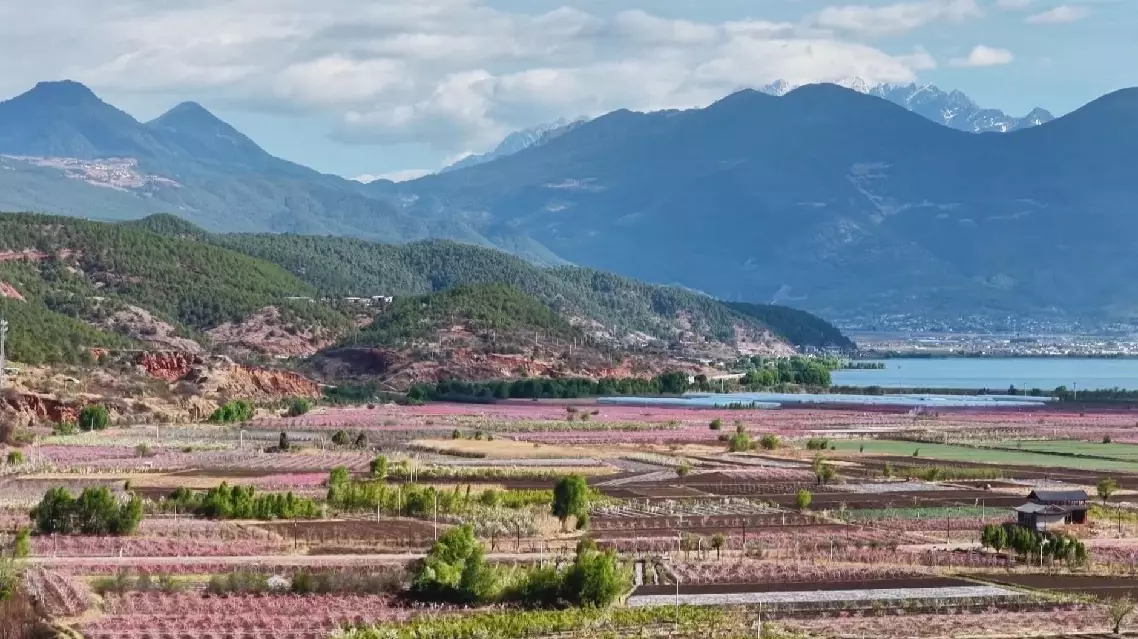
Spring-time tourism blossoms in China as scenic landscapes, leisure activities drive consumption