A former senior Pentagon strategic analyst said the two-week ceasefire agreed between Iran and the United States is likely only a temporary reprieve, warning that huge gaps still need to be bridged before a permanent end to fighting can be declared.
U.S. President Donald Trump said late Tuesday that he has agreed to what he called a "double-sided" ceasefire with Iran, less than two hours before his deadline to destroy Iran's civilization and the nation.
Iranian Foreign Minister Seyed Abbas Araghchi said Iran would stop its operations if attacks against the country were halted. He added safe passage through the Strait of Hormuz would be possible for two weeks.
In a post on Truth Social, Trump said his decision is subject to Iran agreeing to the complete, immediate and safe opening of the Strait of Hormuz.
Iran's 10-point ceasefire proposal was delivered by Pakistan, a mediator in the war in the Middle East.
Michael Maloof, a former senior strategic analyst at the U.S. Department of Defense, told China Global Media Television (CGTN) in a news program on early Wednesday that the agreement will be fragile.
"I think it's only a temporary matter, because when you listen to the 10 points that Trump said that could be discussed, I think that there's still a wide chasm that needs to be bridged, and it may be a bridge too far. So I think that the interesting thing is that was not in the 10 points was that for the U.S. to clear all bases out of the Arab countries. But the other matters I think are going to be subject to contention and the fact that the Iranians are still going to have some control over the Strait of Hormuz for the next two weeks. It may raise concerns in Washington," said Maloof.
He said that Iran would continue to exercise selective control over shipping through the Strait of Hormuz, and the fighting between Israel and Hezbollah would continue during the two-week ceasefire period.
"As a practical matter, I think it'll be business as usual, with the Iranians continuing to monitor the shipping that goes through and to accept certain vessels and other vessels not to be allowed to go through," said the former Pentagon analyst.
Although Israel has also agreed to the two-week ceasefire with Iran, Maloof emphasized that Israel's response "leaves open the question of southern Lebanon," where it is also carrying out attacks and military occupation.
"And Israel is going to be probably attacked by Hezbollah during the course of this event, unless there can be some understanding reached that it could apply to both sides in the Lebanon and Israel (conflict). But you have the Israelis now occupying southern Lebanon, and invariably, you're going to have gorilla activities going on in southern Lebanon against the IDF forces that are in southern Lebanon. So I expect hostility to continue there. The question of missiles from Hezbollah into Israel is going to be the question mark and I don't know if the 10 points covers that," he said.
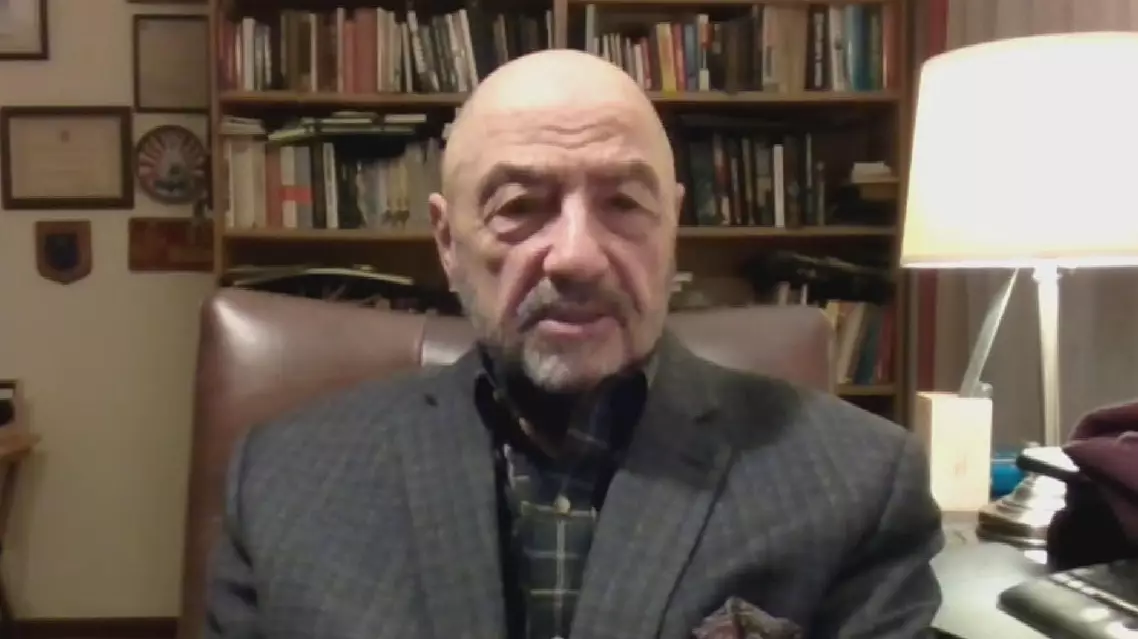
Huge gaps remain before permanent end to US-Israel war on Iran: former Pentagon analyst