Qi Zai, the world's only captive brown giant panda, draws huge crowds at a science park in Xi'an City, northwest China's Shaanxi as it leisurely strolls along yard and happily munches on carrots and bamboo.
The male panda resides at Shaanxi's Qinling Four Rare Animals Science Park, where it has become a major attraction. Its unique brown fur is the result of a genetic mutation. It was found as a weak cub by villagers in the province's Foping County in 2009.
Footage taken on Wednesday shows that bathed in the warm sunshine, Qi Zai leisurely walked into the center of a yard in the park, sat on the grass and began eating. His happily eating style captivated visitors' attention.
"I think it's so cute, incredibly adorable. I've always wanted to see him, and today I finally had the chance. I'm very happy," said a visitor.
Another visitor pointed out his distinctive walk.
"The funniest part is how his hips swing his legs forward. He doesn't really bend his knees. He's a bit pigeon-toed," said another visitor.
In fact, pandas walk with their toes pointing inward to conserve energy and maintain balance, and they can actually move very fast, according to Zhang Danhui, deputy head of the panda management department of the Qinling Giant Panda Research Center.
"Walking with toes pointing inward is an evolutionary adaptation to conserve energy. By walking this way, they can keep their center of gravity steady as they move without losing balance and falling down. Their pigeon-toed walking style allows them to walk more steadily on hillsides and in forests. Though they look somewhat clumsy, they can run at speeds of over 30 kilometers per hour, very agile," he said.
The footage also captured bold magpies landed in the yard, flied onto Qi Zai's back, and then plucked his fur.
"I think it's quite entertaining. The magpie got soft, warm material to build its nest, and Qi Zai got his fur groomed. It's mutually beneficial and it is a wonderful example of harmonious symbiosis in nature," said Pei who was taking photos at the park.
The science park is an extension of the research center, one of China's three major giant panda research hubs, located at the northern foot of the Qinling mountain range. The center is an important window to highlight the biodiversity of Qinling Mountains and the achievements of Shaanxi's wildlife protection.
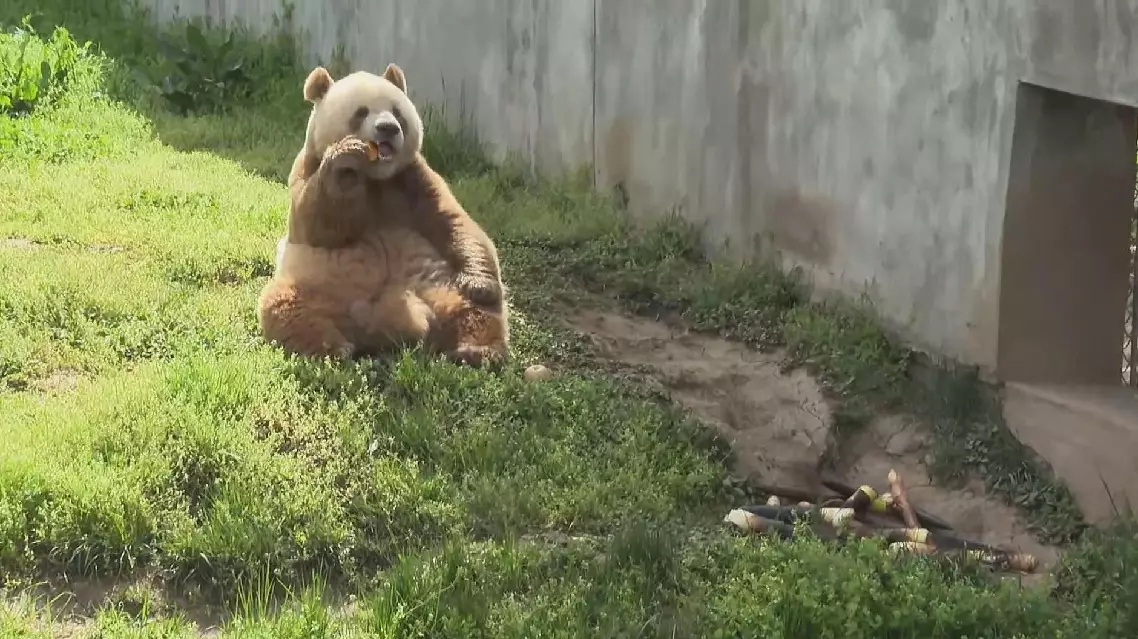
Brown giant panda draws crowds in Shaanxi with cute moves, joyful eating style
Housing markets in China's first-tier cities have seen a recovery in recent weeks and have continued to gain momentum so far in April, with transactions for both new and second‑hand homes on the rise.
Data showed that from April 1 to 6, the capital Beijing registered 2,100 second‑hand home sales online, up 11.8 percent year on year, and 850 new commercial residential units online, up 17.4 percent year on year.
Real estate agencies in several districts welcomed a steady stream of clients during the three-day Qingming Festival holiday, also known as the Tomb-sweeping Festival, which ended Monday.
One agency manager said that until 20:00 on the last day of the holiday, all 10 of their contract-signing rooms were still full.
Ma Xinguo, another agency manager, said that the holiday rush seems to indicate continued momentum in the market.
"It is estimated that 50 to 60 deals were reached (during the holiday). Compared with weekends in March, the overall momentum in contract signings has not decreased," said Ma.
Similar scenes unfolded in both Shanghai and the southern city of Guangzhou, where housing markets maintained the momentum seen in March and attracted large numbers of homebuyers.
According to data from Anjuke, a real-estate listing platform, 203 new homes were sold in Shanghai during the Qingming Festival holiday, a 12.8 percent increase from the same period last year. The pre-owned housing market performed even better, with 1,224 second-hand homes sold, a 17.7 percent year-on-year increase.
Li Wanping, a manager at a real estate agency in Guangzhou, said that their office saw a steady stream of clients during the recent holiday.
"We have so many clients that our sales team can't keep up right now. In the last few days, we've been closing about three to four properties a day on average," said Li.
An industry expert noted that Guangzhou's housing-market recovery reflects the impact of policy support, released pent-up demand, and restored market confidence, indicating more rational and healthy development for the housing markets.
"The housing market for this year and next will see a slight price adjustment, with a bottoming out and localized rebound. As a first-tier city, Guangzhou continues to enjoy strong demand and vitality," said Ou Jiangbo, director of the Institute of Quantitative Economics at the Guangzhou Academy of Social Sciences.
China will work to stabilize the real estate market this year, with city-specific policies to control the number of new real estate projects, reduce housing inventory, and improve supply, according to this year's government work report.
The country will take well-ordered steps to promote the development of quality homes that are safe, comfortable, eco-friendly and smart, and carry out projects to enhance housing quality and initiatives to improve property services, the report said.
The report also noted that efforts will be made to provide housing support for first-time married couples and those with their first child, and help families with children meet their needs for better housing.
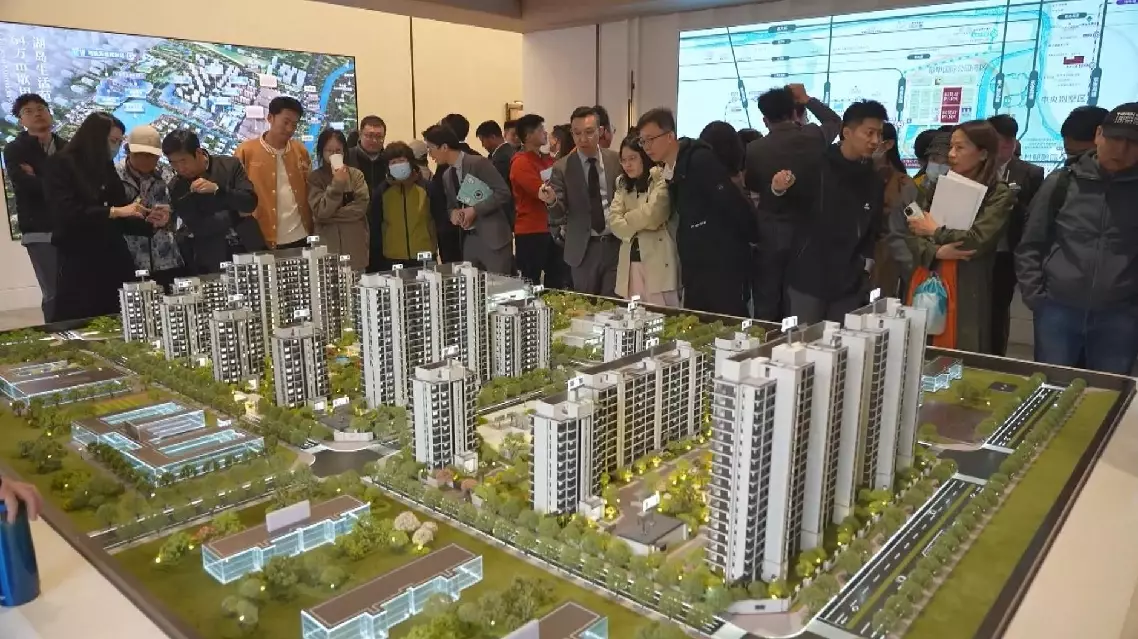
Housing market shows active signs in April as major cities see rebound