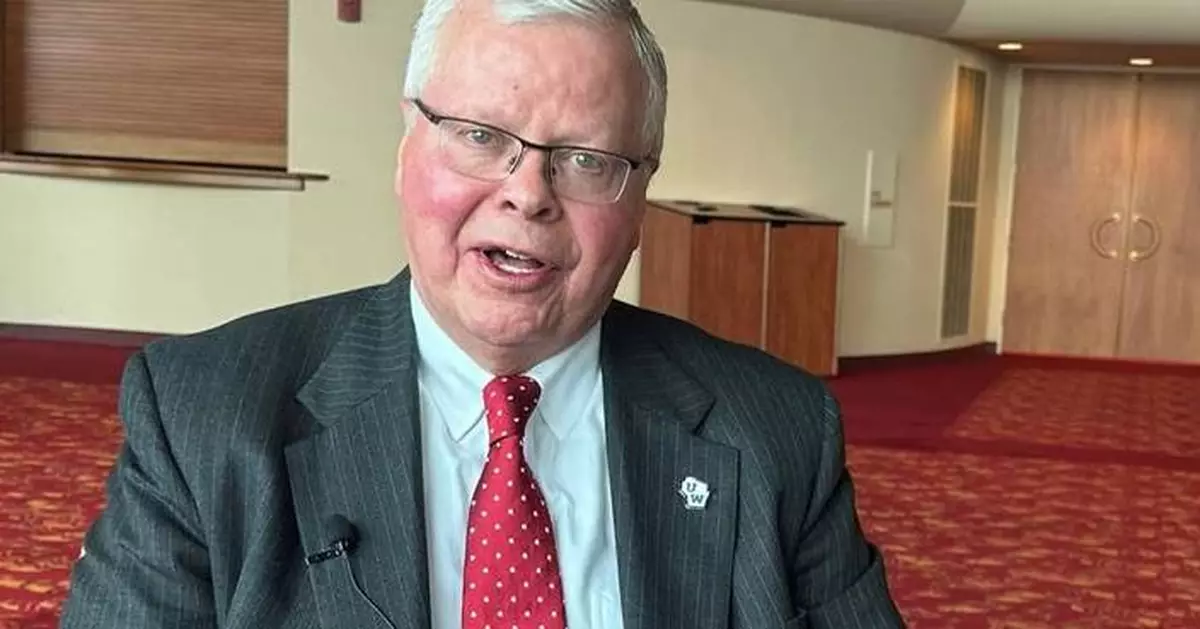
MADISON, Wis. (AP) — Fired Universities of Wisconsin President Jay Rothman told The Associated Press on Wednesday in his first interview since the ouster that he was “blindsided” by the move but has no hard feelings and is unlikely to sue.
Rothman was fired on Tuesday night in a unanimous vote by the board of regents following a roughly 30-minute closed-door discussion. Regents have not given a reason for firing Rothman, who was in the job for just under four years.
“Absolutely I was blindsided,” Rothman told the AP. He said he has still not been given a reason for his firing.
“I really don’t know,” Rothman said. “I asked for reasons why. They were not able to articulate any.”
But Rothman, who came to the job in 2022 after serving as chair and CEO of a Milwaukee-based law firm with more than 1,000 attorneys, said he is unlikely to file a lawsuit over his firing.
“We’ll have to see how circumstances develop,” Rothman said. “I don’t think it’s likely that I would go in that direction. That’s not who I am.”
The AP was the first to report on April 2 that the regents had asked Rothman, 66, to retire or resign or face being fired. Rothman said on Wednesday that he considered retiring, but since regents gave him no reason, he decided against it.
Regent President Amy Bogost said in a statement before the firing that the decision was “about the future” of the 13-university system, including the flagship Madison campus, that educates about 165,000 students.
“The Universities of Wisconsin must be led with a clear vision that both protects and strengthens our flagship, supports our comprehensive universities and ensures we are meeting the evolving needs of our students, workforce and communities across all 72 counties,” Bogost said.
She did not immediately return a message on Wednesday seeking comment.
Rothman did not criticize any regent by name, but he did express frustration generally with the board.
“For a board to be functional, it needs to be able to provide clarity to the management team,” he said. “Not 18 different voices with different opinions and pet projects. There has to be board leadership that is able to consolidate that, build a consensus and provide clear direction.”
Rothman said his performance objectives were not even discussed in his last review in August, which he said was “astonishing.”
Rothman spent his time as president lobbying Republican legislators to increase state aid for the system in the face of federal cuts, navigating free speech issues surrounding pro-Palestinian protests, and grappling with declining enrollment that has forced eight branch campuses to close. Overall enrollment across the system has remained steady under his leadership.
Rothman brokered a deal with Republicans in 2023 that called for freezing diversity hires and creating a position at UW-Madison focused on conservative thought in exchange for the Legislature releasing money for UW employee raises and tens of millions of dollars for construction projects across the system.
Rothman said Wednesday he didn't know if any of those particular issues contributed to his being fired, but conceded they could have.
“When you come in to affect change and you try to move an organization forward, you have to make difficult decisions,” Rothman said. “And when you make difficult decisions, you can upset some people."
Sen. Patrick Testin, the Republican president of the Wisconsin state Senate, called Rothman’s firing a “blatant partisan hatchet job.”
The state Senate’s committee that oversees higher education scheduled a hearing for Thursday for 10 regents whose appointments by Evers have yet to be confirmed. Testin called for the Senate to reject all 10, which would mean they could no longer serve as regents.
Rothman said he wasn’t going to speculate on why he was cut loose.
“I am disappointed with the board’s action, but I’m not angry,” he said. “This is not about retribution. I’m concerned about the future of the Universities of Wisconsin.”
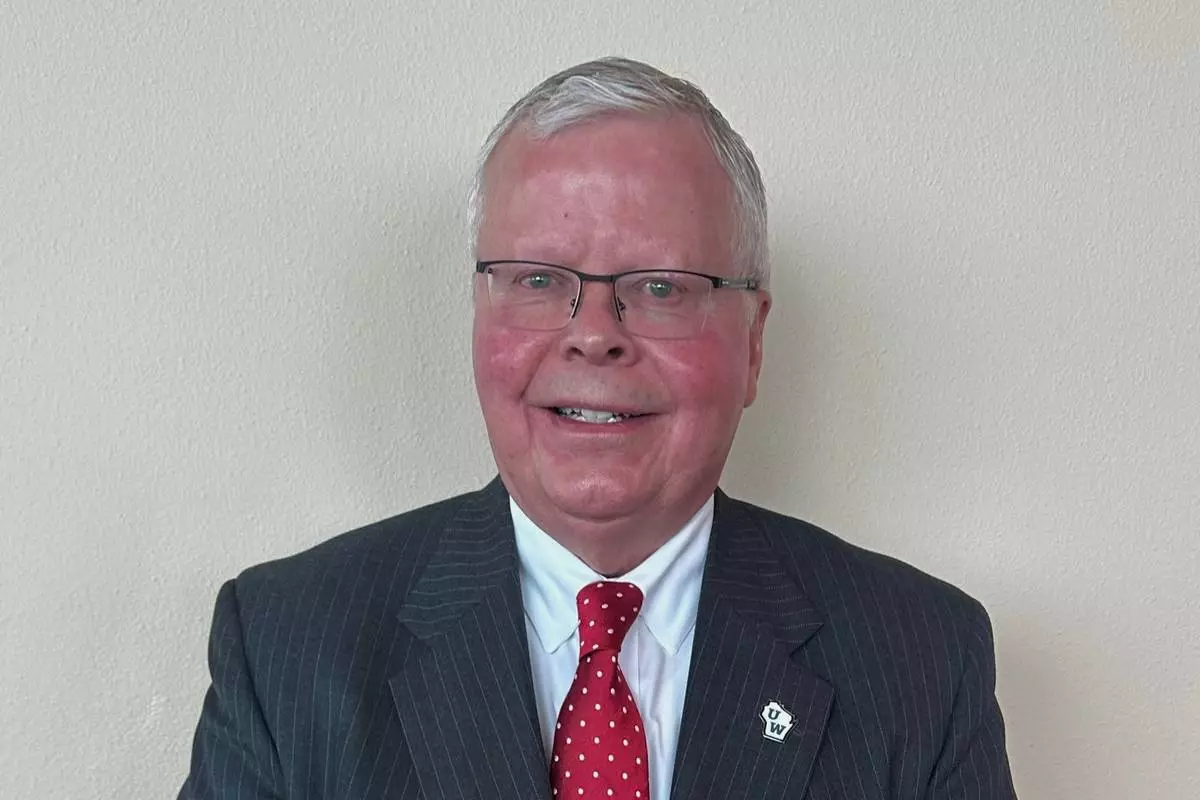
Fired Universities of Wisconsin President Jay Rothman speaks during an interview with The Associated Press on Wednesday, April 8, 2026, in Madison, Wis. (AP Photo/Scott Bauer)
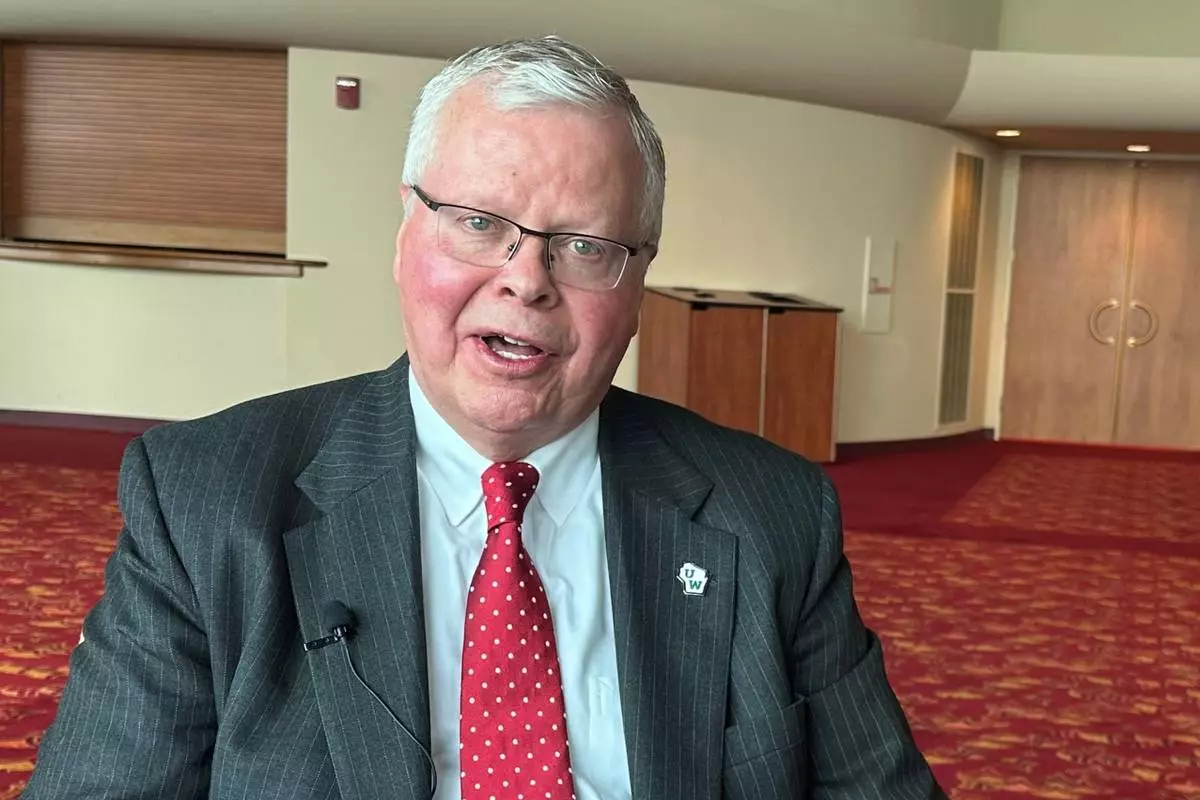
Fired Universities of Wisconsin President Jay Rothman speaks during an interview with The Associated Press on Wednesday, April 8, 2026, in Madison, Wis. (AP Photo/Scott Bauer)
BEIRUT (AP) — Israeli strikes hit several dense commercial and residential areas in central Beirut without warning Wednesday afternoon, hours after a ceasefire was announced in the U.S.-Israeli war with Iran. Lebanon’s health ministry said dozens were killed and hundreds wounded in an early estimate.
U.S. President Donald Trump told PBS News Hour that Lebanon was not included in the deal because of Hezbollah. When asked about Israel’s latest strikes, he said, “That’s a separate skirmish.” Israel had said the agreement does not extend to its war with the Iran-backed militant group Hezbollah in Lebanon, although mediator Pakistan said it does.
The fleeting sense of relief among Lebanese after the ceasefire announcement turned into panic with what Israel’s military called its largest coordinated strike in the current war, hitting more than 100 Hezbollah targets within 10 minutes in Beirut, southern Lebanon and the eastern Bekaa valley.
Black smoke towered over several parts of the seaside capital, where a huge number of people displaced by war have taken shelter. Explosions interrupted the honking of traffic on what had been a bustling, blue-sky afternoon. Ambulances raced toward open flames. Apartment buildings were struck.
Associated Press journalists saw charred bodies in vehicles and on the ground at one of Beirut’s busiest intersections in the central Corniche al Mazraa neighborhood, a mixed commercial and residential area. Using forklifts, rescue workers removed smoldering debris and sifted through ruins for survivors.
There was no sign of Hezbollah launching strikes against Israel in the first couple of hours after the attacks.
Central Beirut has been targeted before, but not by so many strikes at once and in the middle of the day. Israel had rarely struck central Beirut since the outbreak of the latest Israel-Hezbollah war on March 2 but has regularly struck southern and eastern Lebanon and Beirut’s southern suburbs.
Lebanon's Minister of Social Affairs, Haneed Sayed, in an interview with The Associated Press condemned Israel’s wide range of strikes, calling it a “very dangerous turning point.”
“These hits are now at the heart of Beirut … Half of the sheltered (internally displaced persons) are in Beirut in this area,” she said, adding that she had just driven by areas hit.
She said Lebanon's government is ready to enter into negotiations with Israel for an end to hostilities, an offer that the president previously made. Israel has not responded. “There are calls and efforts being made as we speak," Sayed said.
Prime Minister Nawaf Salam in a statement accused Israel of escalating at a moment when Lebanese officials were seeking to negotiate a solution, and of hitting civilian areas in “utter disregard for the principles of international law and international humanitarian law — principles it has, in any case, never respected.”
President Joseph Aoun called the Israeli attacks “barbaric.”
Israel's military said it had targeted missile launchers, command centers and intelligence infrastructure. It accused Hezbollah fighters of trying to “blend into” non-Shiite Muslim areas beyond their traditional strongholds.
Residents and local officials denied that the buildings hit were military sites.
“Look at these crimes,” said Mohammed Balouza, a member of Beirut’s municipal council, at the scene of a strike in Corniche al Mazraa. An apartment building behind a popular shop selling nuts and dried fruit had been hit. “This is a residential area. There is nothing (military) here.”
As the smoke rose Wednesday, Israeli Defense Minister Israel Katz warned Hezbollah leader Naim Kassem that “his turn will come.” In 2024, Israel killed previous Hezbollah leader Hassan Nasrallah with an airstrike.
Katz called Wednesday's strikes the largest blow against Hezbollah since the attack that caused pagers used by hundreds of its members to explode almost simultaneously in September 2024.
Before the new strikes, a Hezbollah official told the AP that the group was giving a chance for mediators to secure a ceasefire in Lebanon, but “we have not announced our adherence to the ceasefire since the Israelis are not adhering to it.” He spoke on condition of anonymity because he was not authorized to comment publicly.
The Hezbollah official said the group will not accept a return to the pre-March 2 status quo, when Israel carried out near-daily strikes in Lebanon despite a ceasefire being nominally in place since the last full-blown Israel-Hezbollah war ended in November 2024.
“We will not accept for the Israelis to continue behaving as they did before this war with regards to attacks,” he said.
Hezbollah had fired missiles across the border days after the U.S. and Israel attacked Iran on Feb. 28, sparking a regional war. Israel responded with widespread bombardment of Lebanon and a ground invasion.
The Israeli military chief of staff, Lt Gen. Eyal Zamir, said the attacks are to protect Israel’s northern residents, who have come under heavy fire.
Israeli airstrikes have killed more than 1,530 people in Lebanon, including more than 100 women and 130 children. The Israeli military has said it has killed hundreds of Hezbollah fighters. More than one million people have been displaced in Lebanon.
Early Wednesday, after the ceasefire in Iran was announced and before Israel struck, many displaced people sleeping in tents on the streets of Beirut and the coastal city of Sidon had begun packing their belongings in preparation to return home.
Families at a sprawling displacement camp on Beirut’s waterfront later expressed confusion and despair.
“We can’t take this anymore, sleeping in a tent, not showering, the uncertainty,” said Fadi Zaydan, 35. He and his parents had prepared to head back to the southern city of Nabatieh. Instead, they decided to wait things out in Sidon, a bit closer to home.
Associated Press writer Isabel DeBre contributed. AP writers Hussein Mallah and Fadi Tawil in Beirut, Michelle Price in Washington and Melanie Lidman in Eilat, Israel, contributed.
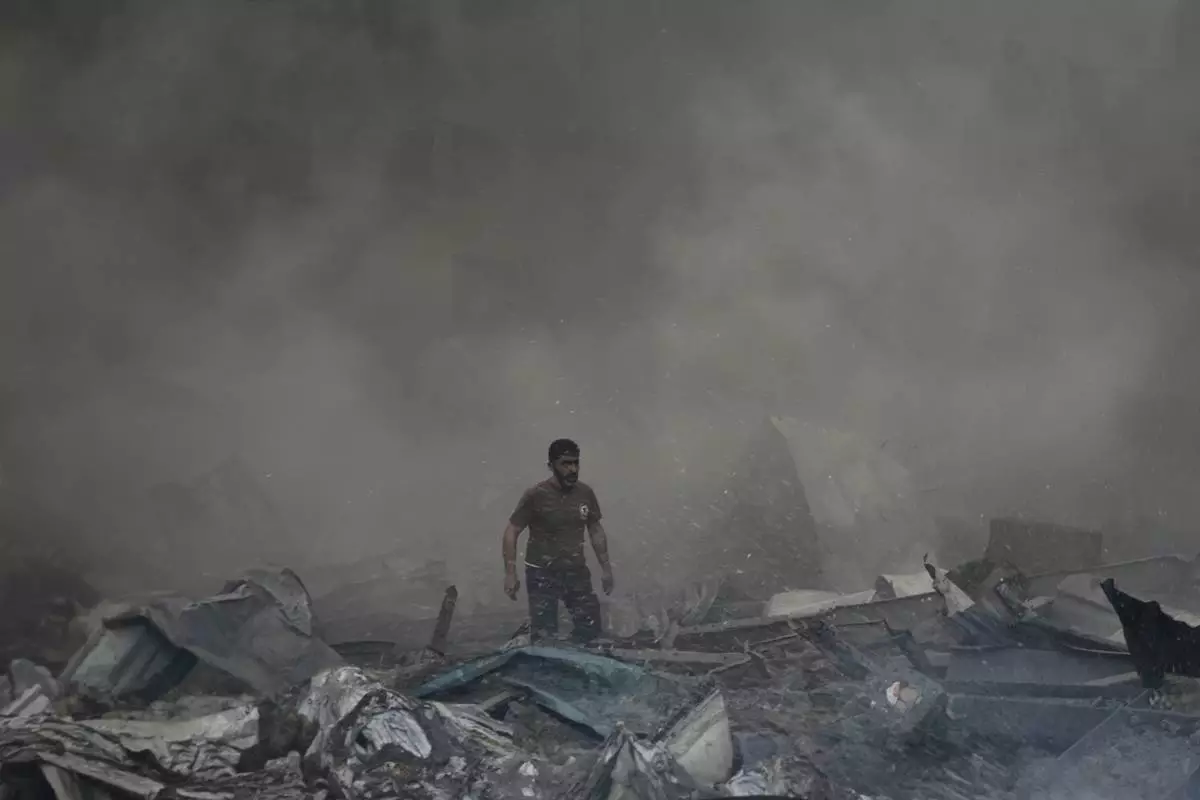
A first responder emerges through the smoke at the site of an Israeli airstrike that struck an apartment building in Beirut, Lebanon, Wednesday, April 8, 2026. (AP Photo/Bilal Hussein)
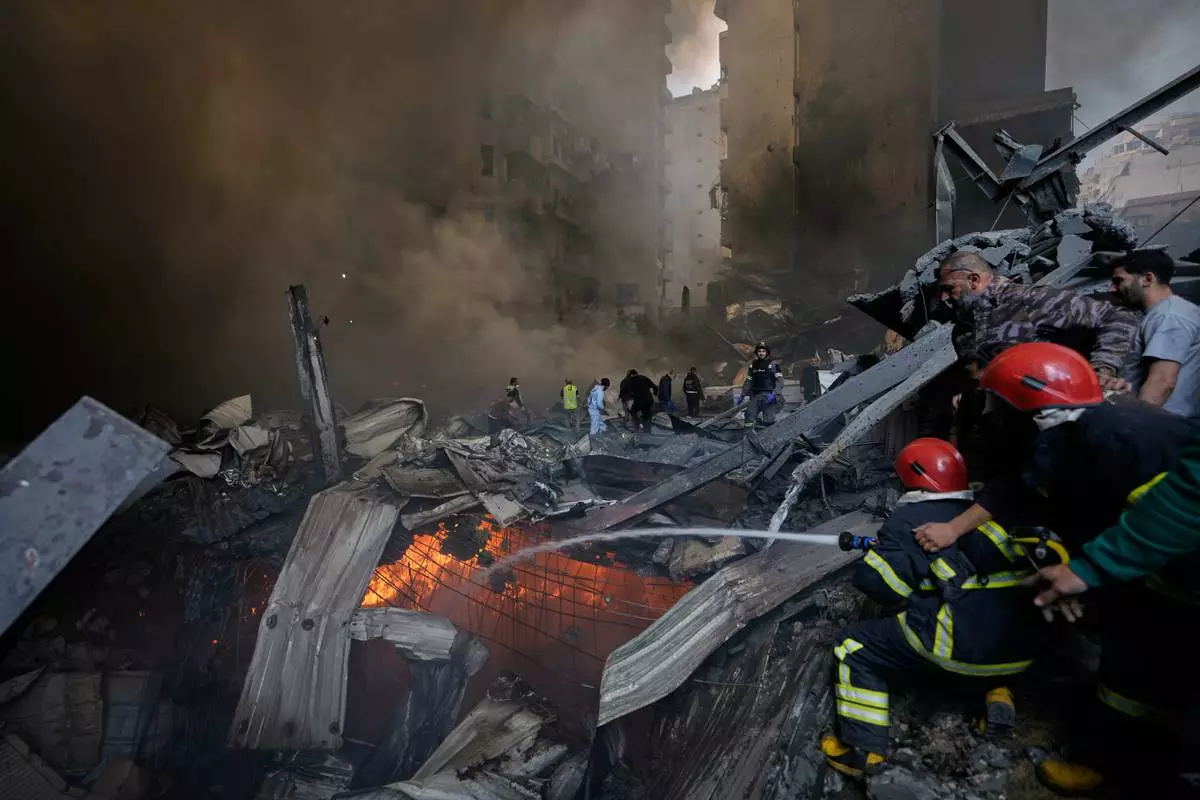
Firefighters try to put out flames at the site of an Israeli airstrike that struck an apartment building in Beirut, Lebanon, Wednesday, April 8, 2026. (AP Photo/Bilal Hussein)
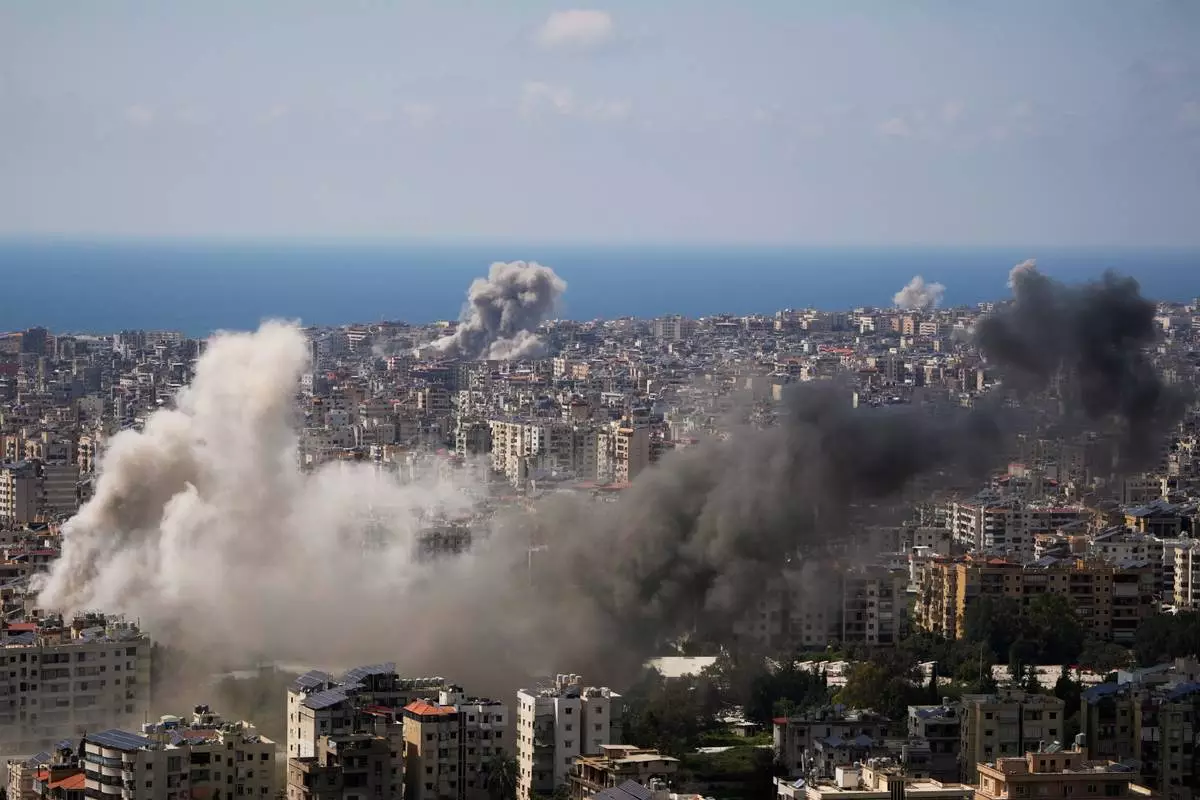
Smoke rises following several Israeli airstrikes in Beirut, Lebanon, Wednesday, April 8, 2026. (AP Photo/Hassan Ammar)
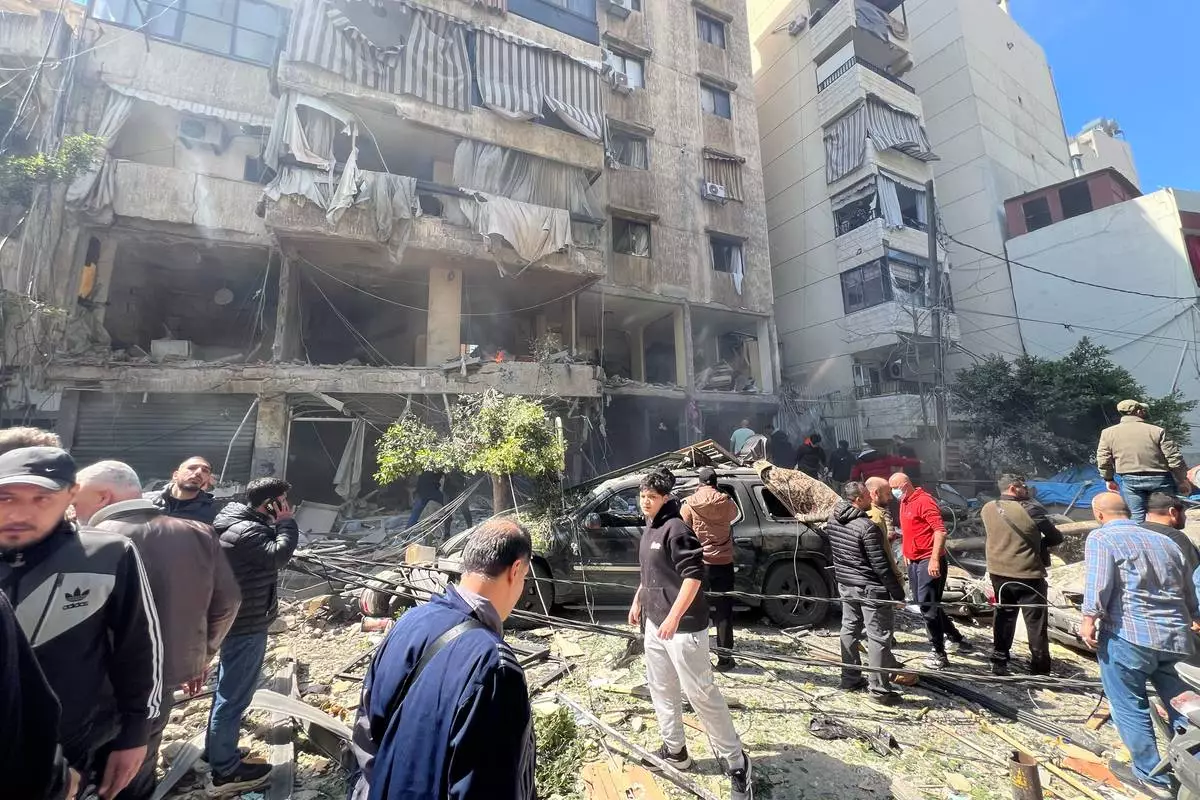
People gather at the site of an Israeli airstrike that hit an apartment building in Beirut, Lebanon, Wednesday, April 8, 2026. (AP Photo/Hussein Malla)
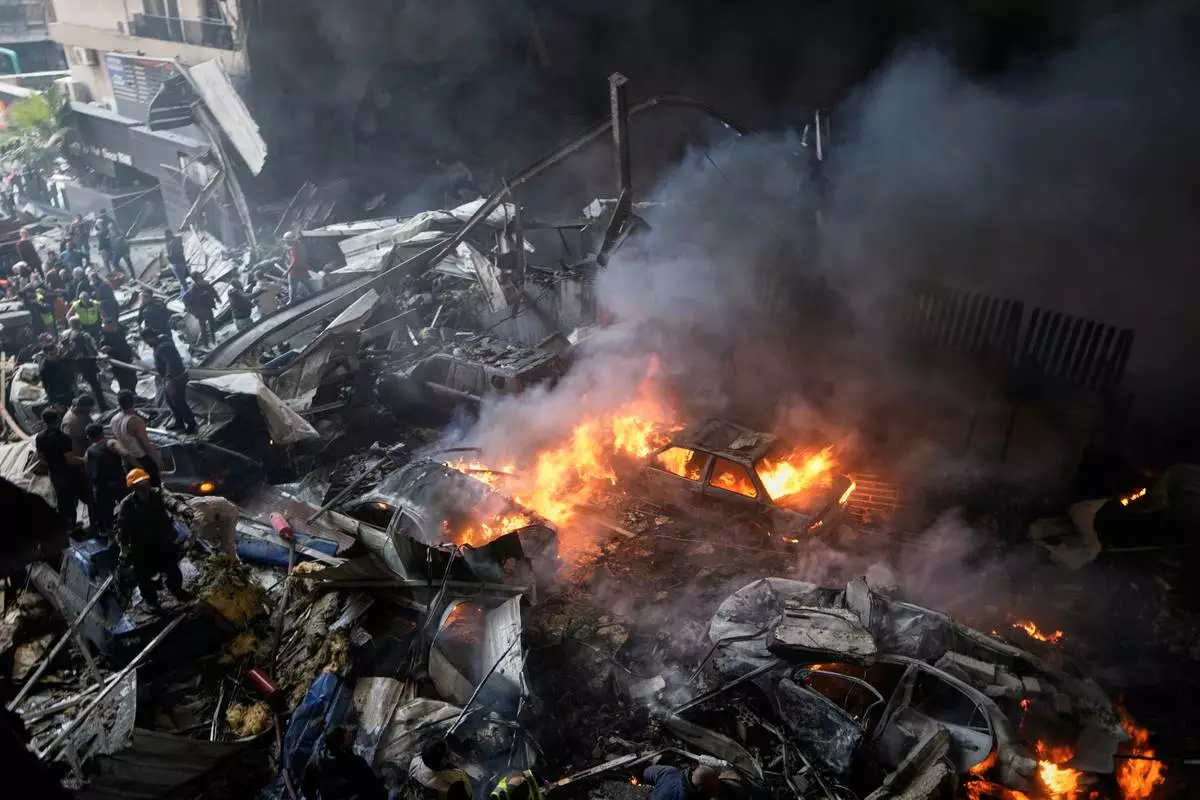
First responders work at the site of an Israeli airstrike that struck an apartment building in Beirut, Lebanon, Wednesday, April 8, 2026. (AP Photo/Bilal Hussein)
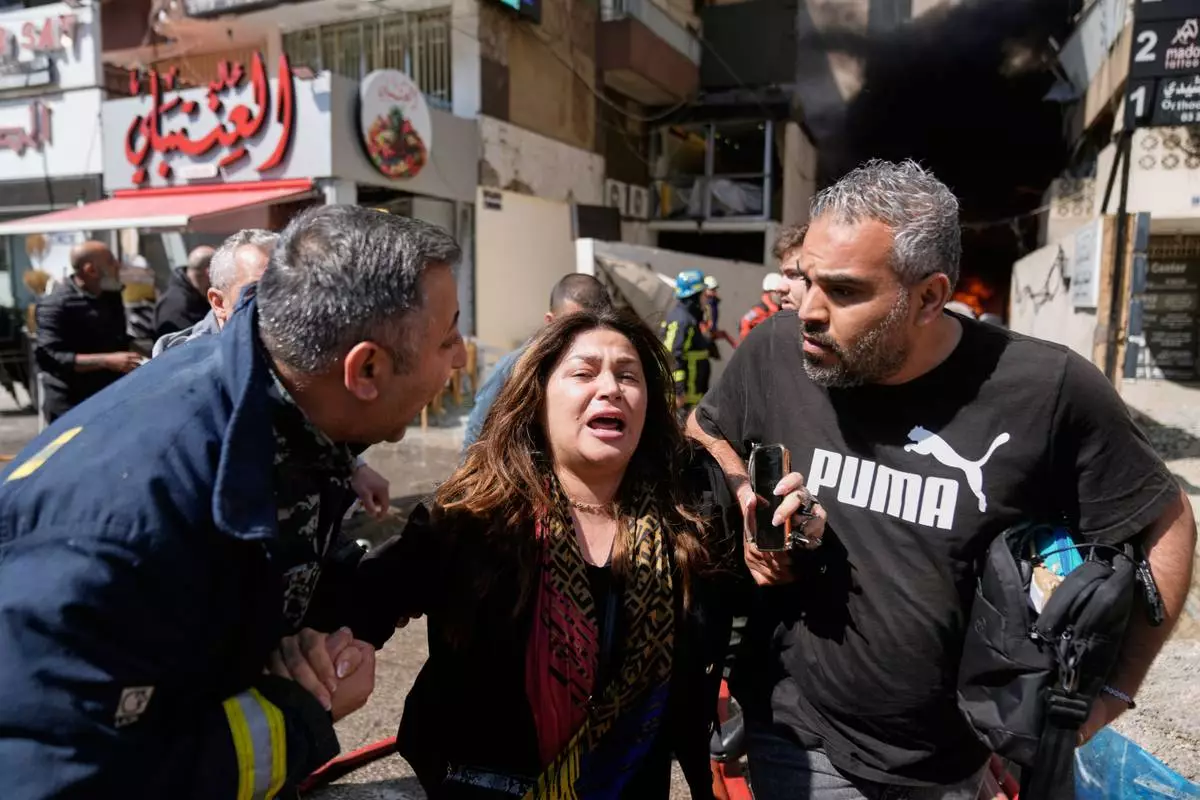
A woman is assisted at the site of an Israeli airstrike that struck an apartment building in Beirut, Lebanon, Wednesday, April 8, 2026. (AP Photo/Bilal Hussein)
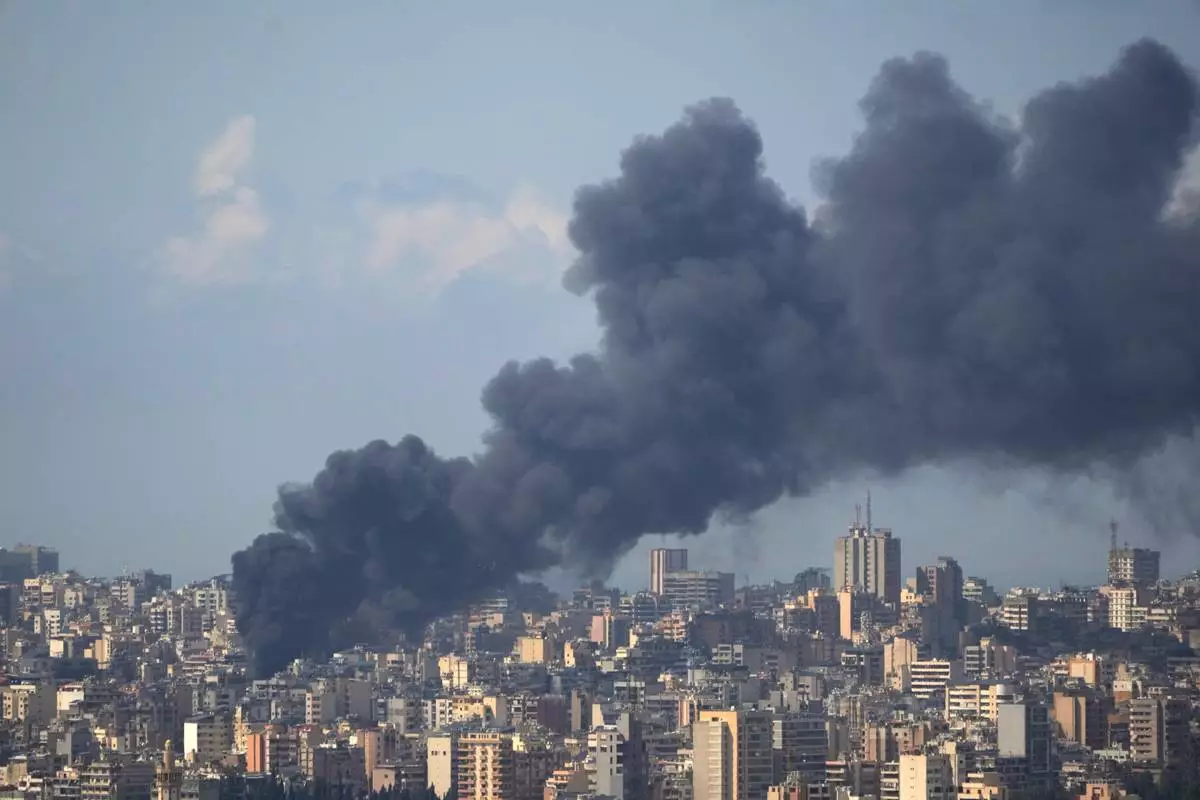
Smoke rises following an Israeli airstrike on a building in Beirut, Lebanon, Wednesday, April 8, 2026. (AP Photo/Hassan Ammar)