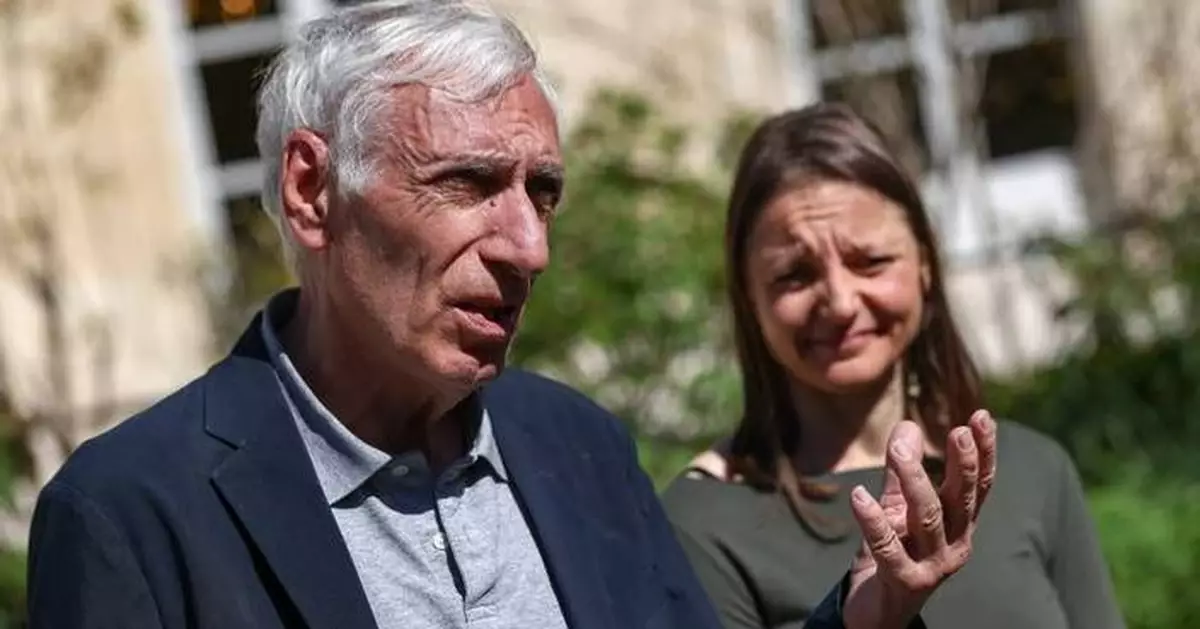
PARIS (AP) — French former detainees Cécile Kohler and Jacques Paris returned to France Wednesday after more than three years of detention in Iran, following weeks of talks with Tehran.
Kohler, 41, and Paris, 72, left by road on Tuesday, right before a tentative ceasefire between the United States and Iran was announced to halt fighting that has rocked the region since Feb. 28. Their release was hailed as a major diplomatic success by French authorities.
Click to Gallery
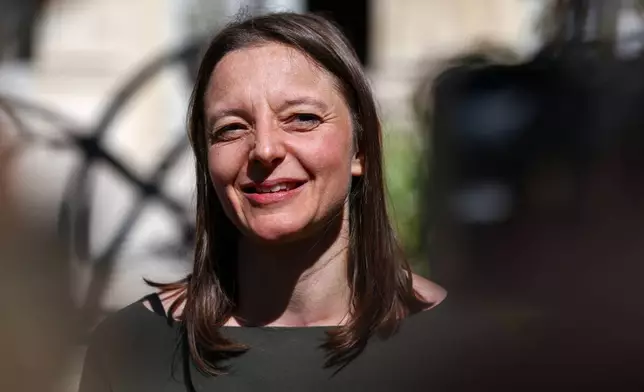
Cecile Kohler, a French national who were freed by Iran with Jacques Paris after three and a half years in detention, speaks to media at the Elysee Palace as they are hosted by French President Emmanuel Macron, in Paris, France, April 8, 2026. (Tom Nicholson/Pool Photo via AP)
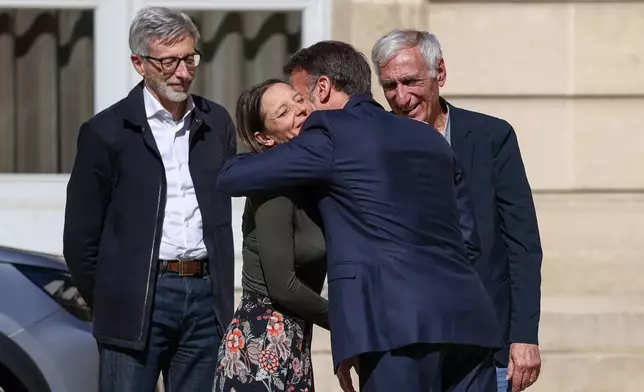
French President Emmanuel Macron, centre right, greets Cecile Kohler, a French national who was freed by Iran with Jacques Paris, right, after three and a half years in detention, next to French ambassador to Iran Pierre Cochard at the Elysee Palace in Paris, France, April 8, 2026. (Tom Nicholson/Pool Photo via AP)
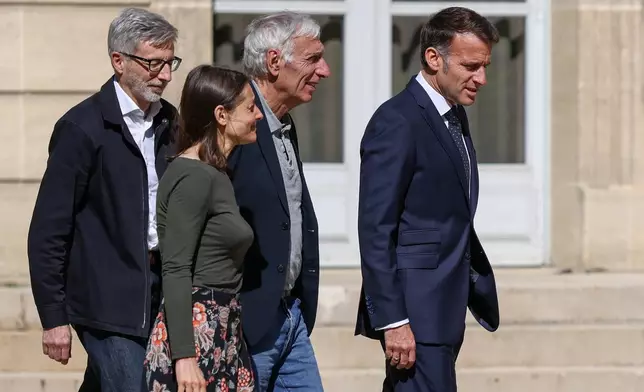
French President Emmanuel Macron, right, walks with Jacques Paris, second from right, and Cecile Kohler, third from right, French nationals who was freed by Iran with Cecile Kohler after three and a half years in detention, and French ambassador to Iran Pierre Cochard, left, at the Elysee Palace in Paris, France, April 8, 2026. (Tom Nicholson/Pool Photo via AP)
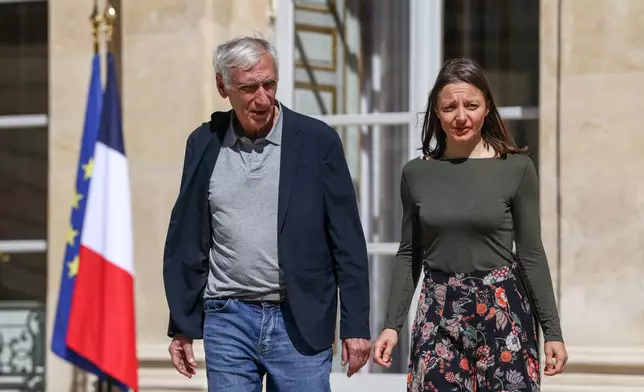
Jacques Paris, left, and Cecile Kohler, French nationals who were freed by Iran with after three and a half years in detention, walk at the Elysee Palace as they are hosted by French President Emmanuel Macron, in Paris, France, April 8, 2026. (Tom Nicholson/Pool Photo via AP)
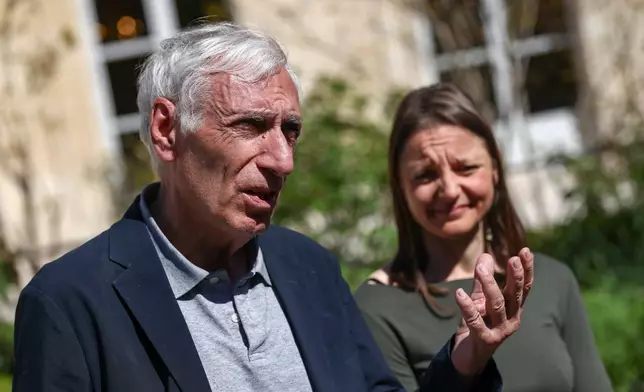
Jacques Paris, left, and Cecile Kohler, French nationals who were freed by Iran with after three and a half years in detention, speak to media at the Elysee Palace as they are hosted by French President Emmanuel Macron, in Paris, France, April 8, 2026. (Tom Nicholson/Pool Photo via AP)
President Emmanuel Macron, who has attempted to distance his country from the Middle East conflict, welcomed them at the Elysee presidential palace.
Arrested on soying charged, they were released from prison in Iran in November. However, the two had been holed up in French diplomatic premises in Tehran as Iranian authorities wouldn't allow them to leave the country. Macron said they were given the green light to make their way back home on Tuesday.
“We realize just how much we ‘narrowly escaped’, so to speak, because it could have been much worse,” Kohler told reporters Wednesday. “It’s been two days that we’ve been under strain, because we traveled by car, then by plane. We haven’t slept for two days,” she said.
Kohler and Paris were driven from Iran to neighboring Azerbaijan, a journey that takes about 9 hours, before taking a flight to Paris, French authorities said. They were accompanied all the way by France's ambassador to Tehran, Pierre Cochard.
Macron's office said their release is the outcome of a “long-term effort," but talks accelerated in recent weeks due to pressure from the Iran war, giving a sense of urgency to the situation.
He said last week the U.S. couldn’t complain about a lack of support from allies after deciding to launch the Iran war without consultation. “This is not our (military) operation,” he told reporters during a visit to South Korea.
The French leader was the first Western head of state to speak on March 8 with Iranian President Masoud Pezeshkian after the war erupted. Since then, they spoke on the phone twice, on March 15 and March 24.
French authorities also thanked Oman for its mediation role to secure the release of Kohler and Paris.
Omani authorities “made it possible, in the final stretch, to convey a certain number of messages within the Iranian system,” French Foreign Minister Jean-Noël Barrot said on France 2 national television.
“On Sunday evening, Easter Sunday, I received a call from my counterpart, Iran’s foreign minister, confirming that the decision had been made on their side,” he said.
Barrot said details of negotiations with Iran would remain “confidential.”
However, Iran’s state-run agency IRNA reported Tuesday that Iran had reached an agreement with France for the release of both French citizens in exchange for Iranian national Mahdieh Esfandiari.
Macron’s office denied there was any such agreement about a prisoner swap.
Tehran has been pressing since last year for the release of Esfandiari, who was convicted in France on charges of inciting terrorism over comments she made about the Hamas-led Oct. 7, 2023 attacks on Israel.
Esfandiari was sentenced in February to one year in prison with an additional three-year suspended sentence, along with a permanent ban from French territory. She appealed the decision.
She has since been under house arrest, a measure that was lifted on Tuesday afternoon, shortly after it was made public that the two French nationals had left Iran, her lawyer Nabil Boudi told The Associated Press.
Kohler and Paris thanked on Wednesday all those who helped them out of Iran.
Talking to reporters, they called Iran's Evin prison, where many political prisoners and dissidents are held, “hell.”
“We experienced daily horror,” Kohler said.
Paris said they felt “under constant threat” while in detention.
“We had no right to read, no right to write. Whenever we left our cell, we were blindfolded,” he said.
“One of the goals was likely to break us," Paris added. "We are not broken. We will bear witness, we will speak out, and we will enjoy life again.”
The couple was vacationing in Iran when they were arrested in May 2022.
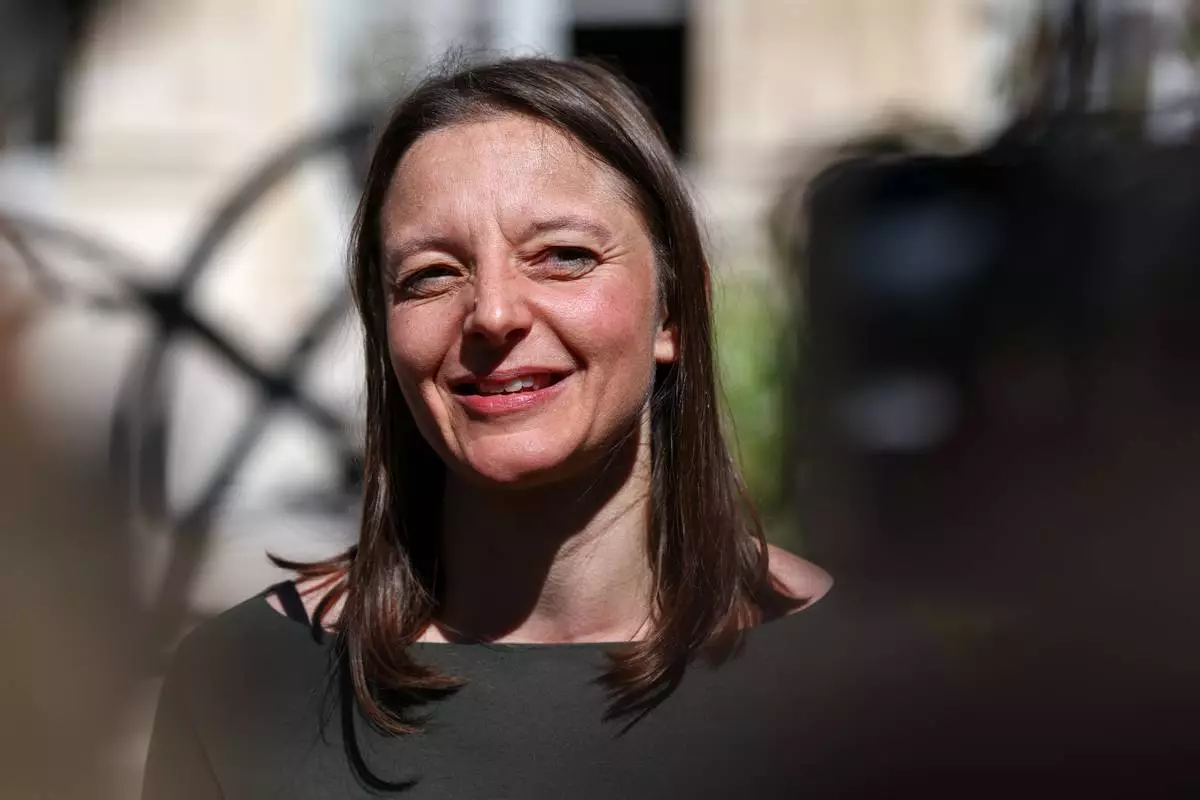
Cecile Kohler, a French national who were freed by Iran with Jacques Paris after three and a half years in detention, speaks to media at the Elysee Palace as they are hosted by French President Emmanuel Macron, in Paris, France, April 8, 2026. (Tom Nicholson/Pool Photo via AP)
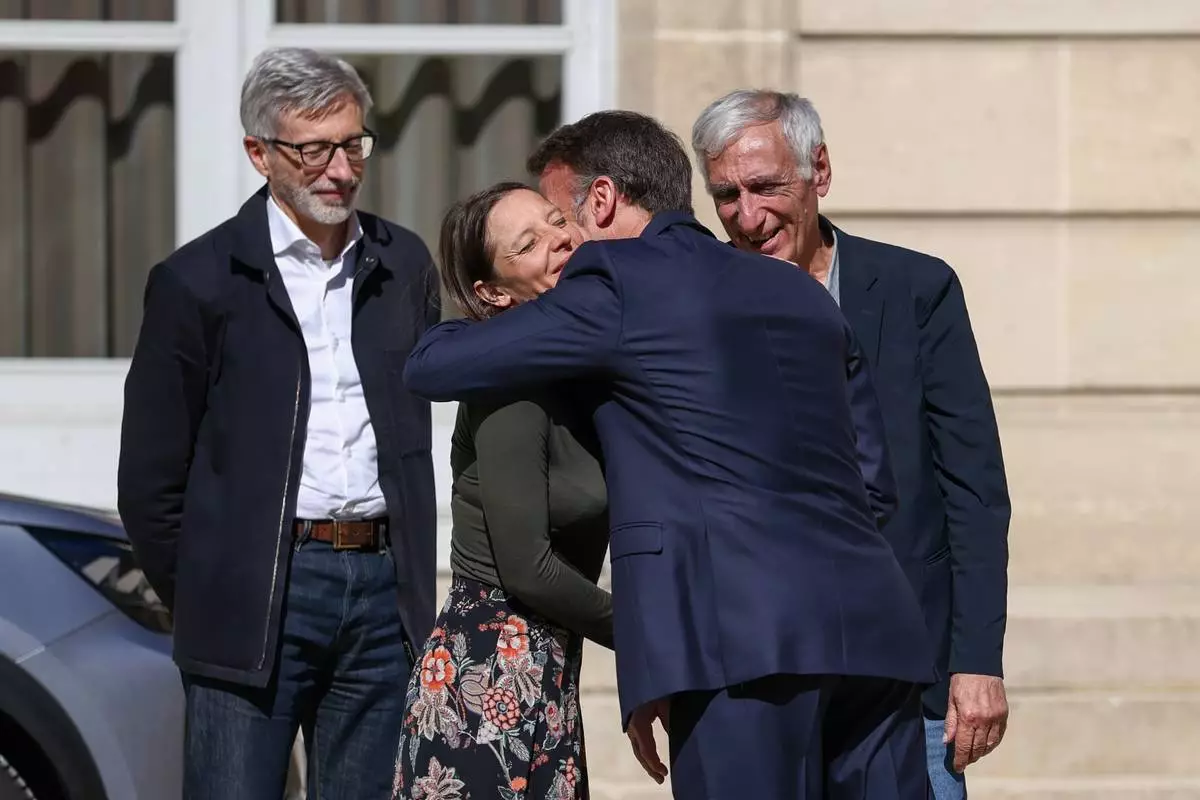
French President Emmanuel Macron, centre right, greets Cecile Kohler, a French national who was freed by Iran with Jacques Paris, right, after three and a half years in detention, next to French ambassador to Iran Pierre Cochard at the Elysee Palace in Paris, France, April 8, 2026. (Tom Nicholson/Pool Photo via AP)
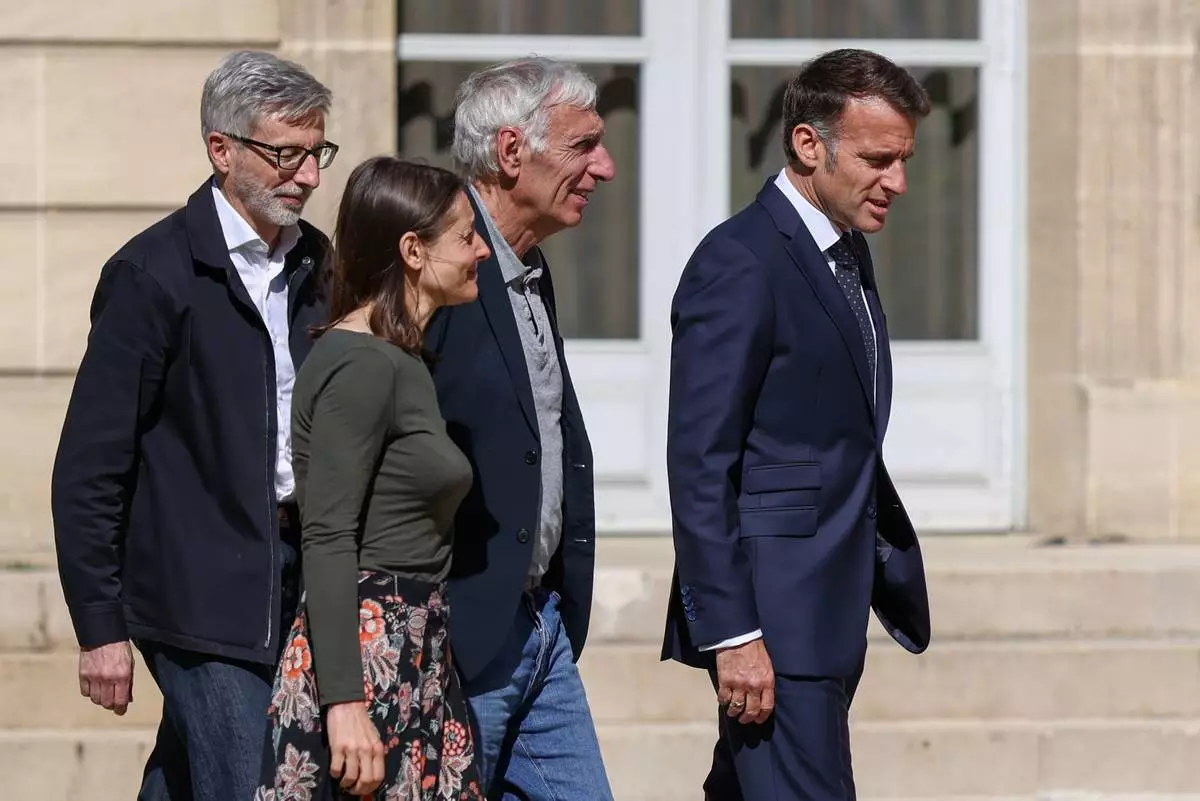
French President Emmanuel Macron, right, walks with Jacques Paris, second from right, and Cecile Kohler, third from right, French nationals who was freed by Iran with Cecile Kohler after three and a half years in detention, and French ambassador to Iran Pierre Cochard, left, at the Elysee Palace in Paris, France, April 8, 2026. (Tom Nicholson/Pool Photo via AP)
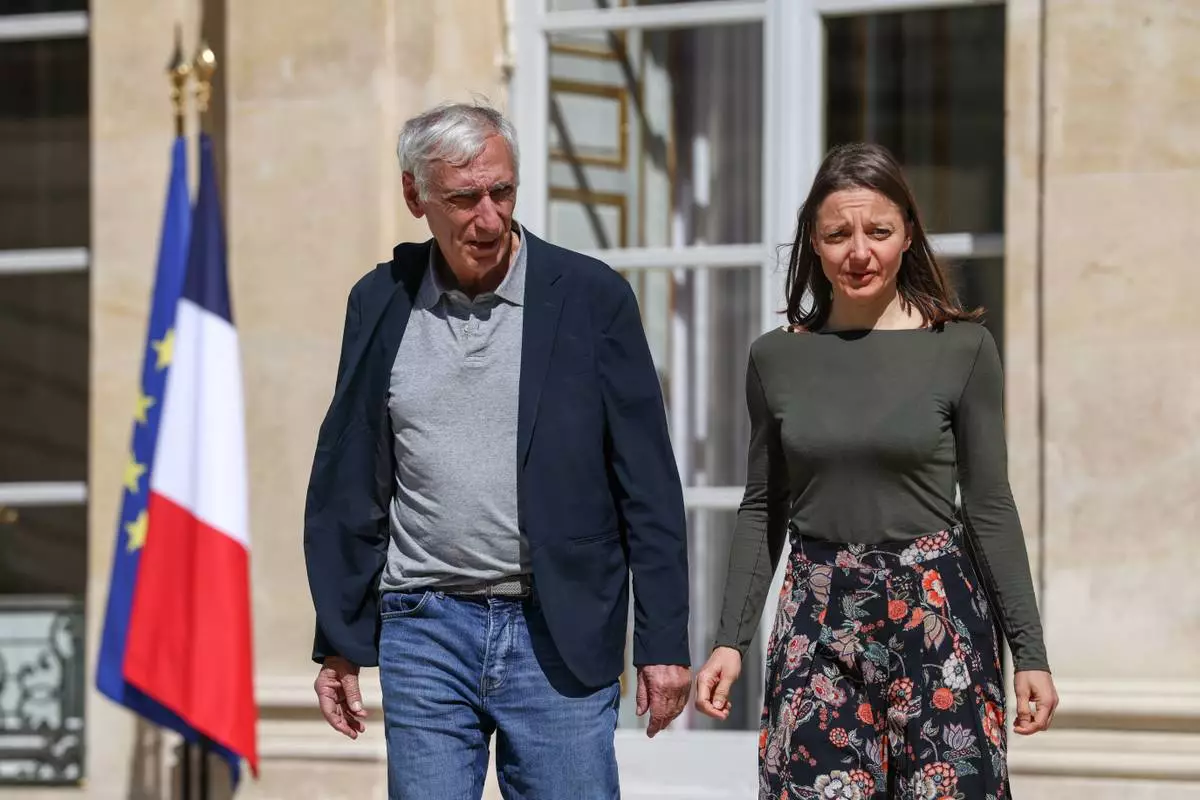
Jacques Paris, left, and Cecile Kohler, French nationals who were freed by Iran with after three and a half years in detention, walk at the Elysee Palace as they are hosted by French President Emmanuel Macron, in Paris, France, April 8, 2026. (Tom Nicholson/Pool Photo via AP)
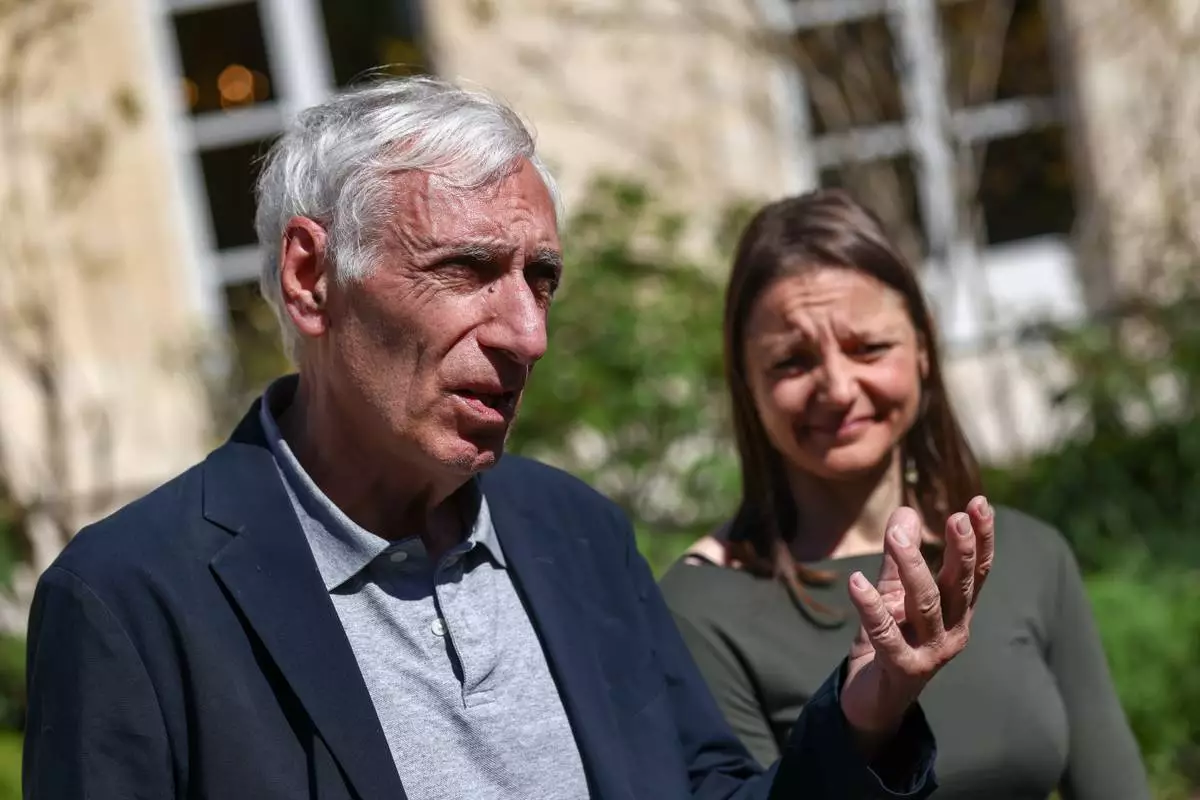
Jacques Paris, left, and Cecile Kohler, French nationals who were freed by Iran with after three and a half years in detention, speak to media at the Elysee Palace as they are hosted by French President Emmanuel Macron, in Paris, France, April 8, 2026. (Tom Nicholson/Pool Photo via AP)