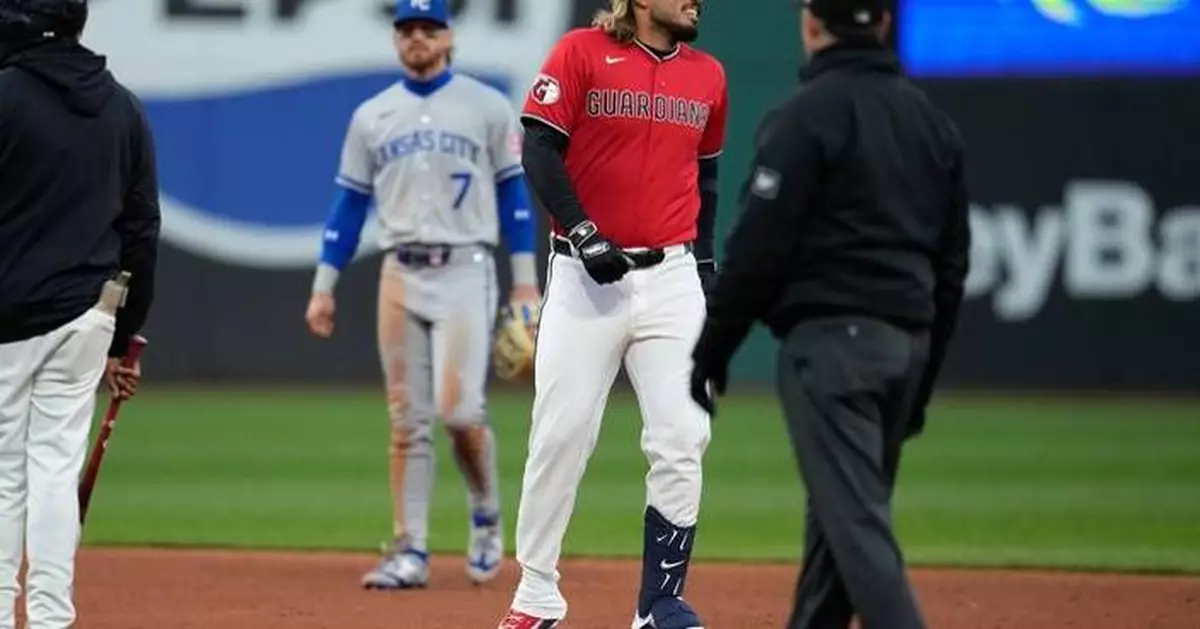
CLEVELAND (AP) — Cleveland Guardians shortstop Gabriel Arias is expected to miss four to eight weeks with a moderate left hamstring strain that occurred during Monday night's game against Kansas City.
The 26-year-old was hurt while running out a double in the fifth inning and left the game. He was placed on the 10-day injured list Tuesday after undergoing medical tests, the results of which were announced Wednesday.
“He’s in some pain,” Guardians manager Stephen Vogt said before the three-game series finale against the Royals.
Arias, who is batting .200 with two homers and four RBIs in 10 games, will be re-examined weekly throughout his rehabilitation. This is his third full season as a starter for Cleveland.
The Guardians recalled second baseman Juan Brito from Triple-A Columbus to take his place in the lineup, while moving Brayan Rocchio from second to shortstop. They started the final two contests against Kansas City.
AP MLB: https://apnews.com/mlb
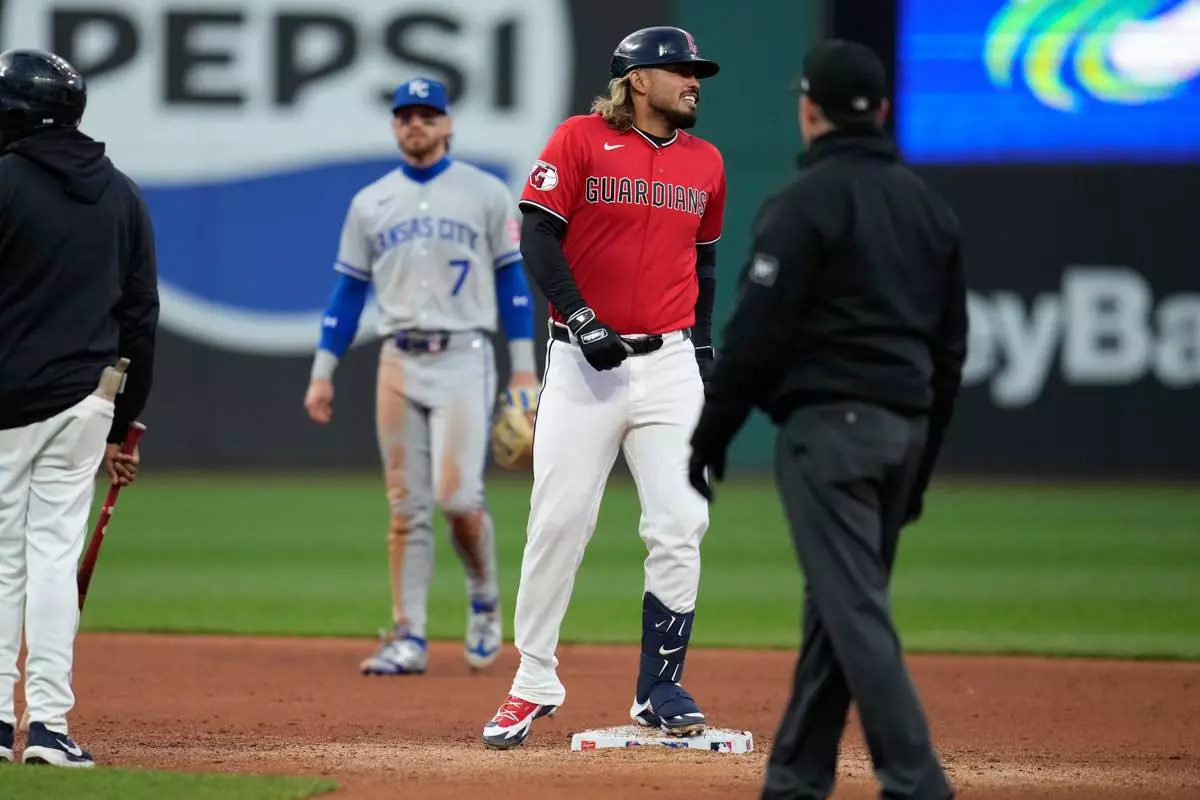
Cleveland Guardians' Gabriel Arias, second from right, at second base after pulling up with an injury after running to second on a double in the fifth inning of a baseball game against the Kansas City Royals in Cleveland, Monday, April 6, 2026. (AP Photo/Sue Ogrocki)
MEXICO CITY (AP) — Mexican President Claudia Sheinbaum on Wednesday announced plans to tap into unconventional natural gas deposits in an effort to lower her country's reliance on foreign energy at a time when the Iran war is disrupting global energy markets.
But Sheinbaum — a scientist and climate expert — notably avoided the term hydraulic fracturing or “fracking,” a drilling method used to extract oil and natural gas from deep underground bedrock using a highly pressurized liquid. Instead, she framed the initiative as a quest for “sustainable” extraction, emphasizing that environmental impacts would be minimized to the greatest extent possible.
The technical feasibility of “sustainable fracking” is a subject of significant debate among environmental scientists and energy experts. But Sheinbaum said a technical committee will spend two months evaluating less harmful methods, such as utilizing nonpotable water and reducing chemical additives. The committee will also assess the potential costs of these mitigations, she said.
“All the gas we import comes from a type of extraction that has environmental impacts” and is “100 meters from the Mexican border,” she noted, alluding to fracking projects in Texas.
Mexico is the world’s single largest buyer of U.S. gas.
While noting that natural gas import contracts with the U.S. remain secure and the bilateral relationship is strong, she argued that increasing energy sovereignty is a responsible necessity. “Is more gas needed? Yes. Can all gas be replaced? Hardly,” she added.
Since assuming power in October 2024, Sheinbaum has pledged to expand renewable energy while maintaining firm support for the state-owned Petróleos Mexicanos. On Wednesday, she defended this stance by arguing that fossil fuels remain an essential component of Mexico’s energy landscape.
Sheinbaum said the priority is to reduce external energy dependence in turbulent times and avoid situations like the one experienced in Europe with the shortage of Russian gas during the war in Ukraine or the one caused by the current war in the Middle East.
Wednesday's proposal — which is certain to spark controversy — comes amid a surge in infrastructure projects designed to increase U.S. gas imports. These developments aim to satisfy Mexico’s rising domestic electricity demand while positioning the country as a hub for re-exporting gas to Asian and European markets.
Follow AP’s coverage of Latin America and the Caribbean at https://apnews.com/hub/latin-america
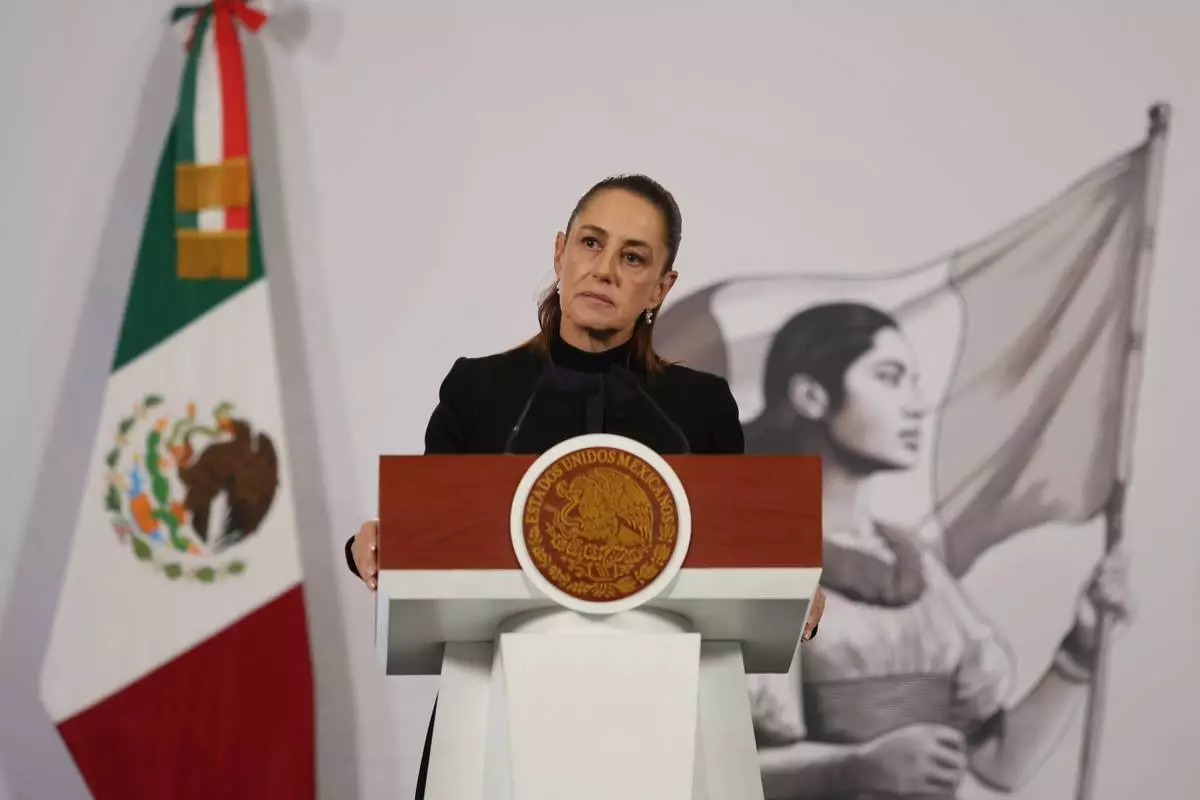
FILE - Mexican President Claudia Sheinbaum gives her the daily, morning news conference at the National Palace in Mexico City, Feb. 23, 2026. (AP Photo/Ginnette Riquelme, File)