The spillover effects of the Middle East crisis have been spreading across the globe, with the economic implications of the U.S.-Israel war on Iran impacting on people's livelihoods and seeing hefty increases in the cost of living seen all around the world.
Following weeks of escalating tensions, Iran and the United States have agreed to a 2-week ceasefire less than two hours before a deadline set by U.S. President Donald Trump, and are set to hold negotiations in Pakistan.
Trump announced on Tuesday he has agreed to "suspend the bombing and attack of Iran for a period of two weeks," after earlier threatening that a "whole civilization will die tonight" unless the Strait of Hormuz was re-opened.
Much of the wider economic pain has come from the weeks of disruption to shipping along the Strait of Hormuz, a vital chokepoint through which a considerable share of the world's oil, liquefied natural gas, and fertilizers are transported.
In Spain, costs of agricultural production have risen significantly, giving rise to price increases for many food products.
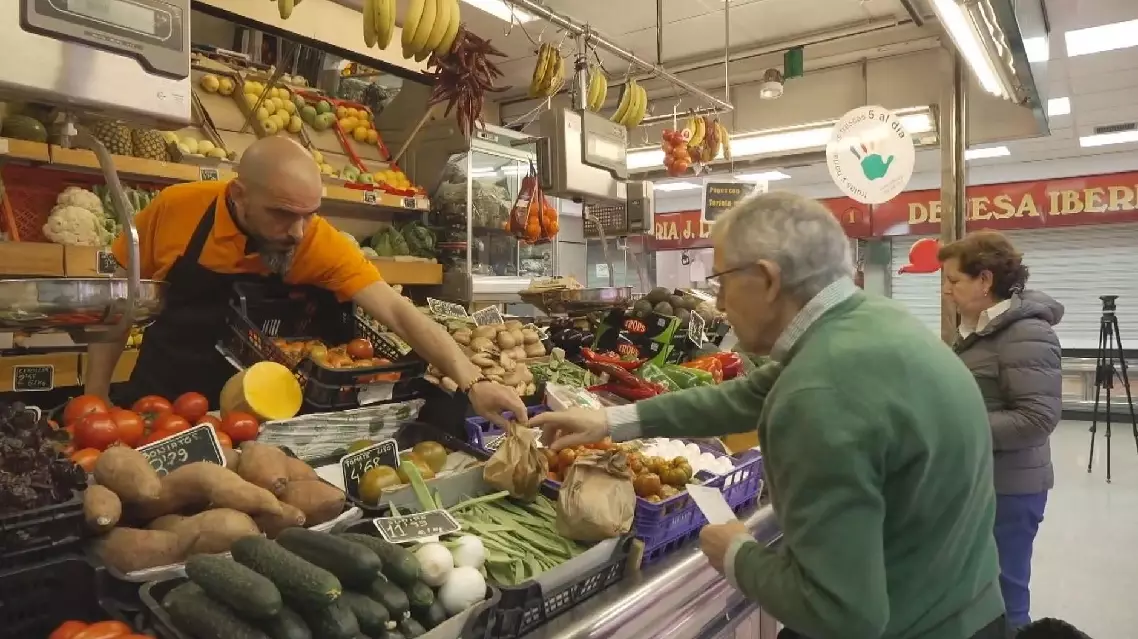
Vendors at a community vegetable market in Madrid said that prices of common vegetables such as tomatoes have fluctuated significantly recently, with some agricultural products seeing prices rise by about 30 to 50 percent compared to the same period last year.
Market data shows that the price of nitrogen fertilizers such as urea in Europe has increased by about 30 to 32 percent, and this increase has been passed on from grains and feed to other stages, ultimately pushing up the prices of everyday food items such as meat and bread.
"Fish prices have risen significantly, and fruit is also expensive now. My daughter's family has five members, and she now has to search everywhere for cheaper supermarkets," said a resident in Madrid. In Singapore, catering and food industries have been put under significant pressure, as the sharp increase in energy prices brought by the war has pushed up transportation costs and raw material prices.
"There is indeed a significant impact, as electricity and gas account for approximately 5 to 8 percent of restaurant costs. Imported ingredients, such as seafood, beef, and dairy products, have seen particularly noticeable price increases, primarily due to rising energy costs, which have driven up transportation, cold chain, and production costs. This is compounded by exchange rate fluctuations and global supply shortages," said Zhou Jiameng, president of Tung Lok Group, one of Singapore's leading restaurant groups.
K. Shanmugam, Singapore's Coordinating Minister for National Security and Minister for Home Affairs, said in a ministerial statement to Parliament on Tuesday that the government's primary concern is the pressure from rising food prices. He said that Singapore maintains a certain level of strategic food reserves to provide a buffer against unforeseen supply disruptions.
In the UK, despite efforts to transition to renewables, fossil fuels remain dominant in its energy mix, leaving it at the mercy of energy shocks brought about by the war on Iran.
Motorists in Britain are paying more for petrol and diesel than they were a month ago. While the country still has a dwindling source of oil from the North Sea and buys petrol from refineries in Belgium and the Netherlands, importing diesel is much more expensive, and is having a direct impact on millions of British drivers.
"Being a musician, my line of work, I need to travel quite often on weekends. The trains actually don't always get me to where I need to go, so I need my car, and I need fuel in my car, so it’s really important," said a resident named Redmond.
Economic pain felt worldwide as US-Israel war on Iran brings about higher living costs