SEOUL, South Korea (AP) — North Korea said Thursday its testing spree this week involved various new weapons systems, including ballistic missiles armed with cluster-bomb warheads, as it pushes to expand nuclear-capable forces aimed at rival South Korea.
The report by North Korean state media came a day after South Korea’s military said it detected North Korea firing multiple missiles from an eastern coastal area in its second round of launches in two days.
North Korea’s official Korean Central News Agency said the tests lasted three days starting Monday and also included demonstrations of anti-aircraft weapons, purported electromagnetic weapons systems and carbon-fiber bombs.
South Korea’s Joint Chiefs of Staff said the missiles launched Wednesday flew 240 to 700 kilometers (150 to 434 miles) before falling into the sea, and that it also detected at least one projectile launched Tuesday from an area near the North Korean capital of Pyongyang.
Japan’s Defense Ministry said none of the weapons fired Wednesday entered waters within its exclusive economic zone, while the U.S. military said the North Korean launches on Tuesday and Wednesday posed no immediate threat to the United States or its allies.
KCNA said the latest tests included demonstrations of cluster-munition warhead systems mounted on the nuclear-capable Hwasong-11 ballistic missiles, which resemble Russia’s Iskander missiles in their design for low-altitude, maneuverable flight to evade missile defense systems. The report said the launches confirmed that the short-range missile, when armed with such warheads, “can reduce to ashes any target covering an area of 6.5-7 hectares (16 to 17.2 acres) with the highest-density power.”
Jang Do-young, a spokesperson for South Korea’s Joint Chiefs of Staff, said at a briefing that the military was analyzing the launches while sharing information with U.S. and Japanese counterparts, but declined to provide specific assessments about the North’s claims of progress in its military capabilities.
The launches underscored continuing tensions between the Koreas, blunting South Korean hopes for warmer relations.
In a statement Tuesday night, Jang Kum Chol, a first vice minister at Pyongyang’s Foreign Ministry, said South Korea would always remain the North’s “most hostile enemy state” and mocked Seoul’s liberal government for seeking to revive restore long-stalled dialogue, calling its officials “world-startling fools.”
North Korean leader Kim Jong Un has suspended virtually all diplomacy with Seoul and Washington since the collapse of his nuclear talks with President Donald Trump in 2019, and has since accelerated the development of nuclear-capable missiles that threaten U.S. allies in Asia as well as the U.S. mainland.
Kim has also pursued closer ties with Russia, China and other countries embroiled in confrontations with the United States as he looks to break out of isolation and strengthen his regional footing. North Korean state media says Chinese Foreign Minister Wang Yi will arrive in the country on Thursday for a two-day trip in the latest round of diplomacy between the countries.
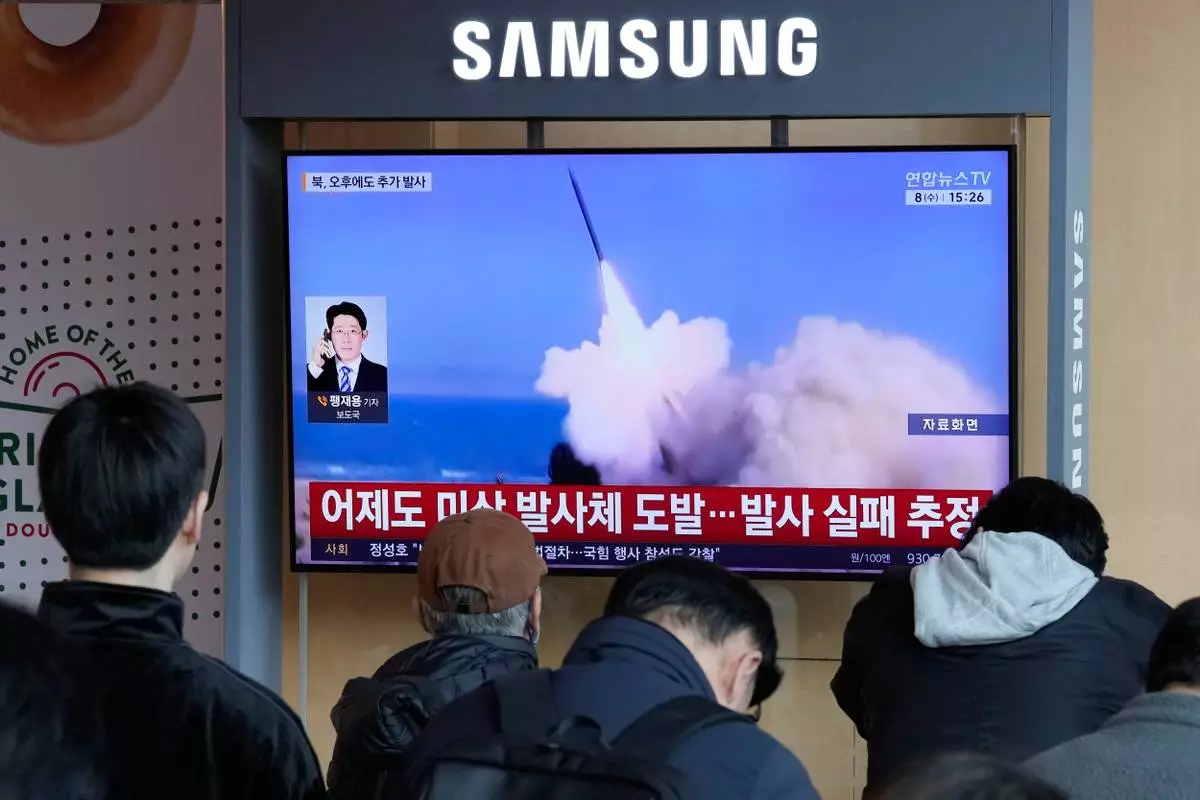
A TV screen shows a file image of North Korea's missile launch during a news program at Seoul Railway Station in Seoul, South Korea, Wednesday, April 8, 2026. (AP Photo/Ahn Young-joon)
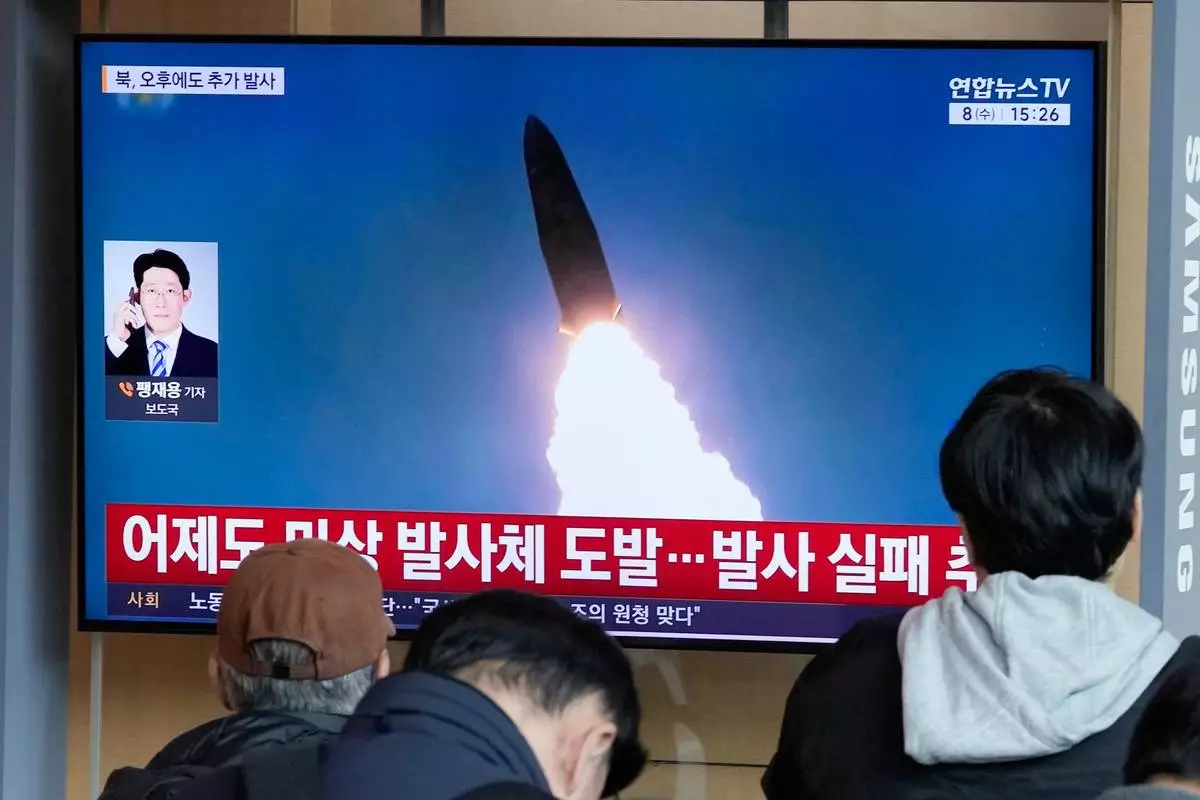
A TV screen shows a file image of North Korea's missile launch during a news program at Seoul Railway Station in Seoul, South Korea, Wednesday, April 8, 2026. (AP Photo/Ahn Young-joon)
ARAFAT, Saudi Arabia (AP) — Muslim pilgrims from around the world congregated on Mount Arafat in Saudi Arabia on Tuesday, the second official day of the annual Islamic pilgrimage, considered the pinnacle of the Hajj.
Despite the sweltering heat, the pilgrims gathered on the rocky hill and surrounding plain for intense prayers and worship that often mark a spiritual peak for them. They fervently murmured prayers and poured their hearts out in supplications. Many raised their hands in worship. It is common for pilgrims on that day, some with tears streaming down their faces, to ask God for forgiveness, mercy, blessings and good health.
The Hajj, one of the Five Pillars of Islam, is required once in a lifetime for every Muslim who can afford it and is physically able to perform it.
For pilgrims, the Hajj, performed over several days, can be a deeply moving spiritual experience and a chance to seek God’s forgiveness and the erasure of past sins. As they brave the intense heat to perform religious rituals, many pilgrims have been using umbrellas for shade.
A Saudi official said on Friday that more than 1.5 million pilgrims have arrived in the country from abroad.
This year, Muslims have been pouring into Saudi Arabia for the Hajj against the backdrop of a tenuous ceasefire in the Iran war and related uncertainty in the region.
The U.S. military said Monday that it carried out “self-defense” strikes in southern Iran, including on missile launch sites and boats used to lay mines, even as President Donald Trump said on social media that negotiations with Tehran were “proceeding nicely." Iran on Tuesday denounced the most recent U.S. strikes as a sign of “bad faith and unreliability” as negotiations pressed on toward a possible deal to end the war.
For many, performing the Hajj can be a realization of a lifelong dream as they spend years hoping and praying to one day be able to undertake the pilgrimage or saving up money and waiting for a permit to embark on the trip.
“This happens once in a lifetime,” Mohammad Asal, an Egyptian pilgrim, said. “People here have prepared their prayers, hoping that God will respond to them, because we know that ... the most important ritual of the Hajj is being in Arafat.”
The Hajj brings together large numbers of Muslims of diverse races, ethnicities, languages and socioeconomic classes, creating a sense of unity for many. It’s a mass, communal experience, with Muslims performing rituals together. But it is also deeply personal, as every pilgrim brings their own yearnings and experiences.
“It was incredible,” Ahmed Sufyan, a pilgrim from the United States, said on Tuesday. “The unity and peace that we feel is something I’ve never experienced before,” he added via WhatsApp.
“Our wishes are many,” Mohammad Obaid, a Sudanese pilgrim, said, adding he was praying for Sudan and Muslims everywhere.
Fam reported from Winter Park, Florida.
Associated Press religion coverage receives support through the AP’s collaboration with The Conversation US, with funding from Lilly Endowment Inc. The AP is solely responsible for this content.
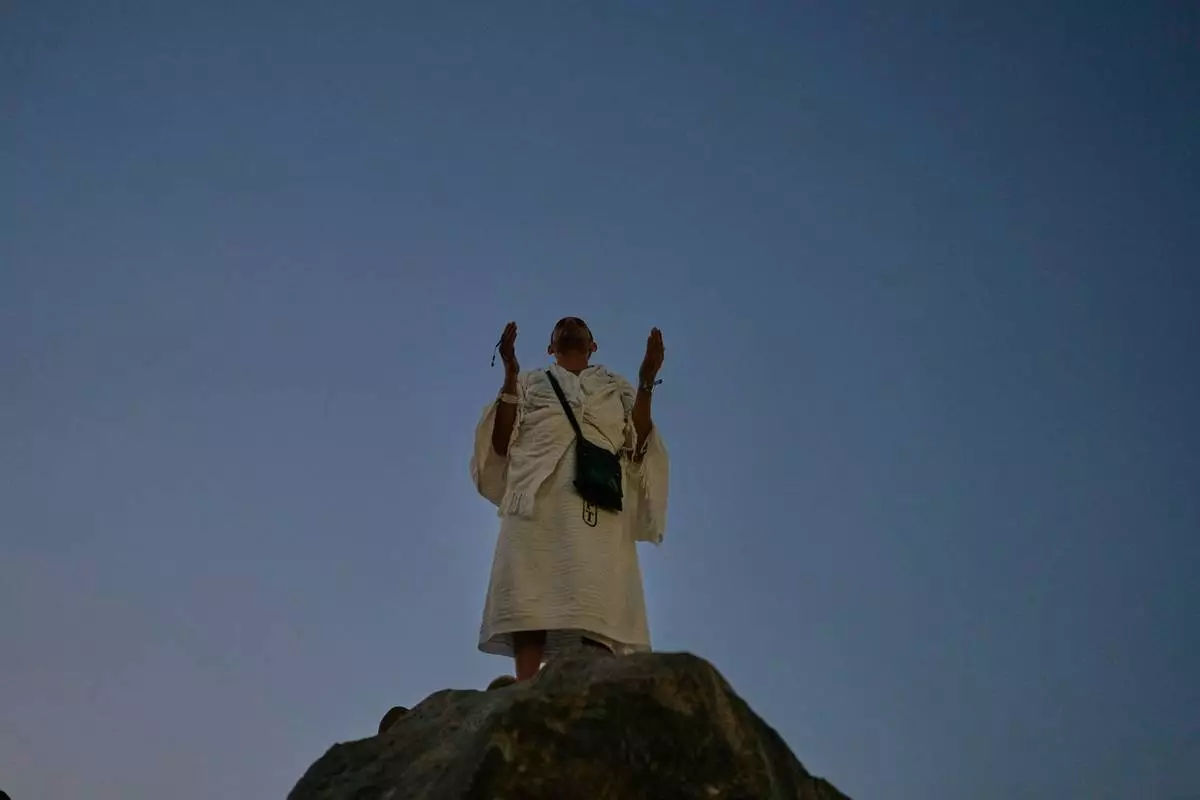
A Muslim pilgrim pray atop of the rocky hill known as the Mountain of Mercy, on the Plain of Arafat, during the annual Hajj pilgrimage near the holy city of Mecca, Saudi Arabia, Tuesday, May 26, 2026. (AP Photo/Altaf Qadri)
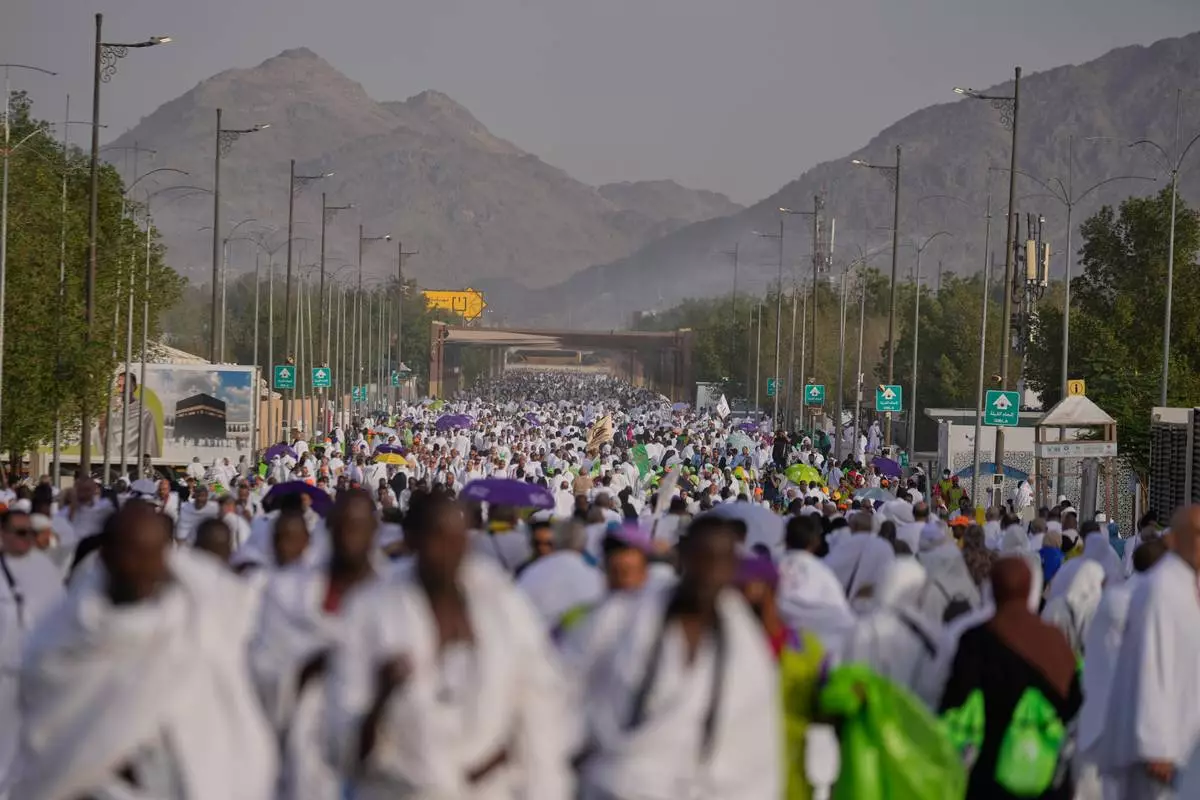
Muslim pilgrims walk towards the rocky hill known as the Mountain of Mercy, on the Plain of Arafat, during the annual Hajj pilgrimage near the holy city of Mecca, Saudi Arabia, Tuesday, May 26, 2026. (AP Photo/Altaf Qadri)
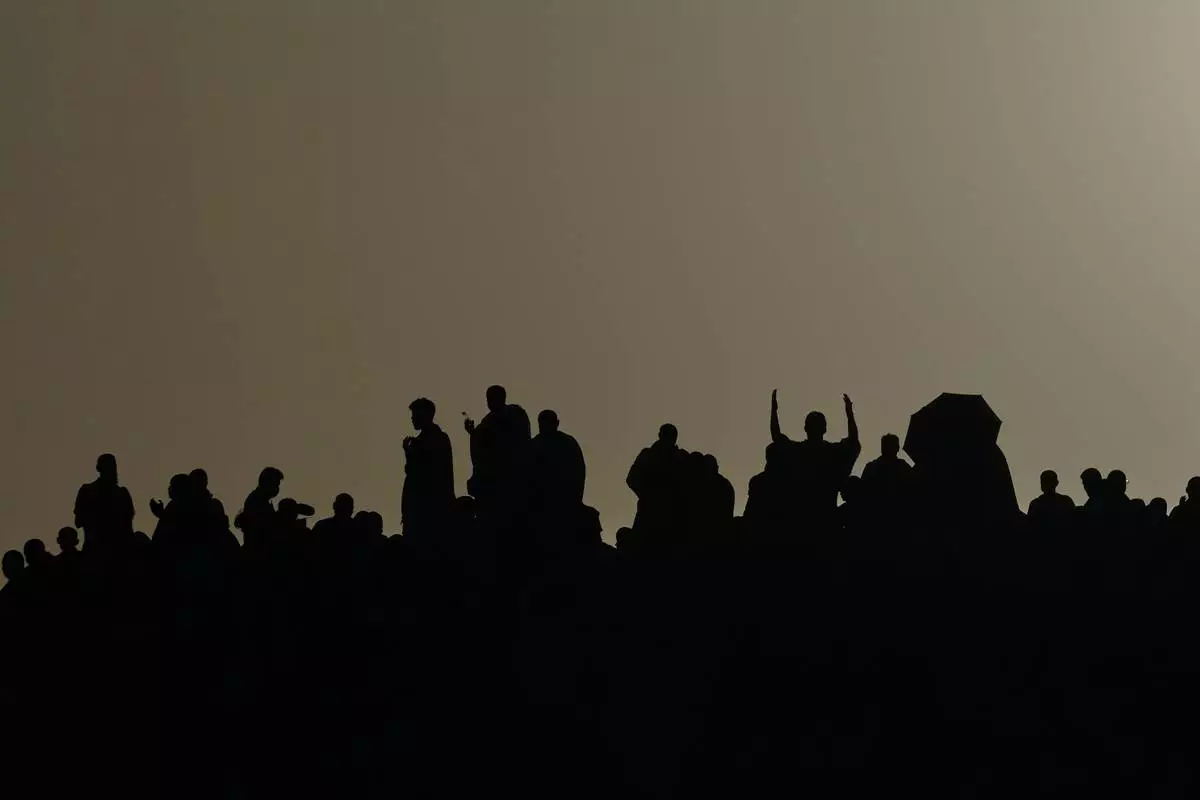
Muslim pilgrims are silhouetted as they pray at top of the rocky hill known as the Mountain of Mercy, on the Plain of Arafat, during the annual Hajj pilgrimage near the holy city of Mecca, Saudi Arabia, Tuesday, May 26, 2026. (AP Photo/Altaf Qadri)
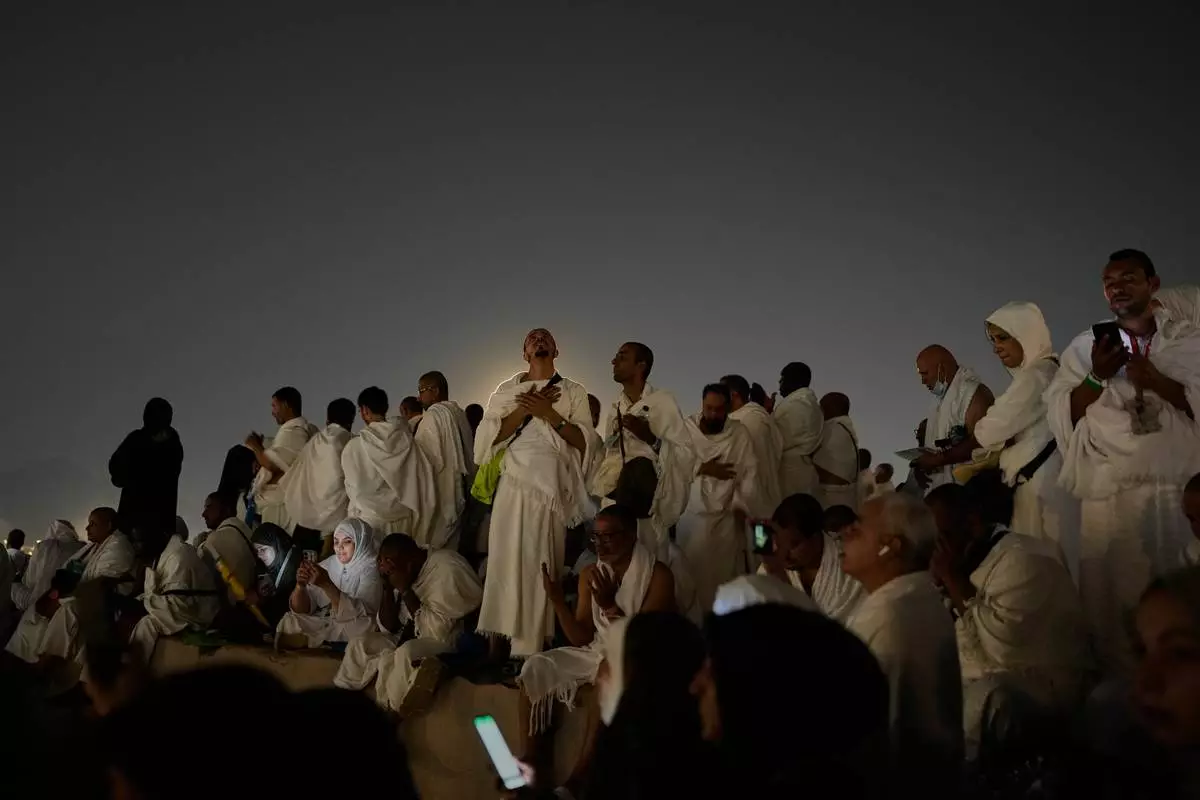
Muslim pilgrims pray at top of the rocky hill known as the Mountain of Mercy, on the Plain of Arafat, during the annual Hajj pilgrimage near the holy city of Mecca, Saudi Arabia, Tuesday, May 26, 2026. (AP Photo/Altaf Qadri)
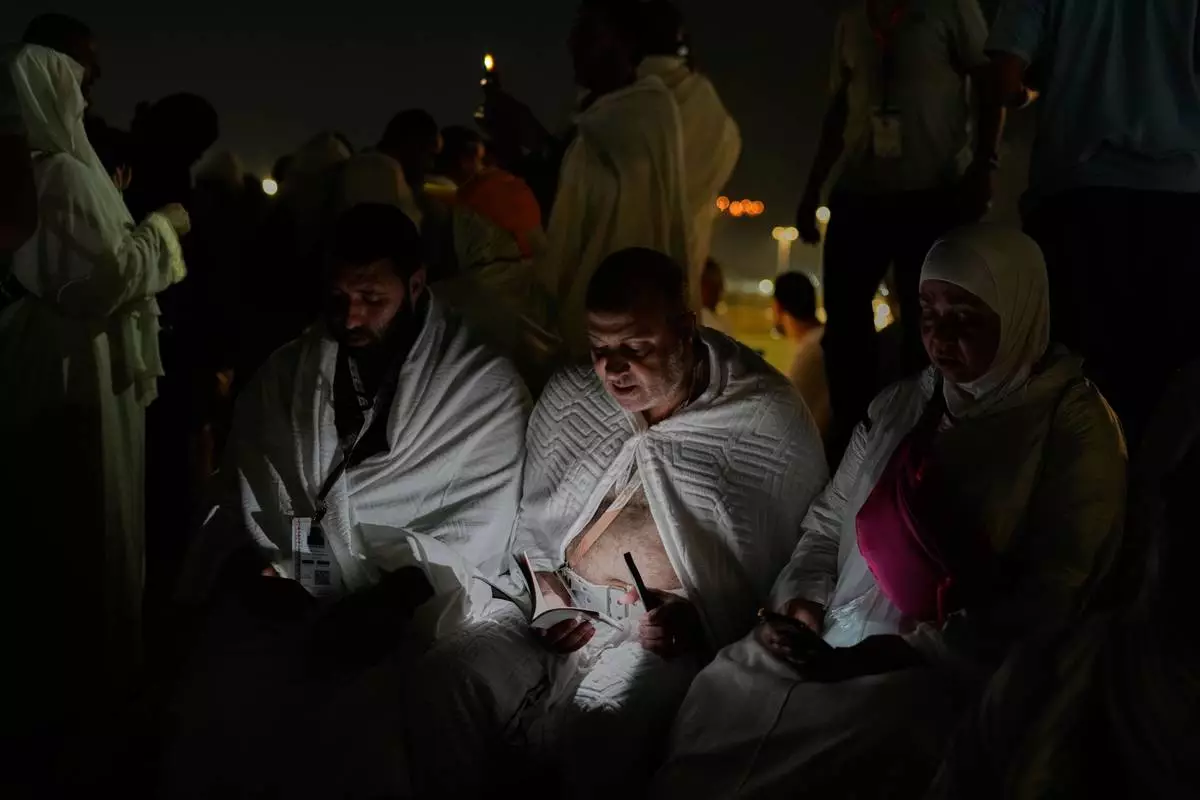
Muslim pilgrims read a copy of Islam's holy book Quran atop of the rocky hill known as the Mountain of Mercy, on the Plain of Arafat, during the annual Hajj pilgrimage near the holy city of Mecca, Saudi Arabia, Tuesday, May 26, 2026. (AP Photo/Altaf Qadri)