STONY BROOK, N.Y. (AP) — With Iran qualifying for the World Cup, Arad Ershad had visions of splurging on flights and tickets to attend one of the team’s upcoming first-round matches in Los Angeles.
That changed when Ershad, a New York graduate student who grew up in Tehran, saw how many of the players he had adored since childhood failed to speak out following its theocratic leadership’s deadly crackdown on protesters in January.
Click to Gallery
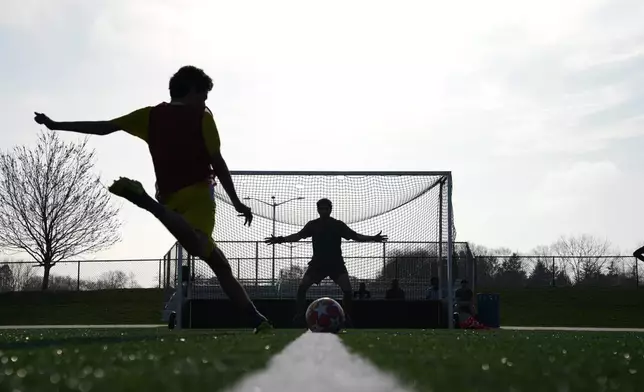
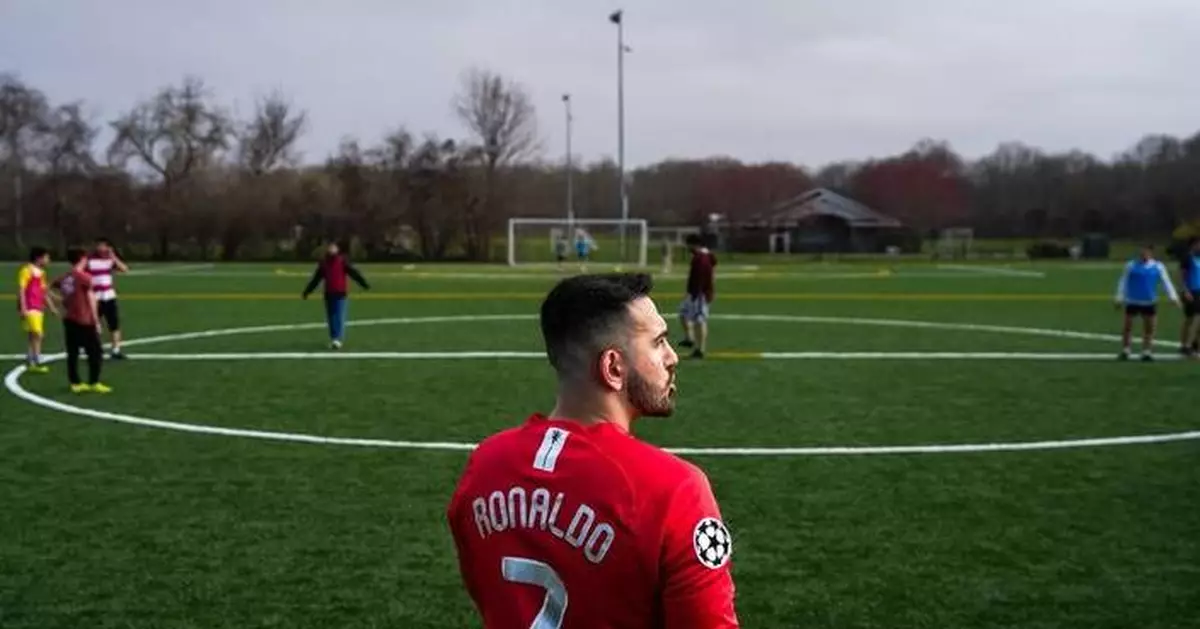
People play soccer at Stony Brook University in Stony Brook, N.Y., Friday, April 3, 2026. (AP Photo/Ryan Murphy)
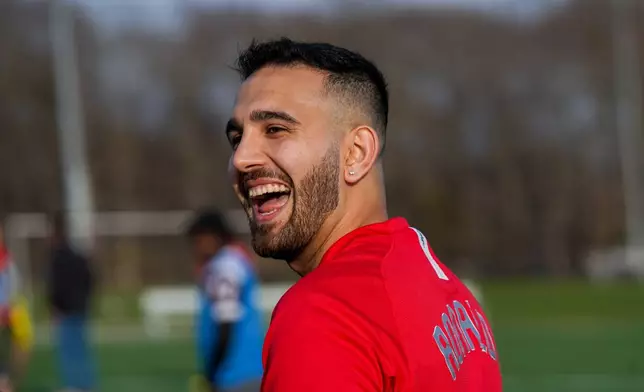
Tehran native and Stony Brook University graduate student Arad Ershad laughs while playing soccer at Stony Brook University in Stony Brook, N.Y., Friday, April 3, 2026. (AP Photo/Ryan Murphy)

People play soccer at Stony Brook University in Stony Brook, N.Y., Friday, April 3, 2026. (AP Photo/Ryan Murphy)
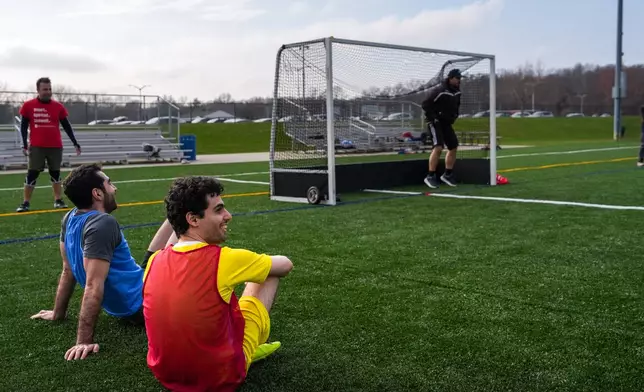
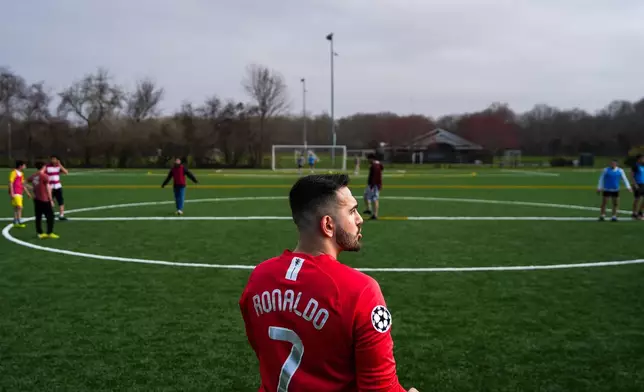
Tehran native and Stony Brook University graduate student Arad Ershad plays soccer with friends at Stony Brook University in Stony Brook, N.Y., Friday, April 3, 2026. (AP Photo/Ryan Murphy)
“It feels so bad that I do not want them to succeed. They were like my icons, my legends," he lamented during a recent pickup soccer game on Long Island. “I know playing a World Cup is the biggest thing a soccer player can achieve in his life, but how can you just be silent?”
Ershad is one of many diehard soccer fans in the Iranian diaspora with conflicting emotions as Team Melli — the Persian nickname for Iran's national squad — prepares for its seventh World Cup. Iran is set to begin its campaign against New Zealand on June 15 near Los Angeles, a region that's home to the largest Iranian community outside of Iran, including many who fled the 1979 Islamic Revolution.
Some view the men's team as complicit in whitewashing the Iranian government's repression and can’t bear to watch the competition. Others plan to attend Iran's games to show their love for the country and sport, but bearing signs of protest. Still others say they’ll set politics aside and just enjoy seeing Iran compete on soccer's biggest stage.
All of this is assuming the team actually takes part, which Iranian officials called into question because of the country's war with the United States and Israel. Iranian soccer officials recently met with the head of FIFA, international soccer's governing body, who has insisted that Iran stick to the schedule.
The Iranian team often finds itself unable to avoid political issues. Before a recent match in Turkey, players held small backpacks honoring the Iranian children who were killed in a U.S. missile strike on an elementary school — a move Iranian American fans said showed their allegiance to the government and the political pressure it places on them.
Iranian athletes have faced serious consequences for speaking out. In 2022, a prominent former member of the national team was arrested for allegedly protesting against the country's leadership. This year, star striker Sardar Azmoun wasn't selected for World Cup warmup games, reportedly because of a social media post that angered the authorities.
Nader Adeli, who manages Iranian American club team Arya FC's over-60 squad in Los Angeles, is worried the war might keep Iran from attending the World Cup.
Last month, U.S. President Donald Trump discouraged the Iranian team from taking part, citing safety concerns. In response, Iran asked to move its matches to Mexico, which is co-hosting the event along with the U.S. and Canada, though the head of FIFA has repeatedly rejected such a move.
Adeli, who didn’t win the ticket lottery to attend one of Iran's two Los Angeles-area matches, said the World Cup should be a moment to enjoy the sport without outside distractions.
But with war raging, he doesn't think the team will travel. And if it does, he doubts the players would be able to fully focus on competing.
“Sports should never become a political issue,” he said. “As people, we have nothing against any Americans, we have nothing against any Iranians. It is just the governments.”
Iran's women's team made headlines last month when several members didn't sing along to the country's national anthem before their opening match at the Women’s Asian Cup in Australia.
Although they sang it before Iran's next two fixtures, some commenters saw their initial silence as a protest against their government — though others saw it as a display of mourning about the war. The team and players — two of whom accepted asylum offers to remain in Australia — didn't comment on the matter.
Shiva Amini, who used to play for the national team but now lives in New York City, is among the Iranian ex-pats calling on the Trump administration not to grant visas to the men's team to play in the World Cup.
The 36-year-old player, who left Iran in 2017 after being photographed not wearing a headscarf while in Europe, said many Iranians soured on the men’s squad during the 2022 World Cup, when players stayed silent as Iran was roiled by street demonstrations over the country's mandatory headscarf laws following the death of Mahsa Amini.
“They had a big platform, and instead of talking about that, they were laughing, they were so happy, and it was honestly a slap on the face,” she said. “So those are not the Iranian national soccer team. Those are the regime’s national soccer team.”
The few players who have spoken out paid dearly, Amini acknowledged, including Amir Nasr-Azadani, who faces years behind bars for his involvement in the 2022 protests.
Azmoun, the Dubai-based star striker who played for Iran's past two World Cup teams, wasn't picked to play in the team's warmups for this year's tournament, reportedly because he posted a photo on social media of himself greeting United Arab Emirates political leaders.
Masoud Ahmadi, a 62-year-old interior designer who plays for another largely Iranian American over-60 club team, Sina FC, said he's trying to get a ticket to see Iran play. If he does, he said he'll take a stand against the Iranian leadership by carrying the country's lion-and-sun flag, which predates the Islamic Revolution.
Ahmadi said he was detained in Iran as a teenager before he fled to Turkey on foot. The U.S. granted him political asylum.
“We’re going to definitely raise our voice,” said Ahmadi, who is proud of his Iranian heritage but critical of the men's squad. “This team is not an Iranian people’s team. This is a government team."
Sasan Sadri, who manages the team, said if he scores a ticket, he'll try to wear a shirt calling for leadership change in Iran.
“As my countrymen, I like them to achieve,” he said. “I don’t support the regime, but soccer is soccer.”
As for Ershad, the New York grad student, he plans to support the Iranian team if the government is overthrown before the tournament starts. If not, he'll back soccer great Cristiano Ronaldo's side to win it all.
“It's so hard to not cheer for your national team, but let’s go Portugal," he said.
Taxin reported from Irvine, California.
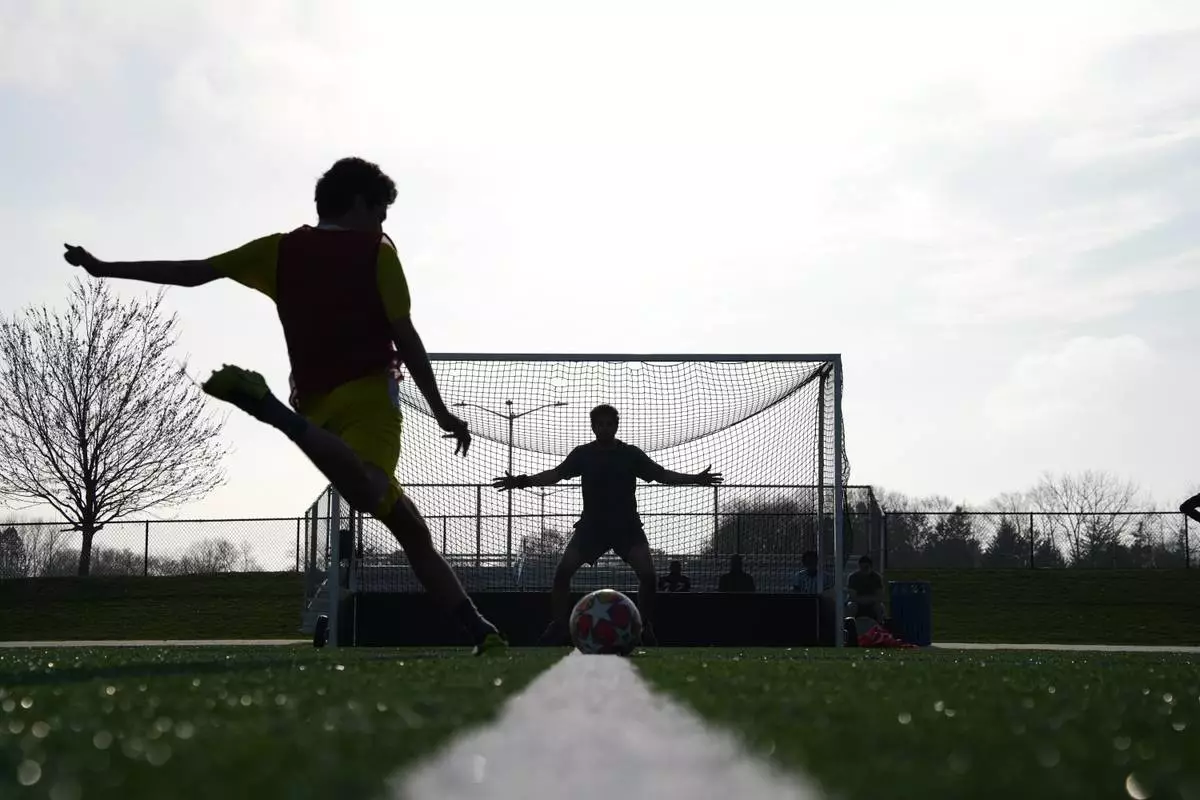
People play soccer at Stony Brook University in Stony Brook, N.Y., Friday, April 3, 2026. (AP Photo/Ryan Murphy)
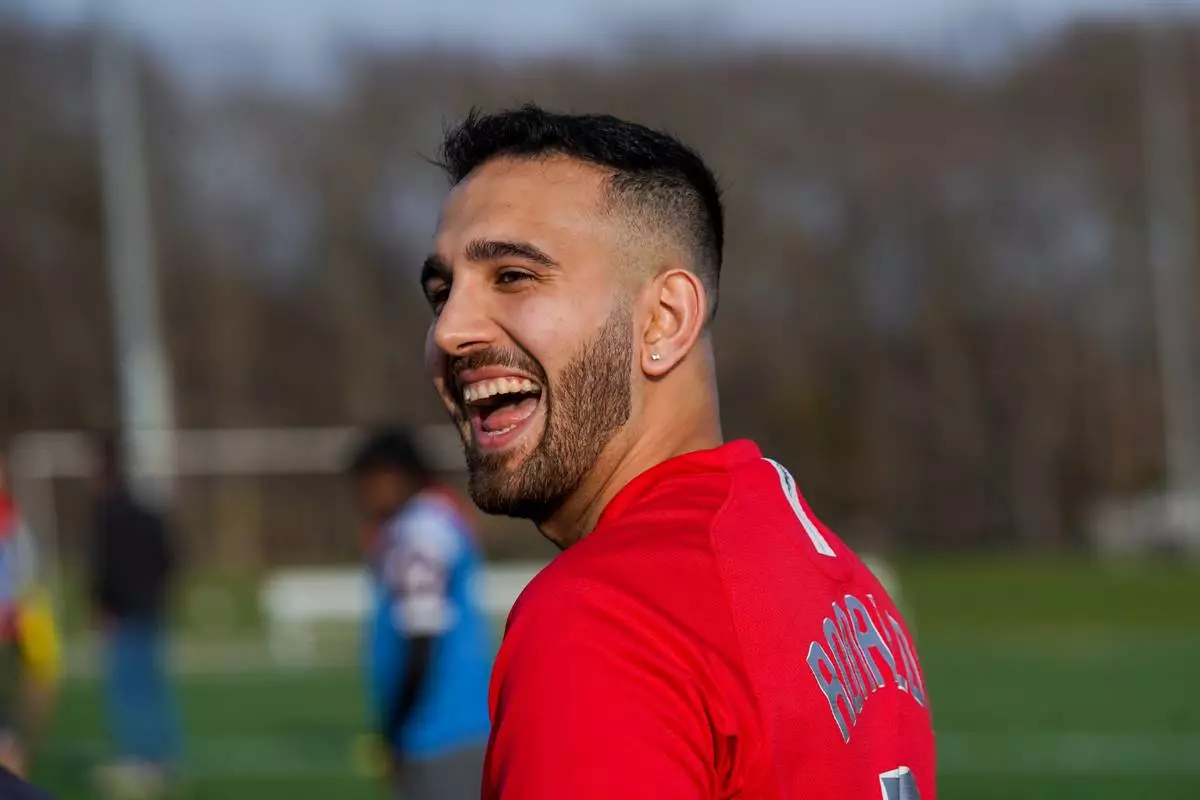
Tehran native and Stony Brook University graduate student Arad Ershad laughs while playing soccer at Stony Brook University in Stony Brook, N.Y., Friday, April 3, 2026. (AP Photo/Ryan Murphy)

People play soccer at Stony Brook University in Stony Brook, N.Y., Friday, April 3, 2026. (AP Photo/Ryan Murphy)
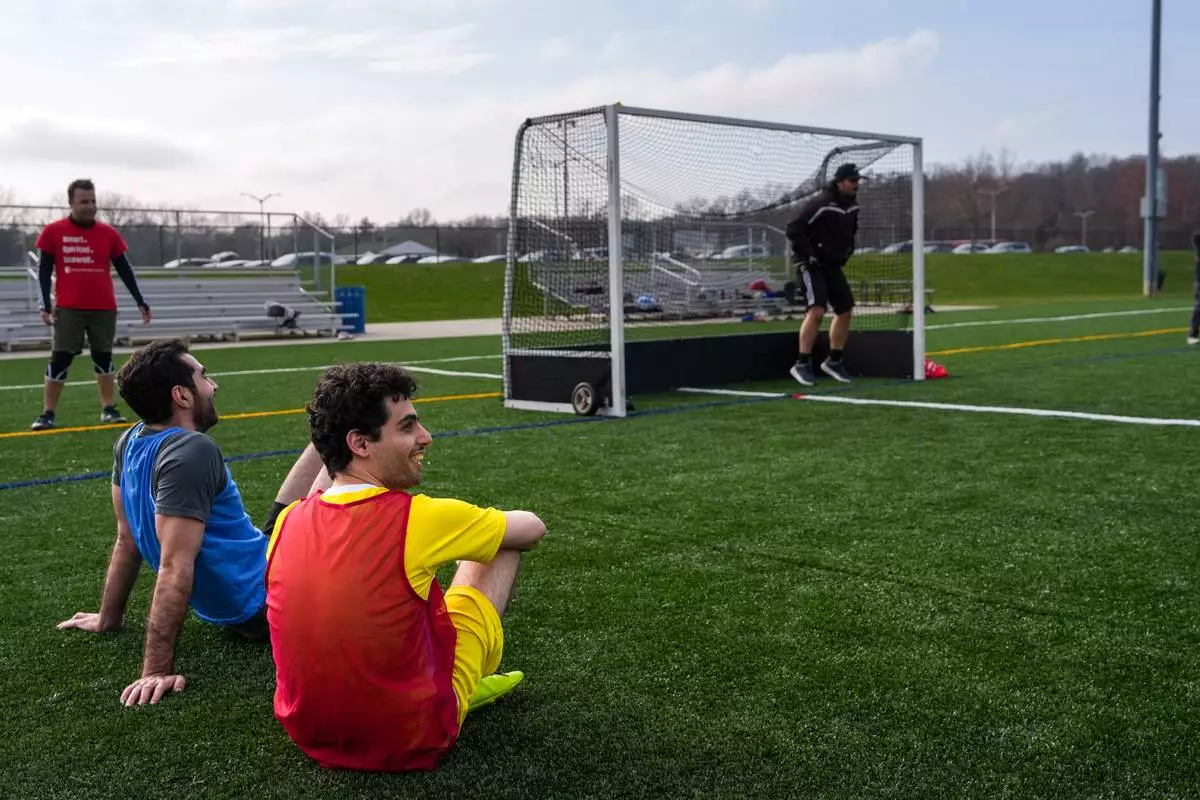
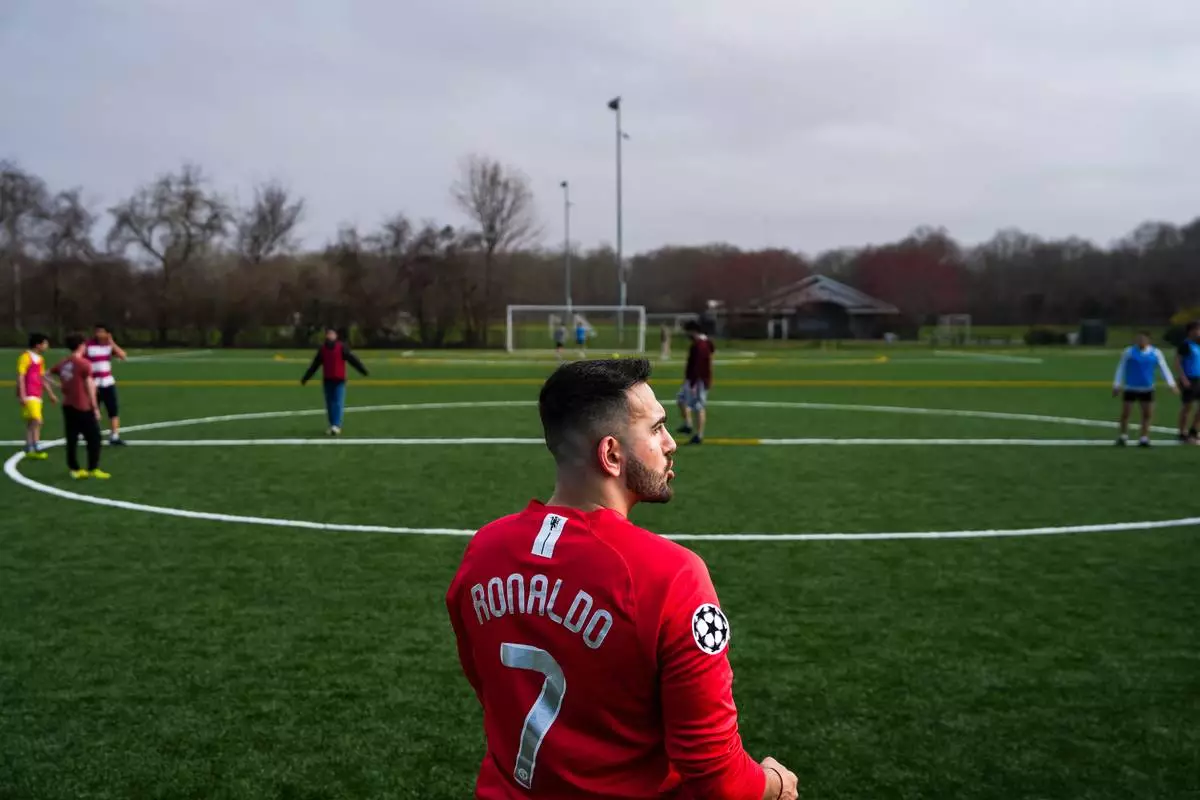
Tehran native and Stony Brook University graduate student Arad Ershad plays soccer with friends at Stony Brook University in Stony Brook, N.Y., Friday, April 3, 2026. (AP Photo/Ryan Murphy)
DUBAI, United Arab Emirates (AP) — A tentative ceasefire in the Iran war staggered Thursday under the weight of Israel’s intense bombardment of Beirut, Tehran’s continued chokehold on the Strait of Hormuz, and uncertainty over whether negotiators can find common ground on a range of other differences.
Hours after the ceasefire was announced — amid disagreement over whether it included a pause in fighting between Israel and Hezbollah — Israel pounded Beirut with airstrikes, resulting in the deadliest day in the country since the war began on Feb. 28.
Iran and the U.S. — which both declared victory in the wake of the ceasefire announcement — appeared to try to pressure each other. Semiofficial news agencies in Iran suggested forces have mined the Strait of Hormuz, a crucial waterway for the world’s oil whose closure has proved Tehran’s greatest strategic advantage in the conflict. President Donald Trump, meanwhile, warned that U.S. forces would hit Iran even harder than before if it did not fulfill the agreement.
But what that agreement is remains in deep dispute. Beyond whether Lebanon is included, there are questions over what will happen to Iran’s stockpile of enriched uranium, how and when normal traffic will resume through the strait, and what happens to Iran’s ability to launch missile attacks in the future.
The chief of Iran’s nuclear agency said protecting Tehran’s right to enrich uranium is “necessary” for any ceasefire talks with the United States.
Mohammad Eslami, who leads the Atomic Energy Organization of Iran, made the remarks Thursday to journalists including one from The Associated Press during commemorations for the late Supreme Leader Ayatollah Ali Khamenei in Tehran.
“It is a part of the necessary (things) that nobody speaks about,” Eslami said, referring to the U.S. refusal to acknowledge enrichment as one part of Iran’s 10-point plan for a permanent ceasefire.
The U.S. and Iran are due to meet in Pakistan for talks this weekend.
At least 182 people were killed in Lebanon on Wednesday when Israel intensified its attacks on the Iran-backed Hezbollah militant group, which joined the war in support of Tehran. First responders searched overnight for missing people still under the rubble after the strikes, which hit commercial and residential areas of Beirut.
Israel said Thursday it killed Ali Yusuf Harshi, an aide to Hezbollah leader Naim Kassem. Hezbollah did not immediately respond to a request for comment.
Iranian Foreign Minister Abbas Araghchi has insisted that an end to the war in Lebanon was part of the ceasefire deal, but Israeli Prime Minister Benjamin Netanyahu and Trump said it was not.
A New York-based think tank warned the deal “ hovers on the verge of collapse.”
“Even if Lebanon was formally outside the deal, the scale of Israel’s strikes was likely to be viewed as escalatory, nonetheless,” the Soufan Center wrote in an analysis. “Israel’s strikes can be understood both as an effort to drive a wedge between Iran and its proxies and as a response to being allegedly sidelined in the original ceasefire discussions.”
Lebanon’s state-run National News Agency reported Thursday that an Israeli strike overnight had killed at least seven people in southern Lebanon. The Israeli military did not immediately acknowledge the strike.
Semiofficial news agencies in Iran published a chart Thursday suggesting the country’s paramilitary Revolutionary Guard put sea mines into the strait during the war — a message that may be intended to pressure the U.S.
The chart, released by the ISNA news agency and Tasnim, showed a large circle marked “danger zone” in Farsi over the route ships take through the strait, through which 20% of all traded oil and natural gas once passed.
Only a trickle of ships have passed through the strait since the war began after a few were attacked and Iran threatened to hit any that it deemed connected to the U.S. or Israel. Ships appeared to continue to avoid the strait Wednesday, despite the ceasefire: Data from Kpler showed only four vessels with their trackers on passed through.
The chart suggested ships travel through waters closer to Iran’s mainland near Larak Island, a route that some ships were observed taking during the war. It was dated from Feb. 28 until April 9, and it was unclear if the Guard had cleared any mines since then.
Iran’s deputy foreign minister, Saeed Khatibzadeh, told the BBC on Thursday that his country will allow ships to pass through the strait in accordance with “international norms and international law” once the United States ends its “aggression” in the Middle East and Israel stops attacking Lebanon.
The strait’s de facto closure has caused oil prices to skyrocket — raising, in turn, the cost of gasoline, food and other basics far beyond the Middle East. Oil prices fell on news of the ceasefire Wednesday, but began to climb as uncertainty over the deal grew.
The spot price of Brent crude, the international standard, was around $98 Thursday — up about 35% since the war began.
Trump warned that U.S. warships and troops will remain around Iran “until such time as the REAL AGREEMENT reached is fully complied with.”
If it is not, “then the ‘Shootin’ Starts,’ bigger, and better,” Trump wrote in a social media message.
The White House said that Vice President JD Vance would lead the U.S. delegation for talks in Islamabad aimed at ending the war, which are set to start Saturday.
There appear to be many points of disagreement to address, including whether Iran will be allowed to formalize a system of charging ships to use the strait that it has instituted. That would upend decades of precedent treating it as an international waterway that was free to transit.
The fate of Iran’s missile and nuclear programs — the elimination of which were major objectives for the U.S. and Israel in going to war — also remained unclear. The U.S. insists Iran must never be able to build nuclear weapons and wants to remove Tehran’s stockpile of highly enriched uranium, which could be used to build them, should it choose to pursue the bomb. Iran insists its program is peaceful.
Trump said Wednesday that the U.S. would work with Iran to remove the buried uranium, though Iran did not confirm that. In one version of the deal that Iran published, it said it would be allowed to continue enrichment.
Becatoros reported from Athens, Greece. Associated Press writers Chan Ho-him in Hong Kong, Zeke Miller in Washington and Kareem Chehayeb and Hussein Malla in Beirut contributed to this report.
Government supporters walk past a billboard depicting Iran's Supreme Leader Mojtaba Khamenei as they gather to mark the 40th day since the killing of his father, slain Supreme Leader Ayatollah Ali Khamenei, in Tehran, Iran, Thursday, April 9, 2026. (AP Photo/Vahid Salemi)
A sign for a roadside hotel is seen on Road 2 near Golhahr, Iran, Thursday, April 9, 2026. (AP Photo/Francisco Seco)
People inspect the rubble of a building destroyed in an Israeli airstrike a day earlier in Beirut, Lebanon, Thursday, April 9, 2026. (AP Photo/Hussein Malla)
Government supporters gather to mark the 40th day since the death of Supreme Leader Ayatollah Ali Khamenei in Tehran, Iran, Thursday, April 9, 2026. (AP Photo/Vahid Salemi)
A rescue worker extinguishes burning cars at the site of an Israeli airstrike in central Beirut, Lebanon, Wednesday, April 8, 2026. (AP Photo/Hussein Malla)
Smoke rises following several Israeli airstrikes in Beirut, Lebanon, Wednesday, April 8, 2026. (AP Photo/Hassan Ammar)
Ali, 4, holds a toy horse next to the tent his family uses as a shelter after fleeing Israeli bombardment in southern Lebanon, in Beirut, Lebanon, Wednesday, April 8, 2026. (AP Photo/Emilio Morenatti)
Government supporters gather ahead of the funeral procession for Maj. Gen. Majid Khademi, head of intelligence for Iran's paramilitary Revolutionary Guard, in Tehran, Iran, Wednesday, April 8, 2026. (AP Photo/Francisco Seco)
FILE - Two police officers walk in front of an anti-U.S. billboard depicting American aircraft being caught by Iranian armed forces in a fishing net beneath the words in Farsi, "The Strait of Hormuz will remain closed, The entire Persian Gulf is our hunting ground," in Tehran, Iran, Sunday, April 5, 2026. (AP Photo/Vahid Salemi, File)