EQUIHEN BEACH, France (AP) — French authorities said that at least four people, two men and two women, died on Thursday as they were trying to get onboard an inflatable boat to attempt the perilous sea crossing from northern France to the U.K.
The prefect of the Pas-de-Calais region in northern France, François-Xavier Lauch, said that 38 others were rescued, including one whose condition involved a medical emergency. He spoke while rescue operations were still ongoing on Equihen Beach on Thursday morning.
Click to Gallery
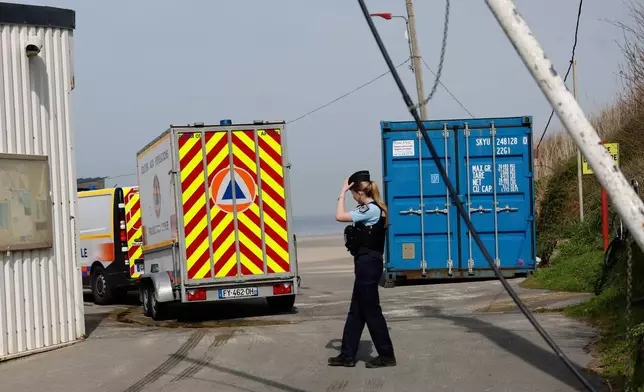
A police officer stands guard after a migrant taxi-boat accident, in Equihen-Plage, northern France. Thursday, April 9, 2026. (AP Photo/Jean-Francois Badias)
A young boy runs on the beach after at least four people died while trying to board an inflatable boat for a dangerous sea crossing from northern France to the U.K. in Equihen-Plage, northern France. Thursday, April 9, 2026. (AP Photo/Jean-Francois Badias)
A police officer stands guard after at least four people died while trying to board an inflatable boat for a dangerous sea crossing from northern France to the U.K. in Equihen-Plage, northern France. Thursday, April 9, 2026. (AP Photo/Jean-Francois Badias)
Policemen stand guard after a migrant taxi-boat accident, in Equihen-Plage, northern France, Thursday, April 9, 2026. (AP Photo/Jean-Francois Badias)
Migrants board a small boat in an attempt to reach Britain, Wednesday, April 8, 2026 in Malo-les-Bains, northern France. (AP Photo/Jean-Francois Badias)
Policemen walk past migrants as they board a small boat in an attempt to reach Britain, Wednesday, April 8, 2026 in Malo-les-Bains, northern France. (AP Photo/Jean-Francois Badias)
A policeman looks at migrants as they board a small boat in an attempt to reach Britain, Wednesday, April 8, 2026 in Malo-les-Bains, northern France. (AP Photo/Jean-Francois Badias)
Policemen look at migrants as they board a small boat in an attempt to reach Britain, Wednesday, April 8, 2026 in Malo-les-Bains, northern France. (AP Photo/Jean-Francois Badias)
Lauch said that migrants were carried away by dangerous currents as they were trying to embark on a “taxi-boat,” the name authorities give small motorized boats that are usually inflatable. Traffickers use them to pick up people along large stretches of the northern French coast.
Thursday's tragedy happened along a broad expanse of sand, backed by dunes and a forest where people attempting the perilous crossing hide out, sometimes for days at a time, as they wait for boats and suitable weather and sea conditions. Police patrol on buggies and keep watch from the remains of World War II-era bunkers but can't prevent all departures on a beach so long.
Attempted crossings and deaths have surged in recent days. French maritime authorities said Wednesday that 102 people have been rescued in two separate operations while trying to cross the channel. Last week, two people died in similar circumstances off the coast north of Calais.
Unlike inflatable boats that migrants carry themselves into the water, so-called “taxi boats” set off largely empty from secluded spots along the coast and pick up migrants from prearranged rendezvous areas on beaches.
An Associated Press reporter attended such scenes on Wednesday in Malo-les-Bains, near Dunkirk.
Migrants wade into the sea, with adults carrying children in their arms or on their shoulders, then clamber aboard the inflatables that wait offshore. Once loaded up, they set off on the cross-channel journey, sometimes picking up more people along the way.
Depending on tides, weather and police patrols, migrants sometimes have to wade far from the water’s edge, up to their torsos, to reach the boats, increasing the risk of losing their footing, being caught by currents or wading too deep.
Campaign groups for migrant rights have long warned that increasingly vigorous efforts by French police to prevent boat departures from beaches, including using knives to hack and puncture inflatable boats to render them unusable, are encouraging the use of “taxi boats,” which increases the risks of drownings, injuries and the need for rescues.
Sylvie Corbet reported from Paris. John Leicester contributed to this report from Paris.

A police officer stands guard after a migrant taxi-boat accident, in Equihen-Plage, northern France. Thursday, April 9, 2026. (AP Photo/Jean-Francois Badias)

A young boy runs on the beach after at least four people died while trying to board an inflatable boat for a dangerous sea crossing from northern France to the U.K. in Equihen-Plage, northern France. Thursday, April 9, 2026. (AP Photo/Jean-Francois Badias)

A police officer stands guard after at least four people died while trying to board an inflatable boat for a dangerous sea crossing from northern France to the U.K. in Equihen-Plage, northern France. Thursday, April 9, 2026. (AP Photo/Jean-Francois Badias)

Policemen stand guard after a migrant taxi-boat accident, in Equihen-Plage, northern France, Thursday, April 9, 2026. (AP Photo/Jean-Francois Badias)

Migrants board a small boat in an attempt to reach Britain, Wednesday, April 8, 2026 in Malo-les-Bains, northern France. (AP Photo/Jean-Francois Badias)

Policemen walk past migrants as they board a small boat in an attempt to reach Britain, Wednesday, April 8, 2026 in Malo-les-Bains, northern France. (AP Photo/Jean-Francois Badias)

A policeman looks at migrants as they board a small boat in an attempt to reach Britain, Wednesday, April 8, 2026 in Malo-les-Bains, northern France. (AP Photo/Jean-Francois Badias)

Policemen look at migrants as they board a small boat in an attempt to reach Britain, Wednesday, April 8, 2026 in Malo-les-Bains, northern France. (AP Photo/Jean-Francois Badias)
WASHINGTON (AP) — Before Donald Trump returned to the White House, the Biden administration and many electric utilities were building a future dominated by renewable energy. They aimed to replace coal, slashing greenhouse gases and reducing air pollution that kills more than a thousand people annually.
Dozens of coal plants — emitting as much planet-warming pollution as 27 million cars — were expected to be retired during Trump's second term. Now there may not be any more coal plants closing until after Trump leaves office, according to officials and the energy analysis company Enverus.
The United States is undergoing a dramatic shift in energy policy as Trump wields government's sweeping powers to benefit coal and suppress cleaner alternatives. It could lead to more expensive electricity and dirtier air and set back efforts to curb climate change, according to an Associated Press review of government data and interviews with experts.
Trump officials are using emergency powers to prevent five coal plants from closing. That’s raising ratepayer bills: Keeping one Michigan plant open for about seven months cost $135 million. They are using millions of dollars of taxpayer money to make repairs and extend the lives of other coal plants. They’re also slashing pollution limits to make it easier for plants to keep operating without costly upgrades.
Interior Secretary Doug Burgum has said the goal for coal plants “is 100% stay open, no more retirements, no more shutting down.”
The actions far exceed Trump’s coal advocacy in his first term, when he relaxed some environmental regulations to give it a short-lived boost. The administration argues that coal produces badly needed power even during extreme weather, giving it an advantage over renewables that it says the Biden administration unwisely subsidized in the name of climate change.
“The Trump administration this time around is much more organized and strategic in trying to bring about a revival of coal,” said Robert Lifset, a University of Oklahoma professor of energy history. “You’re seeing almost like a whole-of-government approach.”
It's happening as electricity demand surges due to the colossal growth of data centers. One Indiana community oversaw construction of vast solar fields on farmland ahead of an expected retirement of the Schahfer Generating Station, a coal plant in Wheatfield, Indiana. Now the Trump administration is keeping that plant open, saying its power is critical.
“I was really emotional about it because finally they weren’t going to be a threat to our air and to our water anymore,” said Barbara Deardorff, an activist who grew up about 2 miles from the plant. “Since then, everything’s gone upside down.”
After World War II, U.S. electricity use rose alongside economic growth. The two trends split after the 2008 recession: The economy grew again, but electricity demand stayed flat, thanks in part to improved efficiency, said Seth Feaster with the Institute for Energy Economics and Financial Analysis, which promotes renewable energy.
Utilities retired costly old plants in droves, replacing them with more efficient natural gas and renewables. Coal’s share of U.S. power generation dropped by more than half.
Schahfer's smokestacks had been a familiar backdrop among northern Indiana's fields since it was built in the 1970s. Then, in 2023, its operator foresaw a new future: the Northern Indiana Public Service Company said it would cut coal from 73% of its energy production to zero as it pursued renewables. Schahfer would be shut down.
As that date neared, the surrounding community was transforming. Solar panels were built on hundreds of acres of farmland nearby, a change in local character some regretted but others welcomed for the cleaner energy and new tax revenue.
Then in December, the Trump administration issued an emergency order to keep Schahfer operational, saying it's coal-generated power was essential to meet demand from extreme weather.
“Today, the policies that get in the way of a reasonable energy development and mess up the math are things focused around climate change,” Energy Secretary Chris Wright said in February during a news conference about electric grid reliability.
Not only is the coal plant remaining online, but Amazon has proposed a multibillion-dollar data center complex nearby powered by gas generators that would produce more than twice the power of the old coal facility. NIPSCO said an agreement with Amazon would protect customers.
“It's been a complete 180,” said Deardorff, who said her family will no longer be able to farm on land it has long leased near the plant.
Stopping retirements completely, as Burgum has suggested, would keep online some 34 gigawatts of coal power that was set to retire before 2029. That threatens to stall a decades-long decline in pollution from coal that sharply reduced deaths as plants retired or installed new equipment. Coal plants scheduled to retire under Trump emitted more than 130 million tons of carbon dioxide last year, plus tens of thousands of tons of health-damaging sulfur dioxide and nitrogen oxides.
“If we retire all the coal plants we could avoid those 2,000 deaths per year from coal. And if we keep the plants online and they keep burning coal, then we’re going to get those emissions and see those same health impacts,” said George Mason University environmental engineer Lucas Henneman, who led a government study of deaths from coal pollution.
Beyond the five plants ordered to stay open, the administration spent $175 million on upgrades to extend the lives of seven other plants. It's considering applications for $350 million in similar spending.
Enverus principal analyst Juan Arteaga said the spending — along with coal’s reliability — make it unlikely any plants retire until at least 2030.
Modernizing the aging fleet of U.S. coal plants to keep them afloat, make them more affordable and with fewer emissions ultimately could cost $1 billion annually, said Michelle Bloodworth of the industry group America's Power. She said the spending is justified, considering “billions and billions” went to renewables.
The administration has broad discretion in deciding whether an emergency exists and can “order almost any change in operation of the electricity system,” the Congressional Research Service said in February.
That hasn't stopped legal challenges from five Democratic-led led states — Washington, Illinois, Minnesota, Michigan and Colorado.
Colorado Attorney General Phil Weiser said the Trump administration orders burden consumers with higher prices and obstruct sustainable energy.
“We are going from a trajectory where we were going to lead the world on clean energy to one where we are becoming an isolated petrostate,” said Bob Keefe, with the renewable energy tracking group E2. “It's costing jobs, it is costing investments, it is hurting us in the global marketplace and by the way it is resulting in higher electricity prices.”
Economists are skeptical coal's revival will last. Aging coal plants don't make sense when solar is cheap, said Tufts University associate professor Steve Cicala. No large U.S. coal plant has been built since 2013, although one is planned in Alaska.
Parts of Trump's agenda already have faltered. The largest federal coal lease sale in more than a decade flopped, and courts rejected some of Trump's attempts to block wind power.
Yet industry executives remain bullish.
“It's our time,” said CEO Jimmy Brock with Core Natural Resources, one of the nation’s largest coal mining companies.
Associated Press journalists Mead Gruver in Cheyenne, Wyoming, and M.K. Wildeman in Hartford, Connecticut, contributed.
The Associated Press receives support from the Walton Family Foundation for coverage of water and environmental policy. The AP is solely responsible for all content. For all of AP’s environmental coverage, visit https://apnews.com/hub/climate-and-environment
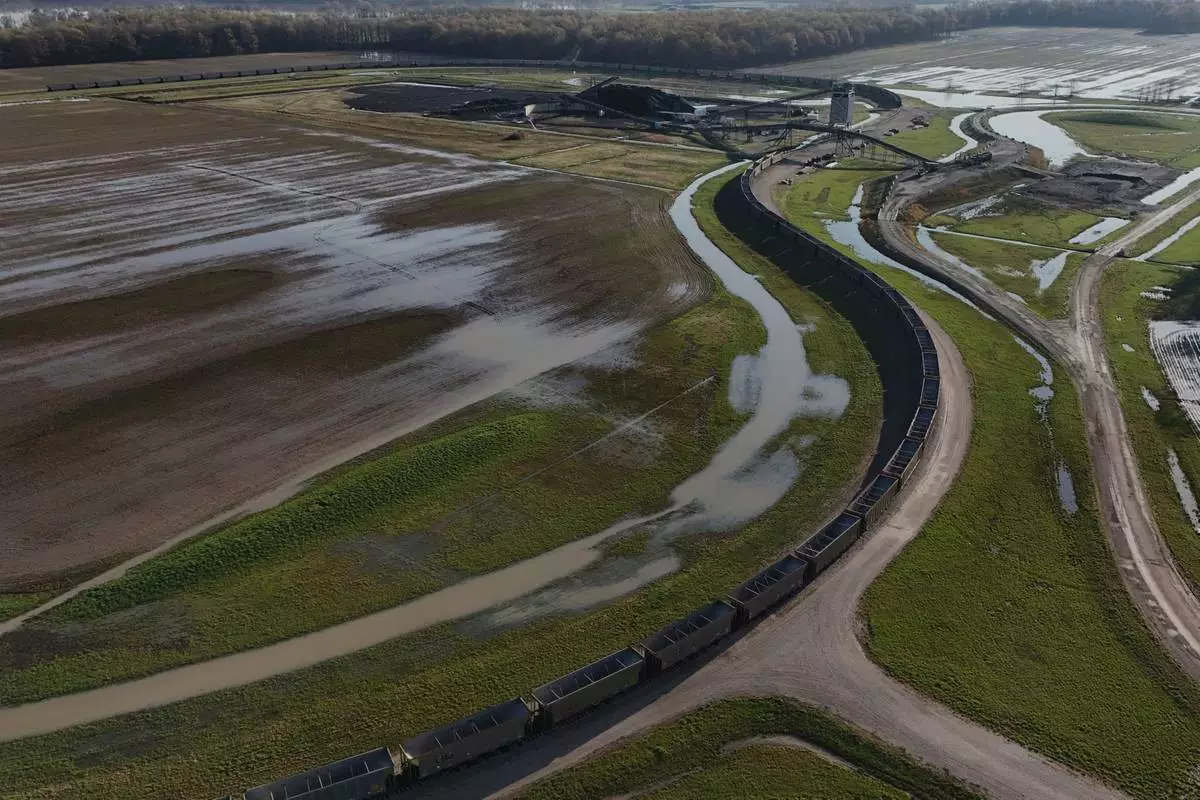
FILE - A train sits near a coal pile, April 10, 2025, in Princeton, Ind. (AP Photo/Joshua A. Bickel, File)
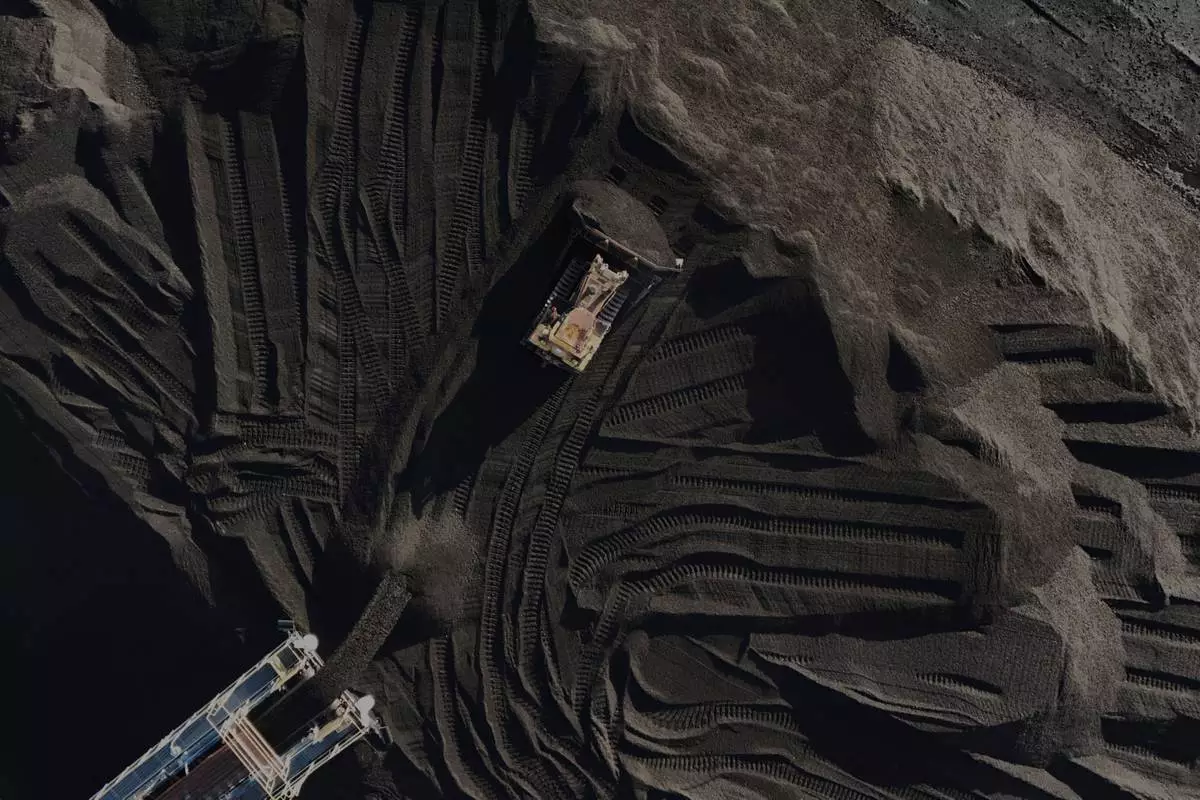
FILE - A bulldozer moves coal, April 10, 2025, in Princeton, Ind. (AP Photo/Joshua A. Bickel, File)
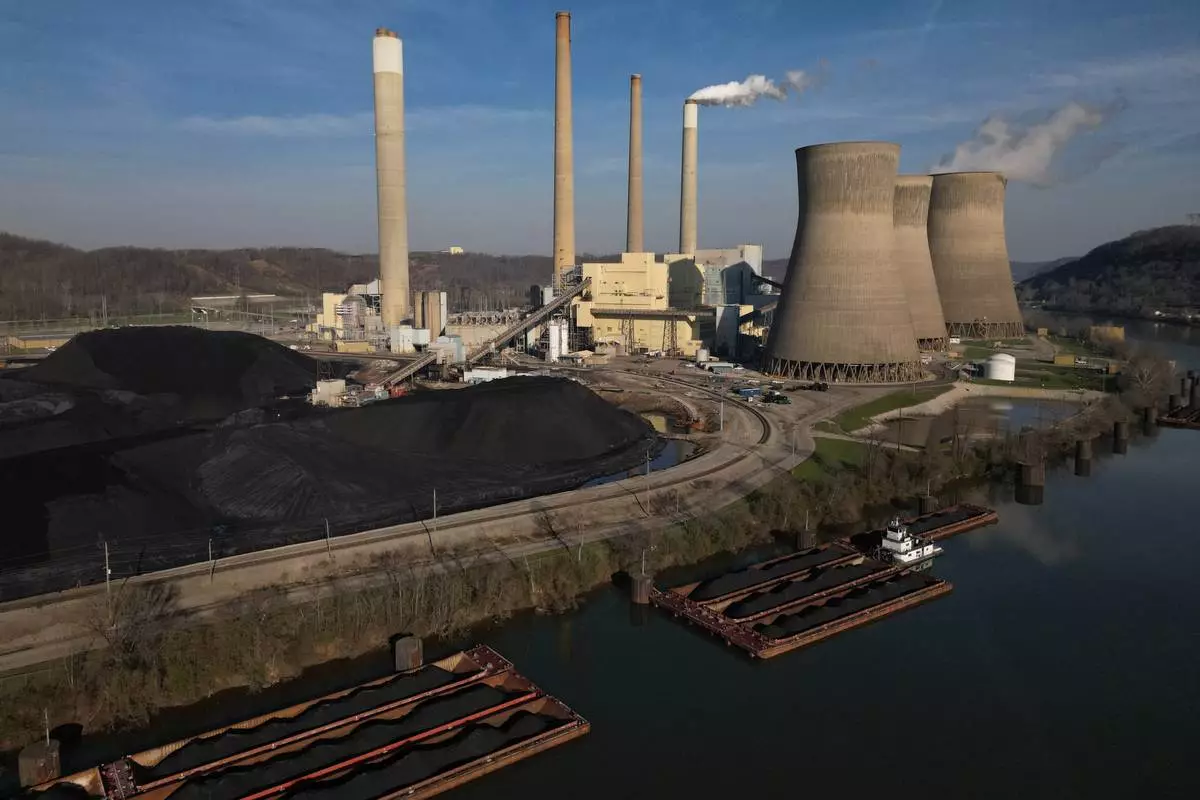
FILE - American Electric Power's John Amos coal-fired power plant in Winfield, W.Va., is seen on the banks of the Kanawha River, March 22, 2026. (AP Photo/Carolyn Kaster, File)