Russia's Supreme Court on Thursday effectively criminalized the activities of the Nobel Peace Prize-winning rights group Memorial, the latest step in an unrelenting crackdown on dissent and civil society organizations in the country amid its war in Ukraine.
Separately, police in Moscow raided the offices of the prominent independent newspaper Novaya Gazeta, whose chief editor Dmitry Muratov was a Nobel Peace Prize laureate in 2021. The newspaper said its lawyers were not allowed inside the office.
Click to Gallery
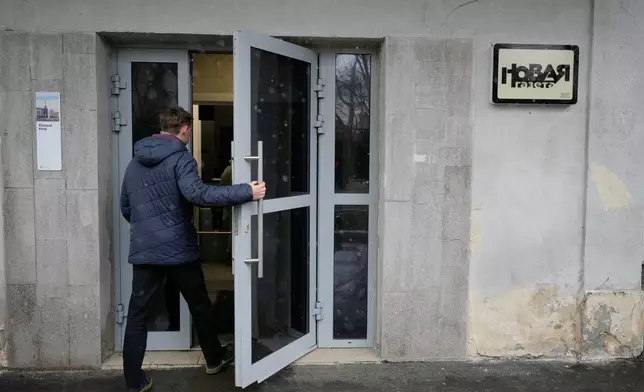
A man enters a building where independent Russian newspaper Novaya Gazeta has an office in Moscow, Thursday, April 9, 2026. (AP Photo/Pavel Bednyakov)
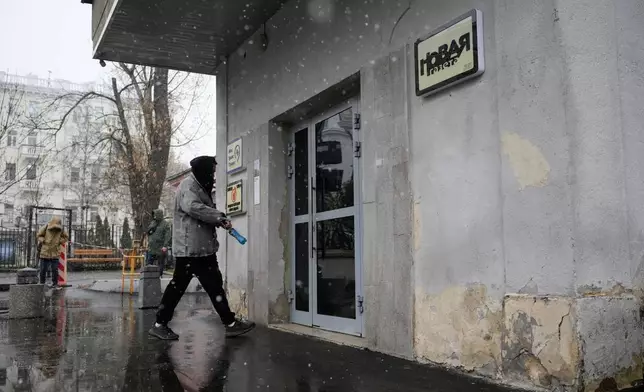
A man walks to enter a building where independent Russian newspaper Novaya Gazeta has an office in Moscow, Thursday, April 9, 2026. (AP Photo/Pavel Bednyakov)
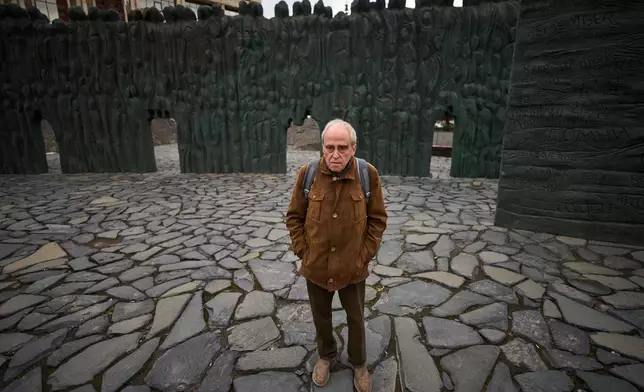
Jan Raczynski, chair of the International Memorial entity that was liquidated in Russia in 2021, stands after his interview with the Associated Press in front of the Wall of Grief memorial to the victims of Soviet repressions in Moscow, Wednesday, April 8, 2026. (AP Photo/Alexander Zemlianichenko)
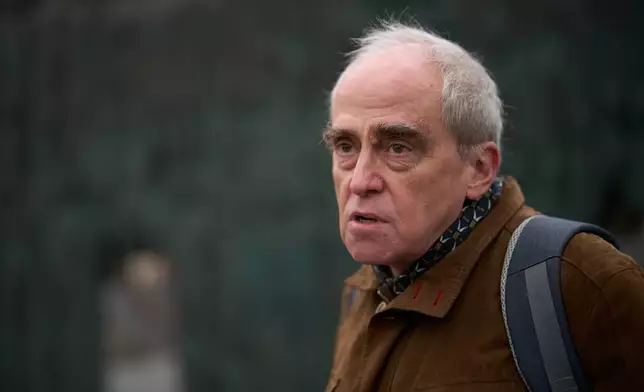
Jan Raczynski, chair of the International Memorial entity that was liquidated in Russia in 2021, speaks during his interview with the Associated Press in front of the Wall of Grief memorial to the victims of Soviet repressions in Moscow, Wednesday, April 8, 2026. (AP Photo/Alexander Zemlianichenko)
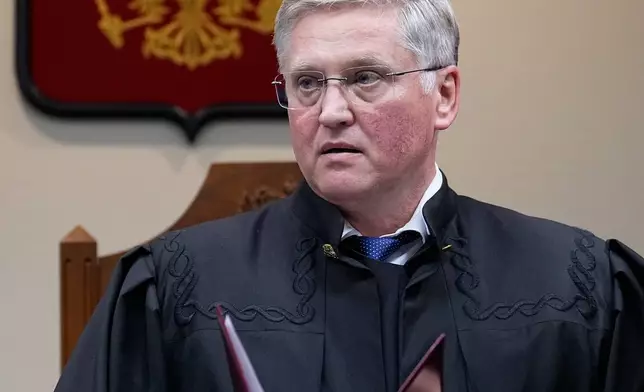
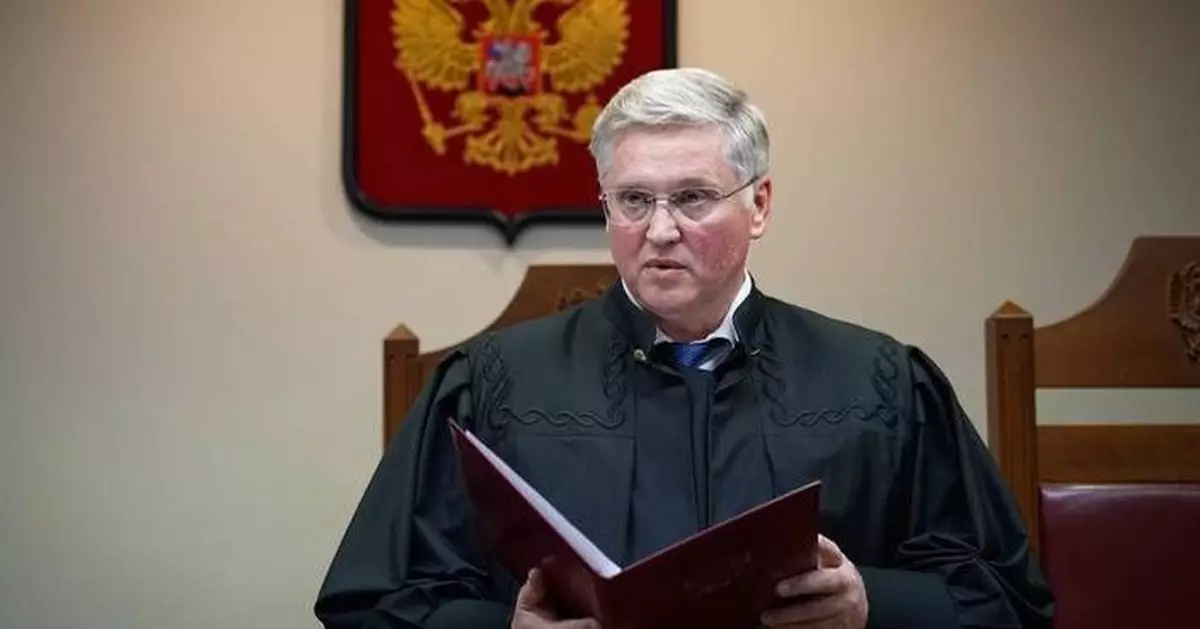
Court judge Vyacheslav Kirillov reads a ruling to outlaw the "international movement" Memorial as extremist in a move against Nobel Peace Prize-winning rights group in Moscow, Russia, Thursday, April 9, 2026. (AP Photo/Alexander Zemlianichenko)
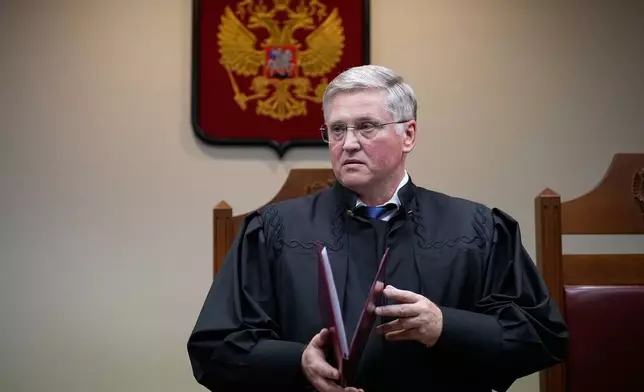
Court judge Vyacheslav Kirillov reads a ruling to outlaw the "international movement" Memorial as extremist in a move against Nobel Peace Prize-winning rights group in Moscow, Russia, Thursday, April 9, 2026. (AP Photo/Alexander Zemlianichenko)
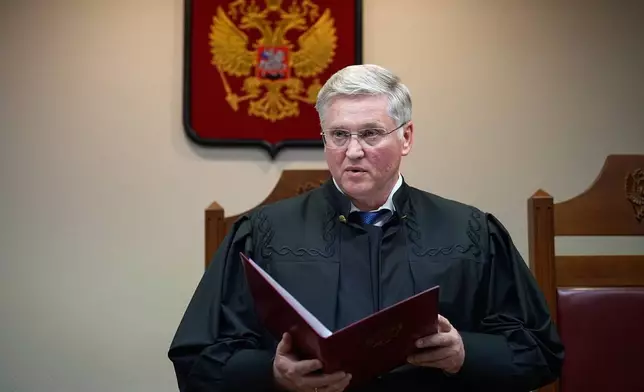
Court judge Vyacheslav Kirillov reads a ruling to outlaw the "international movement" Memorial as extremist in a move against Nobel Peace Prize-winning rights group in Moscow, Russia, Thursday, April 9, 2026. (AP Photo/Alexander Zemlianichenko)
The ruling against the human rights group followed a closed hearing on a petition from the Justice Ministry to designate what it called “the Memorial international civic movement” as extremist and ban its activities in Russia.
Memorial said in a statement issued earlier in the day that there is no such entity but that the ruling still “would allow the authorities to crack down on any Memorial projects, their participants and supporters.”
Memorial is one of the oldest and the most renowned Russian human rights organizations. It was awarded the 2022 Nobel Peace Prize, less than a year after President Vladimir Putin launched his full-scale invasion of Ukraine, alongside Belarusian activist Ales Bialiatski, who was imprisoned at the time, and the Ukrainian organization Center for Civil Liberties.
In a statement on Wednesday, the Norwegian Nobel Committee condemned the actions against the group, calling them “an affront to the fundamental values of human dignity and freedom of expression" and urged Russia to “cease all harassment of Memorial and its members.”
Amnesty International's Eastern Europe and Central Asia deputy regional director Denis Krivosheev said in a statement that the court ruling was targeting not just Memorial but “criminalizing human rights work itself.”
Memorial was founded in the late 1980s to ensure that the victims of the Soviet Union's political repression would be remembered, and grew to a network of smaller organizations both in Russia and abroad.
The group had been declared a “foreign agent,” a designation that brought additional government scrutiny and carried strong pejorative connotations, and over the years was ordered to pay massive fines for alleged violations of the ”foreign agent” law. Russian courts ordered its two main entities — the human rights center and the International Memorial — to shut down in December 2021.
Undeterred, the group continued to operate. In 2023, its members founded an international Memorial association in Geneva. Earlier this year, that association was banned in Russia as “undesirable,” a label that exposes anyone involved with it to prosecution.
In February 2024, Memorial's co-chair Oleg Orlov was sentenced to 2 1/2 years in prison for speaking out against the war in Ukraine. He was released in a massive East-West prisoner exchange in August 2024 along with other imprisoned dissidents.
An extremist designation puts even more pressure on the group, as involvement with extremist activities is a criminal offense in Russia punishable by prison terms.
Jan Raczynski, chair of the International Memorial that was forced to shut down in 2021, told The Associated Press that he was surprised and bewildered to learn from the news about the Justice Ministry's petition.
He said Memorial has been well-known for many years on par with “perestroika" and “glasnost” — Soviet leader Mikhail Gorbachev’s policies of political reform and openness. Raczynski noted that Soviet physicist and human rights advocate Andrei Sakharov, a 1975 Nobel Peace Prize laureate, was its first chairman.
Raczynski likened the Supreme Court's closed hearing to the repressions studied by the group.
“This is very similar to what we’ve been doing for almost 40 years now, these closed trials of people, in absentia, usually without a defense," he said, adding that it was difficult to predict what would happen next.
"I just know that for many hundreds of thousands of people in Russia, this is a very anxious time, because Memorial has helped a lot of people, and now they don’t understand what is happening,” Razcynski said.
He denounced allegations that Memorial was extremist, saying the group has always stood against violence, and vowed that its work will continue “one way or another.”
The Russian state news agency Tass cited the Supreme Court’s press service as saying Memorial’s activities “are clearly anti-Russian in nature, aimed at destroying the fundamental foundations of Russian statehood, violating territorial integrity, and eroding historical, cultural, spiritual, and moral values.”
Memorial said the case against the group “is yet another attempt to intimidate all dissent in the country and silence civil society" that will not succeed.
“Memorial and other civil society organizations, which are being destroyed in Russia, will continue their work abroad,” it said. “Memorial will outlive the Putin regime and will be able to openly return to Russia.”
After news emerged about the police raid against Novaya Gazeta, the Russian news agency Interfax, citing law enforcement officials, reported that a criminal case has been launched against the renowned newspaper on charges of illegal collection and use of personal data.
Tass cited law enforcement as saying the raid was connected to a case against Novaya Gazeta journalist Oleg Roldugin, who also co-founded another independent Russian newspaper, Sobesednik. Novaya Gazeta on social media said it couldn't confirm or deny whether this is the case, but noted that Roldugin's home also was raided, he has been taken in for questioning, and a lawyer was later allowed to see him.
The newspaper has faced growing pressure since Moscow's full-scale invasion of Ukraine. Its website has been blocked in Russia, its media license was revoked in 2022, and many of its journalists fled abroad and regrouped in a separate publication called Novaya Gazeta Europe. That publication has been banned in Russia as “undesirable.”
Muratov, Novaya Gazeta's longtime editor who still lives in Russia, shared the 2021 Nobel Peace Prize with Maria Ressa, a journalist from the Philippines. He was declared a “foreign agent” by Russian authorities.
The newspaper was itself born from the legacy of Gorbachev's Nobel Peace Prize in 1990. He used part of his prize money to fund what later became Novaya Gazeta, which launched in 1993.
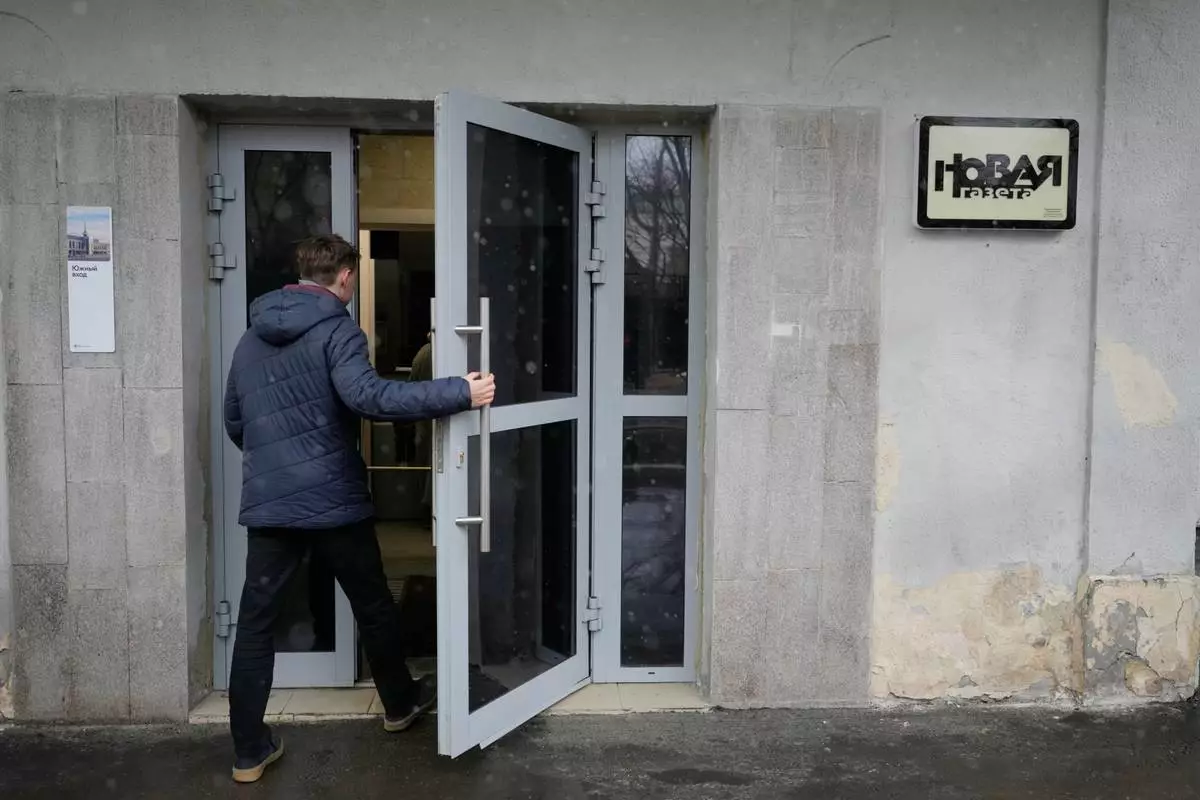
A man enters a building where independent Russian newspaper Novaya Gazeta has an office in Moscow, Thursday, April 9, 2026. (AP Photo/Pavel Bednyakov)
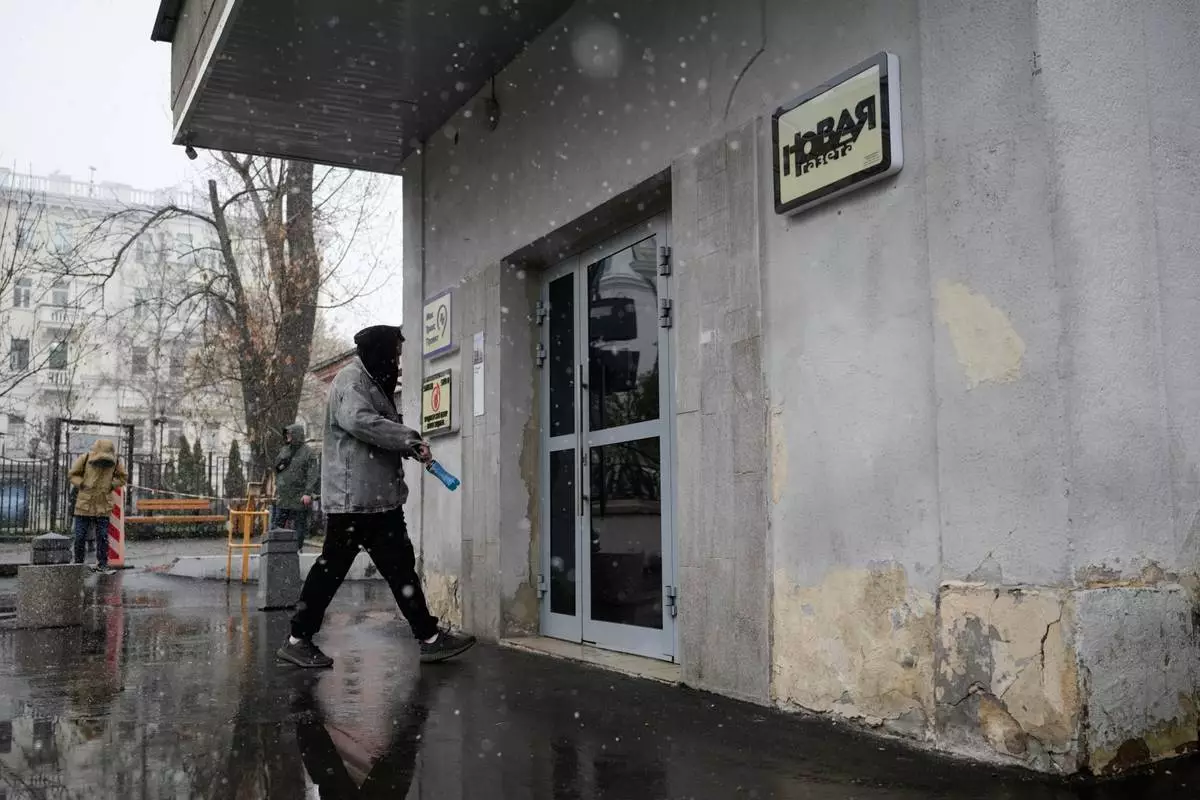
A man walks to enter a building where independent Russian newspaper Novaya Gazeta has an office in Moscow, Thursday, April 9, 2026. (AP Photo/Pavel Bednyakov)
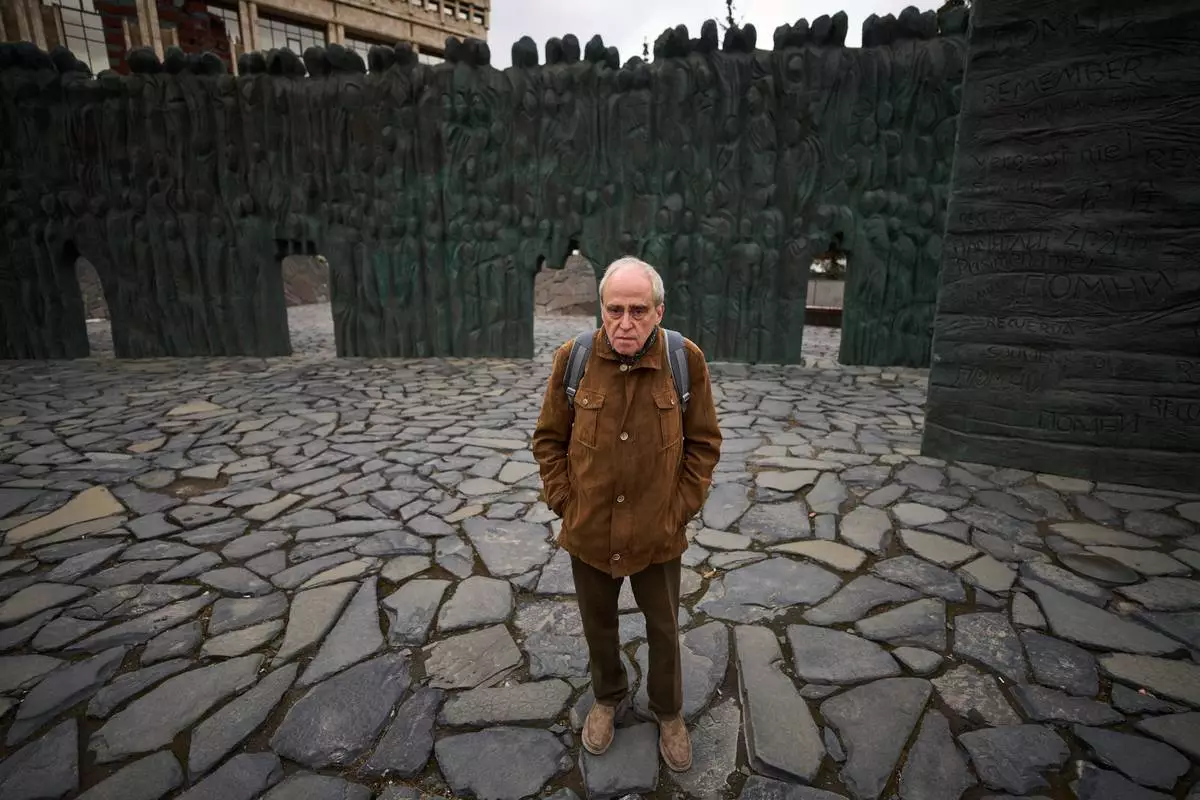
Jan Raczynski, chair of the International Memorial entity that was liquidated in Russia in 2021, stands after his interview with the Associated Press in front of the Wall of Grief memorial to the victims of Soviet repressions in Moscow, Wednesday, April 8, 2026. (AP Photo/Alexander Zemlianichenko)
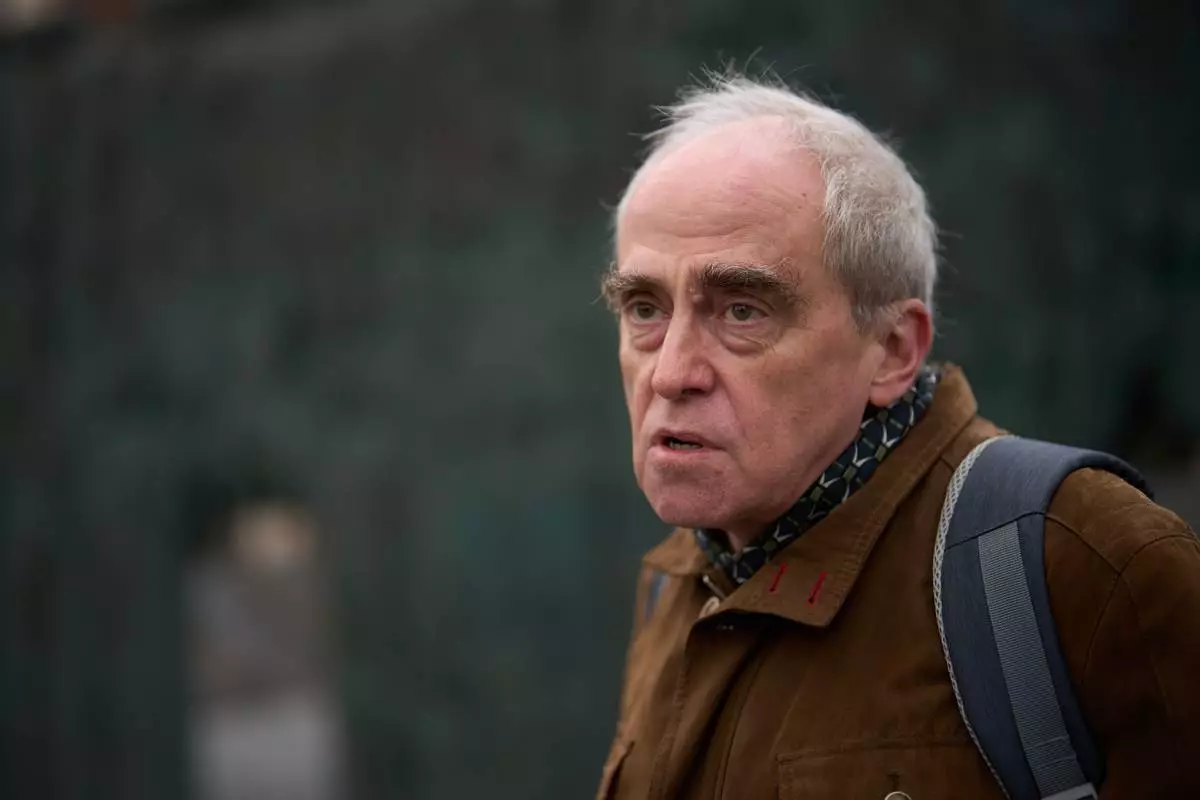
Jan Raczynski, chair of the International Memorial entity that was liquidated in Russia in 2021, speaks during his interview with the Associated Press in front of the Wall of Grief memorial to the victims of Soviet repressions in Moscow, Wednesday, April 8, 2026. (AP Photo/Alexander Zemlianichenko)
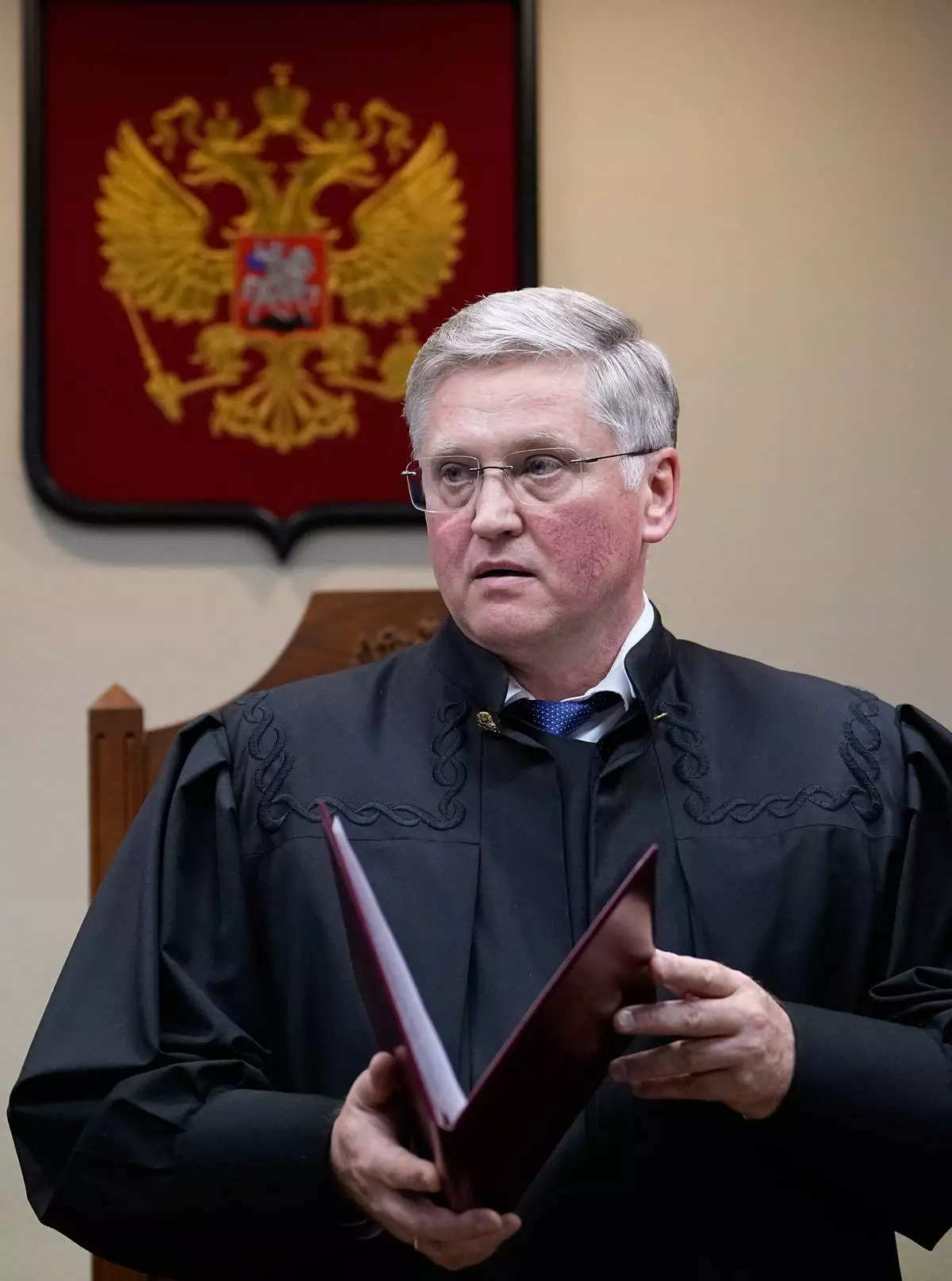
Court judge Vyacheslav Kirillov reads a ruling to outlaw the "international movement" Memorial as extremist in a move against Nobel Peace Prize-winning rights group in Moscow, Russia, Thursday, April 9, 2026. (AP Photo/Alexander Zemlianichenko)
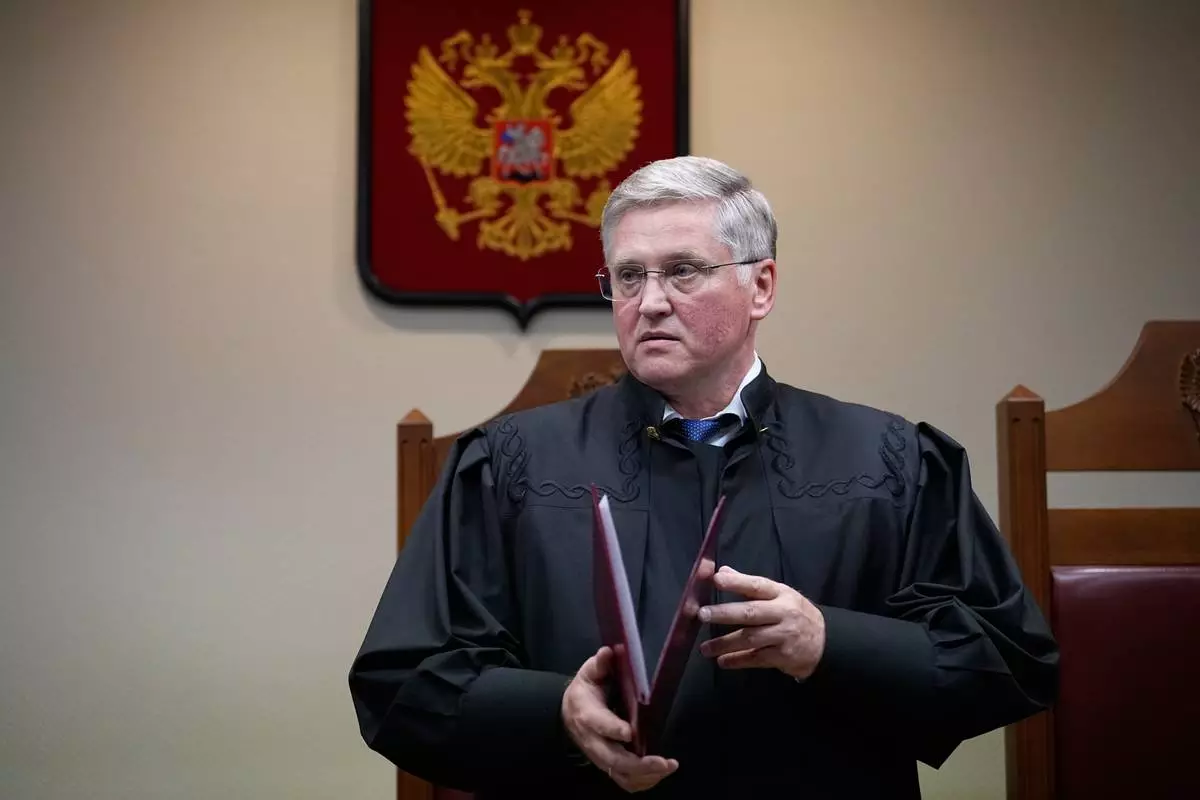
Court judge Vyacheslav Kirillov reads a ruling to outlaw the "international movement" Memorial as extremist in a move against Nobel Peace Prize-winning rights group in Moscow, Russia, Thursday, April 9, 2026. (AP Photo/Alexander Zemlianichenko)
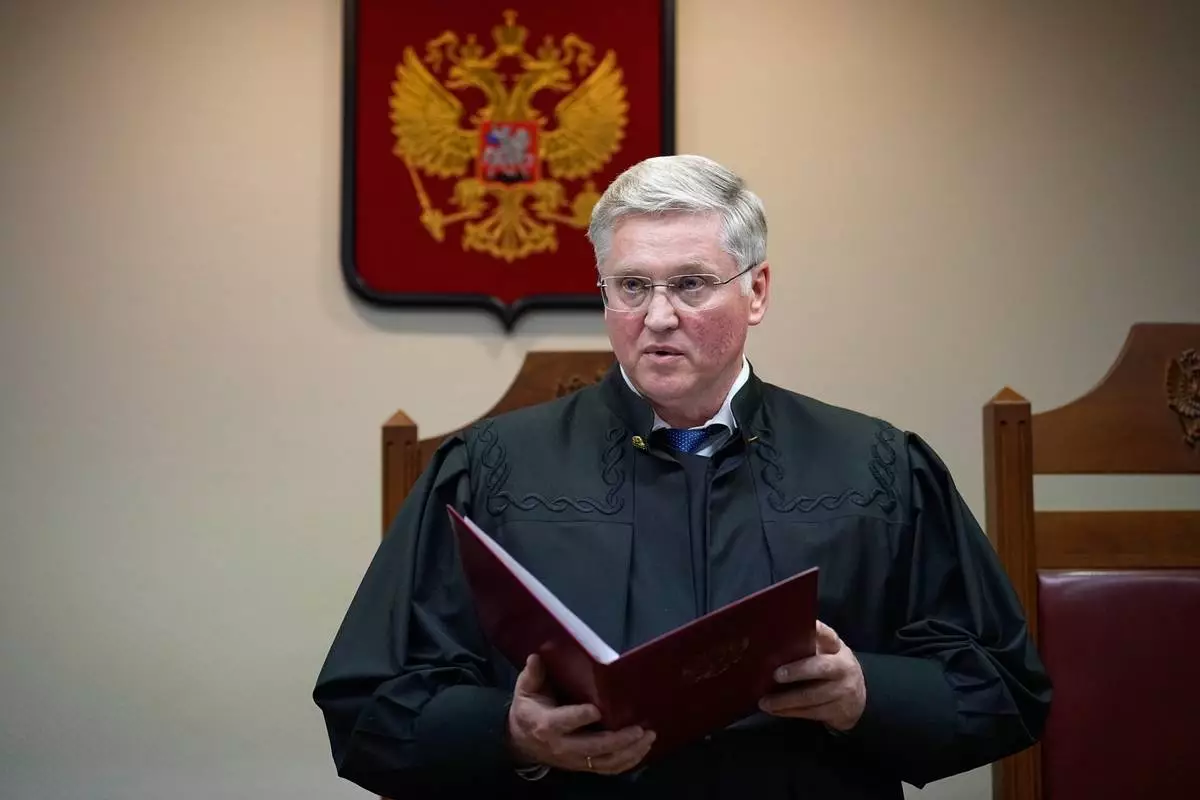
Court judge Vyacheslav Kirillov reads a ruling to outlaw the "international movement" Memorial as extremist in a move against Nobel Peace Prize-winning rights group in Moscow, Russia, Thursday, April 9, 2026. (AP Photo/Alexander Zemlianichenko)