MADISON, Wisc. (AP) — The bluntest assessment of Republican failures during this week's elections in Wisconsin came from one of their own.
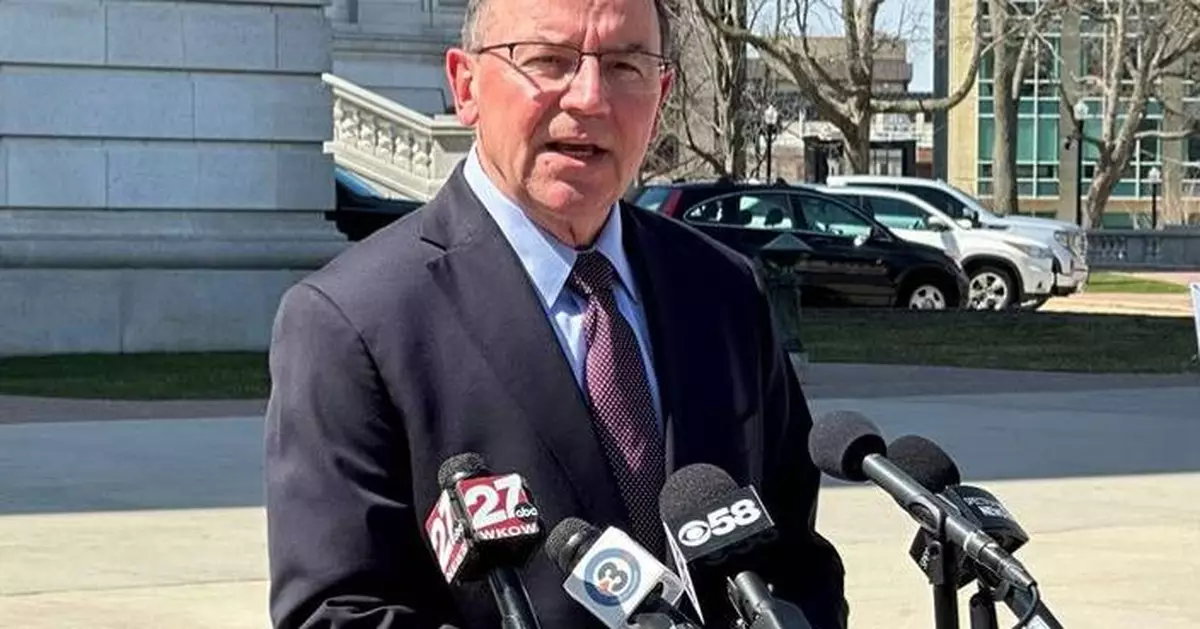
“We got our butts kicked,” said U.S. Rep. Tom Tiffany, who is running for governor.
He was referring to Democratic victories in campaigns for the Wisconsin Supreme Court and the mayor's office in Waukesha, a conservative suburb outside of Milwaukee. But some Republicans were also rattled by a Georgia special election, where their candidate to replace Marjorie Taylor Greene in Congress won by a much slimmer margin than the party enjoyed in the past.
Taken together, the swings from red to blue added more data points to an increasingly clear picture of Democratic momentum heading into the November midterms, when control of the U.S. House, U.S. Senate and state governments around the country are up for grabs.
“In rural, urban, red, blue, Democrats have overperformed everywhere,” said Jared Leopold, a Democratic consultant whose clients include Keisha Lance Bottoms, a candidate for Georgia governor. “That is a significant canary in the coal mine about what November of ’26 is going to look like.”
Some Republicans insisted there was no need to panic, and their fundraising remains stronger than Democrats. Stephen Lawson, a Georgia strategist, said “the sky is not falling.”
But he also said his party is running behind where it has been in the past, and Republicans need to be “looking at these results carefully.”
Special elections can be notoriously unreliable as political benchmarks, but Democrats have consistently demonstrated surprising strength. They flipped a Texas state Senate district. They won a Florida state House seat in a district that includes President Donald Trump's Mar-a-Lago resort in Palm Beach.
Then they gained ground on Tuesday in the race to replace Greene, who resigned from Congress in January after a falling out with Trump.
Clay Fuller, the Republican candidate, prevailed by 12 points. Two years ago, Greene won by 29 points and Trump carried the district by almost 37 points.
“That’s a red alarm for Republicans,” said Democratic strategist Meredith Brasher.
Fuller defeated Shawn Harris, who plans to challenge him again in November.
Jackie Harling, the district's Republican chairwoman, said she believed that Greene’s resignation energized Democrats while her party is suffering from “election fatigue.”
“Marjorie Taylor Greene was like a freight train that you couldn’t stop, and when she pulled out, it gave Democrats hope and it gave them a shot at winning something they believed was unwinnable,” Harling said.
Georgia has key races this year, including an open contest for the governor's office. Sen. Jon Ossoff, a Democrat, is trying to defend his seat as well.
There's reason to think that simmering discontent could boomerang back on Republicans just two years after Trump harnessed voters' anger with his comeback presidential campaign.
In November, Democrats defeated two Republican incumbents in statewide races for seats on the Public Service Commission, which regulates utilities. Rising electricity rates have been a fault line in recent campaigns, especially as enormous data centers are built to power artificial intelligence.
But Georgia Democratic Party Chair Charlie Bailey is trying to maintain modest expectations.
“We could cement ourselves, put ourselves, on the slightly bluer side of purple,” he said. ”We’re not going to overnight turn into Colorado.”
Wisconsin holds statewide elections for supreme court seats, and liberals expanded their majority with a 20-point blowout victory on Tuesday.
Democrats saw gains in red, blue and purple counties when compared to another judicial race last year, which was also won by the liberal candidate.
“This to me was a very clear sign of momentum and enthusiasm for Democrats in the fall,” said Wisconsin Democratic Party Chairman Devin Remiker.
The state has its own open race for governor this year, and Democrats are hoping to take control of the state legislature and oust Republican U.S. Rep. Derrick Van Orden.
“It’s time for us to put this thing in overdrive,” said Mandela Barnes, a Democratic former lieutenant governor who is running for governor.
Milwaukee County Executive David Crowley, another Democratic candidate for governor, said it’s clear that “people are really upset with the Republican Party and their brand right now.”
“But that doesn’t mean that they’re automatically going to come over to the Democrats,” Crowley said. “And that’s why we have to continue to focus on the issues and speak to the values of all the voters here in the state of Wisconsin.”
Tiffany, the Republican candidate for governor in Wisconsin, cautioned against reading too much into Tuesday’s results.
He said “every election is unique,” and he wasn’t making any changes to his campaign. He said the key to winning will be to “paint that clear contrast of how we are going to help everyday Wisconsinites.”
But Democrats seemed to be making inroads, including in Waukesha. The city is located outside of Milwaukee in the Republican stronghold of Waukesha County.
Democrat Alicia Halvensleben, president of the city’s Common Council, defeated Republican Scott Allen, one of the most conservative members of the state Assembly.
She said Trump came up “a lot” when she was campaigning, although she thinks her victory came down to local issues and how the state legislature wasn't addressing them.
“There’s so much uncertainty at the national level,” Halvensleben said. “I think that level of uncertainty is causing people a lot of anxiety, all the way down to the local level.”
Amy reported from Atlanta and Cooper reported from Phoenix.
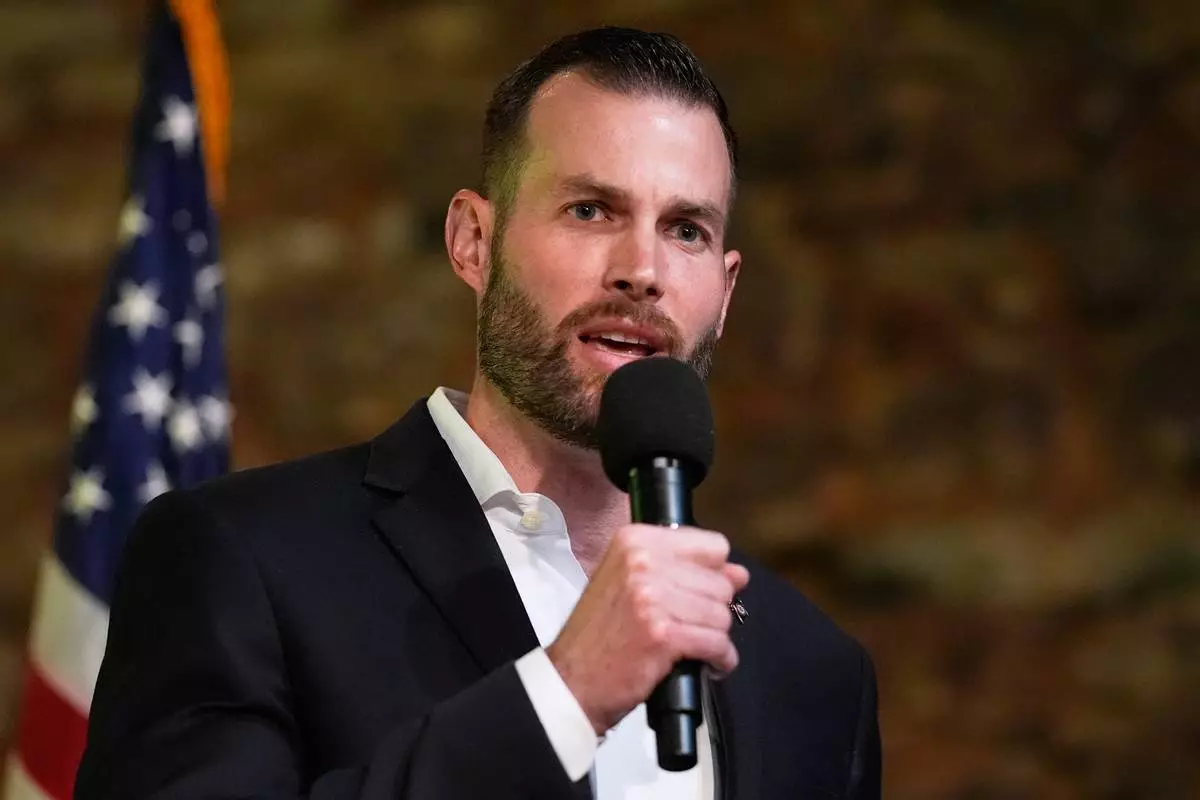
Republican Clay Fuller speaks during an election night watch party after winning a special election for Georgia's 14th Congressional District, Tuesday, April 7, 2026, in Ringgold, Ga. (AP Photo/Mike Stewart)
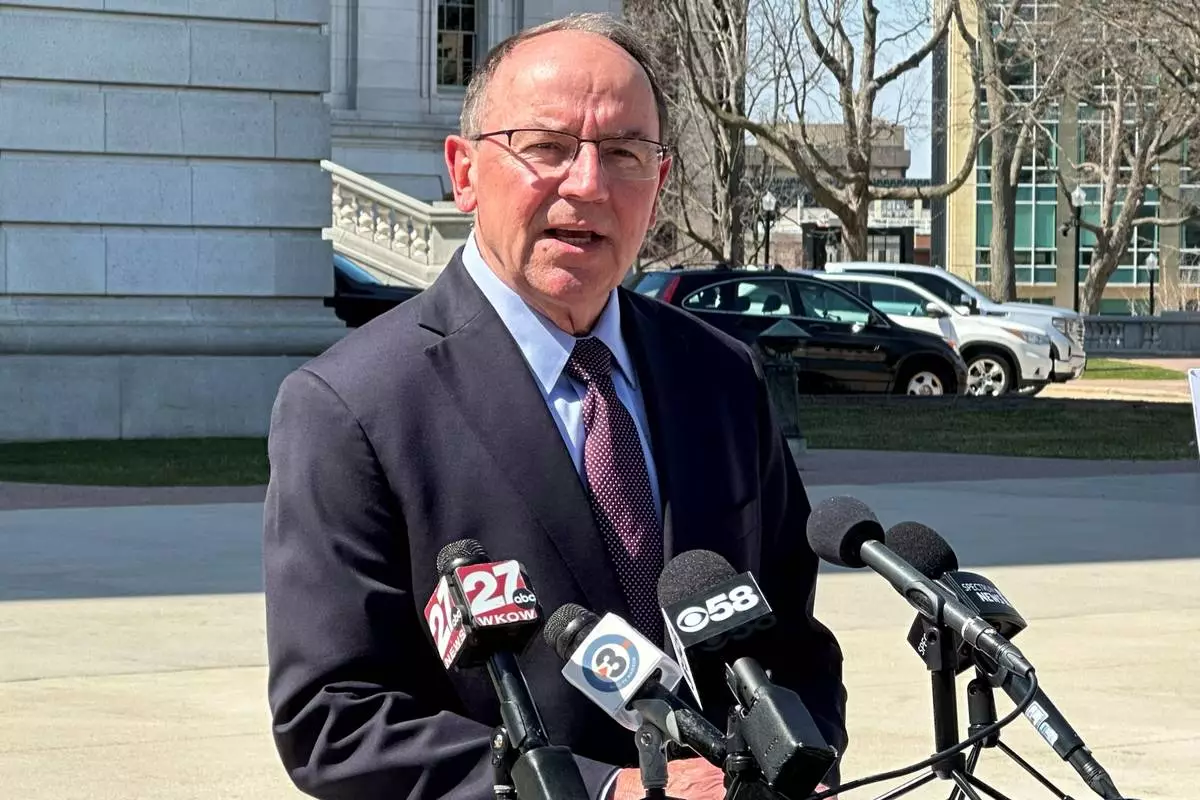
Rep. Tom Tiffany, R-Wis., a candidate for Wisconsin governor, speaks during a news conference Wednesday, April 8, 2026, about what the GOP needs to do in November after big defeats in the spring election, outside of the state Capitol in Madison, Wis. (AP Photo/Scott Bauer)
DUBAI, United Arab Emirates (AP) — Semiofficial news agencies in Iran published a chart Thursday suggesting the country’s paramilitary Revolutionary Guard put sea mines into the Strait of Hormuz during the war, in a message that may be intended to pressure the U.S. as uncertainty hangs over a days-old two-week ceasefire and further negotiations are expected in Pakistan.
The charts were released by the ISNA news agency, as well as Tasnim, which is believed to be close to the Guard. They showed a large circle marked “danger zone” in Farsi over the Traffic Separation Scheme, which was the route ships take through the strait, the narrow mouth of the Persian Gulf through which 20% of all oil and natural gas traded once passed.
The chart suggested ships travel further north through waters closer to Iran’s mainland near Larak Island, a route that some ships were observed taking during the war.
The charts were dated from Feb. 28 until Thursday, April 9, and it was unclear if the Guard had cleared any mining on the route since then.
Oil rose again to above $97 a barrel and Asian stocks were trading lower Thursday on skepticism over the ceasefire. Brent crude, the international standard, was up 2.9% to $97.46 per barrel. It had fallen briefly to below $92 following the temporary ceasefire announcement. Benchmark U.S. crude was 3.7% higher Thursday at $97.94 per barrel.
Ship-tracking data from Kpler showed only four vessels with their Automatic Identification System trackers on passed through the Strait of Hormuz on Wednesday, the first day of the ceasefire. However, that does not include so-called “dark fleet” vessels, which travel with their AIS trackers turned off. Many of those “dark fleet” ships carry sanctioned Iranian crude oil out to the open market.
U.S. President Donald Trump posted a statement insisting that his surge of warships and troops will remain around Iran “until such time as the REAL AGREEMENT reached is fully complied with.”
Trump’s comments on his Truth Social platform appeared to be a way to pressure Iran.
“If for any reason it is not, which is highly unlikely, then the ‘Shootin’ Starts,’ bigger, and better, and stronger than anyone has ever seen before,” Trump wrote.
He also insisted Iran would not be able to build nuclear weapons and “the Strait of Hormuz WILL BE OPEN & SAFE.”
The U.S. and Iran both claimed victory after reaching the ceasefire agreement, and world leaders expressed relief. But more drones and missiles hit Iran and Gulf Arab countries after the deal was announced.
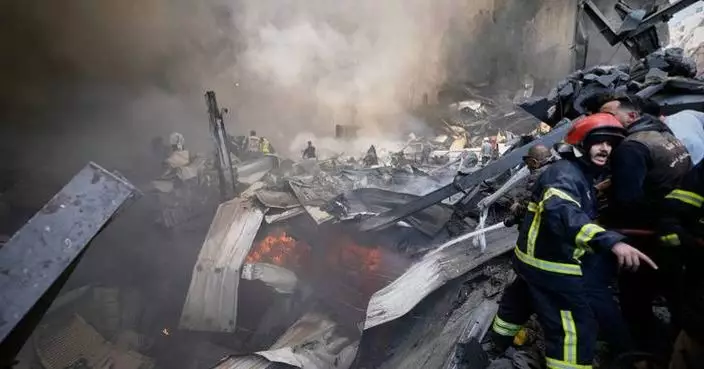
Israel also intensified its attacks on the Hezbollah militant group in Lebanon on Wednesday, hitting commercial and residential areas in Beirut. At least 182 people were killed in the deadliest day of fighting there. First responders searched overnight for missing people still under the rubble after the deadly Israeli strikes.
The violence threatened to scuttle what U.S. Vice President JD Vance called a “fragile” deal.
Iran's parliament speaker said Wednesday that planned talks were “unreasonable” because Washington had broken three of Tehran’s 10 conditions for an end to the fighting. In a social media post, Mohammad Bagher Qalibaf objected to Israeli attacks on Hezbollah, an alleged drone incursion into Iranian airspace after the ceasefire took effect and U.S. refusal to accept any Iranian enrichment capabilities in a final agreement.
Iranian Foreign Minister Abbas Araghchi insisted that an end to the war in Lebanon was part of the ceasefire deal, but Israeli Prime Minister Benjamin Netanyahu and Trump said the truce did not cover Lebanon. When the deal was announced, the prime minister of Pakistan, which served as a mediator, said in a social media post that it applied to “everywhere including Lebanon and elsewhere.”
A New York-based think tank warned the ceasefire “hovers on the verge of collapse.”
The Soufan Center said Israel's strikes on Lebanon on Wednesday added to the risk the deal would fall apart.
“Even if Lebanon was formally outside the deal, the scale of Israel’s strikes was likely to be viewed as escalatory, nonetheless,” it wrote in an analysis published Thursday. “Israel’s strikes can be understood both as an effort to drive a wedge between Iran and its proxies and as a response to being allegedly sidelined in the original ceasefire discussions.”
The White House said that Vice President JD Vance would lead the U.S. delegation to talks in Islamabad aimed at ending the war, which are set to start Saturday.
Iran’s negotiating team will arrive in Islamabad on Thursday night, the Iranian ambassador there said.
Reza Amiri Moghadam wrote on X that the “Iranian delegation arrives tonight in Islamabad for serious talks based on 10 points proposed by Iran,” without identifying who was on the Iranian team.
Those points include Iran enriching uranium, maintaining its control of the Strait of Hormuz and other issues that have been nonstarters in the past for Trump. The White House has repeatedly described the 10 points issued by Iran as false.
Moghadam wrote that the Iranians would come to Islamabad despite “skepticism of Iranian public opinion due to repeated ceasefire violations by Israeli regime to sabotage the diplomatic initiative,” likely referring to Israel’s strikes on Lebanon, which Israel and the U.S. have said wasn’t included in the shaky ceasefire.
Becatoros reported from Athens, Greece. Chan Ho-him in Hong Kong, Zeke Miller in Washington and Kareem Chehayeb and Hussein Malla contributed to this report.
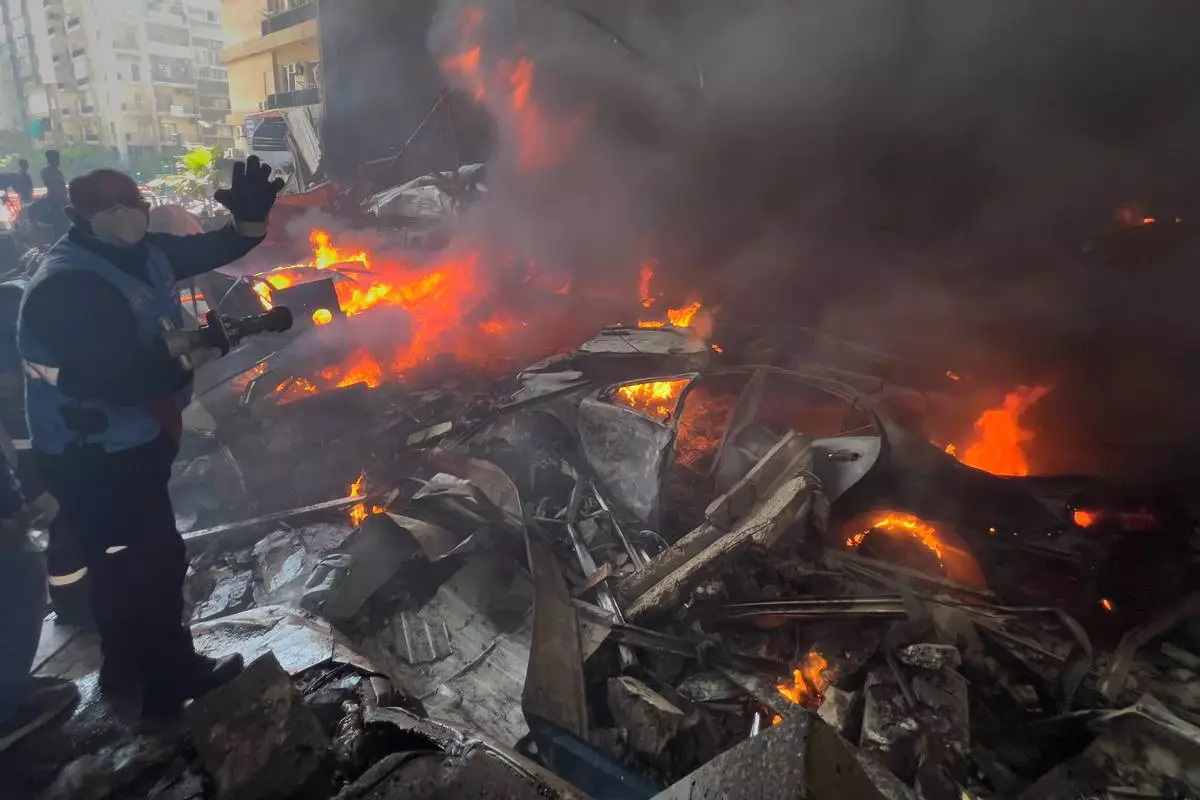
A rescue worker extinguishes burning cars at the site of an Israeli airstrike in central Beirut, Lebanon, Wednesday, April 8, 2026. (AP Photo/Hussein Malla)
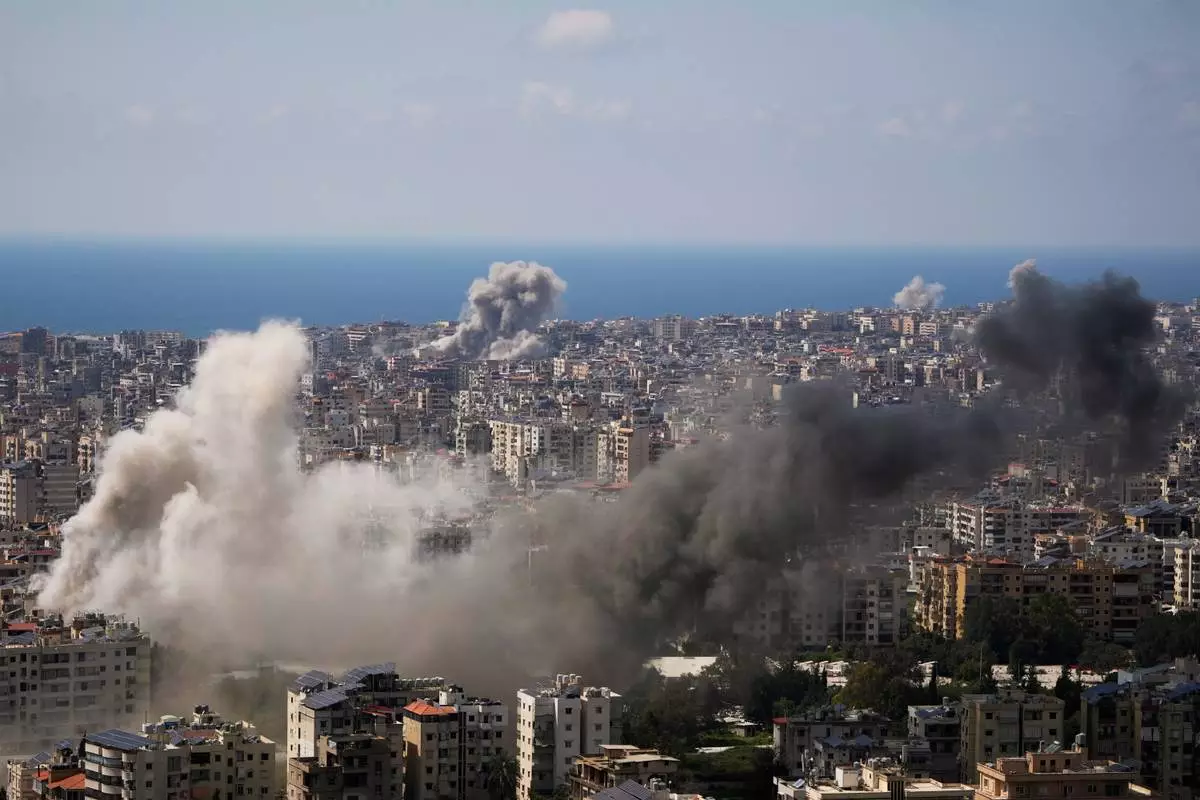
Smoke rises following several Israeli airstrikes in Beirut, Lebanon, Wednesday, April 8, 2026. (AP Photo/Hassan Ammar)

Ali, 4, holds a toy horse next to the tent his family uses as a shelter after fleeing Israeli bombardment in southern Lebanon, in Beirut, Lebanon, Wednesday, April 8, 2026. (AP Photo/Emilio Morenatti)
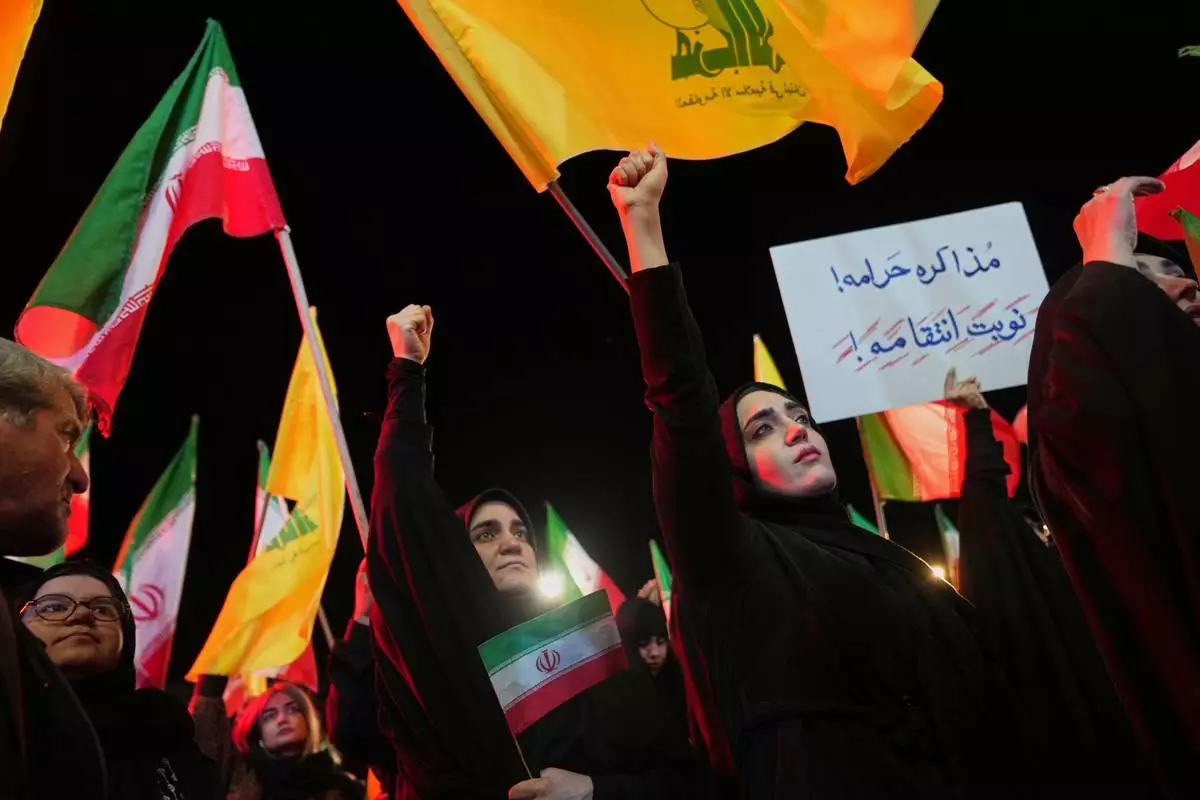
Government supporters gather ahead of the funeral procession for Maj. Gen. Majid Khademi, head of intelligence for Iran's paramilitary Revolutionary Guard, in Tehran, Iran, Wednesday, April 8, 2026. (AP Photo/Francisco Seco)
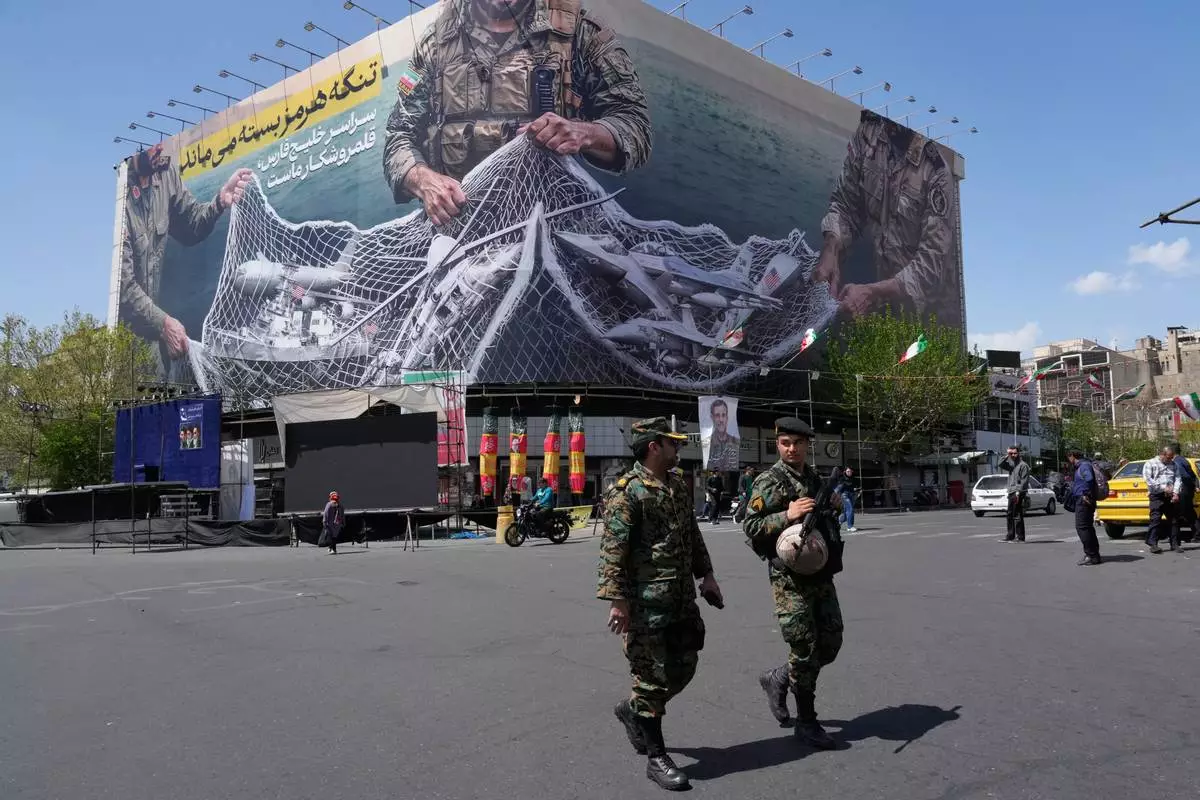
FILE - Two police officers walk in front of an anti-U.S. billboard depicting American aircraft being caught by Iranian armed forces in a fishing net beneath the words in Farsi, "The Strait of Hormuz will remain closed, The entire Persian Gulf is our hunting ground," in Tehran, Iran, Sunday, April 5, 2026. (AP Photo/Vahid Salemi, File)