BRUSSELS (AP) — NATO Secretary-General Mark Rutte declined to say Thursday whether President Donald Trump had repeated his threat to quit the military organization, saying only that the U.S. leader was disappointed in some allies for being too slow to help with the Iran war.
Rutte's remarks came a day after he weathered a fresh ordeal with the U.S. leader, following months of tensions over Trump's threats to seize Greenland. The U.S.-Israel war on Iran does not involve the world’s biggest military alliance and NATO allies were not consulted about it, but Trump has criticized fellow treaty members for their lack of support.
Click to Gallery
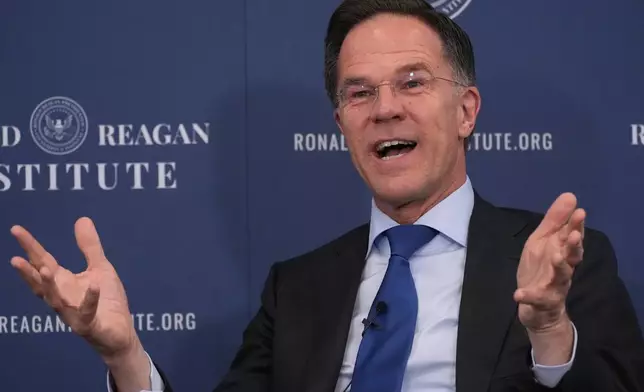
NATO Secretary General Mark Rutte speaks at the Ronald Reagan Institute, Thursday, April 9, 2026, in Washington. (AP Photo/Manuel Balce Ceneta)
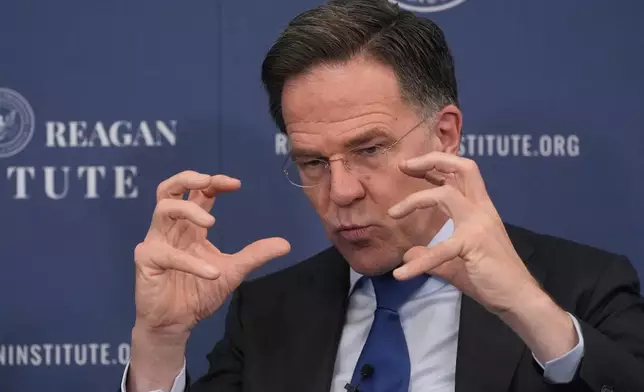
NATO Secretary General Mark Rutte speaks at the Ronald Reagan Institute, Thursday, April 9, 2026, in Washington. (AP Photo/Manuel Balce Ceneta)
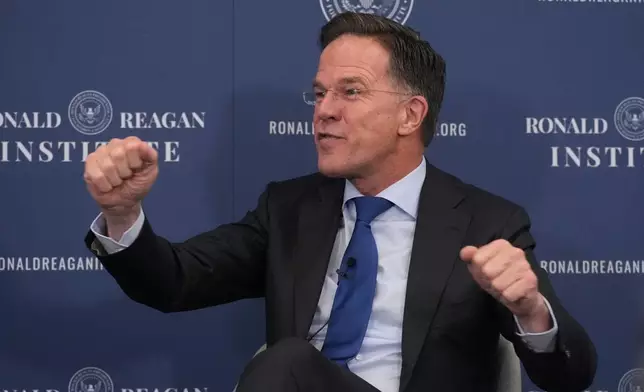
NATO Secretary General Mark Rutte speaks at the Ronald Reagan Institute, Thursday, April 9, 2026, in Washington. (AP Photo/Manuel Balce Ceneta)
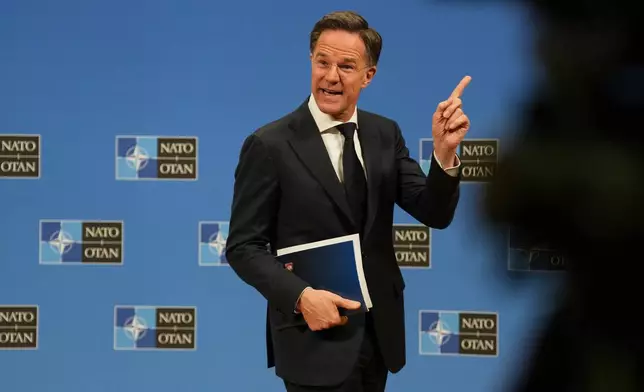
NATO Secretary General Mark Rutte leaves the podium after the launch of the NATO Secretary General's Annual Report for 2025 at NATO headquarters in Brussels, Thursday, March 26, 2026. (AP Photo/Virginia Mayo)
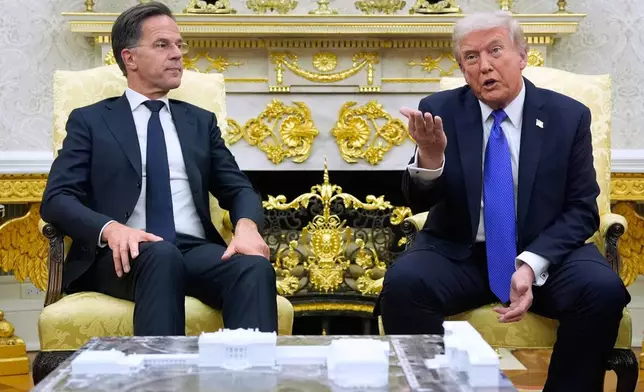
FILE - President Donald Trump meets with NATO Secretary General Mark Rutte in the Oval Office of the White House, Oct. 22, 2025, in Washington. (AP Photo/Alex Brandon, File)
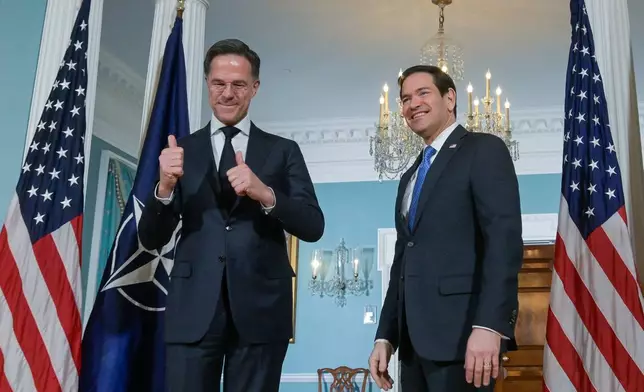
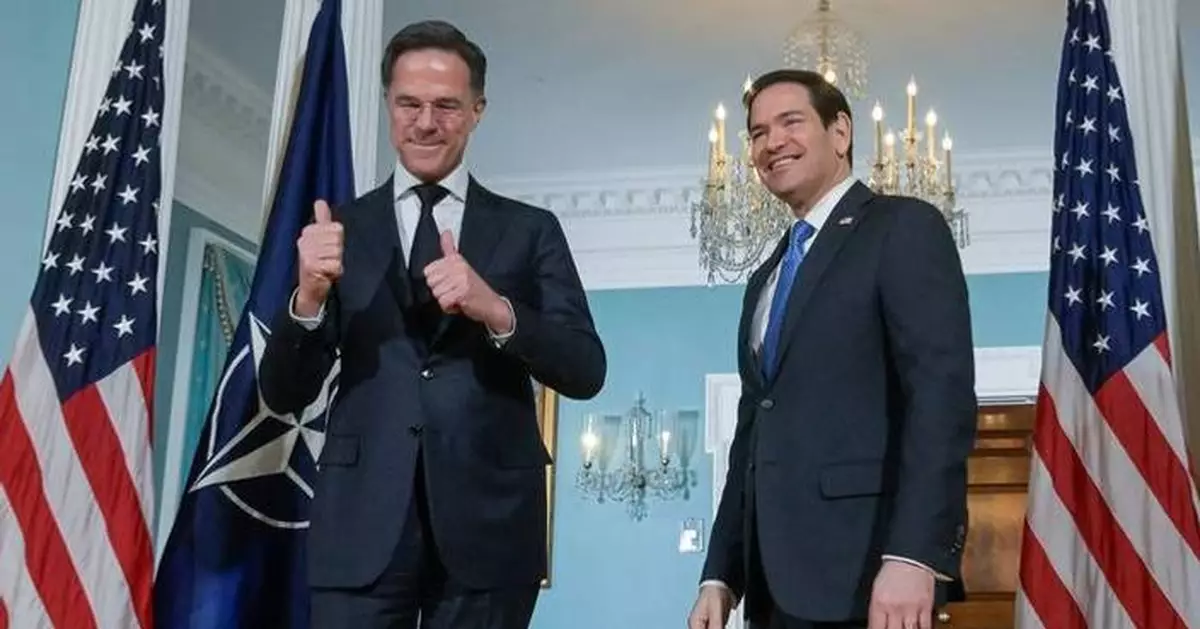
Secretary of State Marco Rubio, right, is joined by NATO Secretary General Mark Rutte, left, for a photo opportunity at the State Department, Wednesday, April 8, 2026, in Washington. (AP Photo/Rod Lamkey, Jr.)
Since launching the war, Trump has derided U.S. allies as “cowards,” slammed NATO as “a paper tiger” and compared U.K. Prime Minister Keir Starmer to Neville Chamberlain, who is probably best remembered for a policy of appeasement toward Nazi Germany.
In recent days, the man who is as good as chairman of the NATO board suggested that the U.S. might leave. Trump already threatened to walk out in 2018 during his first term. His complaint now is that some allies ignored his call to help as Iran effectively shut the Strait of Hormuz, a vital trade waterway.
After the talks with Rutte, the alliance’s most powerful leader took to social media to show his annoyance. “NATO WASN’T THERE WHEN WE NEEDED THEM, AND THEY WON’T BE THERE IF WE NEED THEM AGAIN,” Trump posted.
Asked repeatedly since then whether Trump intends to take America out of NATO, Rutte has said little, but he has not denied that such a threat was made. “I sensed his disappointment about the fact that he felt that too many allies were not with him," was all Rutte would say on Thursday.
Rutte has earned a reputation as a “Trump whisperer,” notably helping to draw up a plan that has seen European allies and Canada buy U.S. weapons for Ukraine, and keep the administration involved in Europe’s biggest war in decades.
Indeed, one of his most demanding tasks since taking office in 2024 has been to keep the mercurial U.S. leader engaged in NATO, particularly as America has set its sights on security challenges elsewhere, in the Indo-Pacific, Venezuela, and most recently Iran.
Rutte has used flattery, praising Trump for forcing allies to spend more on defense. He has congratulated the U.S. leader over the war and refrained from criticizing Trump’s warning that “a whole civilization will die” should Iran not reopen the strait.
In a speech Thursday on America's role in NATO, Rutte said “allow me here to applaud President Trump for his bold leadership and vision.” Rutte chided some allies for being "a bit slow, to say the least,” to help with Iran.
He declined to confirm reports that Trump is considering moving U.S. troops out of European countries that do not support the war, saying: “I totally understand that over time the U.S. wants more and more to pivot towards the Indo-Pacific.”
The striking thing about the war on Iran is that NATO has no role to play there. As a defensive alliance it has protected ally Turkey when Iranian missiles were fired in retaliation at its territory, but the war was launched by a NATO member, not at one.
Rutte himself has said that NATO would not join the war, and there is no public confirmation that the U.S. had even raised the issue at the organization’s Brussels headquarters, although it cannot be ruled out that the administration made a request on Wednesday for that to happen.
NATO declined to say whether security for the strait has been officially discussed and referred questions to the United Kingdom, which is leading an effort outside the alliance to make the trade route safe for shipping once the ceasefire is working.
Estonian Foreign Minister Margus Tsahkna said Thursday that his country is always ready to consider providing support through NATO to partners who request it there.
“If the U.S. or any other NATO ally is asking (for) our support, we are always read to discuss it,” he told broadcaster CNBC. “But for that, we need of course the official ask to discuss then what is the mission, what is the goal.”
If allies “need our support, then we need to plan together,” he said.
Rutte himself insists that the alliance will only defend itself, and not become involved in another conflict outside of NATO territory, which is considered to be much of Europe and North America.
NATO has operated outside of the Euro-Atlantic area in the past, notably in Libya and Afghanistan. But there is no appetite to do so again given its chaotic U.S.-led exit from Afghanistan in 2021, which former NATO chief Jens Stoltenberg described as a “defeat.”
Trump's ire seems most directed at Spain and France, rather than NATO itself. Spain has closed its airspace to U.S. planes involved in the Iran war and has refused U.S. forces the use of jointly operated military bases.
After the two-week ceasefire was announced, Spanish Prime Minister Pedro Sánchez posted on X that his government “will not applaud those who set the world on fire just because they show up with a bucket.”
France has been critical, insisting that the war was launched without respecting international law and that Paris was never consulted about it. No blanket restrictions were placed on the use of joint bases or its airspace, but French authorities have said they’re making such decisions on a case by case basis.
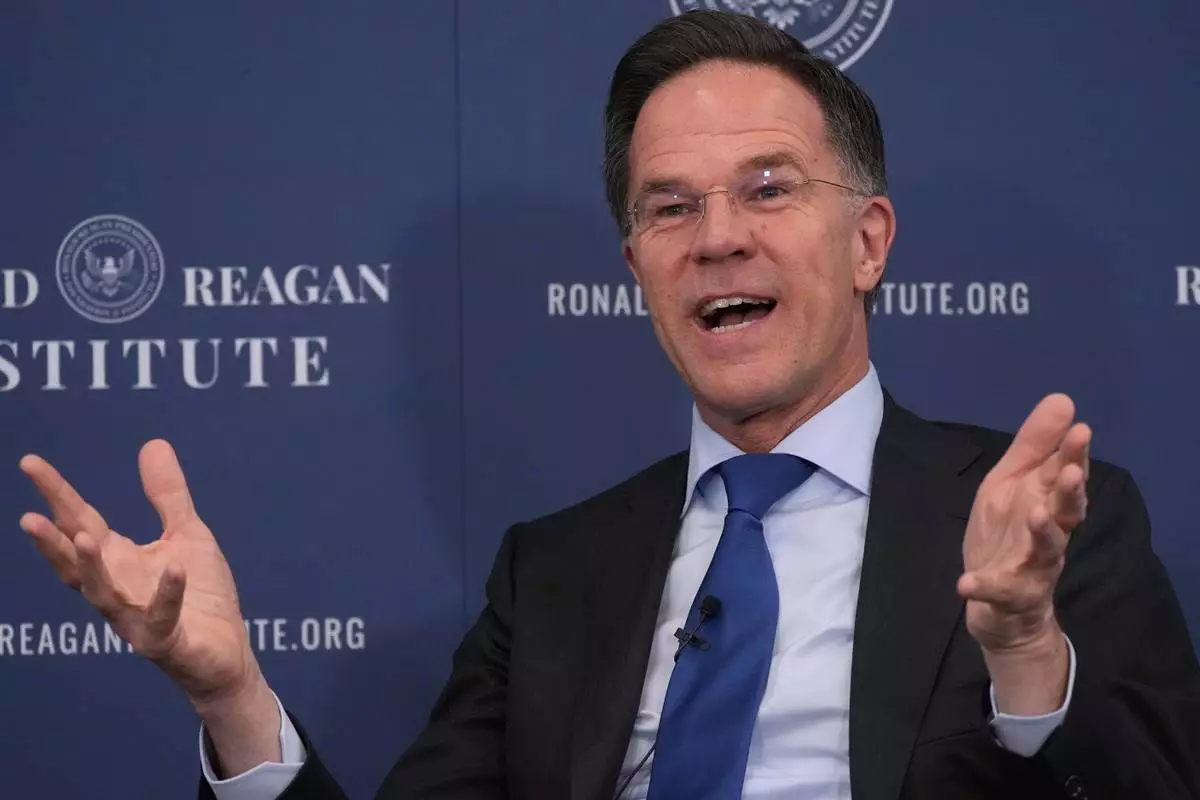
NATO Secretary General Mark Rutte speaks at the Ronald Reagan Institute, Thursday, April 9, 2026, in Washington. (AP Photo/Manuel Balce Ceneta)
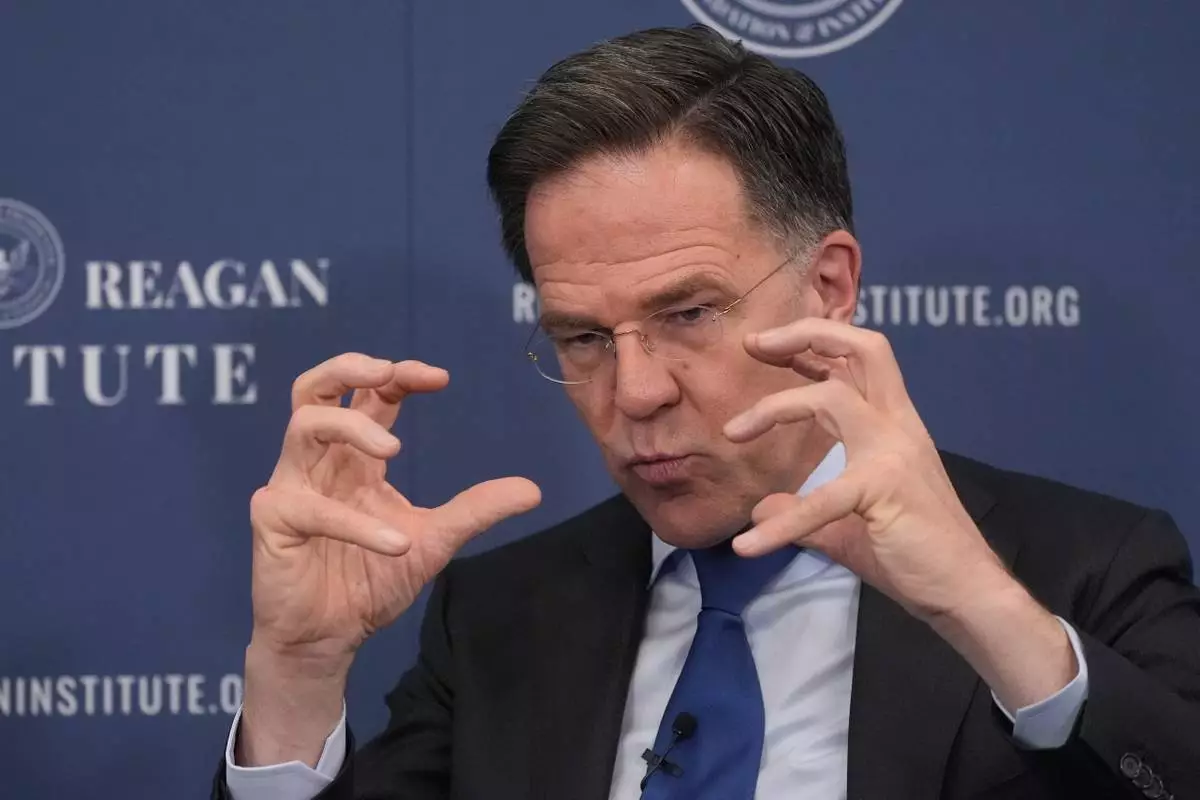
NATO Secretary General Mark Rutte speaks at the Ronald Reagan Institute, Thursday, April 9, 2026, in Washington. (AP Photo/Manuel Balce Ceneta)
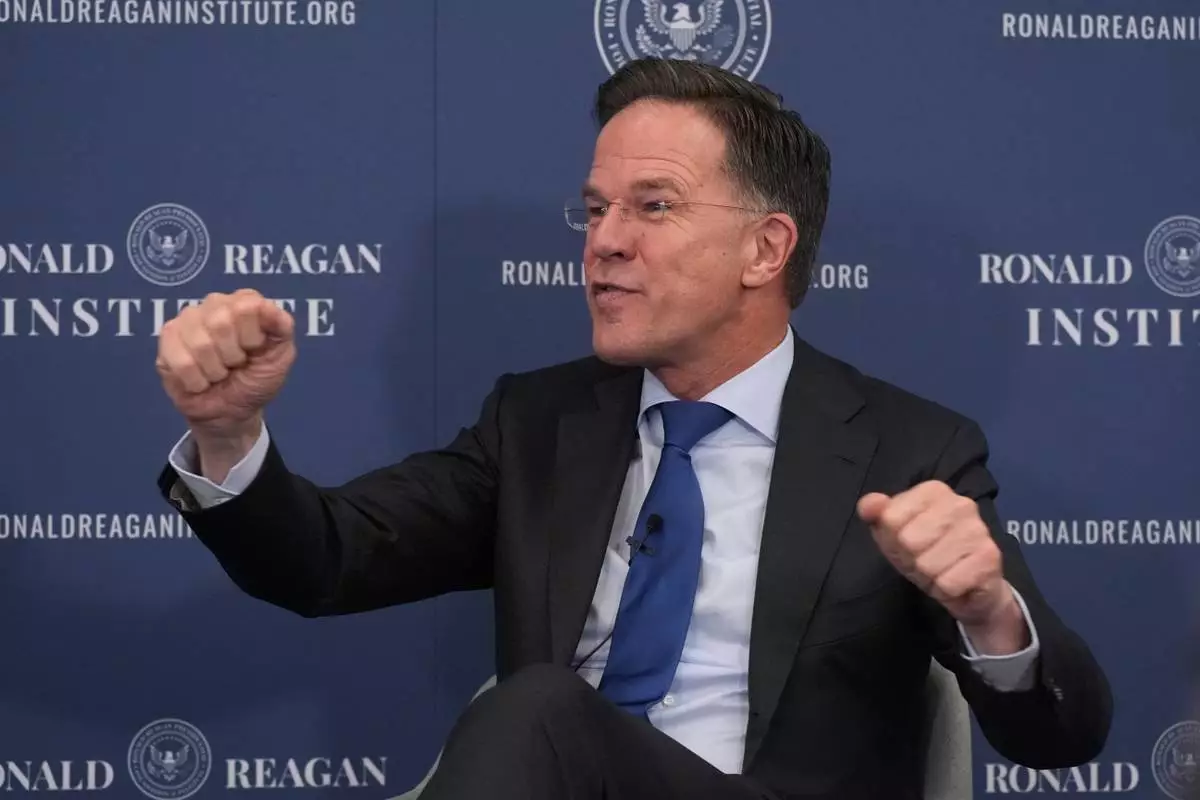
NATO Secretary General Mark Rutte speaks at the Ronald Reagan Institute, Thursday, April 9, 2026, in Washington. (AP Photo/Manuel Balce Ceneta)
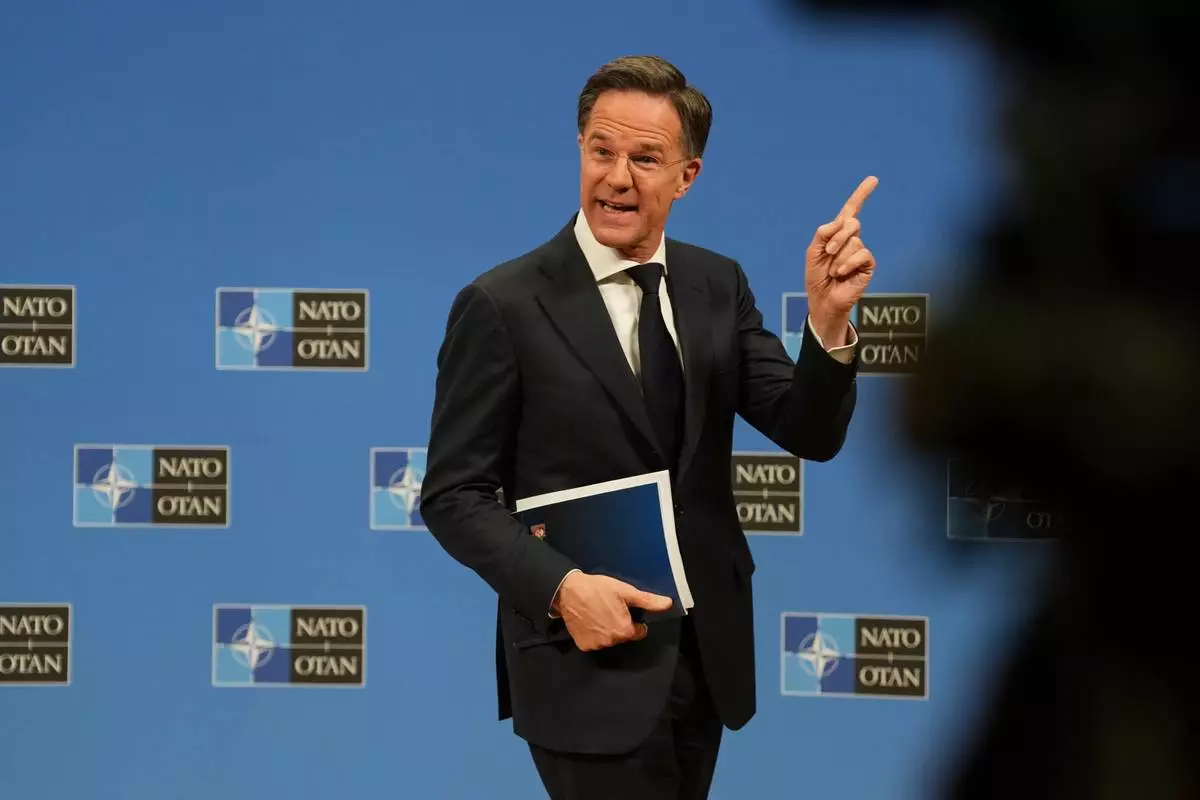
NATO Secretary General Mark Rutte leaves the podium after the launch of the NATO Secretary General's Annual Report for 2025 at NATO headquarters in Brussels, Thursday, March 26, 2026. (AP Photo/Virginia Mayo)
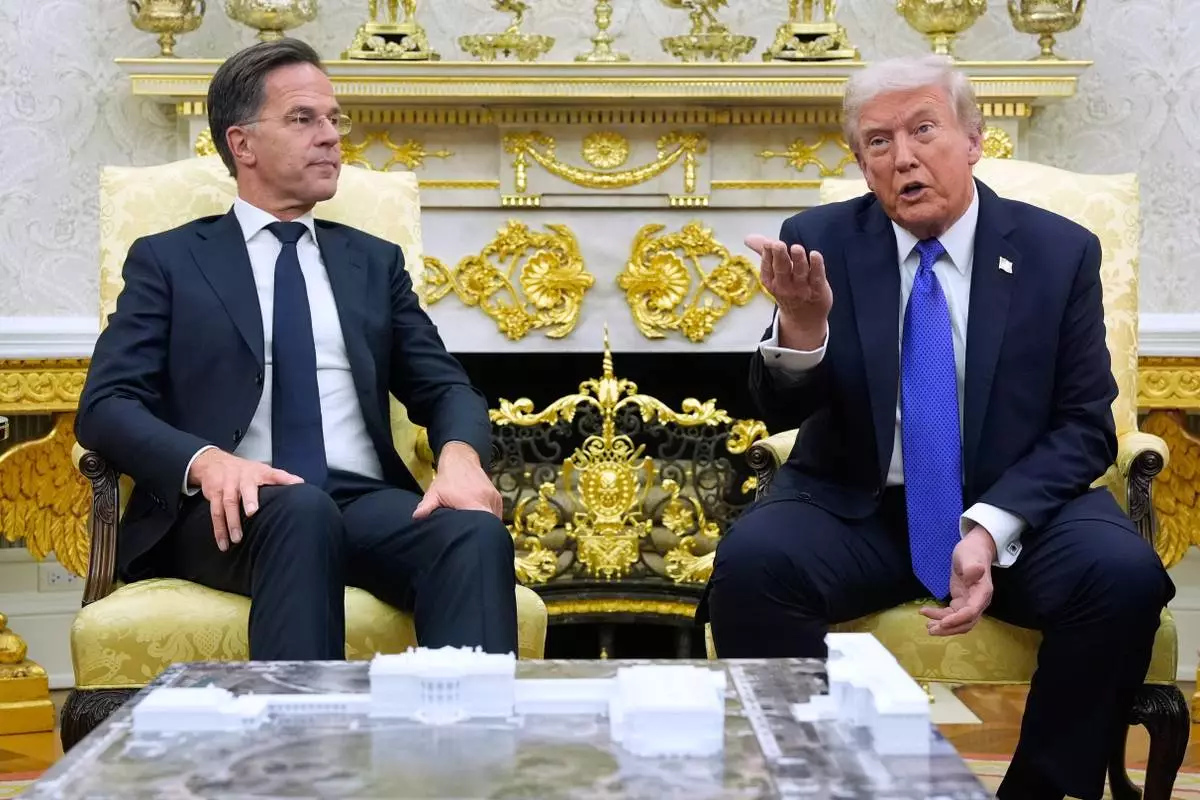
FILE - President Donald Trump meets with NATO Secretary General Mark Rutte in the Oval Office of the White House, Oct. 22, 2025, in Washington. (AP Photo/Alex Brandon, File)
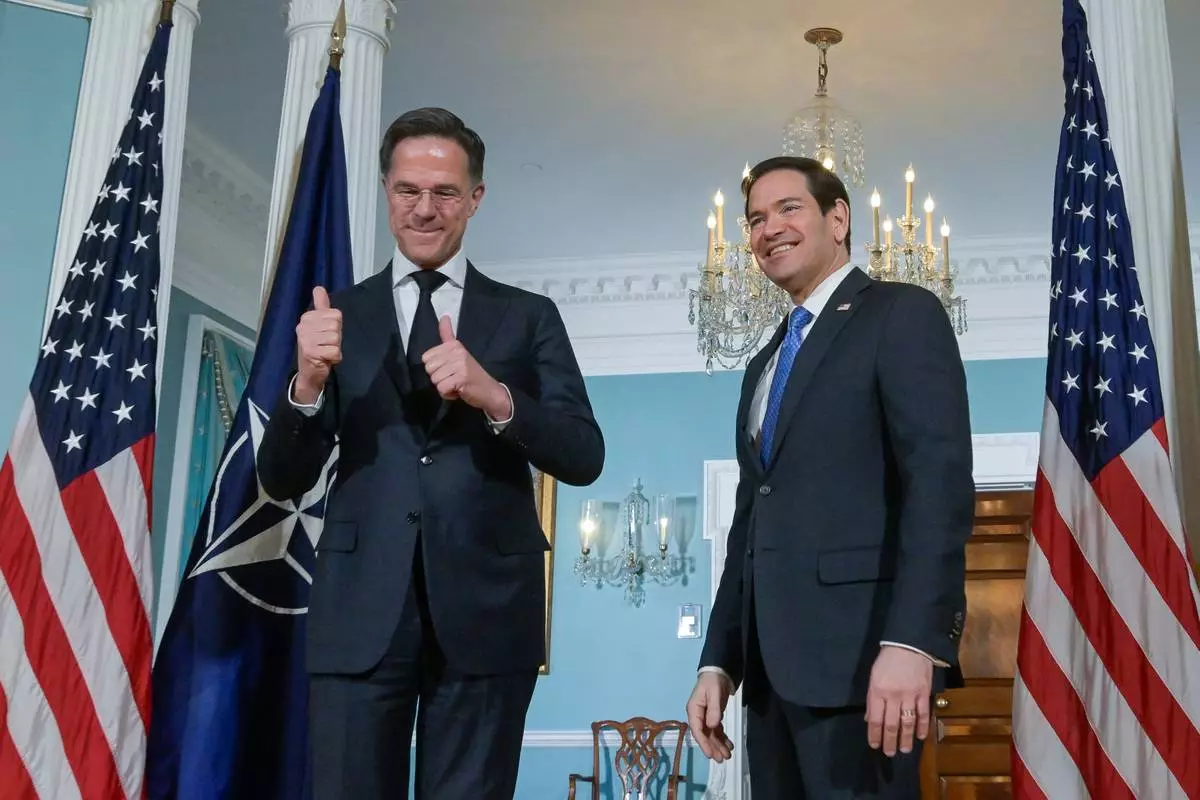
Secretary of State Marco Rubio, right, is joined by NATO Secretary General Mark Rutte, left, for a photo opportunity at the State Department, Wednesday, April 8, 2026, in Washington. (AP Photo/Rod Lamkey, Jr.)