SINGAPORE & COLLEGE PARK, Md.--(BUSINESS WIRE)--Apr 9, 2026--
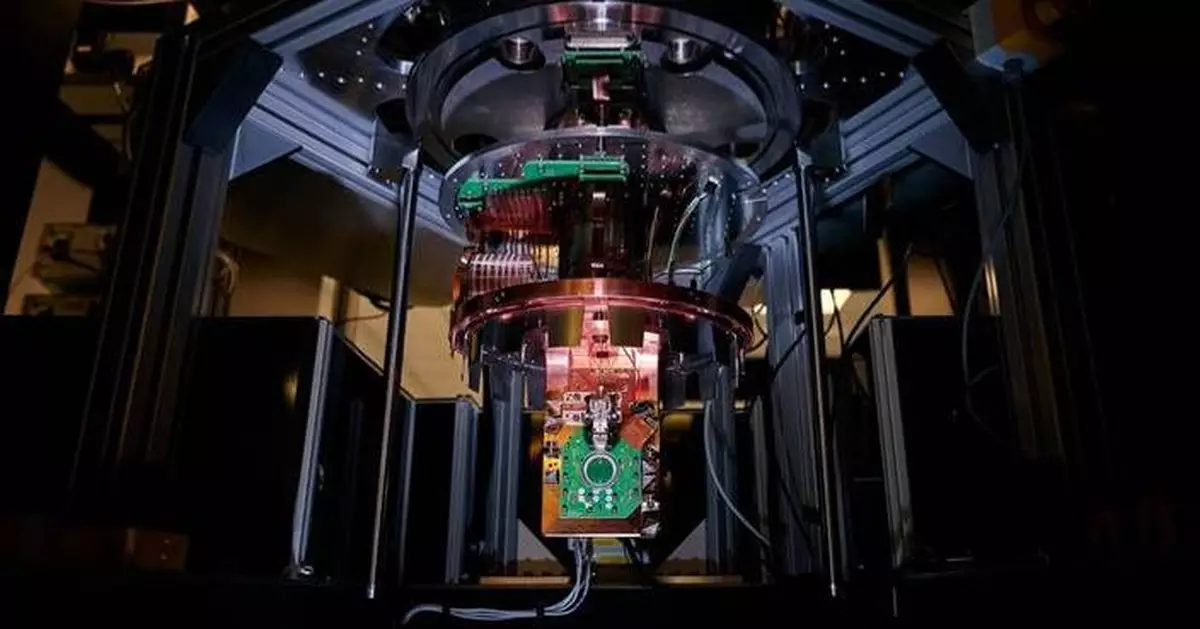
Horizon Quantum Holdings Ltd. (“Horizon Quantum”), a pioneer of software infrastructure for quantum applications and IonQ — the world’s leading quantum platform company — today announced a strategic agreement. Horizon Quantum will purchase one of IonQ’s first 6th-generation, chip-based 256-qubit trapped-ion systems, in furtherance of Horizon Quantum’s mission to unlock the full potential of quantum computing with its software platform. The acquisition of the 256-qubit system marks a further step in Horizon Quantum’s efforts to enable broad quantum advantage.
This press release features multimedia. View the full release here: https://www.businesswire.com/news/home/20260409584530/en/
IonQ’s 256-qubit system is designed to provide researchers and developers significantly more computing capacity to explore complex problems, with its microwave gate operations and 99.99% gate fidelity, while producing more accurate and reliable solutions using Horizon Quantum’s real-world software infrastructure. The forthcoming IonQ system will be designed so all of its qubits can work together efficiently from its “all-to-all connectivity” and parallel operations enabling a broader range of calculations with greater flexibility.
With this technology, Horizon Quantum plans to expand the capabilities of its quantum hardware testbed beyond the initial superconducting system with a second, technologically distinct hardware modality. Horizon Quantum will be among only a few efforts globally to operate commercial systems of multiple modalities, which will allow Horizon Quantum to make further progress towards its goal of building the most capable, hardware-agnostic environment for quantum software development. Horizon Quantum intends to expand support for trapped-ion systems in Triple Alpha, along with enhancing the real-time runtime capabilities within its execution infrastructure. This is expected to enable advanced functionality, including general control flow, dynamic memory allocation, and concurrent classical/quantum function evaluation, empowering developers to go beyond the limits of static circuit execution and create adaptive, expressive quantum programs. By tightly integrating Triple Alpha with frontier quantum computing systems, Horizon Quantum aims to ensure that its software infrastructure provides developers with the most direct path to broad quantum advantage.
“I could not be more delighted to be working with IonQ to bring trapped ion and world-leading gate fidelities to our testbed,” said Horizon Quantum Founder and CEO Dr Joe Fitzsimons. “Bringing a state-of-the-art system with the capabilities of hundreds of qubits will provide an important and cutting-edge resource to bear in our quest to unlock broad quantum advantage for developers.”
About Horizon Quantum
Horizon Quantum [Nasdaq: HQ] is on a mission is to unlock broad quantum advantage by building software infrastructure that empowers developers to use quantum computing to solve the world’s toughest computational problems. Founded in 2018 by Dr Fitzsimons, a leading researcher and former professor with more than two decades of experience in quantum computing, Horizon Quantum seeks to bridge the gap between today’s quantum hardware and tomorrow’s applications through the creation of advanced software development tools. Its integrated development environment, Triple Alpha, enables developers to write sophisticated, hardware-agnostic quantum programs at multiple levels of abstraction. Learn more at www.horizonquantum.com.
About IonQ
IonQ, Inc. [NYSE: IONQ] is the world’s leading quantum platform and merchant supplier - delivering integrated quantum solutions across computing, networking, sensing, and security. IonQ’s newest generation of quantum computers, the forthcoming IonQ Tempo, will be the latest in a line of cutting-edge systems that have been helping customers and partners including Amazon Web Services, AstraZeneca, and NVIDIA achieve 20x performance results and accelerate innovation in drug discovery, materials science, financial modeling, logistics, cybersecurity, and defense. In 2025, the company achieved 99.99% two-qubit gate fidelity, setting a world record in quantum computing performance.
Headquartered in College Park, Maryland, IonQ has operations in California, Colorado, Massachusetts, Tennessee, Washington, Italy, South Korea, Sweden, Switzerland, Toronto, and the United Kingdom. Our quantum computing services are available through all major cloud providers, while we also meet the needs of networking and sensing customers across land, sea, air, and space. IonQ is making quantum platforms more accessible and impactful than ever before. Learn more at IonQ.com.
Note to Investors Regarding Forward-Looking Statements
This press release includes forward-looking statements. The expectations, estimates, and projections of the businesses of Horizon Quantum and IonQ may differ from their actual results and consequently, you should not rely on these forward-looking statements as predictions of future events. Words such as “expect,” “estimate,” “anticipate,” “intend,” “may,” “will,” “could,” “should,” “potential,” “plan” “enable,” and similar expressions are intended to identify such forward-looking statements. Actual results may differ materially and adversely from those expressed or implied in any forward-looking statements and Horizon Quantum and IonQ therefore caution against placing undue reliance on any of these forward- looking statements. Many of these factors are outside of the control of Horizon Quantum and IonQ and are difficult to predict. Factors that may cause such differences include, but are not limited to: (1) statements regarding estimates and forecasts of other financial, performance and operational metrics and projections of market opportunity; (2) references with respect to the anticipated benefits of the strategic relationship with IonQ; (3) the outcome of any efforts to integrate IonQ’s trapped-ion technology with Horizon Quantum’s software infrastructure; (4) Horizon Quantum’s ability to scale and grow its business, and the advantages and expected growth of Horizon Quantum; (5) the cash position of Horizon Quantum; (6) the ability to recognize the anticipated benefits of the recently completed business combination with dMY Squared Technology Group, Inc., which may be affected by, among other things, competition, the ability of Horizon Quantum to grow and manage growth profitably and source and retain its key employees; (7) costs related to the strategic relationship with IonQ; (8) changes in applicable laws and regulations or political and economic developments; (9) the possibility that Horizon Quantum may be adversely affected by other economic, business and/or competitive factors; (10) Horizon Quantum’s estimates of expenses and profitability; (11) difficulties operating Horizon Quantum’s quantum processors and the possibility that the quantum processors do not provide the advantages that Horizon Quantum expects; (12) the ability of Horizon Quantum to integrate access to its quantum computing test bed, including IonQ’s technology, within its Triple Alpha platform; (13) the ability of Horizon Quantum’s coding languages to provide additional abstraction when compared to other quantum computing solutions; (14) the entry into the Quantum Systems Agreement, dated March 31, 2026 among Horizon Quantum and IonQ, Inc. (the “IonQ Agreement”), and Horizon Quantum’s ability to recognize the benefits of the IonQ Agreement; (15) the ability to maintain the listing of Horizon Quantum’s Class A ordinary shares and warrants on Nasdaq; and (16) other risks and uncertainties included in the “Risk Factors” sections of the Registration Statement on Form F-4 filed by Horizon Quantum in connection with the Business Combination, other documents filed or to be filed with the SEC by Horizon Quantum, and those described under the heading “Risk Factors” in IonQ’s Annual Report on Form 10-K for the year ended December 31, 2025 filed with the SEC. The foregoing list of factors is not exclusive. New risks emerge from time to time, and it is not possible for management to predict all risks, nor can management assess the impact of all factors on the business or the extent to which any factor, or combination of factors, may cause actual results to differ materially from those contained in any forward-looking statements. You should not place undue reliance upon any forward-looking statements, which speak only as of the date made. Horizon Quantum and IonQ do not undertake or accept any obligation or undertaking to release publicly any updates or revisions to any forward-looking statements to reflect any change in their expectations or any change in events, conditions, or circumstances on which any such statement is based, except as required by law.
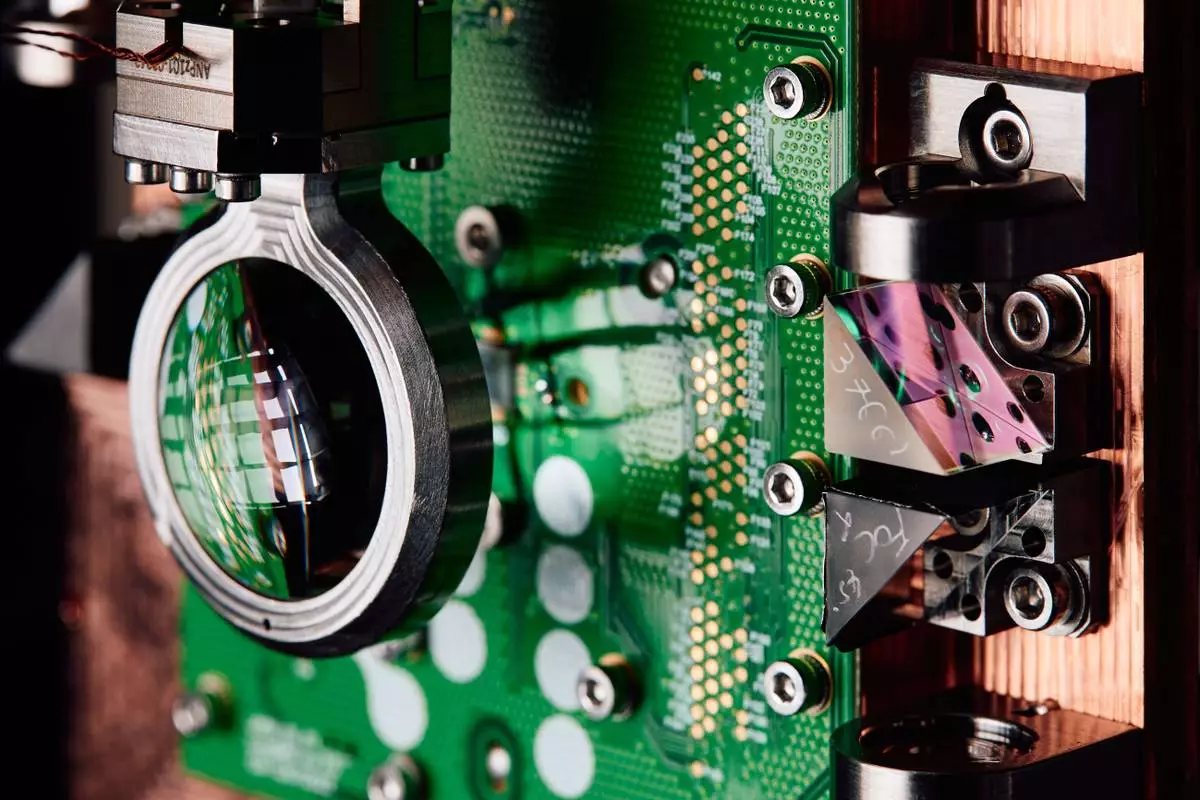
A close-up of a current trapped ion system from IonQ. The system to be delivered to Horizon will be IonQ’s next-generation 256-qubit technology
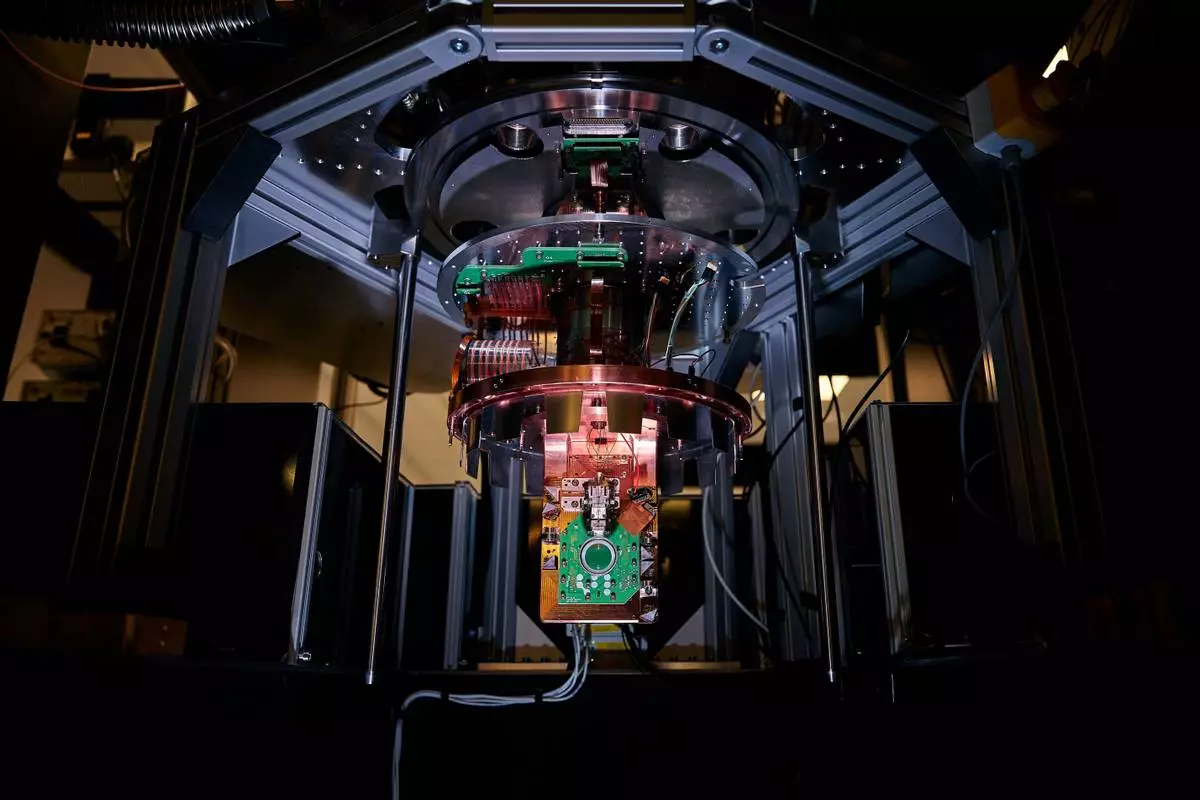
This photo depicts a current trapped ion system from IonQ. The system to be delivered to Horizon will be IonQ’s next-generation 256-qubit technology