NEW ORLEANS (AP) — A man imprisoned for nearly 30 years before being exonerated won a landmark election in New Orleans promising to fix a judicial system that failed him. Now, Louisiana Gov. Jeff Landry and the GOP-controlled Legislature are racing to eliminate his job before he can be sworn in.
Calvin Duncan won 68% of the vote last November to become the Orleans Parish clerk of criminal court after pledging to reform the justice system based on his own experience fighting to access court records while in maximum security prison.
Duncan rebuilt his life, in part by running for and winning the clerk’s office. But Louisiana Senate Republicans on Wednesday voted to scrap Duncan’s new job as part of a broader GOP effort to streamline the judiciary in New Orleans, a Democratic hub with a predominantly Black electorate. The state Legislature is largely Republican and white, and the deeply red state has been leading efforts to gut the Voting Rights Act.
Duncan's swearing in is scheduled for May 4.
He told The Associated Press he believes he’s being retaliated against by Louisiana officials who have long denied his innocence, even though his name is listed on the National Registry of Exonerations.
Republicans say it isn't personal and defend the effort as a step toward government efficiency.
“The citizens of New Orleans overwhelmingly said: ‘I want to give this person a chance, he can make a difference,’” Duncan, a Democrat, told lawmakers during a March committee hearing. “What this bill does, it says: ‘Thank you but you wasted your time.’ It disenfranchises everybody.”
The case started with the 1981 murder of 23-year-old David Yeager and landed Duncan in prison for more than 28 years. In 2011, on the eve of a hearing to consider new evidence, prosecutors offered to reduce Duncan's sentence to time served if he pleaded guilty to manslaughter and armed robbery. Duncan was freed, but he didn’t give up trying to clear his name.
Finally, in 2021, a judge agreed that he had been unjustly convicted and vacated Duncan’s sentence altogether.
As state attorney general in 2023, Landry opposed Duncan's petition to be compensated for his wrongful conviction. Duncan withdrew the petition after Landry's successor, Liz Murrill, threatened to go after Duncan's law license in the state. When Duncan ran for clerk, Murrill vowed to take “further action” against him if he did not stop calling himself “exonerated.”
Landry and Murrill have pointed to Duncan having accepted the 2011 plea deal for manslaughter and armed robbery.
“The Attorney General made it clear during the election that if I continued to accurately speak about my innocence and exoneration that I would face consequences from her office," Duncan told The Associated Press. “We are seeing those consequences today as she and the Governor try to undo the will of 68% of voters in New Orleans.”
Murrill said she had “no involvement” in the move to eliminate the office.
Landry told the AP that eliminating Duncan's elected office was about improving “government efficiency” and "cleaning up a system in Orleans Parish that has been plagued by dysfunction and corruption for years.”
Proponents of consolidating the criminal clerk of court with the civil clerk of court say the offices are combined in other parishes. Terminating the criminal clerk of court position would save the state an estimated $27,300, according to the office of the legislative auditor, which added that the costs of combining clerks' offices were “unknown.”
The bill’s Republican author, Sen. Jay Morris, who represents a district in north Louisiana, acknowledged that once Duncan’s elected position is eliminated, the civil clerk of court might struggle to handle the influx of cases. The solution, he says, is to “hire someone.”
Other New Orleans elected judicial officials whose jobs may be eliminated in the future would be allowed to serve out their terms, but not Duncan.
Morris told lawmakers that the goal is to pass the law in time to prevent Duncan from taking office before the start of his four-year term.
The bill, on track to be passed by the GOP-controlled House and approved by Landry, would immediately go into effect with the governor’s signature.
“I have never seen something so barbaric," Sen. Royce Duplessis, a Democrat representing New Orleans said on the Senate floor. “I understand politics and I know you all are going to vote how you are going to vote. But just know, when we are all done here, history has a record."
Duncan, 62, was the driving force behind a 2020 U.S. Supreme Court decision that ended nonunanimous jury convictions. He has also founded a nonprofit dedicated to expanding incarcerated people's access to the court system. He has said being elected to the clerk’s office was the culmination of his life’s work.
Cline reported from Baton Rouge.
Brook is a corps member for The Associated Press/Report for America Statehouse News Initiative. Report for America is a nonprofit national service program that places journalists in local newsrooms to report on undercovered issues.
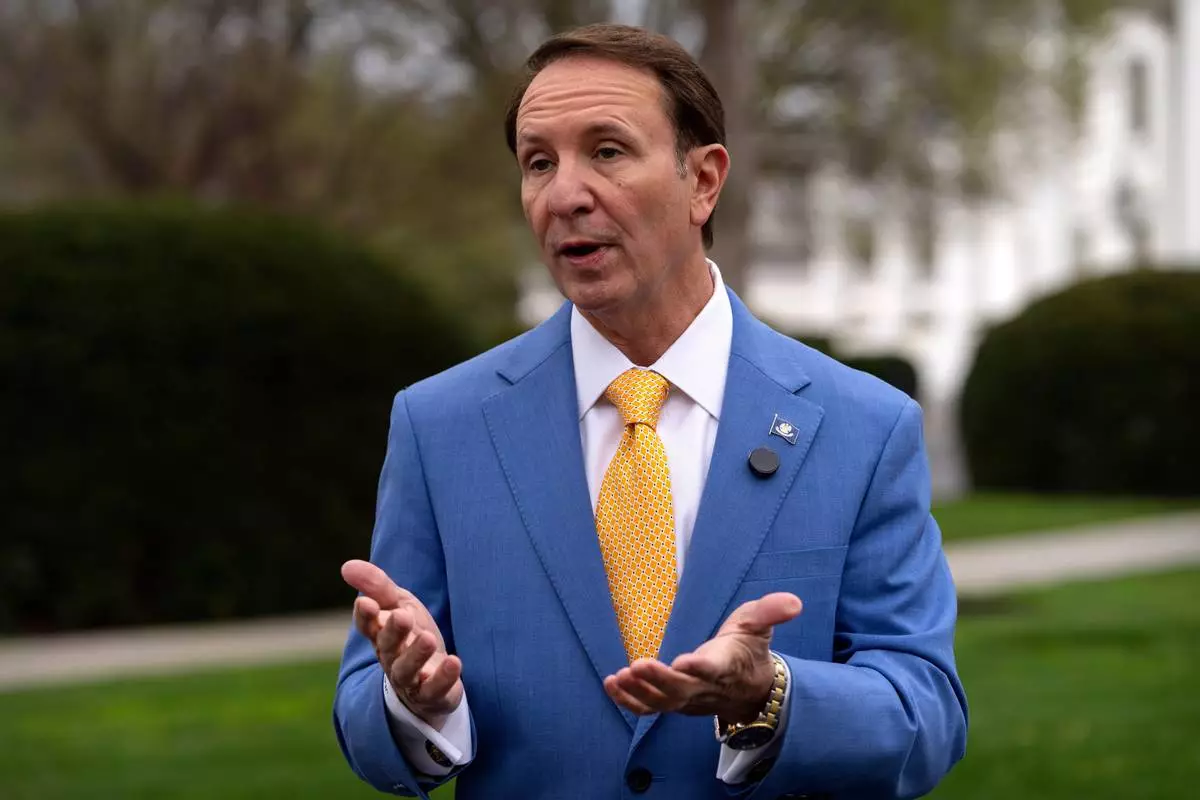
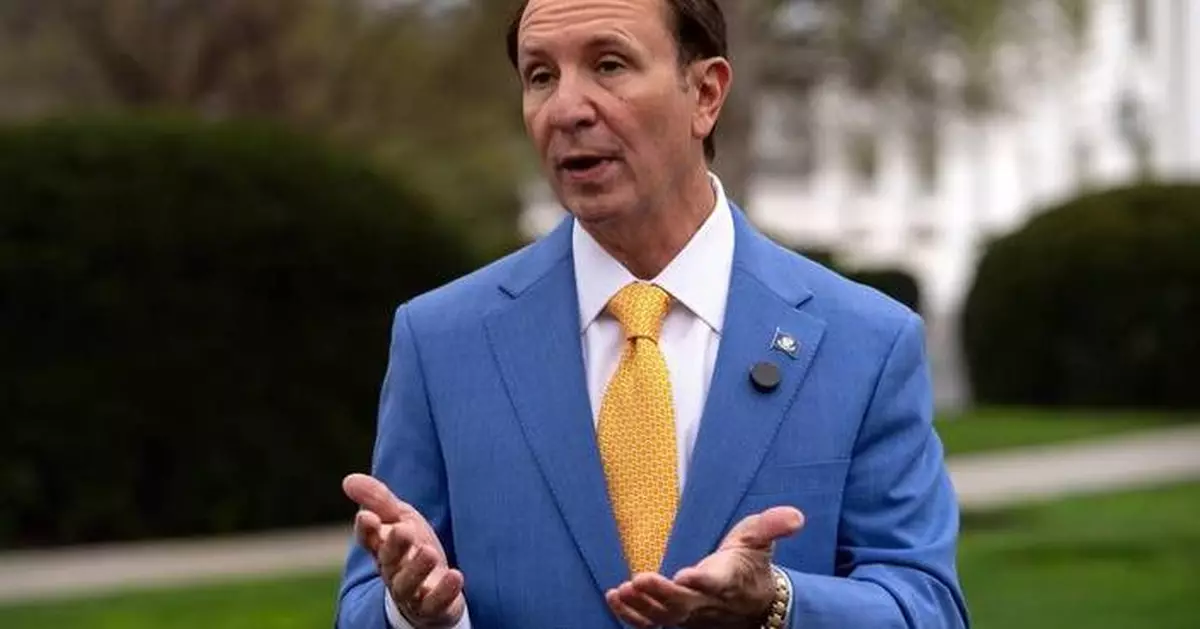
FILE - Louisiana Gov. Jeff Landry records a social media video outside the White House in Washington, on March 24, 2025. (AP Photo/Mark Schiefelbein, File)
BEIRUT (AP) — In the hours after the U.S. and Iran announced a tentative ceasefire, Israel dramatically escalated its attacks in Lebanon against the Iran-backed militant group Hezbollah.
The burst of strikes in central Beirut and other parts of the country killed more than 300 people and wounded 1,150 others, according to health officials.
The Israeli military said that it had targeted sites affiliated with the Hezbollah militant group and announced that it had killed an aide to the group's leader, Naim Kassem. But the strikes, which hit densely packed residential and commercial districts at rush hour, also killed more than 100 women, children and older people, according to health officials.
Hezbollah retaliated to the heavy strikes — which prompted an international outcry — by launching missiles into Israel, though no serious casualties have been reported.
The latest war between Israel and Hezbollah erupted after the U.S. and Israeli launched airstrikes against Iran on Feb. 28. Since the ceasefire announced by the U.S. and Iran earlier this week, a heated debate has ensued over whether it applies to the fighting between Israel and Hezbollah. Iran says it does, while the U.S. and Israel say it doesn't.
Israel and Hezbollah have fought multiple wars since the militant group was formed in the 1980s as a guerrilla force resisting Israel’s then occupation of southern Lebanon.
On March 2, two days after Israel and the U.S. attacked Iran, Hezbollah launched missiles toward Israel. It said that the salvo was in retaliation for the killing of Iranian Supreme Leader Ayatollah Ali Khamenei and for “repeated Israeli aggressions” in Lebanon.
The resumption of fighting came 15 months after a U.S.-brokered ceasefire halted their previous war. That conflict started a day after the deadly Hamas-led attack on southern Israel on Oct. 7, 2023.
Hezbollah, an ally of Hamas, began firing on Israel after it launched its blistering counteroffensive against Hamas in Gaza. What began as a low-level conflict along the Israel-Lebanon border region erupted into a full-scale war in September 2024.
After a ceasefire was reached in November 2024, Israel kept up near-daily airstrikes in Lebanon, saying that it aimed to stop Hezbollah from regrouping. Israeli troops also continued to occupy five hilltops on the Lebanese side of the border.
Hezbollah, meanwhile, was under domestic and international pressure to surrender its remaining arsenal. The group stayed largely quiet and didn’t enter the fray during last summer's 12-day war between Israel and Iran. Many believed that the group was too weakened to fight after suffering heavy losses in the 2024 conflict, and so were surprised when it entered the war following U.S.-Israeli attacks on Iran.
As of Thursday, 1,888 people had been killed and more than 6,092 had been wounded by Israeli strikes in Lebanon since March 2, according to the country’s health ministry. It's not clear how many of those were civilians, but they include hundreds of women, children and health workers. Wednesday's strikes killed 30 children, 71 women and nine people over the age of 65, the health ministry said.
More than 1 million people have been displaced in Lebanon. Israel has issued a series of blanket warnings for residents to leave wide swaths of the country, often followed by bombardment of those areas. Many are sleeping in cars, on the streets or in overcrowded schools turned into shelters.
The Israeli military says Hezbollah has launched more than 2,000 missiles and drones across the border, but that most have been intercepted or fallen in open areas. The Israeli army says 12 soldiers have been killed in southern Lebanon and more than 400 others have been wounded.
There have also been a small number of civilian fatalities in northern Israel, including one man killed by a rocket strike and another who was accidentally killed by Israeli army artillery fire during fighting along the border. The steady stream of missiles and drones has residents on edge in northern Israel. Many are angry that the government hasn’t offered to pay to evacuate them as it did during the last war.
The Israeli army has also launched a ground invasion of southern Lebanon. Fierce battles have erupted with Hezbollah militants in the border area and U.N. peacekeeping forces have at times been caught in the middle. Three members of the U.N. force have been killed.
Some Israeli officials have called for their military to occupy southern Lebanon up to the Litani River, about 30 kilometers (20 miles) north of the border. Israeli forces have demolished homes in villages along the border line. Many displaced Lebanese fear that Israel plans to create a depopulated buffer zone and they will never be able to return to their homes.
Lebanese officials have sought to directly negotiate with Israel to halt the fighting. On Thursday, Israeli Prime Minister Benjamin Netanyahu said that Israel had agreed to enter into talks that would focus on disarming Hezbollah and a possible peace deal.
When the U.S. and Iran announced a tentative ceasefire agreement on Wednesday, Pakistan’s prime minister, whose country served as a mediator, said in a social media post that it applied to “everywhere including Lebanon."
Hezbollah has said that it won't abide by the ceasefire unless Israel does.
Joe Macaron, a Middle East analyst, said that the ensuing negotiations will be “a test of how much the Iranian regime is committed to help Hezbollah." It's unlikely Israel will agree to — or be forced by the U.S. to accept — a full ceasefire and withdrawal from Lebanon, he said.
While the U.S. might pressure Israel to halt strikes in central Beirut, a “long war of attrition” is likely to unfold between Israel and Hezbollah in the south, he said. The Israeli military isn't capable of controlling the entire area south of the Litani River, Hezbollah isn't capable of forcing Israeli troops out of southern Lebanon, and neither Israel nor the Lebanese state can forcibly disarm the group, he said.
The only resolution will have to be a negotiated settlement, Macaron said.
Koral Saeed contributed to this report from Abu Snan, Israel.
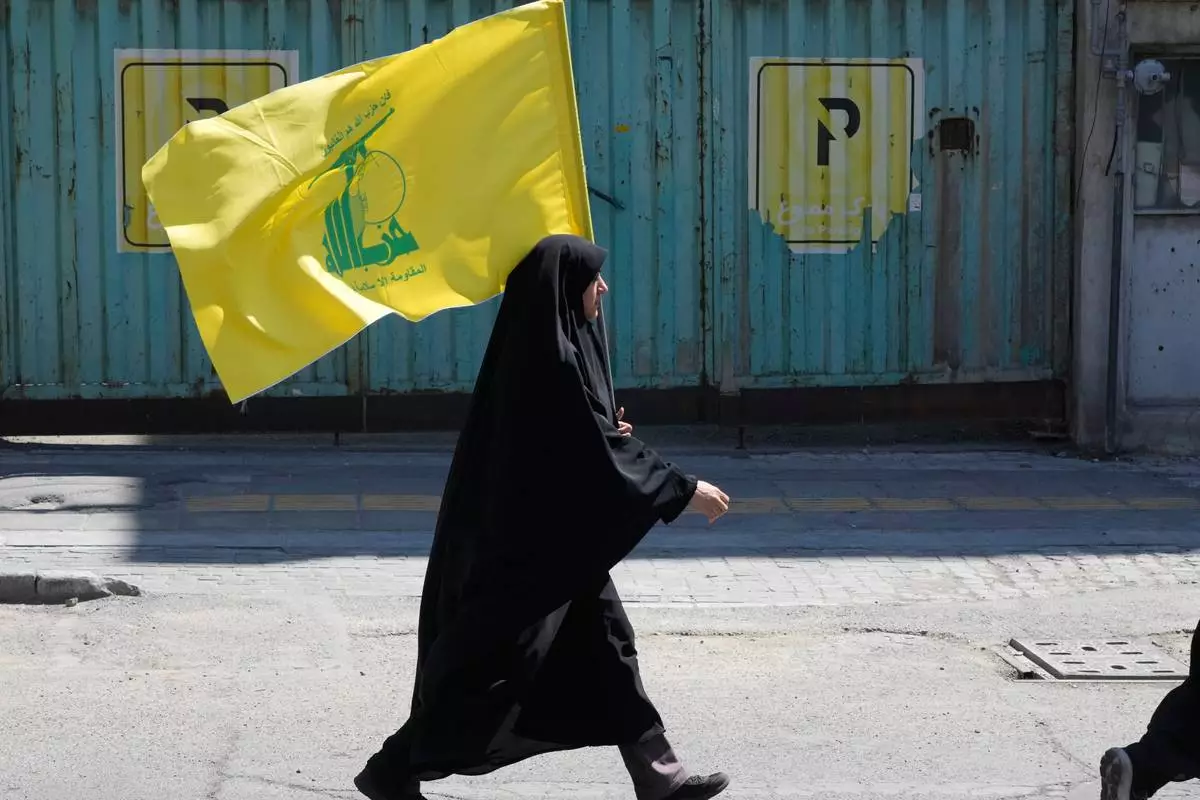
A woman carries a flag of Lebanon's militant Hezbollah group during a ceremony marking the 40th day since the death of Iranian Supreme Leader Ayatollah Ali Khamenei in Tehran, Iran, Thursday, April 9, 2026. (AP Photo/Vahid Salemi)
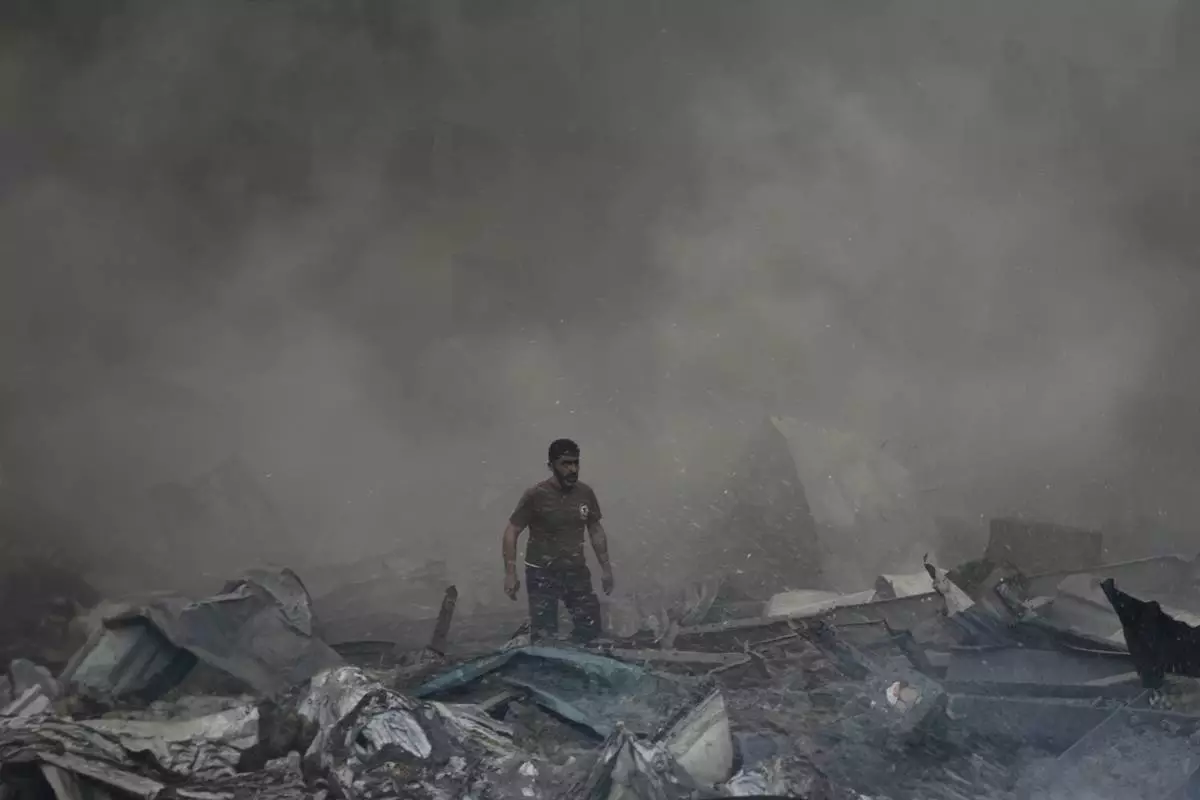
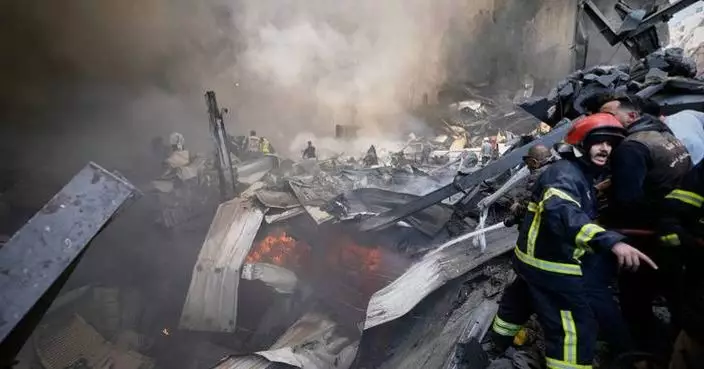
A first responder emerges through the smoke at the site of an Israeli airstrike that struck an apartment building in Beirut, Lebanon, Wednesday, April 8, 2026. (AP Photo/Bilal Hussein)
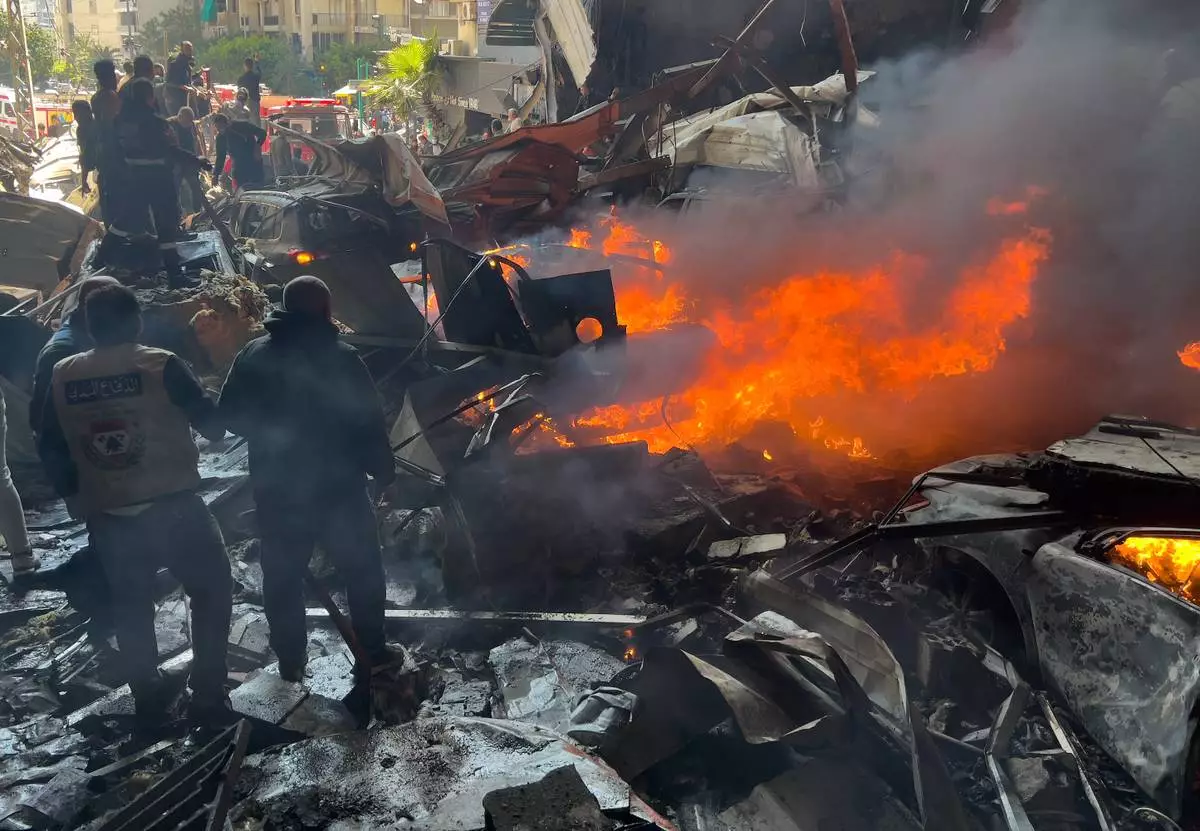
Rescuers gather at the site of an Israeli airstrike in central Beirut, Lebanon, Wednesday, April 8, 2026. (AP Photo/Hussein Malla)
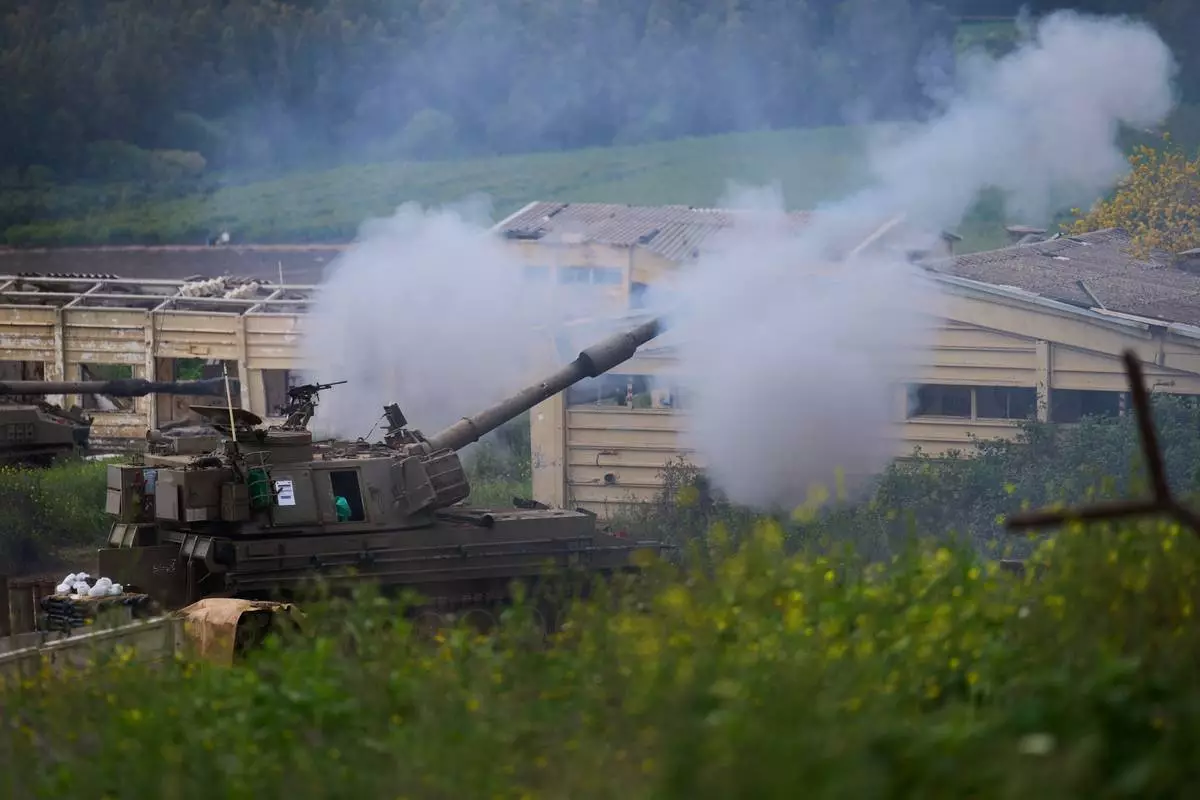
Israeli military mobile artillery unit fires towards southern Lebanon from northern Israel, Thursday, April 9, 2026. (AP Photo/Ariel Schalit)
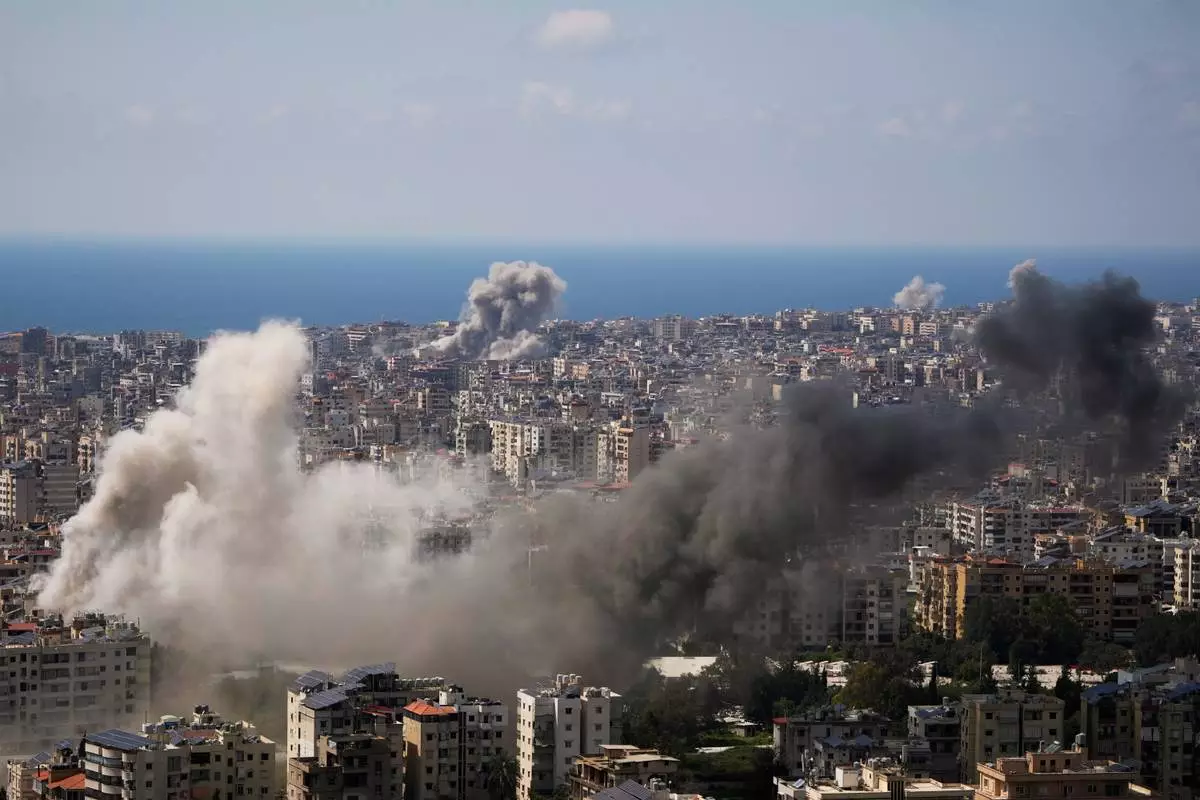
Smoke rises following several Israeli airstrikes in Beirut, Lebanon, Wednesday, April 8, 2026. (AP Photo/Hassan Ammar)