Skip to Content Facebook Feature Image

A federal judge dismisses another DOJ lawsuit seeking voter data, this time in Massachusetts

News

A federal judge dismisses another DOJ lawsuit seeking voter data, this time in Massachusetts
News

News

A federal judge dismisses another DOJ lawsuit seeking voter data, this time in Massachusetts

2026-04-10 07:26 Last Updated At:07:41

A federal judge on Thursday dismissed a lawsuit from the U.S. Department of Justice seeking Massachusetts' state voter rolls, marking the latest setback in a wide-ranging effort by the Trump administration to collect detailed data on the nation's voters.

The ruling from U.S. District Court Judge Leo Sorokin marks at least the fifth time a judge has rejected similar attempts by the Justice Department. Sorokin, an appointee of former President Barack Obama, said the U.S. attorney general's office did not take the necessary steps required to access voter rolls, as outlined in federal law.

“Put simply, the statute requires a statement of why the Attorney General demands production of the requested records,” Sorokin wrote. That statement has to be factual, “not just a conceivable or possible basis.”

In an emailed response, the Justice Department said it “does not comment on ongoing litigation.”

It has said it's seeking the voter data as part of an effort to ensure election security, but Democratic and Republican officials in several states have refused, saying the demand violates state and federal privacy laws. Some have raised concerns that federal officials will use the sensitive data for other purposes, such as searching for potential noncitizens.

During a hearing last month in Rhode Island, a DOJ attorney told a federal judge that the department was seeking unredacted voter roll information so it could be shared with the Department of Homeland Security to check citizenship status. DHS over the past year has beefed up the Systematic Alien Verification for Entitlements, or SAVE, program, for just this purpose.

“Our intention is to run this against the DHS SAVE database,” DOJ attorney Eric Neff told U.S. District Judge Mary McElroy during a March 26 hearing challenging the federal government’s authority to access the voter data.

The Justice Department has sued at least 30 states and the District of Columbia seeking to force release of the data, which includes dates of birth, addresses, driver's license numbers and partial Social Security numbers.

At least 12 states have either provided or promised to provide their detailed voter registration lists to the department, according to the Brennan Center: Alaska, Arkansas, Indiana, Louisiana, Mississippi, Nebraska, Ohio, Oklahoma, South Dakota, Tennessee, Texas and Wyoming.

In the Massachusetts case, the the judge found that the Justice Department failed to follow the requirements for demanding the voter rolls set by a 1960 civil rights law.

That law, enacted as part of an effort to end racial discrimination in elections, says state voter records must be made available for inspection by the U.S. attorney general if the office includes a statement outlining why the information is being demanded and how it will be used.

The department's letter demanding Massachusetts’ voter data made no reference to the Civil Rights Act and didn’t cite any concerns about the way Massachusetts complied with federal voting laws, the judge said. Most importantly, it didn’t include any factual basis for the demand, Sorokin wrote.

In court documents, the Justice Department said it was demanding the data to check for “Massachusetts’ possible lack of compliance” with federal voter registration list requirements. It also said the Civil Rights Act was designed to be an investigatory tool to identify federal election law violations and argued that the U.S. attorney general can’t be required to prove a violation before seeking evidence of one.

“These arguments miss the point,” Sorokin wrote.

Massachusetts Attorney General Andrea Joy Campbell called the ruling a decisive win for voters and the rule of law.

“The privacy of our voters is not up for negotiation, and I will continue to defend the integrity and security of our elections from the Trump Administration's cruel and harmful agenda,” she said in a news release.

Four federal judges in other states have dismissed similar lawsuits from the Department of Justice.

A federal judge in Michigan found the laws cited by the Justice Department do not require the disclosure of the voter records sought by the federal government. A federal judge in California said the administration “may not unilaterally usurp the authority over elections,” which the Constitution gives to the states and Congress. A federal judge in Oregon said the federal government was not entitled to unredacted voter registration lists containing sensitive data.

A federal judge in Georgia dismissed a DOJ lawsuit because he found it had been filed in the wrong city. The federal government then refiled the lawsuit in the city specified by the judge; that case is ongoing.

The Justice Department has appealed the Oregon, California and Michigan dismissals.
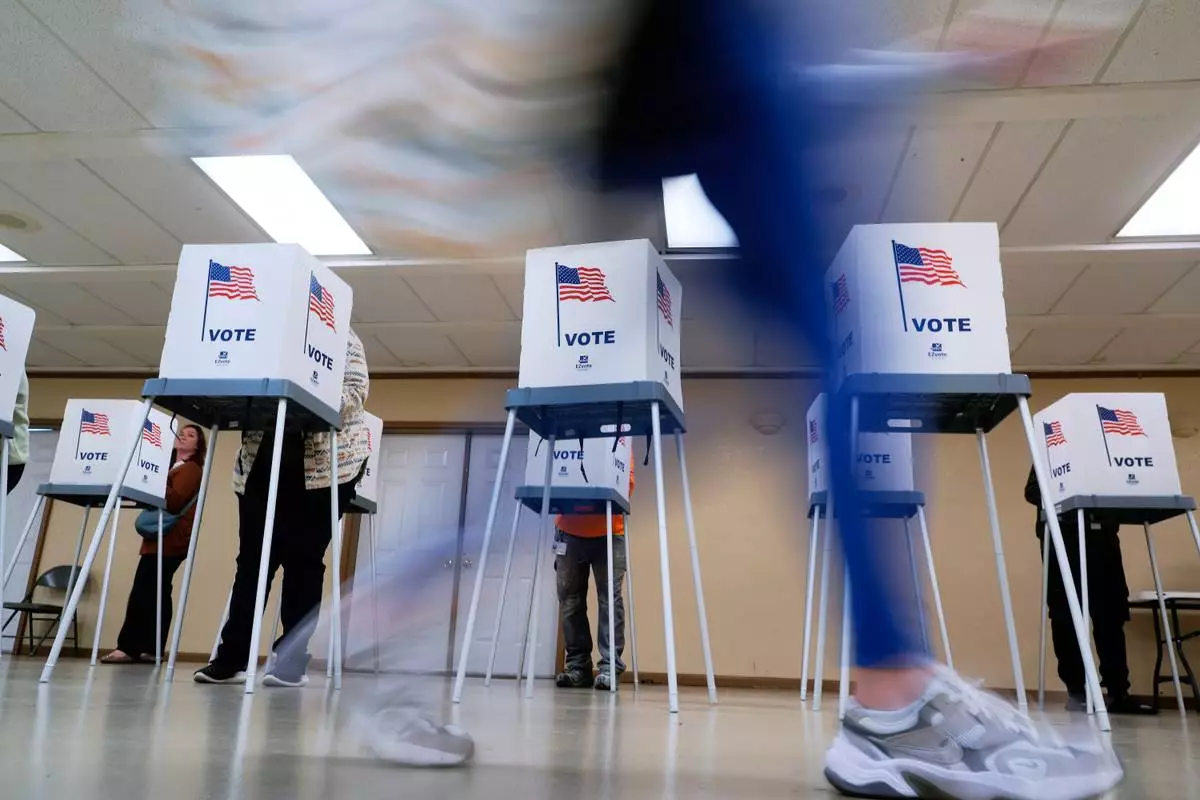
FILE - Voters cast their ballots in Oak Creek, Wis., on Nov. 5, 2024. (AP Photo/Morry Gash, File)
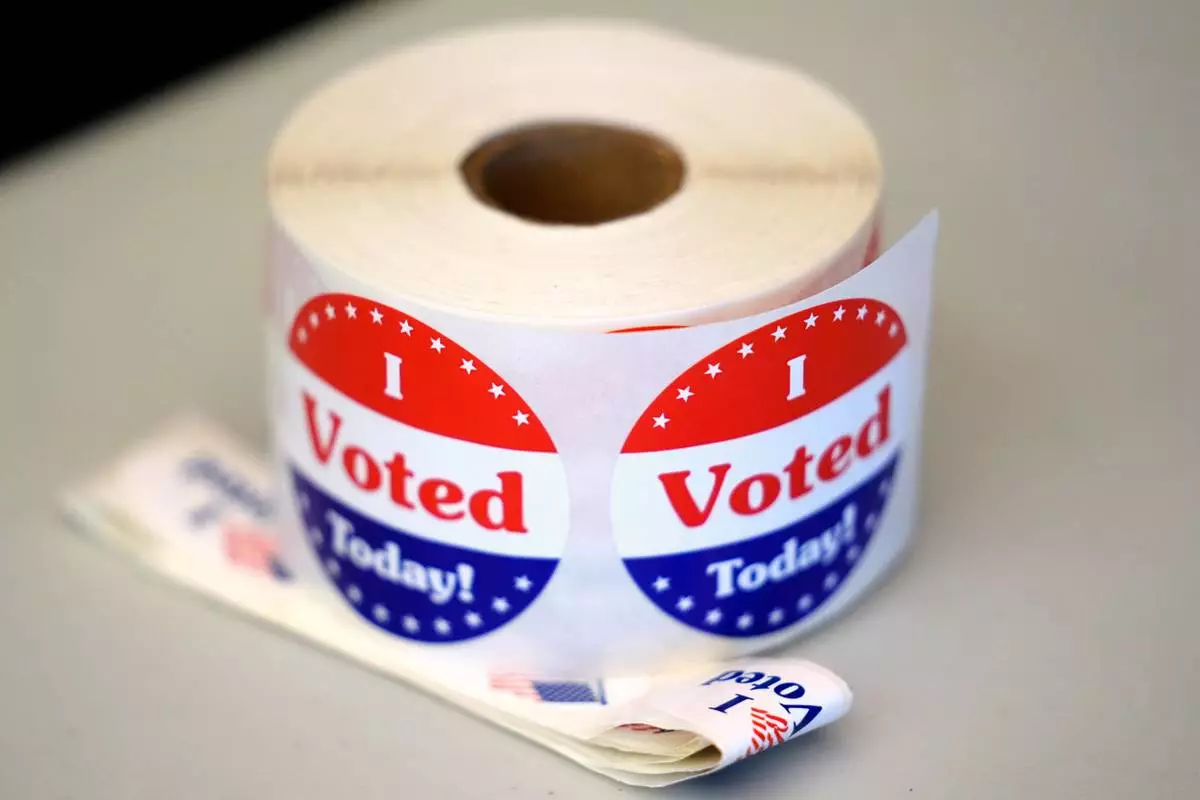
FILE - Voters cast their ballots in Oak Creek, Wis., on Nov. 5, 2024. (AP Photo/Morry Gash, File)

FILE - A spool of stickers rests on a table at a polling station during Massachusetts state primary voting, Sept. 3, 2024, at the Newton Free Library, in Newton, Mass. (AP Photo/Steven Senne, File)
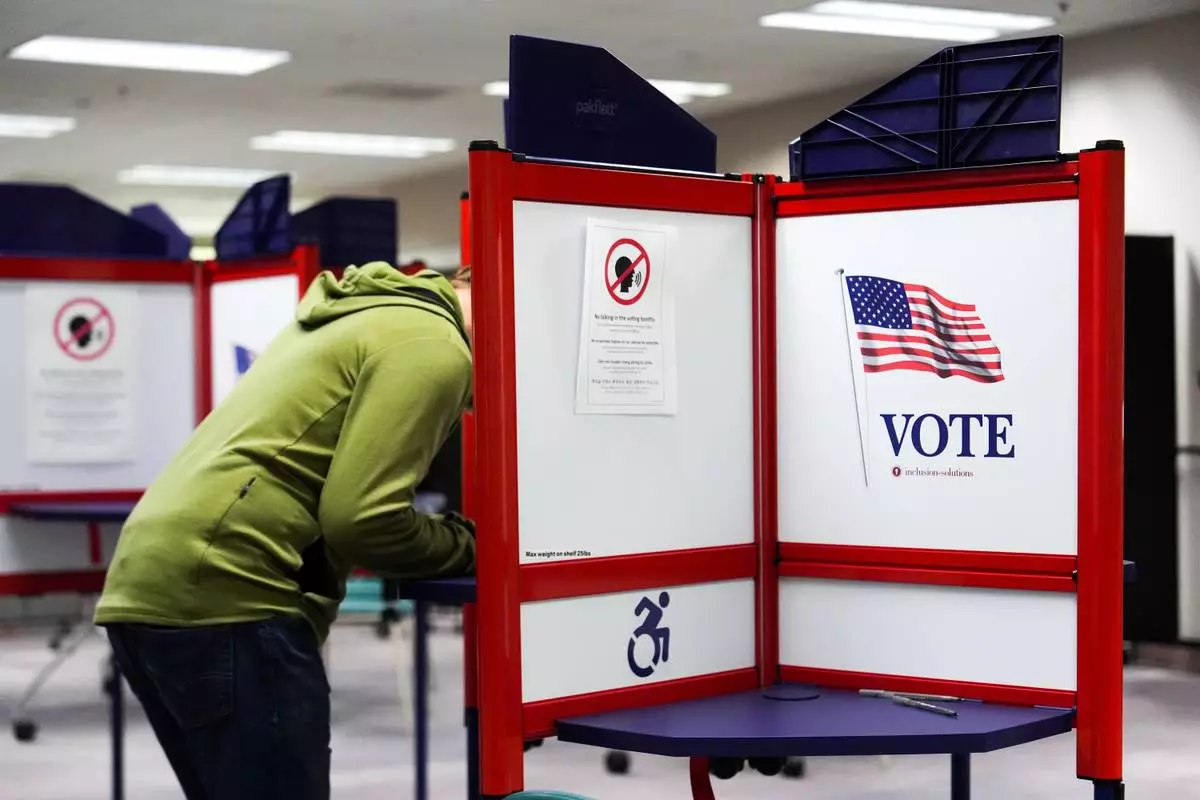
FILE - A spool of stickers rests on a table at a polling station during Massachusetts state primary voting, Sept. 3, 2024, at the Newton Free Library, in Newton, Mass. (AP Photo/Steven Senne, File)

A person votes early in the Virginia redistricting referendum at the Fairfax County Government Center, Friday, April 3, 2026, in Fairfax, Va. (AP Photo/Julia Demaree Nikhinson)
A person votes early in the Virginia redistricting referendum at the Fairfax County Government Center, Friday, April 3, 2026, in Fairfax, Va. (AP Photo/Julia Demaree Nikhinson)

YELLOW SPRINGS, Ohio (AP) — Comedian Dave Chappelle stood on the front lawn of a newly restored 19th-century schoolhouse Thursday, joining neighbors and local officials as a small-town radio station secured its future in the community he calls home.

The ribbon-cutting ceremony marked two historic moments: Chappelle's restoration of the Union Schoolhouse and WYSO's relocation of its new broadcast facility inside it, bringing together distinct efforts to keep the station rooted in Yellow Springs at a time when local media outlets face mounting challenges.

“It’s like our lifeblood in the community,” Chappelle told The Associated Press about the station, recalling how its possible departure to nearby Dayton would have been “a crushing blow” for Yellow Springs.

More than 200 people gathered outside the former Union Schoolhouse, where Chappelle attended along with his wife, mother, station leaders and village officials, including Yellow Springs Mayor Steve McQueen and Dayton Mayor Shenise Turner-Sloss, to celebrate the opening the schoolhouse and the 68-year-old station into its next chapter.

The Union Schoolhouse was originally built in 1872 and once served as one of the village’s earliest integrated schools before later housing municipal offices and small businesses. After sitting vacant for years, it was purchased in 2020 by Chappelle’s real estate company, Iron Table Holdings.

The property has since been transformed into a modern, multiuse space, with WYSO occupying the lower floors, while Chappelle’s offices will be based on the top floor.

For Chappelle, the investment was as much about preservation as development.

“If you have the opportunity like I did, to invest in your community, then it’s one of the greatest investments I’ve ever made,” he said. “In some ways it feels dutiful. Other times I feel proud. ... but ultimately, I'm doing it because I want to, not because I have to.”

The move comes at a time when local media outlets across the country face shrinking resources, shifting audiences and increased competition from digital platforms.

Chappelle said stations like WYSO serve as a stabilizing force. He described it as “a beacon for sanity,” offering “a solid baseline of truth in context” in an increasingly fragmented information landscape.

“I grew up listening to WYSO since high school, and they’ve always been here connecting to the people,” said Mark Willis, a Yellow Springs resident. “They’re not out of a big city. They’re not subject to censorship by a sponsor. They tell the truth, they tell the stories, and it’s rare these days. To see them growing instead of shrinking is beautiful.”

Rather than simply donate funds, Chappelle financed the redevelopment of the building itself, allowing the station to remain locally rooted while maintaining editorial independence.

“Dave has never made a suggestion about our programming,” said Luke Dennis, general manager at WYSO. He said the new facility transforms how the station connects with the public, offering performance space, gathering areas and expanded capacity for programming.

“We belong to the community,” Dennis said.

Public radio stations in smaller markets have faced mounting pressure in recent years, from funding challenges to audience fragmentation.

Dennis said the investment positions WYSO differently. “We’re in a place of strength,” he said.

Yellow Springs has long been central to Chappelle’s life. Though he grew up in Maryland, he spent summers in the village, where his late father worked as the dean of students at Antioch College.

Now living on a 39-acre farm with his wife and their three children, Chappelle has become deeply embedded in the town. He has invested in local properties, opened a comedy club in the downtown area and hosted events that draw national attention, including performances in a nearby cornfield during the pandemic.

Chappelle has also taken an active role in local affairs, speaking at town meetings and supporting community initiatives.

As residents gathered and later filtered through the restored building, the moment marked more than a ribbon-cutting.

“I'm more determined and inspired that these institutions flourish and stay of the people,” Chappelle said after the ceremony. “The only way they can do that is the people supporting them. I'm hopeful more than worried."

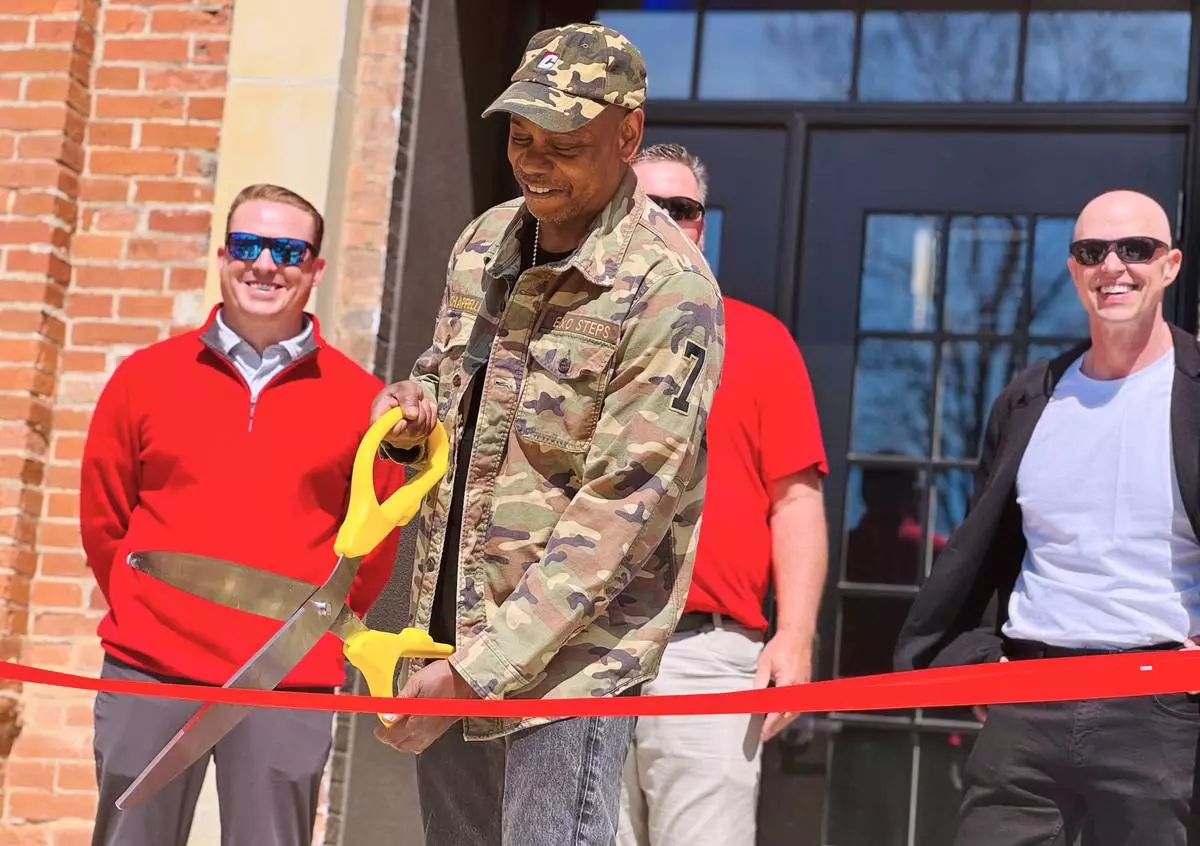
Comedian Dave Chappelle, center, takes part in a ribbon-cutting ceremony for a new studio for WYSO Public Radio at a building in Yellow Springs, Ohio, on Thursday, April 9, 2026. (AP Photo/Jonathan Landrum)

Comedian Dave Chappelle, center, takes part in a ribbon-cutting ceremony for a new studio for WYSO Public Radio at a building in Yellow Springs, Ohio, on Thursday, April 9, 2026. (AP Photo/Jonathan Landrum)

Recommended Articles