Skip to Content Facebook Feature Image

Ceasefire deal brings relief to some in Iran, but Trump's threat to end a civilization still echoes

News

Ceasefire deal brings relief to some in Iran, but Trump's threat to end a civilization still echoes
News

News

Ceasefire deal brings relief to some in Iran, but Trump's threat to end a civilization still echoes

2026-04-10 15:43 Last Updated At:15:50

CAIRO (AP) — Iranians have welcomed a fragile ceasefire deal after weeks of Israeli and American bombardment, but many fear the war is far from over. For some, there is also a sense of whiplash, after U.S. President Donald Trump threatened to wipe out their civilization hours before he reversed course and agreed to an uneasy truce.

The ceasefire that took effect Wednesday has brought relative quiet to the capital, Tehran, after more than a month of heavy strikes that targeted mainly government and security buildings but also destroyed many homes.

More Images
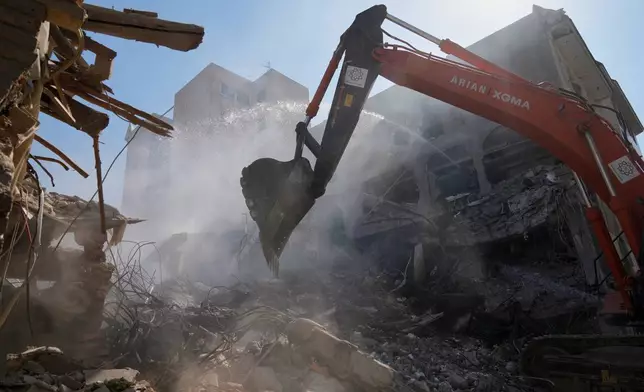
An excavator removes rubble at the site of a strike that, according to a security official at the scene, destroyed half of the Khorasaniha Synagogue and nearby residential buildings in Tehran, Iran, Tuesday, April 7, 2026. (AP Photo/Francisco Seco)
An excavator removes rubble at the site of a strike that, according to a security official at the scene, destroyed half of the Khorasaniha Synagogue and nearby residential buildings in Tehran, Iran, Tuesday, April 7, 2026. (AP Photo/Francisco Seco)

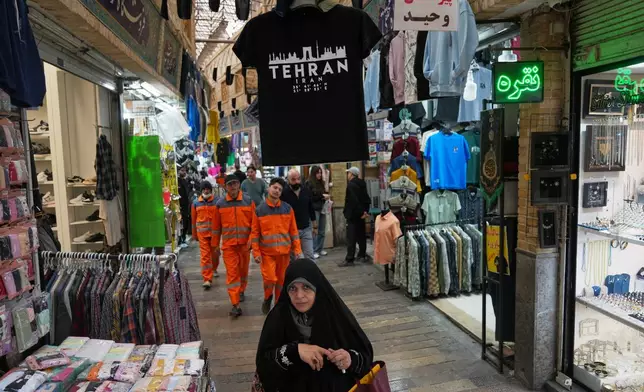
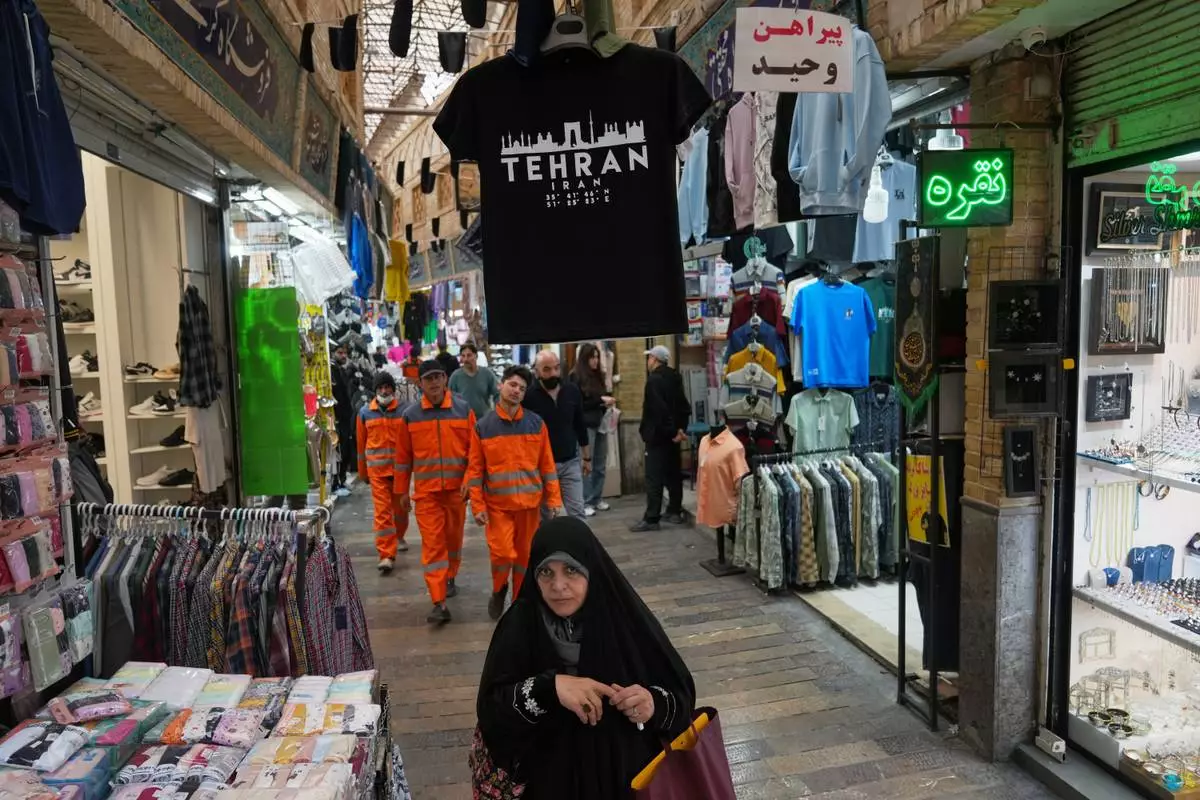
Pedestrians walk through Tajrish Bazaar in Tehran, Iran, Tuesday, April 7, 2026. (AP Photo/Francisco Seco)

Pedestrians walk through Tajrish Bazaar in Tehran, Iran, Tuesday, April 7, 2026. (AP Photo/Francisco Seco)

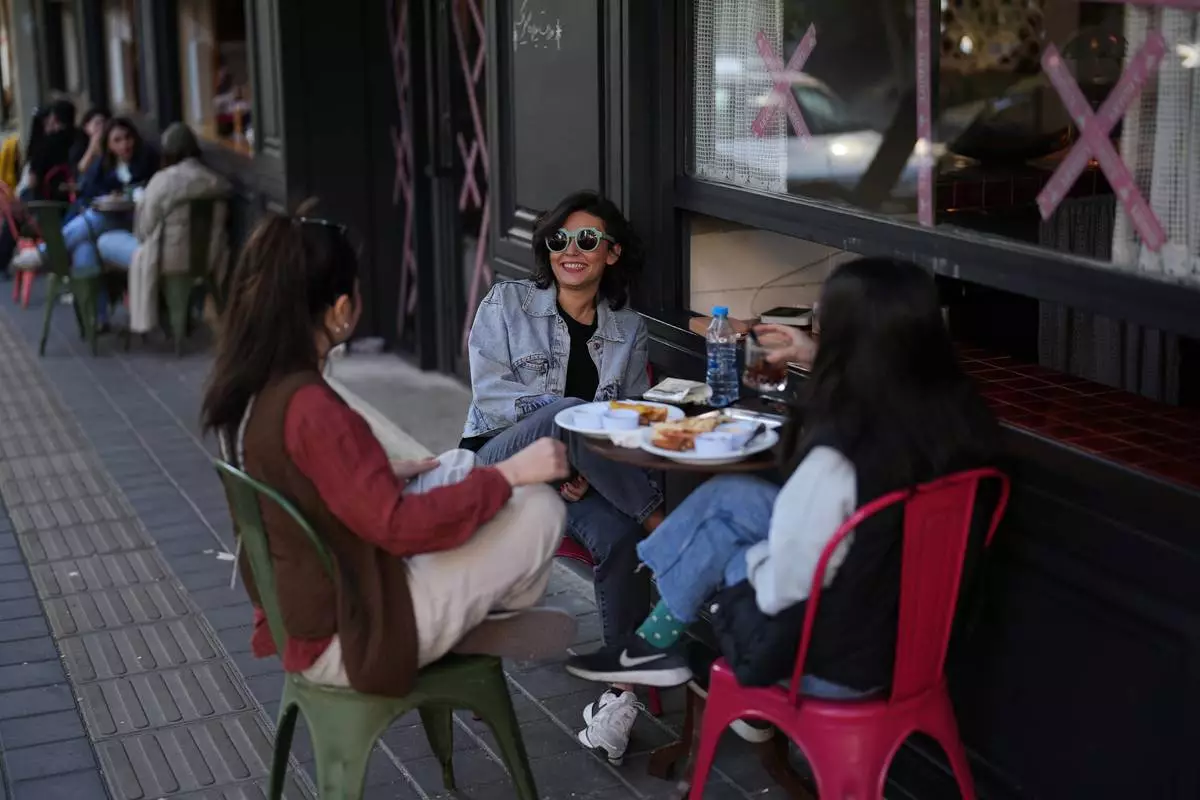
Three young girls sit together over soft drinks and sandwiches at a café terrace in Tehran, Iran, Wednesday, April 8, 2026. (AP Photo/Francisco Seco)
Three young girls sit together over soft drinks and sandwiches at a café terrace in Tehran, Iran, Wednesday, April 8, 2026. (AP Photo/Francisco Seco)

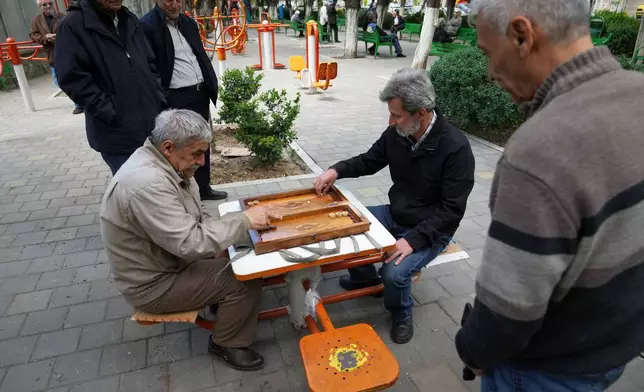
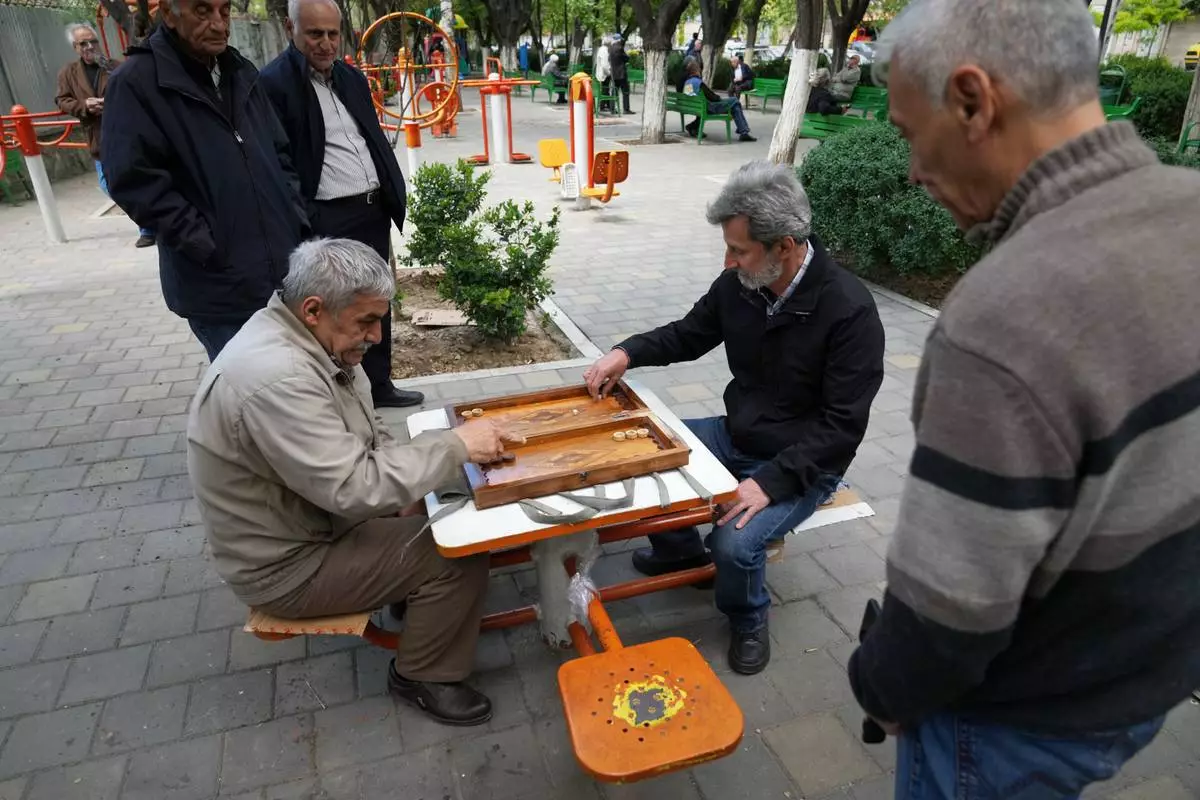
Ali Asghar Nasrulahi, 66, left, a veteran of the Iran-Iraq war, plays backgammon with a friend in a public park in Tehran, Wednesday, April 8, 2026. (AP Photo/Francisco Seco)
Ali Asghar Nasrulahi, 66, left, a veteran of the Iran-Iraq war, plays backgammon with a friend in a public park in Tehran, Wednesday, April 8, 2026. (AP Photo/Francisco Seco)

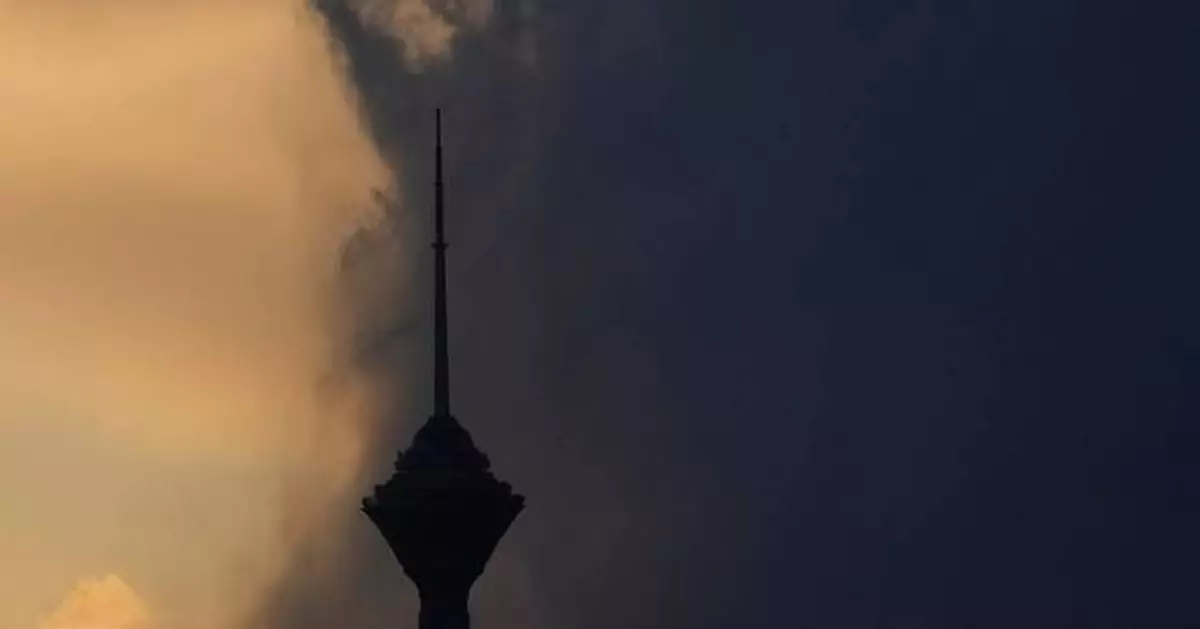
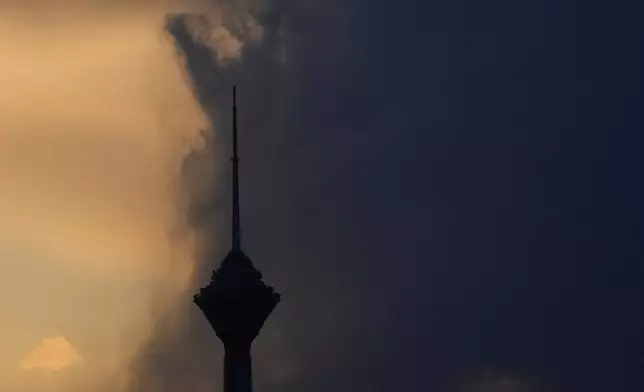
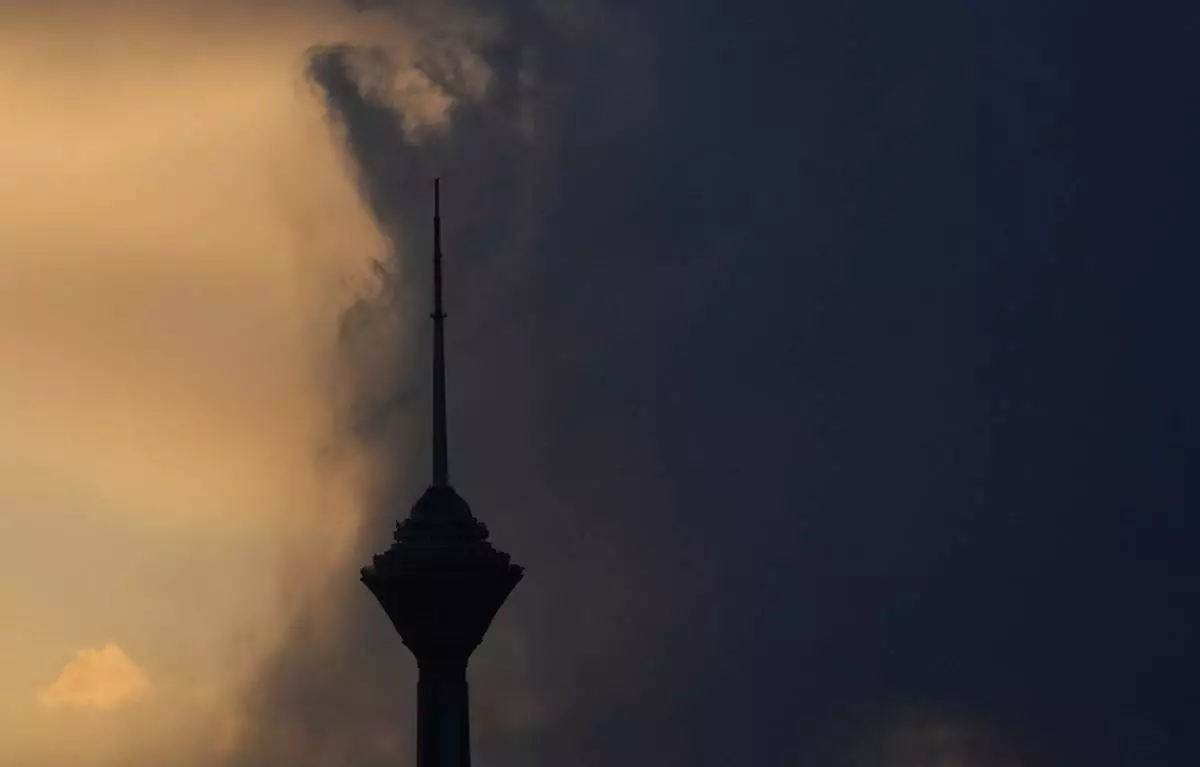
Milad telecommunication tower is seen during a cloudy sunset in Tehran, Iran, Sunday, April 5, 2026. (AP Photo/Vahid Salemi)

Milad telecommunication tower is seen during a cloudy sunset in Tehran, Iran, Sunday, April 5, 2026. (AP Photo/Vahid Salemi)

Major issues remain unresolved, however, and the truce has already teetered in the face of Israel's ongoing war against the Iran-allied Hezbollah in Lebanon and Iran's refusal to fully open the Strait of Hormuz, a vital waterway for world energy supplies.

“Everyone I’ve spoken with, it’s given them a new life,” a university student told The Associated Press in an audio note via WhatsApp, speaking on condition of anonymity over fears for his safety.

“Everyone is really happy,” he said.

But “Tehran has seen a lot of damage,” he added, and there's widespread concern the fighting would resume.

AP spoke to half a dozen residents, despite an ongoing nationwide internet shutdown imposed during mass protests before the war.

Maryam Saeedpoor, a photographer living in downtown Tehran, said she tried to take up painting to keep busy as blasts echoed across the city during the war, “but then I saw my hand was shaking, and I can't.”

She said she's taken little comfort from the truce or Trump's decision to back off from threats to destroy critical infrastructure and bridges — messages from the president that culminated in a social media post saying: “A whole civilization will die tonight.”

She fears the strikes have already done lasting damage to industries and infrastructure that helped the country weather decades of international sanctions. She said the two-week truce is merely a “pause,” with no guarantee the war is over.

“Tehran is the warmest, the most beautiful city in the world in my opinion, but now its face is full of sadness, pain,” Saeedpoor said via WhatsApp audio note. “They say they wanted to take out government leaders, but so many innocent people have been killed.”

Well before the ceasefire, in a street near her own home, she said she saw rescue teams searching for survivors in the rubble of damaged residential buildings.

A photo she posted on Instagram captured the aftermath of another strike, days before the deal. “The building’s residents, by chance, weren’t home that day. All the homes along the street had been destroyed because they’d hit a police station,” she said.

The strikes killed over 1,900 people and wounded more than 5,700, according to the latest figures from Iranian authorities, who do not distinguish between soldiers and civilians. Iran's Red Crescent first responders say thousands of residential buildings were damaged.

For several hours Tuesday, it appeared as if the war would intensify.

Iranians stocked up on water or relocated to safer areas after Trump's threats, and many passed a sleepless night until the truce was announced shortly before the deadline he'd imposed.

A man in his late 20s who works in advertising said he jolted awake before dawn. When he didn't hear the thud of air defenses, he knew there had been a truce and went back to sleep “with a laugh and a smile,” he told the AP via audio note on the messaging app Telegram, also on condition of anonymity over safety fears.

Iranians are deeply divided over their government, and hundreds of thousands took to the streets in January before the mass protests were crushed.

But they take deep pride, not only in thousands of years of Persian civilization, but in the modern state that predates the 1979 Islamic Revolution — all of which appeared under threat from Trump.

Tehran is ringed by snow-capped mountains, and its 19th-century rulers built long, broad avenues lined with plane trees and water channels known as jub that still function today. Iran's oil wealth funded a construction boom before the revolution and the Iran-Iraq war. Now the scars of the latest war are everywhere.

Persian civilization is known, perhaps above all, for its literary legacy, and many ordinary Iranians can quote famed poets. A local journalist recently posted on his X account a photo of a stack of eggs on sale at a shop, with a sign above them reading: “Recite poetry, get a discount.”

Ali Jafarabadi, the head of Book City, Iran's largest bookstore chain, said that many turned to reading as they spent more time inside during the bombardment. Sales of historical fiction set during past wars, self-help books and adult coloring books were up, he said.

At least six of his branches across Tehran were damaged in the war, he said. One blast from a nearby strike ripped through the group’s main branch on the famous Shariati Street, shattering the front windows and driving a metal rod through a line of books in Jafarabadi's office.

The stores closed for the first few days of the war but soon reopened, and he told AP they have done brisk business in recent weeks.

“It shows people are craving books, people are craving culture, people are craving a safe space where they can come and connect with each other," Jafarabadi said in a phone call. “That is the people of Iran.”

A woman who works as a physical trainer and social media influencer told AP she had recently taken to riding her motorcycle around the city “as a form of civil resistance.” In addition to requiring women to cover their hair — though enforcement of that mandate is easing — Iran's theocracy has also long frowned on women riding motorcycles.

In her travels, she described seeing two faces of the city, and of modern Iran. In Tehran's wealthy northern hills, life often seemed to unfold as normal, with people packing into elegant cafes. Downtown, she visited cheaper, traditional cafes where hookahs were served and the clientele was mostly men. Strikes have hit both well-to-do and working-class parts of the city.

“The streets where a building has been damaged and destroyed, or the houses around it, are different," the trainer said, also speaking on condition of anonymity over fears for her safety. "Silence. The smell of death.”

Iran's divisions also were reflected in people's reactions to the truce. Many who despise the government had hoped the war would topple it. Some government supporters were disappointed that Iran had agreed to halt a war they felt it was winning.

The man who works in advertising said most people were somewhere in between.

“Most people in Iran, unlike what you find on a platform like Twitter, are moderates,” he said. “Everyone is looking for an improved situation, not a radicalized situation at any cost.”
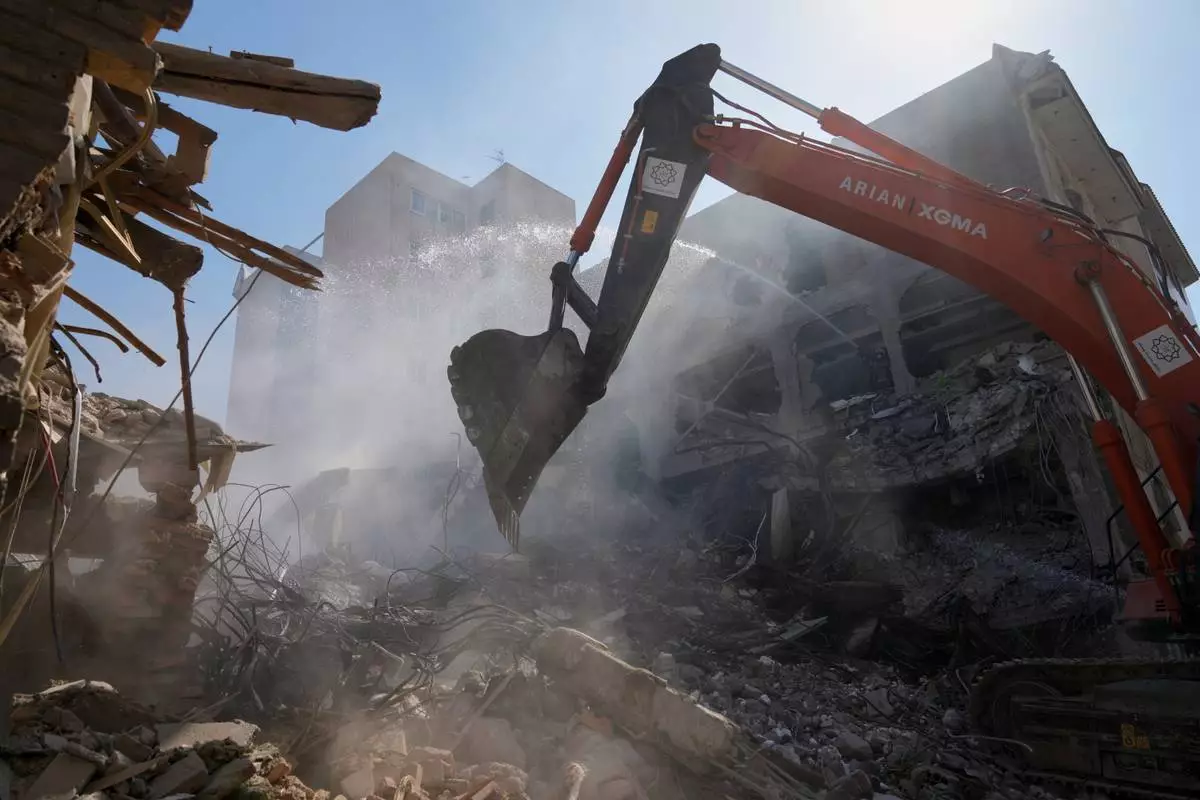
An excavator removes rubble at the site of a strike that, according to a security official at the scene, destroyed half of the Khorasaniha Synagogue and nearby residential buildings in Tehran, Iran, Tuesday, April 7, 2026. (AP Photo/Francisco Seco)
An excavator removes rubble at the site of a strike that, according to a security official at the scene, destroyed half of the Khorasaniha Synagogue and nearby residential buildings in Tehran, Iran, Tuesday, April 7, 2026. (AP Photo/Francisco Seco)

Pedestrians walk through Tajrish Bazaar in Tehran, Iran, Tuesday, April 7, 2026. (AP Photo/Francisco Seco)
Pedestrians walk through Tajrish Bazaar in Tehran, Iran, Tuesday, April 7, 2026. (AP Photo/Francisco Seco)

Three young girls sit together over soft drinks and sandwiches at a café terrace in Tehran, Iran, Wednesday, April 8, 2026. (AP Photo/Francisco Seco)
Three young girls sit together over soft drinks and sandwiches at a café terrace in Tehran, Iran, Wednesday, April 8, 2026. (AP Photo/Francisco Seco)

Ali Asghar Nasrulahi, 66, left, a veteran of the Iran-Iraq war, plays backgammon with a friend in a public park in Tehran, Wednesday, April 8, 2026. (AP Photo/Francisco Seco)
Ali Asghar Nasrulahi, 66, left, a veteran of the Iran-Iraq war, plays backgammon with a friend in a public park in Tehran, Wednesday, April 8, 2026. (AP Photo/Francisco Seco)

Milad telecommunication tower is seen during a cloudy sunset in Tehran, Iran, Sunday, April 5, 2026. (AP Photo/Vahid Salemi)
Milad telecommunication tower is seen during a cloudy sunset in Tehran, Iran, Sunday, April 5, 2026. (AP Photo/Vahid Salemi)

GWACHEON, South Korea (AP) — South Korea's justice minister has pledged to expand access to judicial remedies for victims of state-led abuses, including foreign adoptees whose adoptions were marred by widespread fraud under previous military governments.

Using unusually strong language for a senior South Korean official, Justice Minister Jung Sung-ho said the country’s past adoptions amounted to “forced child trafficking” and that the government will largely refrain from appealing rulings in cases brought by victims seeking compensation for government wrongdoing. Jung spoke Thursday in a roundtable interview with selected journalists.

Hundreds of Korean adoptees in the West have already requested that their cases be investigated by a fact-finding commission reviewing past human rights violations. The body was relaunched in February after its previous mandate ended in November. That earlier Truth and Reconciliation Commission concluded that the government bore responsibility for an adoption program riddled with fraud and malfeasance, driven by efforts to cut welfare costs and carried out by state-authorized private agencies that systematically manipulated children’s origins.

Some adoptees hope the commission’s findings will provide legal grounds for damages lawsuits against the government or their adoption agencies. But victims of other government abuses recognized by the commission have often been locked in lengthy legal battles after state prosecutors appealed rulings in their favor, citing expired statutes of limitations or deeming the commission’s findings inconclusive.

President Lee Jae Myung in October issued an apology over South Korea's past adoption problems.

Jung, a close ally of Lee, said the government is willing to expand legal redress and speed compensation for victims of government abuses whose cases have been verified by the truth commission.

Under a new law that took effect in February giving those victims a three-year window to sue for damages even after statutes of limitations had expired, Jung’s ministry, which represents the government in lawsuits, said last week it plans to withdraw time-limit appeals in more than 800 cases.

Jung said the ministry plans to extend a similar approach to lawsuits by adoptees in the future.

“Once the truth commission firmly establishes the basic facts (regarding the abuses), we intend to cooperate to ensure the process moves swiftly,” Jung said.

Some adoptees, including Yooree Kim, who was sent to a French family in 1984 without her biological parents’ consent and says she was abused by her adopters, have sought compensation under the state compensation act, which in theory allows victims to pursue claims without lengthy court battles. But while the Justice Ministry technically has four weeks to decide on the requests, it has failed to do so for more than six months, according to the adoptees’ lawyer, Choi Jung Kyu.

Jung said he would instruct officials to address the delays but does not see a need for a separate new process to expedite compensation, as called for by some advocates.

South Korea sent thousands of children annually to the United States, Europe and Australia from the 1970s to the early 2000s, peaking at an average of more than 6,000 a year in the 1980s. The country was then ruled by a military government that saw population growth as a major threat to its economic goals and treated adoptions as a way to reduce the number of mouths to feed.

The previous truth commission’s findings broadly aligned with prior reporting by The Associated Press. The AP investigations, in collaboration with Frontline (PBS), drew on thousands of documents and dozens of interviews to show how South Korea’s government, Western nations and adoption agencies worked in tandem to send about 200,000 Korean children overseas, despite years of evidence that many were procured through corrupt or illegal means.

Jung also discussed efforts to combat trafficking and forced labor at salt farms and other sites and the widespread abuse of migrant workers, which has fueled long-standing criticism of South Korea’s exploitation of some of Asia’s most vulnerable people.

These issues have gained urgency after the Trump administration last month launched investigations into dozens of countries it accused of failing to curb forced labor.

The move was part of an effort to impose new tariffs and other trade restrictions after the U.S. Supreme Court struck down President Donald Trump’s earlier tariffs based on emergency powers. The United States last year also blocked imports from a major South Korean salt farm accused of using slave labor, becoming the first trade partner to take punitive action against a decadeslong problem on salt farms in islands off the country’s southwest coast.

Jung vowed to step up efforts to “uproot” trafficking and labor abuses, including instructing prosecutors to seek tougher penalties for violations and strengthening oversight of companies employing foreign workers.

“We cannot monitor every corner of the private sector, but I think we are capable of supervising these matters more thoroughly than almost any other country,” Jung said.

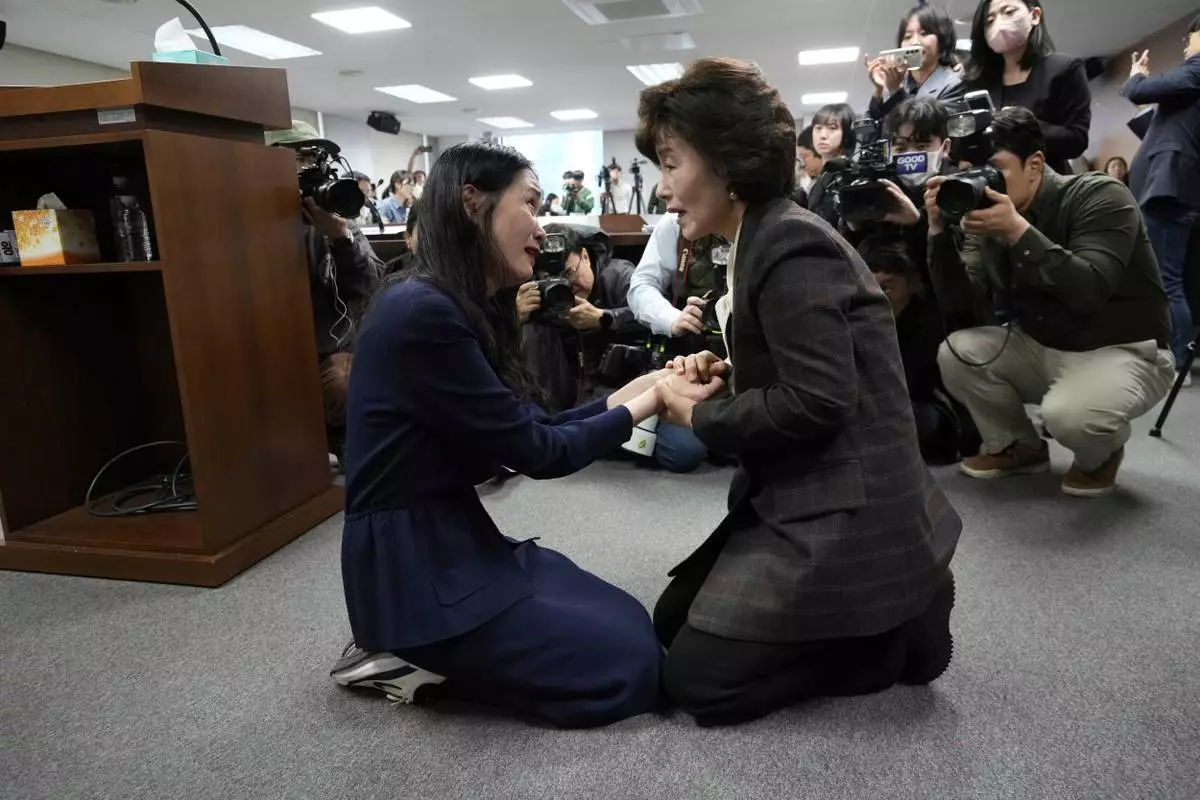
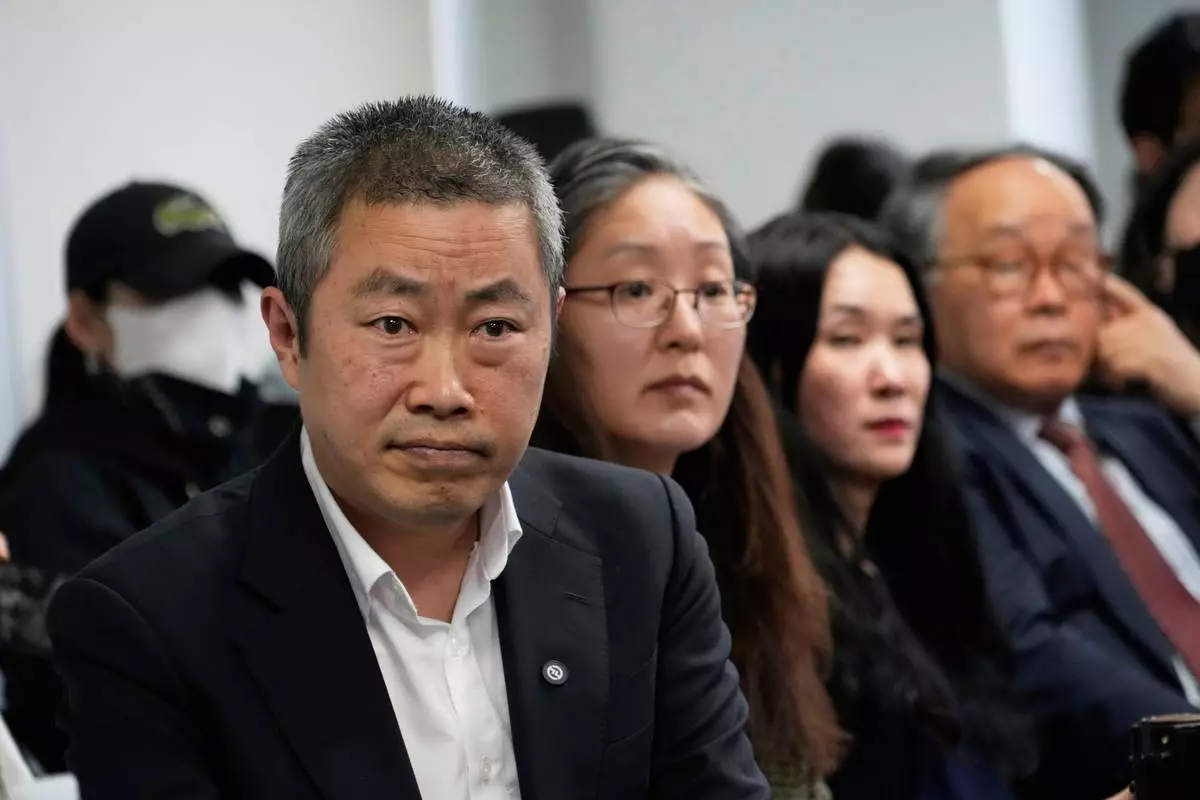
FILE - Truth and Reconciliation Commission Chairperson Park Sun Young, right, comforts adoptee Yooree Kim during a press conference in Seoul, South Korea, March 26, 2025. (AP Photo/Ahn Young-joon, File)

FILE - Truth and Reconciliation Commission Chairperson Park Sun Young, right, comforts adoptee Yooree Kim during a press conference in Seoul, South Korea, March 26, 2025. (AP Photo/Ahn Young-joon, File)

FILE - Peter Møller, left, Boonyoung Han, second from left, co-founders of the Danish Korea Rights Group, and adoptee Yooree Kim, second from right, attend a press conference at the Truth and Reconciliation Commission in Seoul, South Korea, March 26, 2025. (AP Photo/Ahn Young-joon, File)

FILE - Peter Møller, left, Boonyoung Han, second from left, co-founders of the Danish Korea Rights Group, and adoptee Yooree Kim, second from right, attend a press conference at the Truth and Reconciliation Commission in Seoul, South Korea, March 26, 2025. (AP Photo/Ahn Young-joon, File)

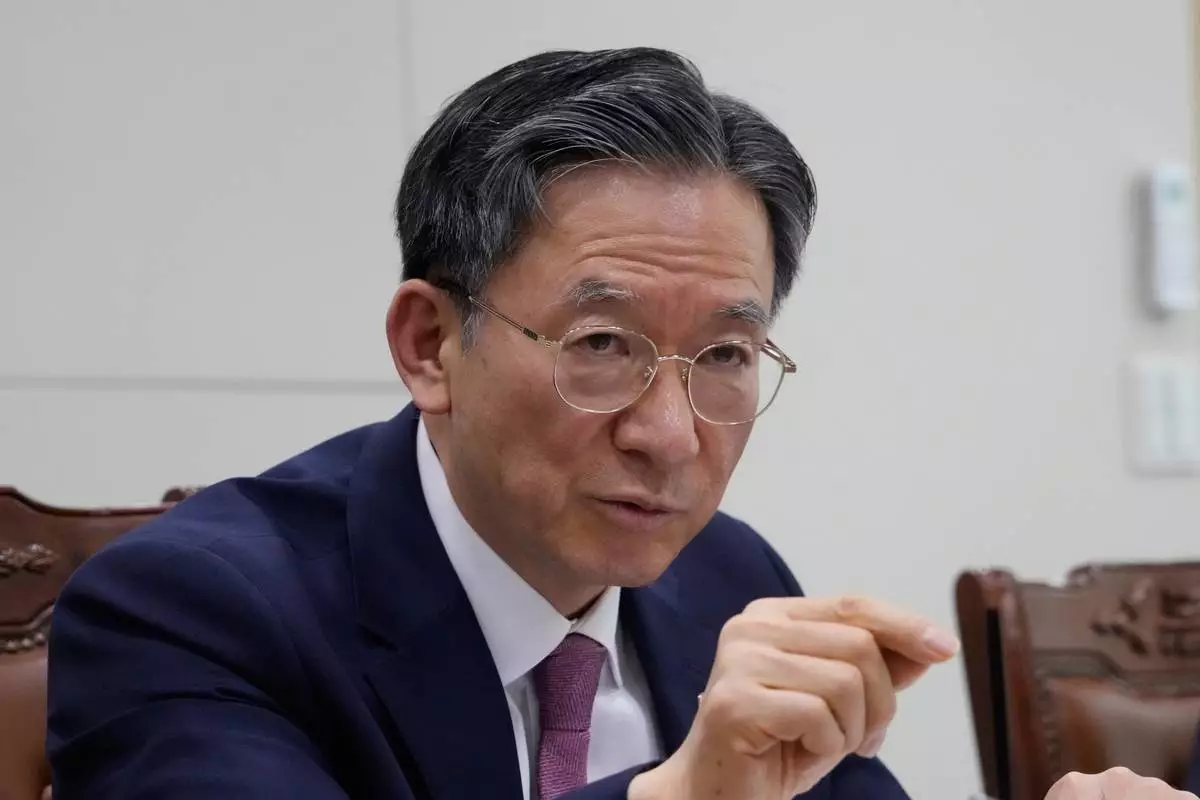
South Korean Justice Minister Jung Sung-ho speaks during a roundtable interview at the Justice Ministry in Gwacheon, South Korea, Thursday, April 9, 2026. (AP Photo/Ahn Young-joon)

South Korean Justice Minister Jung Sung-ho speaks during a roundtable interview at the Justice Ministry in Gwacheon, South Korea, Thursday, April 9, 2026. (AP Photo/Ahn Young-joon)

South Korean Justice Minister Jung Sung-ho speaks during a roundtable interview at the Justice Ministry in Gwacheon, South Korea, Thursday, April 9, 2026. (AP Photo/Ahn Young-joon)

South Korean Justice Minister Jung Sung-ho speaks during a roundtable interview at the Justice Ministry in Gwacheon, South Korea, Thursday, April 9, 2026. (AP Photo/Ahn Young-joon)

Recommended Articles