The Middle East tension is forcing commercial vessels to take longer alternative routes around Africa, placing new pressures and opportunities on logistics hubs across the continent, including the Tanger-Med in northern Morocco, Africa's largest port.
Rising security risks on key waterways are pushing major carriers away from traditional routes through the Suez Canal, and Morocco is emerging as an unexpected beneficiary.
Economic journalist Mohammed Zakki said that Morocco is strengthening its position as a key player in global trade, leveraging its strategic location at the Strait of Gibraltar, one of the world's most important and safest maritime corridors.
As regional instability grows and risks increase along major shipping routes, Morocco is establishing itself as a reliable hub, ensuring the continuity of maritime flows between Europe, Africa, the Americas, and Asia, he said.
Zakki pointed out that Tanger-Med is capitalizing on the re-routing of global shipping, serving as a critical hub for transit and maritime services, while he noted that rising shipping costs are a natural consequence of longer itineraries and increased operational expenses.
Instead of passing through the Suez Canal, vessels are now taking the longer route around the Cape of Good Hope, adding up to two weeks of transit time, increasing fuel consumption, and placing strain on global shipping capacity.
Middle East affairs specialist Hamza El Anfassi said that what the world is witnessing today is not merely a temporary shift in shipping routes, but a true stress test for African logistics infrastructure, with Tanger Med at its center.
Shipping companies are already passing the impact of the crisis on to customers by introducing new fees, including surcharges for war risk and deviation. These can range from 1,500 to 3,300 U.S. dollars per container, and even higher for specialized cargoes.
While the full impact of the crisis is still unfolding, early indicators point to increased maritime traffic in Moroccan ports. The main challenge ahead, experts say, will be managing higher volumes without congestion, while maintaining efficiency and turnaround time.
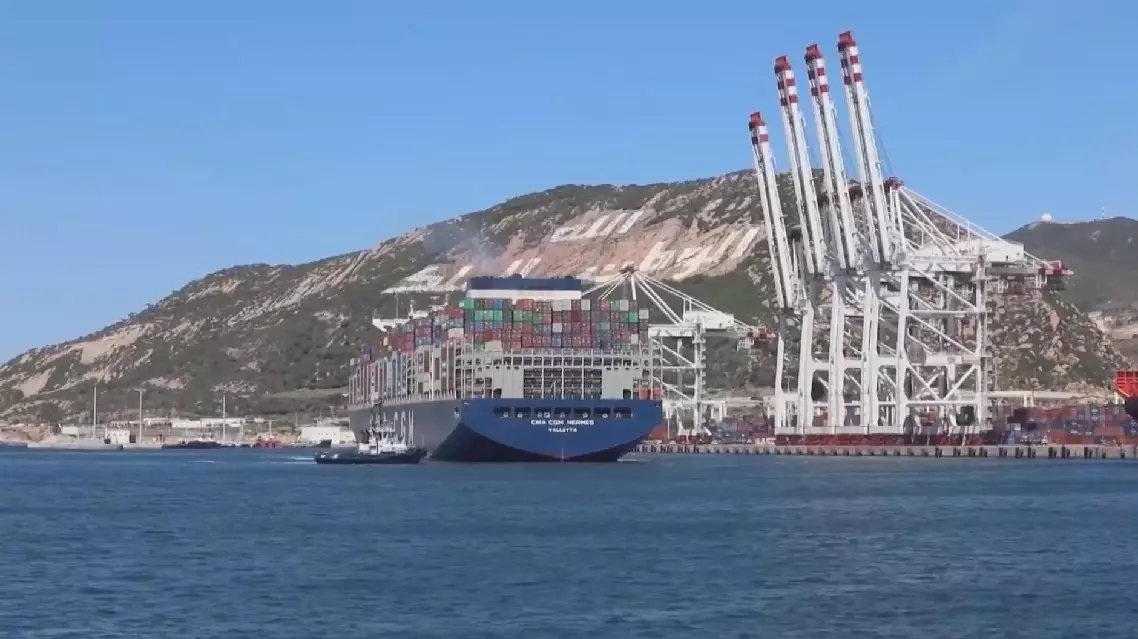
Middle East tension boosts strategic role of Africa's largest port