BANGKOK (AP) — Min Aung Hlaing, who as Myanmar ’s military commander had led the Southeast Asian nation with an iron fist since seizing power from Aung San Suu Kyi’s civilian government in 2021, was sworn in as an elected president on Friday.
His inauguration came after a general election judged by U.N. experts and rights groups to be neither free nor fair, with Suu Kyi’s popular National League for Democracy party among many not taking part. He faces the major challenge of ending the civil war that began when Suu Kyi's ouster from power met with armed resistance.
Click to Gallery
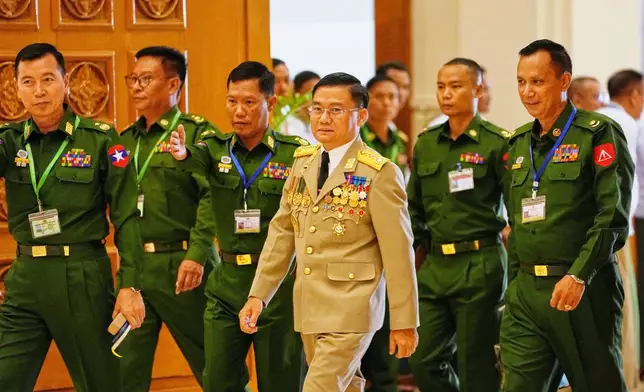
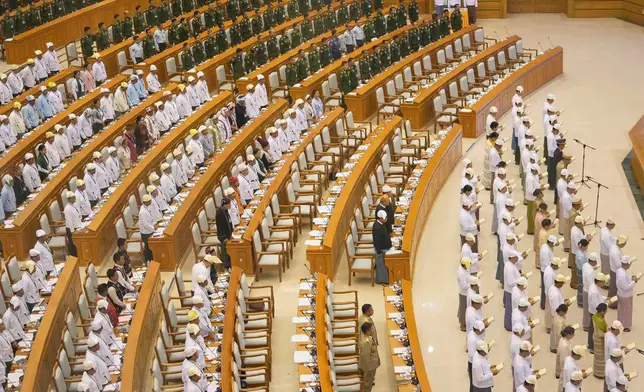
Deputy commander-in-chief Gen. Kyaw Swar Lin, center, arrives for a sworn-in ceremony at Union parliament in Naypyitaw, Myanmar, Friday, April 10, 2026. (AP Photo/Aung Shine Oo)
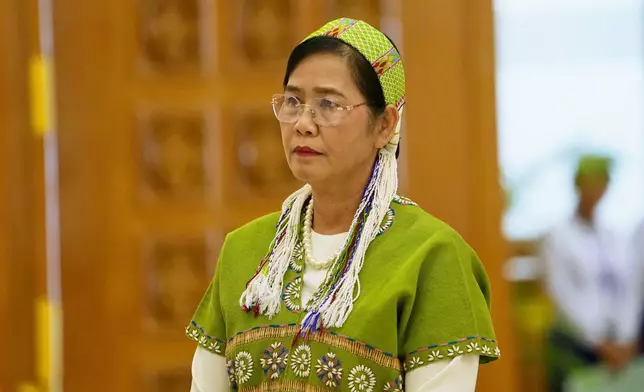
Myanmar newly elected Vice President Nan Ni Ni Aye arrives for a sworn-in ceremony at Union parliament in Naypyitaw, Myanmar, Friday, April 10, 2026. (AP Photo/Aung Shine Oo)
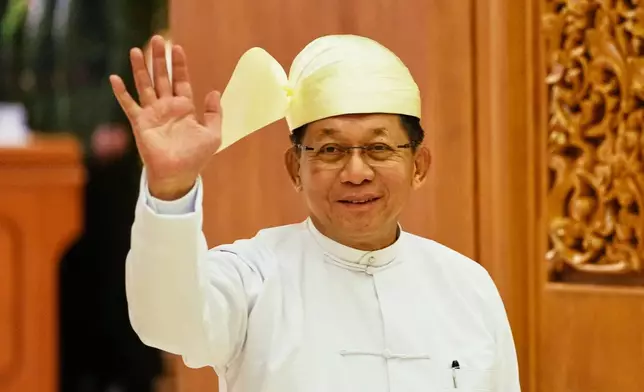
Myanmar newly elected President Min Aung Hlaing waves as he leaves Union parliament after a sworn-in ceremony in Naypyitaw, Myanmar, Friday, April 10, 2026. (AP Photo/Aung Shine Oo)
Myanmar newly appointed cabinet ministers gather to take oaths during a sworn-in ceremony at Union parliament in Naypyitaw, Myanmar, Friday, April 10, 2026.(AP Photo/Aung Shine Oo)
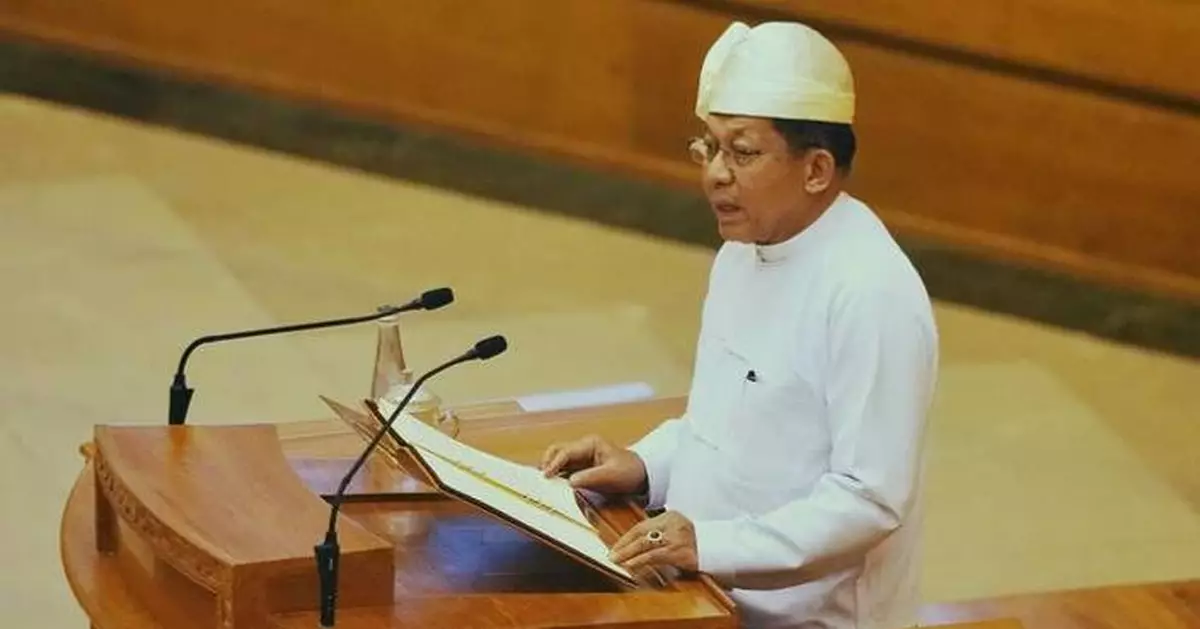
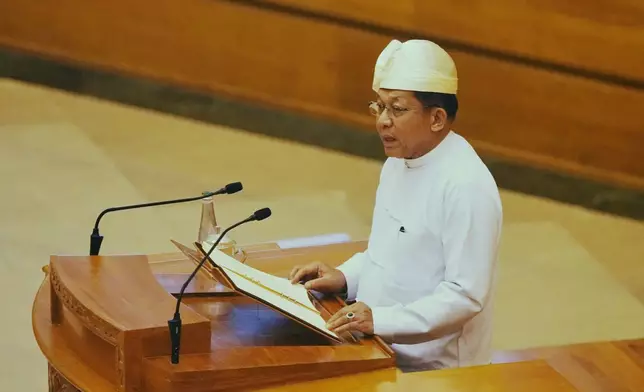
Myanmar newly elected President Min Aung Hlaing speaks during a sworn-in ceremony at Union parliament in Naypyitaw, Myanmar, Friday, April 10, 2026. (AP Photo/Aung Shine Oo)
The transition back to a nominally democratic government is widely seen as an effort to keep the army in power behind a facade of civilian rule.
Min Aung Hlaing’s ascent to the presidency follows a tradition of military strongmen installing themselves as the nation’s top leader and seeking to legitimize their rule through unfair elections.
He will be serving a five-year term after his April 3 election by parliament.
Twenty-eight of the 30 new cabinet members, also sworn in on Friday, are current or former generals, lawmakers from the military-backed Union Solidarity and Development Party, or members of the previous military government.
The pro-military bloc holds nearly 90% of the seats in the two-chamber legislature.
“Myanmar is back on the path to democracy and moving toward a better future,” Min Aung Hlaing, 69, said in a speech after being sworn in.
He also pledged to strive for peace with warring ethnic rebels and restore normal relations with the Association of Southeast Asian Nations, which has pressured Myanmar because of concern over its political instability.
Min Aung Hlaing took the oath of office alongside First Vice President Nyo Saw, a former general and close adviser to him, and Second Vice President Nan Ni Ni Aye, an ethnic Karen politician from the USDP, in the newly renovated parliament building in the capital Naypyitaw. It was damaged in last year’s earthquake.
The general election in December and January was widely criticized, in part because the polls were not held in large parts of the country due to the ongoing civil war.
"The junta’s elections were held in only 42% of Myanmar’s territory, under a restrictive legal framework that barred legitimate political competition to the advantage and benefit of the military-aligned Union Solidarity and Development Party,” the Bangkok-based, non-partisan Asian Network for Free Elections said in a report issued Friday.
“Every aspect of the staged elections, from its election management body to the design of the electoral system and the selection of political parties, was carefully engineered to ensure a predetermined outcome," it said.
Min Aung Hlaing, who had attained the rank of senior general, last week relinquished his post of commander-in-chief because the constitution prohibits the president from simultaneously holding the top military position. A close aide, Gen. Ye Win Oo, took over the powerful job.
In 2017, under a government led by Suu Kyi, Min Aung Hlaing oversaw a harsh counterinsurgency campaign against the Rohingya Muslim minority that drove hundreds of thousands into Bangladesh. The campaign was condemned internationally and some accused the army of being complicit in genocide.
Since the 2021 army takeover, nearly 8,000 civilians have been killed and some 22,208 political detainees remain jailed, according to the Assistance Association for Political Prisoners, a rights monitoring group. Total deaths in the ongoing conflict are estimated to be much higher.
Suu Kyi, Myanmar’s 80-year-old former leader, is serving a 27-year prison term on charges widely viewed as spurious and politically motivated. Her party won landslide victories in the 2015 and 2020 elections, but was forced to dissolve in 2023 after refusing to register under new military rules.
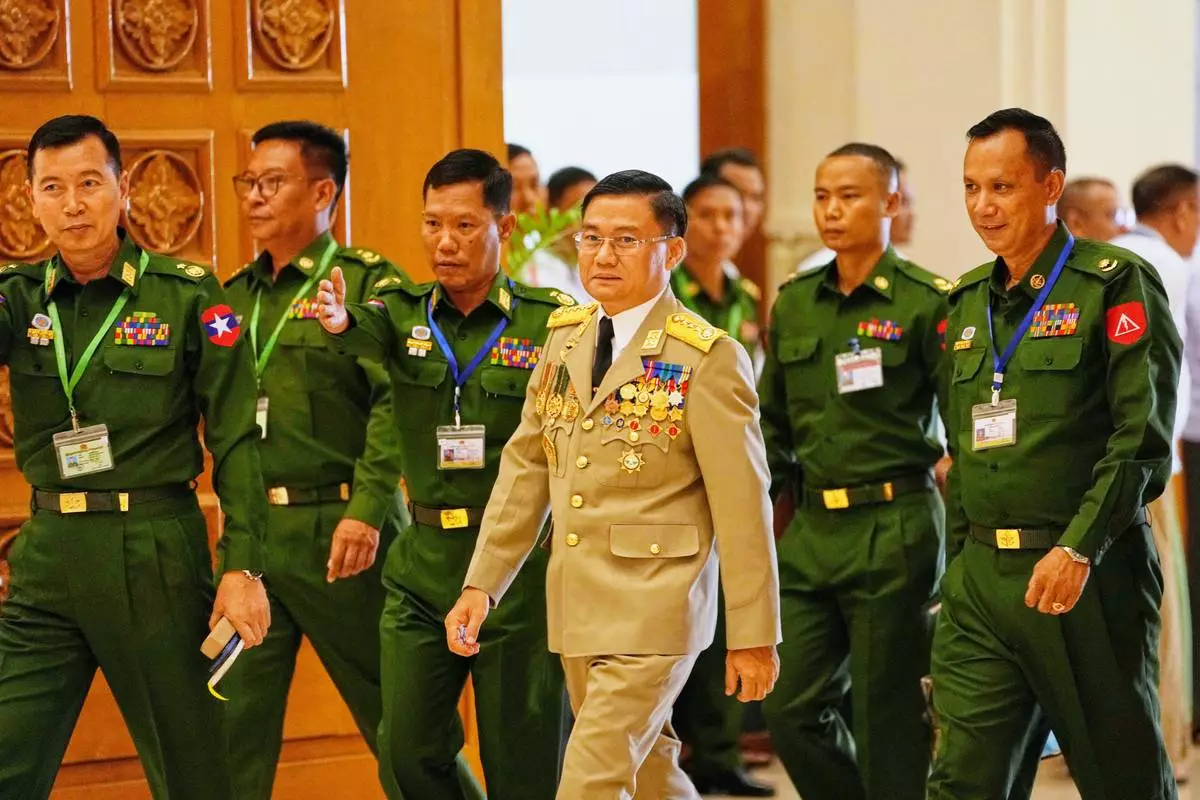
Deputy commander-in-chief Gen. Kyaw Swar Lin, center, arrives for a sworn-in ceremony at Union parliament in Naypyitaw, Myanmar, Friday, April 10, 2026. (AP Photo/Aung Shine Oo)
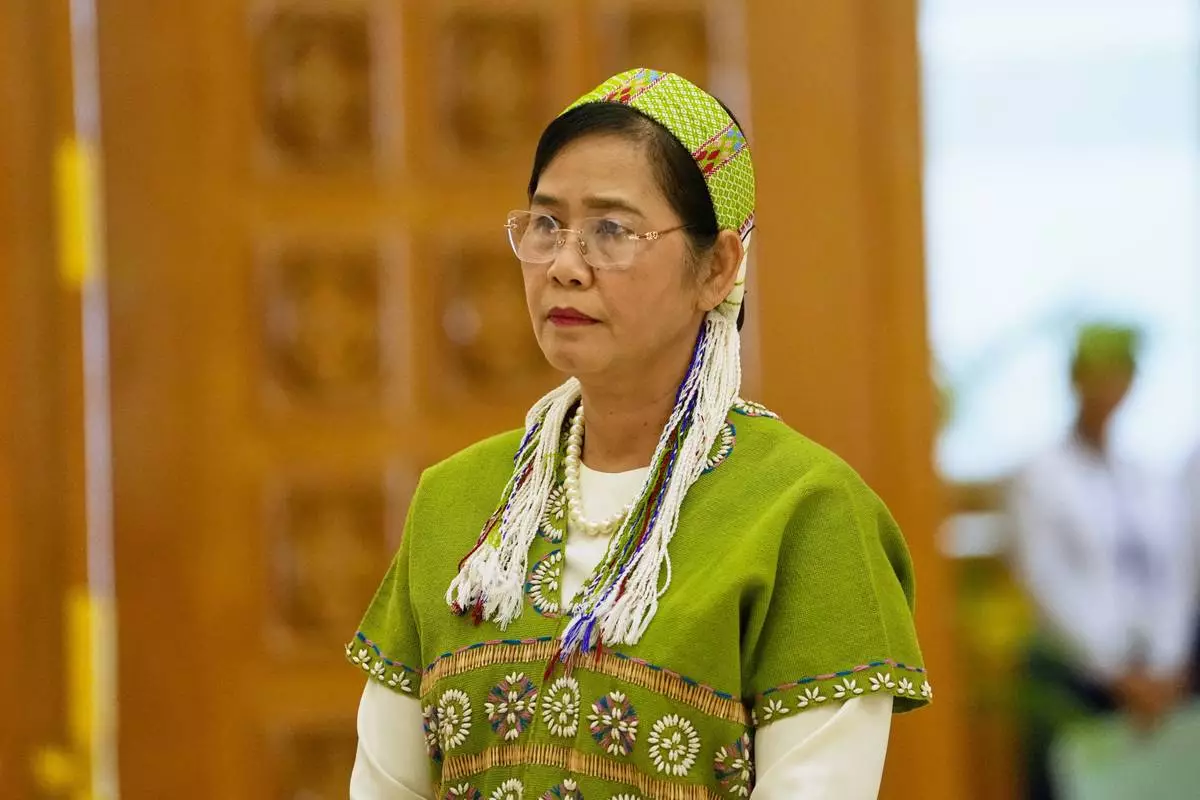
Myanmar newly elected Vice President Nan Ni Ni Aye arrives for a sworn-in ceremony at Union parliament in Naypyitaw, Myanmar, Friday, April 10, 2026. (AP Photo/Aung Shine Oo)
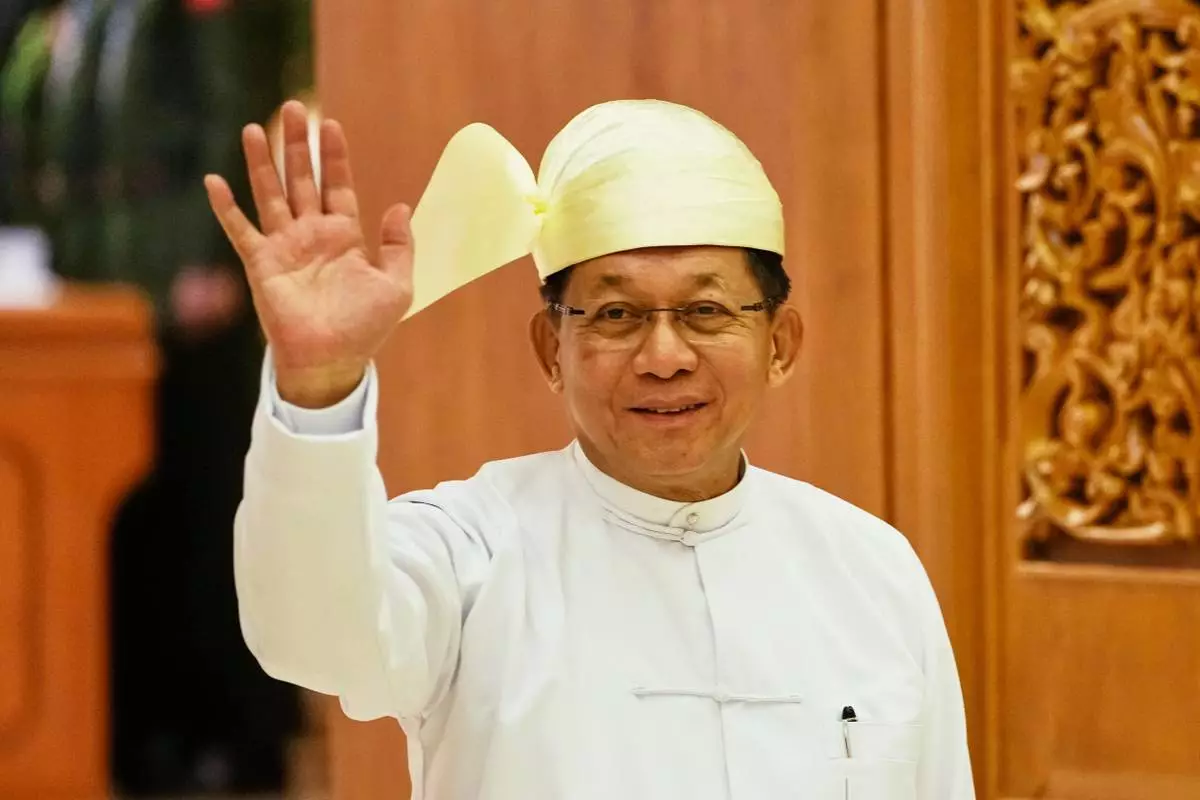
Myanmar newly elected President Min Aung Hlaing waves as he leaves Union parliament after a sworn-in ceremony in Naypyitaw, Myanmar, Friday, April 10, 2026. (AP Photo/Aung Shine Oo)
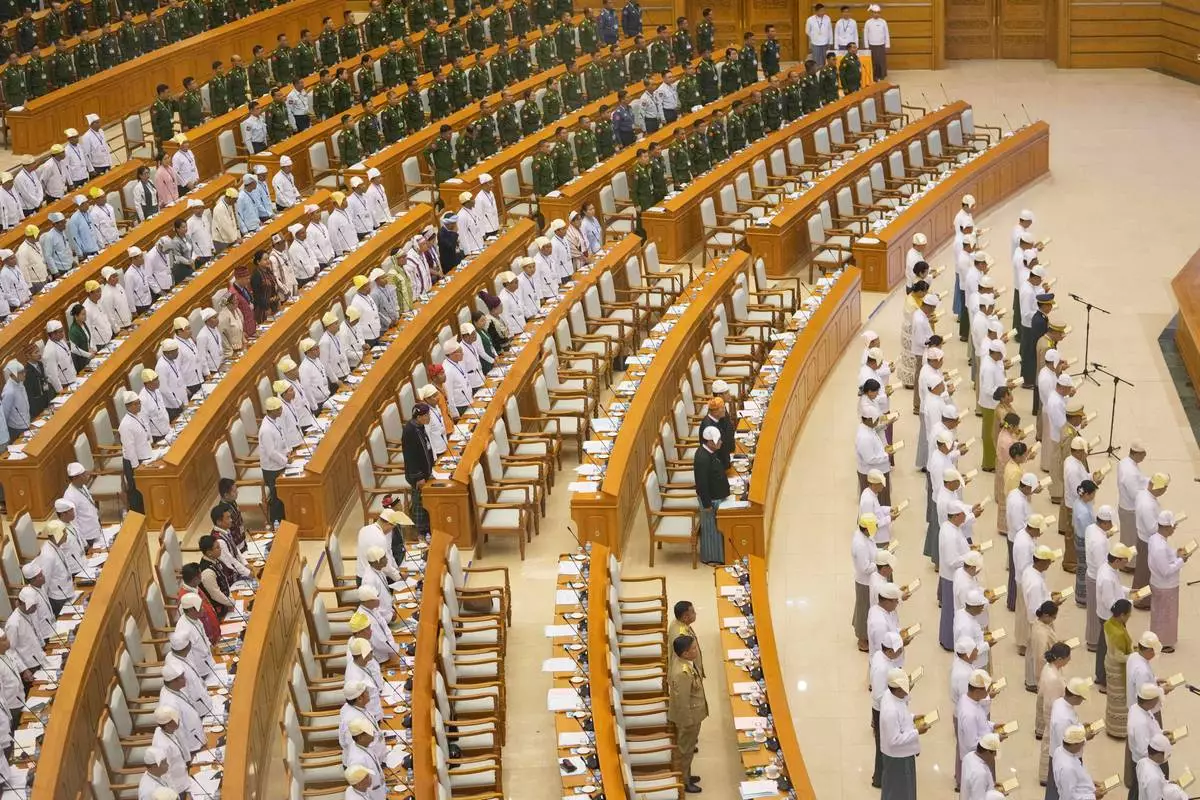
Myanmar newly appointed cabinet ministers gather to take oaths during a sworn-in ceremony at Union parliament in Naypyitaw, Myanmar, Friday, April 10, 2026.(AP Photo/Aung Shine Oo)
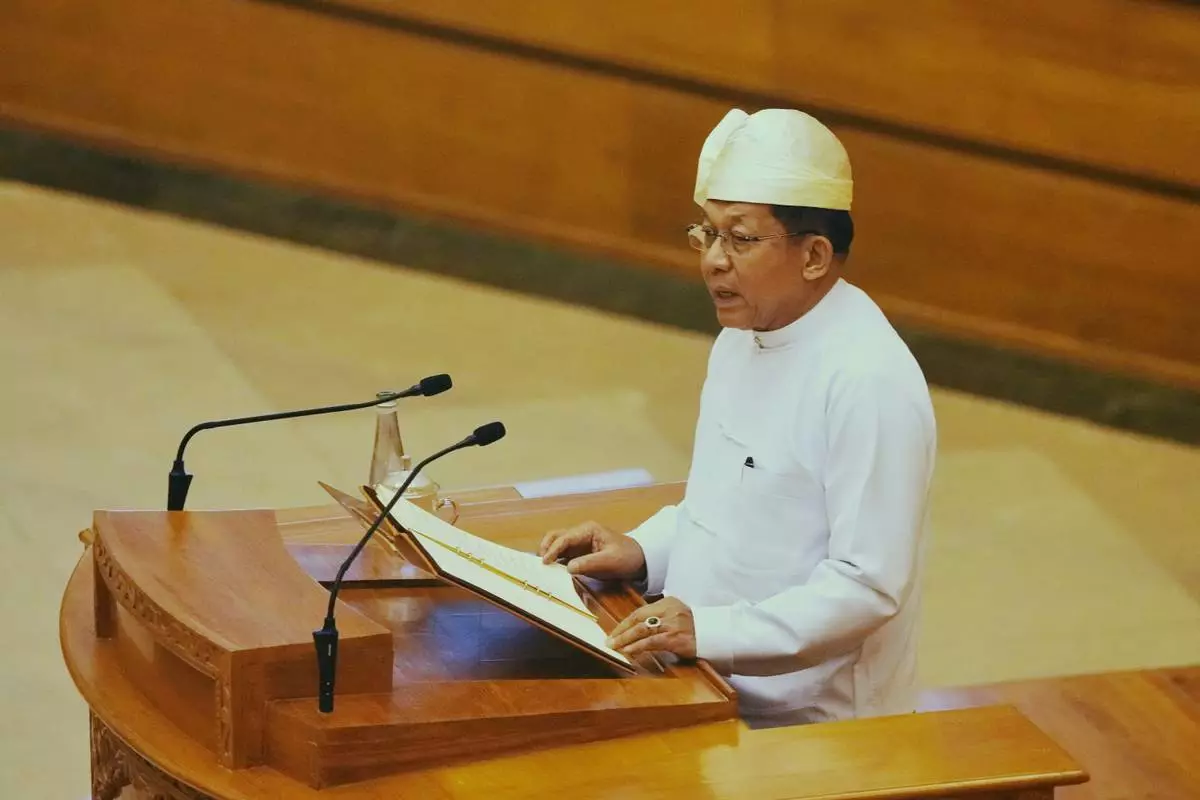
Myanmar newly elected President Min Aung Hlaing speaks during a sworn-in ceremony at Union parliament in Naypyitaw, Myanmar, Friday, April 10, 2026. (AP Photo/Aung Shine Oo)
DUBAI, United Arab Emirates (AP) — Negotiators from Iran and the U.S. prepared for high-level talks with their ceasefire still shaky Friday, as Israel and Hezbollah traded fire and Tehran maintained its stranglehold on the Strait of Hormuz.
There remain many issues that could derail the truce — as well as negotiations for broader deal to permanently end the war.
Iran’s semiofficial Tasnim news agency, close to the Revolutionary Guard, claimed that talks set for Saturday wouldn’t happen unless Israel stopped its attacks in Lebanon. And U.S. President Donald Trump complained that Iran was “doing a very poor job” by not allowing the free flow of ships through the strait, through which 20% of the world’s traded oil once passed.
Kuwait, meanwhile, said it faced a drone attack Thursday night that it blamed on Iran and its militia allies in the region. Though Iran’s paramilitary Revolutionary Guard denied launching any assault, it has carried out attacks across the Mideast in the past that it did not claim.
And yet, preparations for the talks between Iran and the U.S. in Pakistan appeared to move forward, with U.S. Vice President JD Vance set to take off from Washington. Negotiations between Israel and Lebanon, meanwhile, are expected to begin next week in Washington, according to a U.S. official and a person familiar with the plans, who spoke on condition of anonymity due to the delicacy of the matter.
Israel’s insistence that the ceasefire in Iran does not include a pause in its fighting with Hezbollah, which joined the war in support of its backer, Iran, has threatened to scupper the deal. The day the truce was announced, Israel pounded Beirut with airstrikes, killing more than 300 people, according to Lebanon's Health Ministry. It was the deadliest day in the country since the war began Feb. 28.
Trump said Thursday that he has asked Israeli Prime Minister Benjamin Netanyahu to dial back the strikes.
Early Friday, Israel’s military said it hit approximately 10 launchers in Lebanon that had fired rockets toward northern Israel a day earlier.
Iran’s parliament speaker, Mohammad Bagher Qalibaf, warned Thursday that continued Israeli attacks on Hezbollah would bring “explicit costs and STRONG responses.”
Netanyahu, meanwhile, said that he authorized the negotiations with Lebanon “as soon as possible” aimed at disarming Hezbollah militants and establishing relations between the neighbors, which have technically been at war since Israel was established in 1948.
The Lebanese government had not responded as of Friday morning. The timing and location of the talks was first reported by Axios.
Iran’s closure of the Strait of Hormuz has sent oil prices skyrocketing, driven stocks down and roiled the world economy. Tehran's control over the waterway has proved its biggest strategic advantage in the war.
The spot price of Brent crude, the international standard, was around $97 Friday, up more than 30% since the war started.
Before the conflict, over 100 ships passed through the strait each day — many carrying oil to Asia. With the ceasefire in place, only 12 have been recorded passing through.
Underscoring the precarious situation, a Botswana-flagged liquefied natural gas tanker attempted to travel out of the Persian Gulf via a route ordered by the Revolutionary Guard, but suddenly turned around early Friday, ship-tracking data showed.
The head of the United Arab Emirates’ major oil company, Sultan al-Jaber, said some 230 ships loaded with oil were waiting to get through the strait and must be allowed “to navigate this corridor without condition.”
U.S. President Donald Trump complained about that situation, writing on his social media platform: “Iran is doing a very poor job, dishonorable some would say, of allowing Oil to go through the Strait of Hormuz.”
“That is not the agreement we have!” Trump wrote of the trickle of ships Iran has allowed to pass.
Questions also remain over the fate of Iran’s missile and nuclear programs — which the U.S. and Israel sought to eliminate in going to war.
The U.S. insists Iran must never be able to build nuclear weapons and wants to remove Tehran’s stockpile of highly enriched uranium, which could be used to make them. Iran insists its program is peaceful.
Trump has said that the U.S. would work with Iran to remove the uranium, though Tehran has not confirmed that.
The chief of Iran’s nuclear agency, Mohammad Eslami, said Thursday that protecting Tehran’s right to enrich uranium is “necessary” for any ceasefire talks.
Mednick reported from Tel Aviv, Israel. Associated Press writers Chan Ho-him in Hong Kong, Zeke Miller, Matthew Lee and Will Weissert in Washington, Hannah Schoenbaum in Salt Lake City and Kareem Chehayeb and Hussein Malla in Beirut contributed to this report.
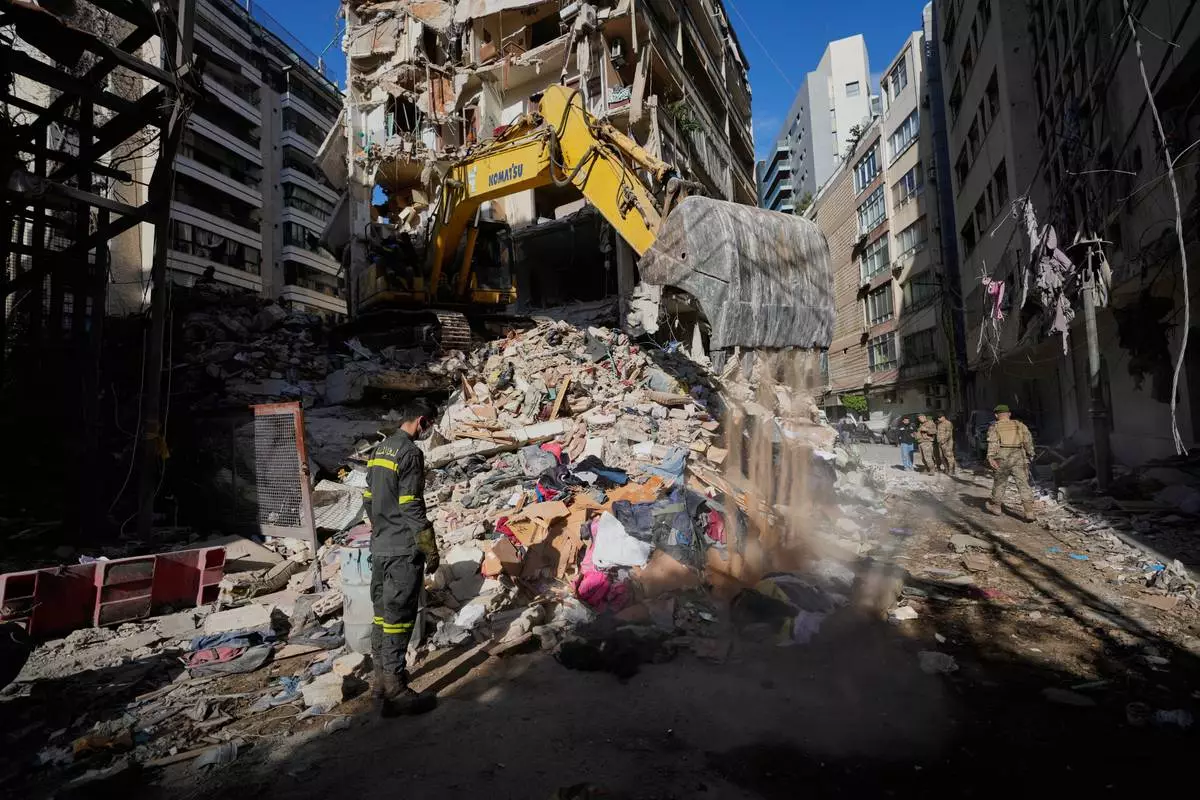
A Lebanese civil defense worker looks on as an excavator operates on the rubble of a building destroyed in an Israeli airstrike a day earlier in Beirut, Lebanon, Thursday, April 9, 2026. (AP Photo/Hussein Malla)
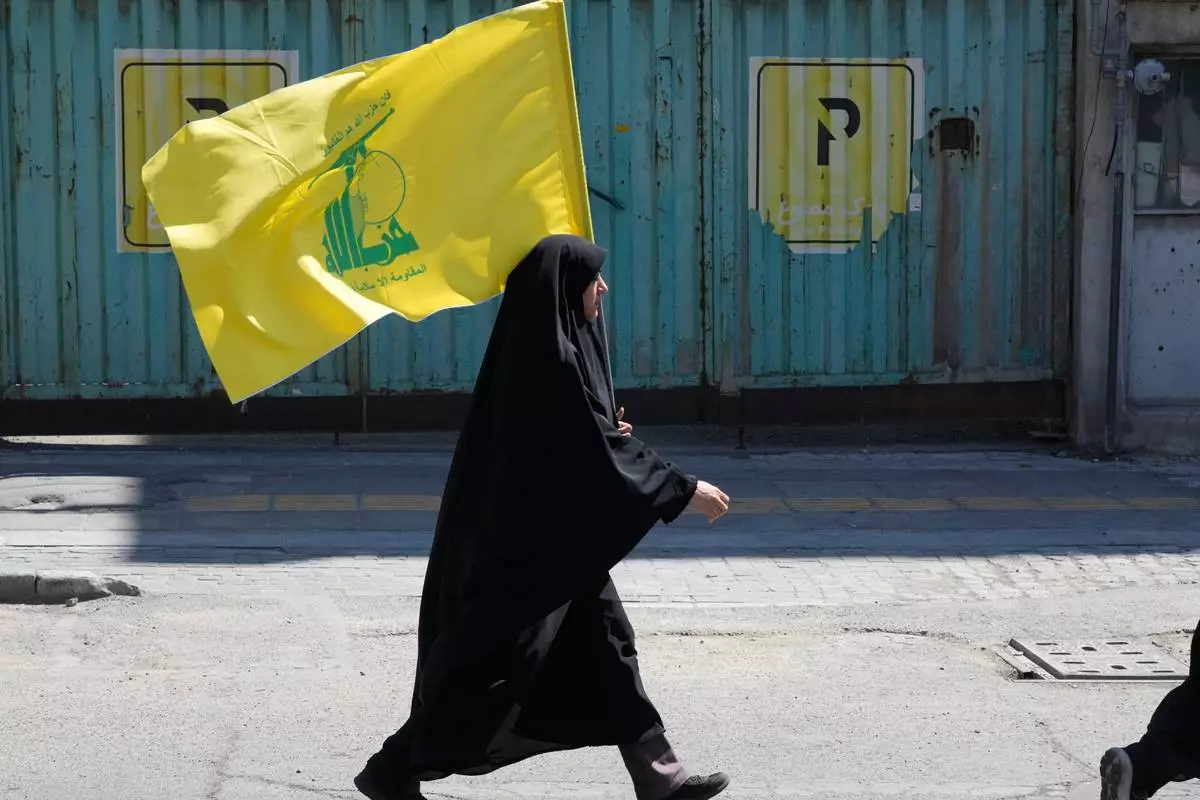
A woman carries a flag of Lebanon's militant Hezbollah group during a ceremony marking the 40th day since the death of Iranian Supreme Leader Ayatollah Ali Khamenei in Tehran, Iran, Thursday, April 9, 2026. (AP Photo/Vahid Salemi)
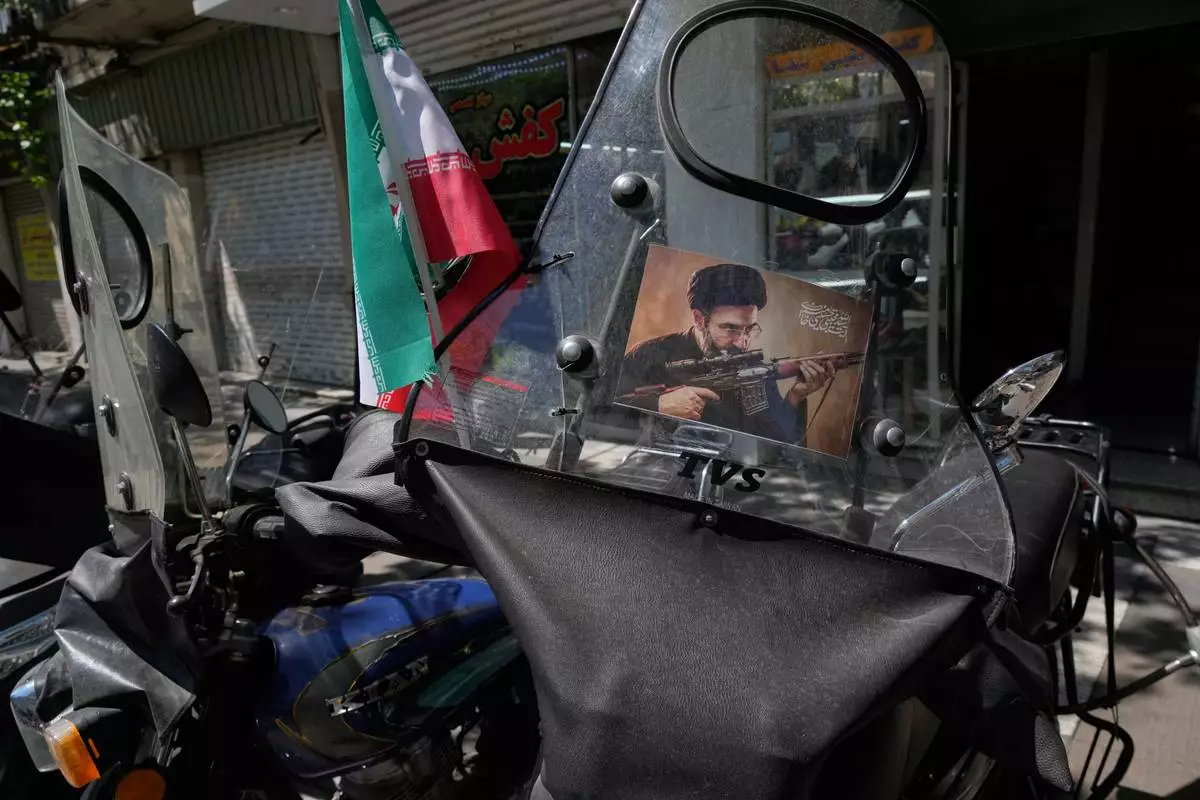
A poster is pasted on a motorbike windshield with graphic depicting Iran's Supreme Leader Ayatollah Mojtaba Khamenei as government supporters gather to mark the 40th day since the killing of his father, Supreme Leader Ayatollah Ali Khamenei, in Tehran, Iran, Thursday, April 9, 2026. (AP Photo/Vahid Salemi)
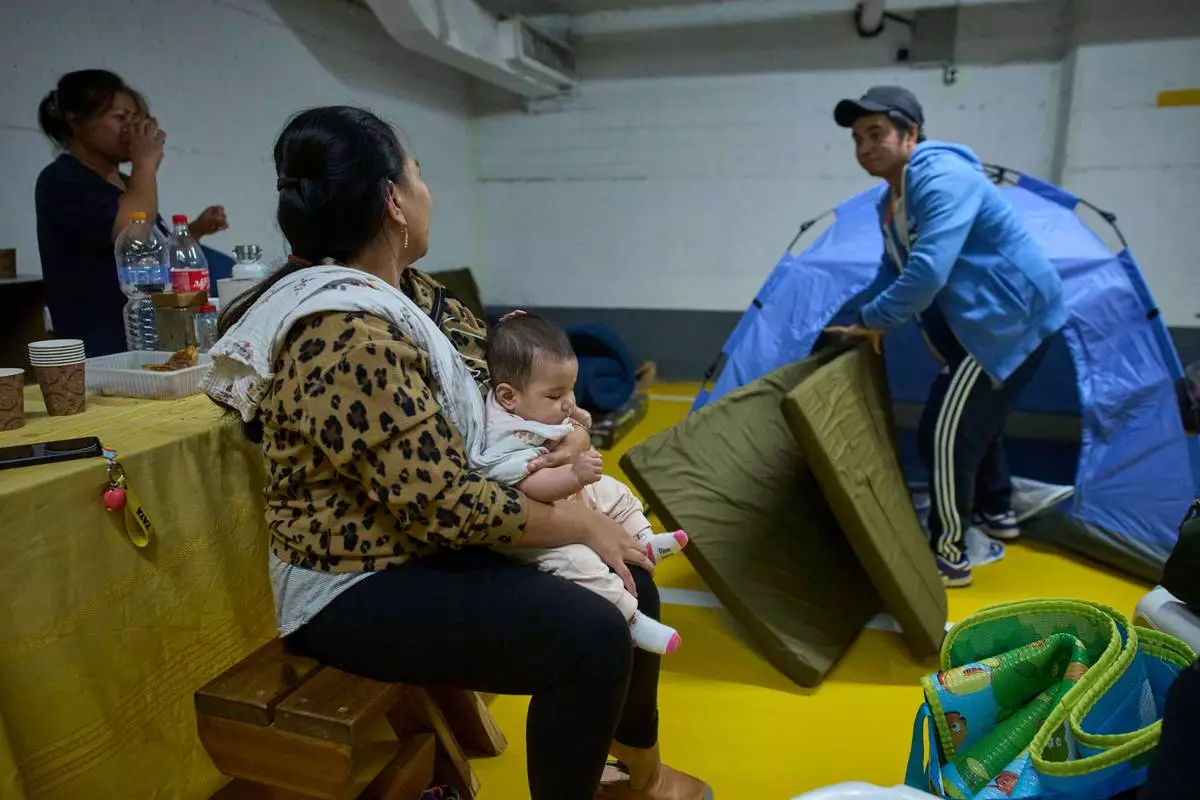
People residing in an underground shelter pack up their belongings as they prepare to leave after the announcement of a two-week ceasefire agreement between Iran and the US, in Tel Aviv, Israel, Thursday, April 9, 2026. (AP Photo/Ohad Zwigenberg)
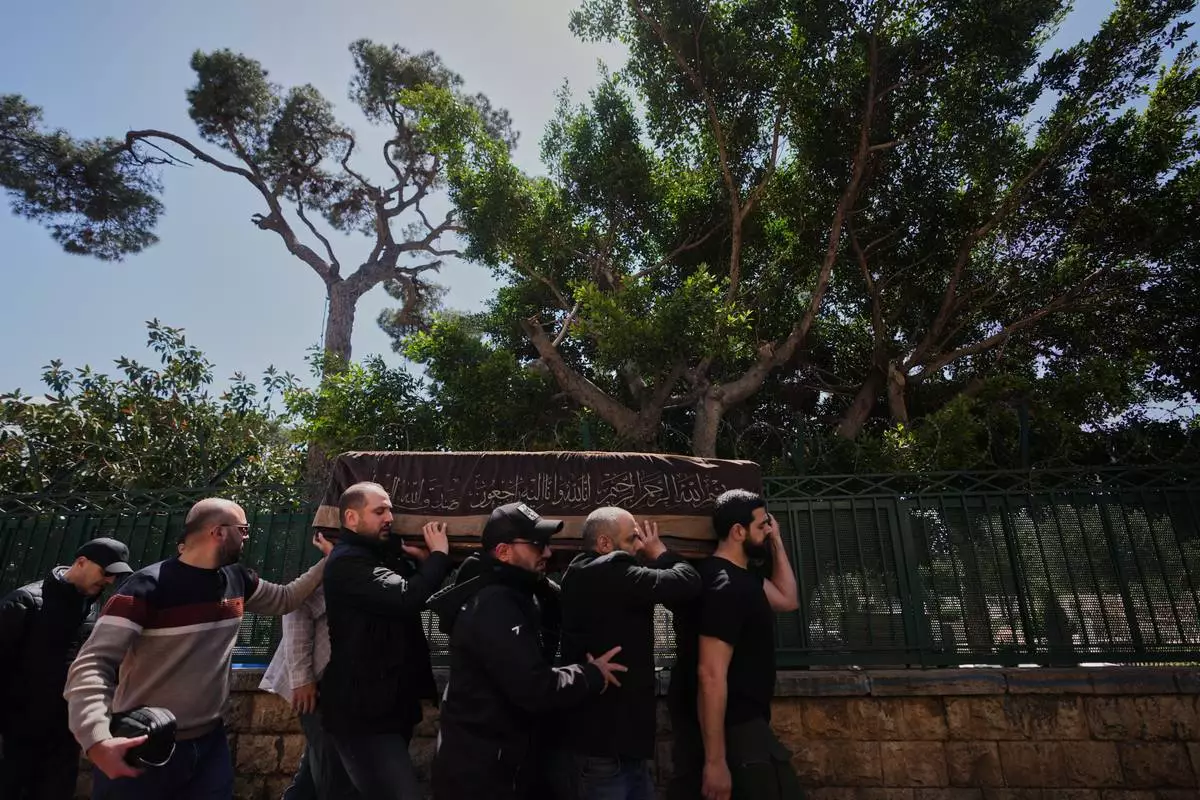
Mourners carry the coffin of Mohammad Zein al-Abedin Shehab, who was killed in an Israeli airstrike a day earlier, during his funeral procession in Beirut, Lebanon, Thursday, April 9, 2026. (AP Photo/Hassan Ammar)
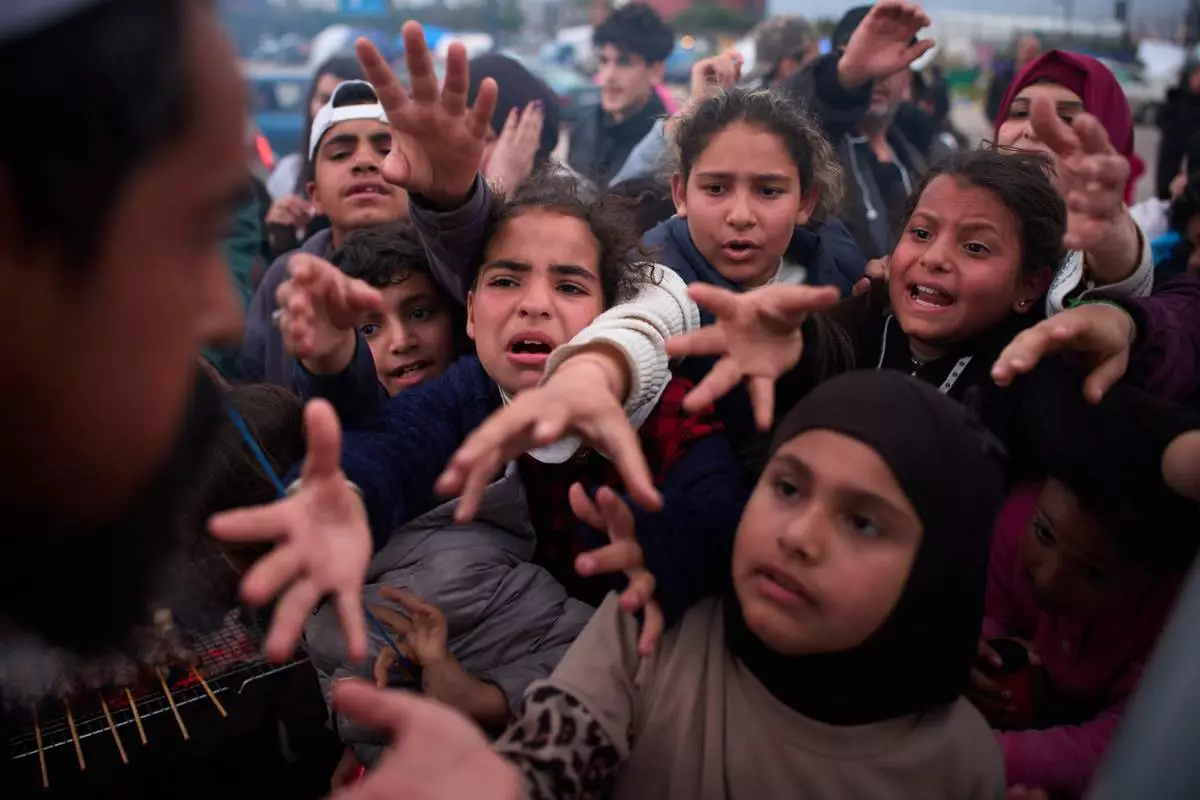
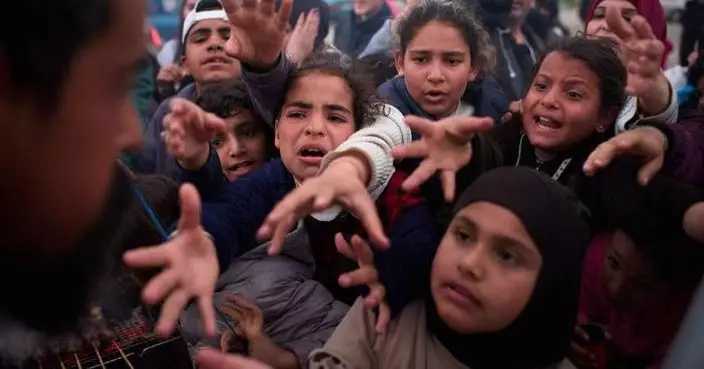
Displaced families extend their hands while waiting for donated food beside the tents they use as shelters after fleeing Israeli bombardment in southern Lebanon, in Beirut, Lebanon, Thursday, April 9, 2026. (AP Photo/Emilio Morenatti)