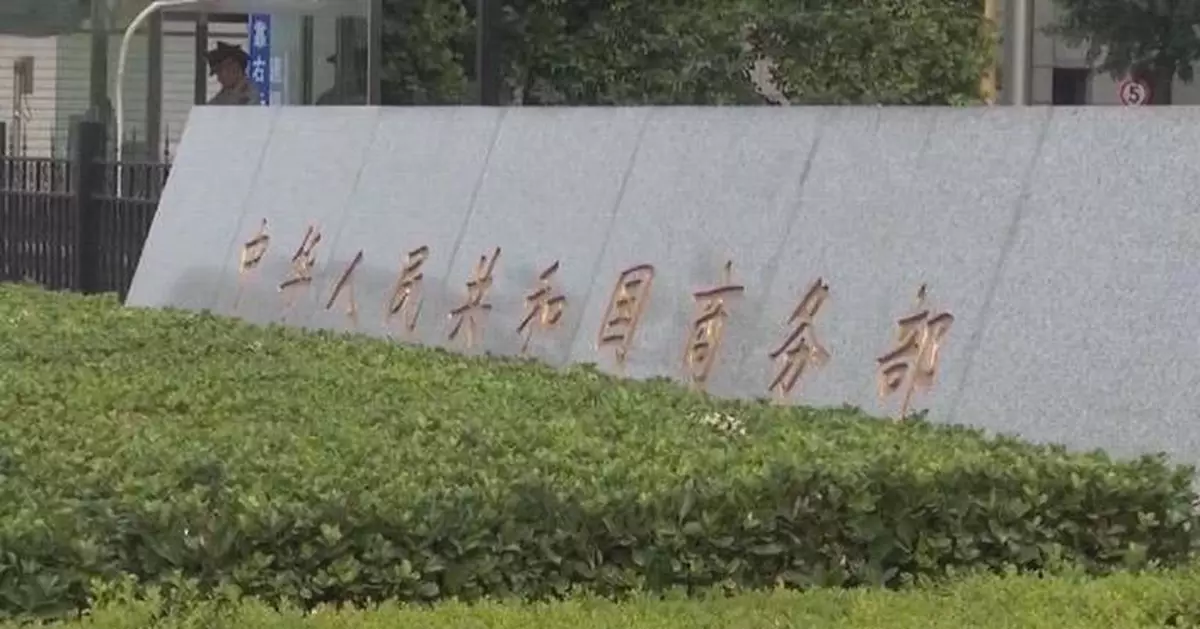
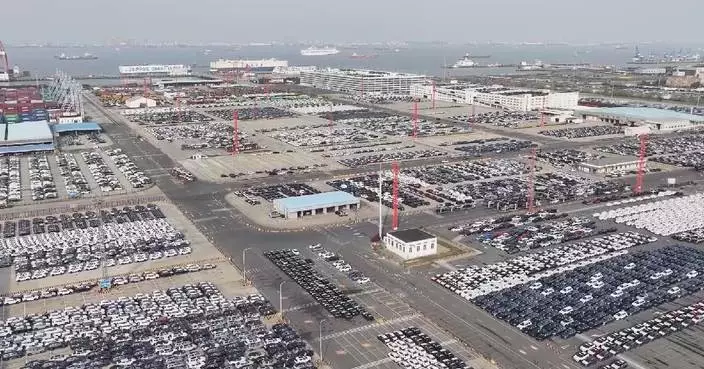
The new guidelines recently released by a couple of Chinese government departments on advancing high-quality development of the e-commerce sector are designed to unleash the sector's internal driving forces, innovative potential and opening-up vitality so as to better serve the real economy, Commerce Ministry spokesman He Yadong said on Thursday.
Speaking at a press briefing in Beijing, He said that e-commerce has become an important component of the digital economy, marked by rapid development, active innovation, and a wide range of application scenarios, and China has maintained its position as the world’s largest online retail market for 13 consecutive years.
In order to deepen the integration of digital technologies with the real economy, the guidelines proposed several key measures, including strengthening innovation-driven development by advancing the application of digital technologies in the e-commerce sector, cultivating high-quality e-commerce by promoting the integration of online and offline sales channels, and fostering e-commerce for rural area and certain industries to achieve more efficient coordination between production and supply chains. These steps will provide new momentum for the growth of the real economy, He said.
He also stressed the importance of opening up and international collaboration.
"Efforts should be made to further expand opening up. We will align with high-standard international economic and trade rules, explore expanding the pilot zone for Silk Road e-commerce cooperation, and intensify pilot and pioneering efforts. China will continue to expand its Silk Road e-commerce partners and carry out themed activities under the 'Silk Road E-commerce Benefits the World' campaign. The Ministry of Commerce will work with other relevant government departments to ensure the effective implementation of the guidelines, thereby contributing to high-quality economic and social development," the spokesman said.
China's new guidelines to further boost e-commerce, strengthen real economy: spokesman
Japanese Prime Minister Sanae Takaichi's political stunts both at home and abroad cannot whitewash Japan's World War II (WWII) aggression, but instead expose the schemes of the country's far-right forces to incite bloc confrontation and promote remilitarization, says a China Media Group commentary published on Sunday.
An edited English version of the commentary is as follows:
In recent days, Takaichi has faced fierce criticism both domestically and internationally.
Her political stunt of kneeling in front of the Tomb of the Unknown Australian Soldier to lay flowers at the Australian War Memorial in Canberra during her visit to Australia further exposed her multiple political calculations to the international community.
Choosing to kneel in front of a tomb in Australia, Takaichi was not regretting for Japan's aggression and atrocities during World War II.
This act not only reveals the distorted world outlook of Japanese politicians, but also exposes their attempts to mislead public opinion, whitewash the crimes of WWII aggression, instigate bloc confrontation, and push for military buildup.
From "fawning diplomacy" during her U.S. visit in March to the recent kneeling show during her visit to Australia in May, Takaichi has been trying to cultivate a friendly image towards the West.
Geopolitically speaking, Japan's far-right forces are trying to expand their military and breach from the restraints of the pacifist constitution by exaggerating external threats. To this end, they are making every effort to exploit geopolitical conflicts and draw neighboring countries, especially Western countries, into bloc confrontation.
Since the end of WWII, Japanese leaders have never apologized to the people of victim countries such as China, the Republic of Korea, and the Democratic People's Republic of Korea. Many Japanese politicians have even tried every means to justify the war crimes.
In particular, Takaichi has questioned the 1995 Murayama Statement, denied the Nanjing Massacre, visited the notorious Yasukuni Shrine annually for many consecutive years, and revived military rank titles during WWII, such as "taisa."
On the issue of Japan's history of aggression, Takaichi's insidious move cannot deceive the world.
Takaichi's political stunts both at home and abroad are a provocation against WWII victim countries in Asia and other regions.
This cannot conceal Japan's remilitarization attempt or the reality that " neo-militarism" is spreading and becoming a threat.
All countries that have suffered from Japanese militarist aggression should remain highly vigilant and united, and work together to safeguard the outcomes of WWII victory, so that historical tragedies never repeat themselves.
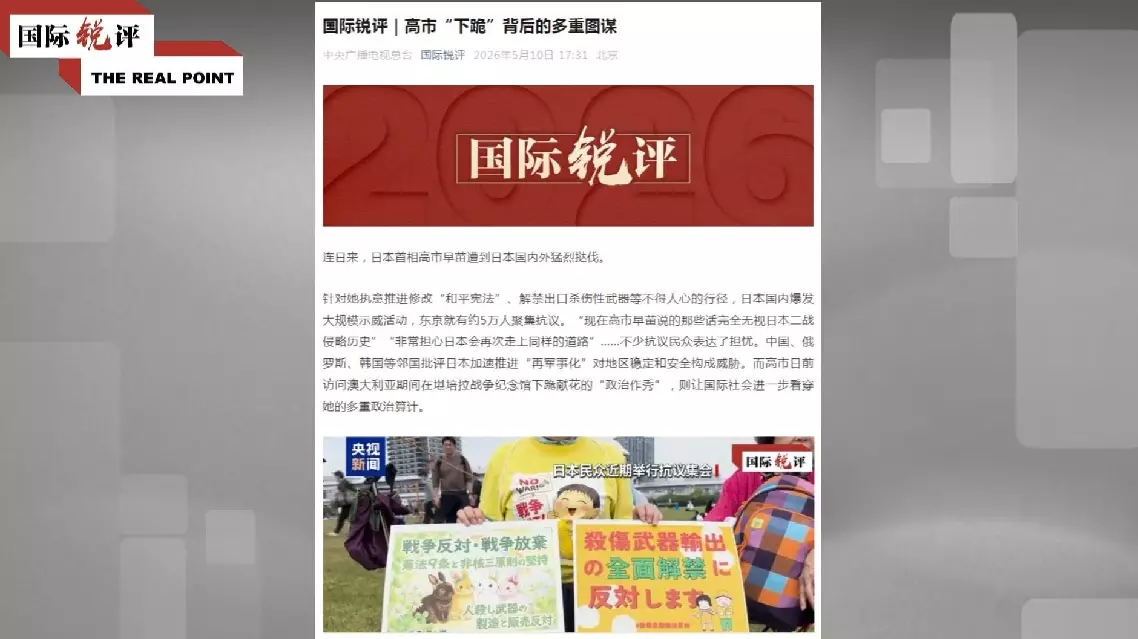
Takaichi's political stunts cannot whitewash Japan's history of aggression, remilitarization attempt: commentary