MILAN (AP) — Stefano Gabbana has stepped down as chairman of the Italian fashion house that he co-founded with Domenico Dolce, but will continue in his creative role, the company said on Friday.
Gabbana’s resignation from oversight roles was effective Jan. 1. Alfonso Dolce, Domenico Dolce's brother, was named chairman later that month, according to the company's filing with the Milan chamber of commerce.
Dolce & Gabbana in a statement called the move “a natural evolution of its organizational structure and governance.’’
The news was first reported by Bloomberg, which cited sources saying that Gabbana, 63, was considering options to exit his 40% stake in the 41-year-old fashion house.
Dolce & Gabbana’s lenders are up to 150 million euros in new funding as part of a broader refinancing of the fashion house's 450 million euros ($525.7 million) of debt, Bloomberg reported. It added that the company was considering the disposal of real estate and the renewal of licences to raise money.
Dolce & Gabbana declined comment on the company's debt, citing talks with bankers.
Gabbana was present at the last runway show in February, with their longtime muse Madonna as a front-row guest. Both he and Dolce greeted Madonna personally at her seat after the show and brought her backstage.
Meryl Streep and Stanley Tucci attended the Dolce & Gabbana runway in character during filming for “The Devil Wears Prada” sequel last September.
Dolce & Gabbana made its Milan runway debut in 1985, with a focus on Sicilian craftsmanship that has been a touchstone throughout the years for the designers. The designers split as a couple some 20 years ago, but have continued to work closely on the creative side.
The brand spiked in popularity in the 1990s with cone bras, corset looks and perfectly tailored black dresses. The designers have often drawn on Dolce's Sicilian roots, with sexy sheer materials and netting for menswear, along with bright floral and fruit prints and jewelry with oversized crosses.
Over the years, they have expanded into fragrance, home goods and watches, among other fashion-adjacent categories.
Luxury sector analyst Luca Solca, at the Bernstein global equity research firm, said he did not anticipate major changes at the fashion house as long as Gabbana remains on in a creative role.
“Stefano Gabbana was the root cause of the social media disaster of Dolce & Gabbana in China a few years ago,'' he said, refering to the cancellation of a 2018 show in Shanghai due to a backlash after the design house released campaign videos that were criticized as culturally insensitive to Chinese people.
“If Stefano Gabbana left, this could be presented as a (belated) atonement from that incident,” Soca added.

FILE - Designers Stefano Gabbana, left, Domenico Dolce accept applause after the Dolce & Gabbana Spring/Summer 2026 collection presented in Milan, Italy, Saturday, Sept. 27, 2025. (AP Photo/Luca Bruno, File)
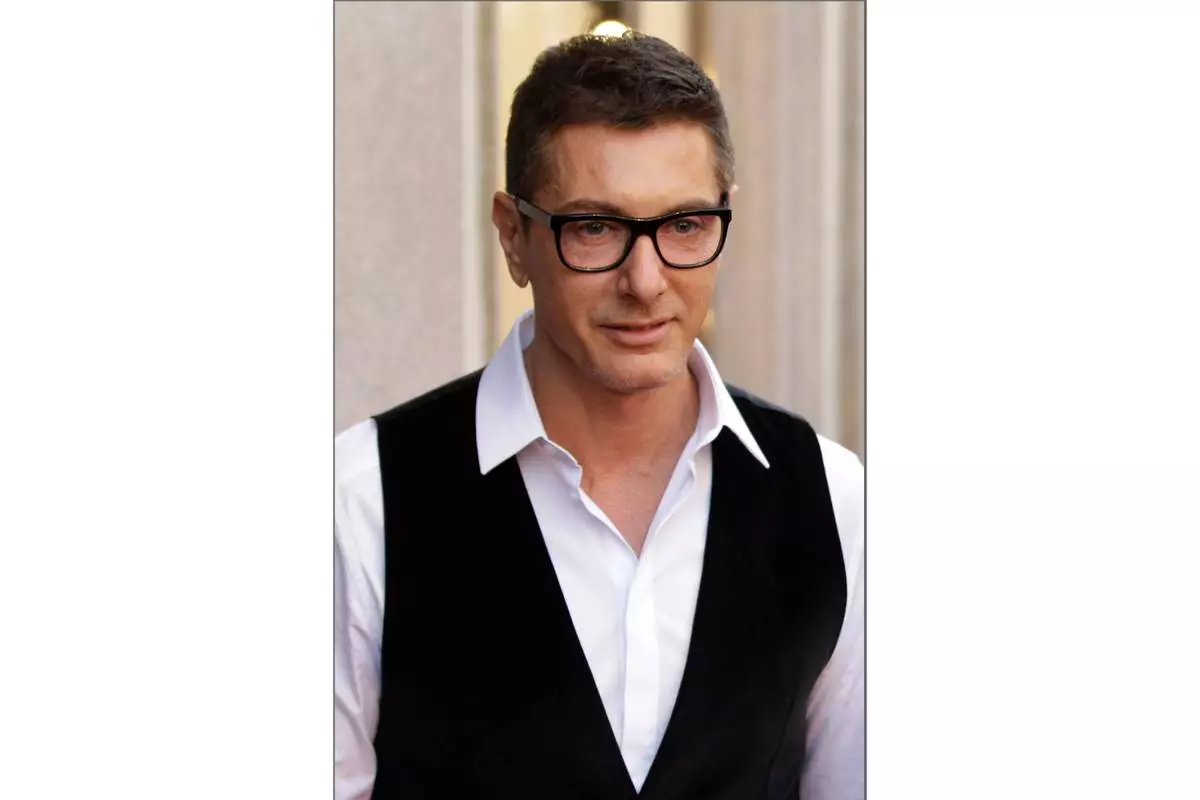
FILE - Italian fashion designer Stefano Gabbana arrives on the red carpet to attend the presentation of a portraits book ' Milan Fashion , soccer players portraits' sponsored by Dolce & Gabbana fashion brand, in downtown Milan, Italy, May 19, 2011. (AP Photo/Luca Bruno, File)

FILE -Madonna congratulates Domenico Dolce, right, and Stefano Gabbana at the end of the Dolce & Gabbana Fall/Winter 2026-2027 Women's collection, presented in Milan, Italy, Feb. 28, 2026. (AP Photo/Antonio Calanni), File)
SAN FRANCISCO & ROTENBURG, Germany--(BUSINESS WIRE)--May 26, 2026--
Ouster, Inc. (Nasdaq: OUST) (“Ouster” or the “Company”), a leader in sensing and perception for Physical AI, and ARGUS Interception GmbH, a pioneer in net-based counter-UAS interception systems, announced today a strategic agreement under which ARGUS Interception will equip its A1-Falke ® net-based interceptors with Ouster digital lidar.
This press release features multimedia. View the full release here: https://www.businesswire.com/news/home/20260526393691/en/
This collaboration combines the high-precision, short-range 3D detection capabilities of Ouster digital lidar with ARGUS Interception’s controlled, net-based drone capture capabilities. By installing Ouster lidar, ARGUS aims to enhance the effectiveness of responsible, non-kinetic counter-UAS operations and offer a minimally invasive response option for complex environments where traditional kinetic measures are unviable.
The A1-Falke ® from ARGUS Interception is designed to capture, recover, and secure uncooperative drones. Built around an interception drone featuring two integrated net launchers, the system utilizes a multi-sensor suite of radar, lidar, and depth-sensing cameras. The system monitors the defined airspace, detects invasive drones, intercepts them in an automated and controlled manner via patented net launcher technology, and brings them to the ground intact, enabling forensic evaluation and preservation of evidence.
Under the strategic agreement, Ouster will supply its digital lidar for integration directly into the A1-Falke® to optimize the precision and reliability of the net-based intercept process, especially in the decisive near-range phase. The integration strengthens the operational chain from initial target acquisition to controlled interception and capture, particularly in complex, safety-sensitive environments and when protecting critical infrastructure and public spaces. Designed for modular deployment, the A1-Falke® system's components can be operated in an integrated or standalone configuration depending on the operational concept.
“Responsible counter-UAS measures depend on reliable sensors and controllable procedures,” said Dennis Rauscher, co-founder and CEO of ARGUS Interception GmbH. “With Ouster, we are integrating lidar technology that further strengthens the precision and reliability of our net-based interception capability, supporting our customers’ operational effectiveness in safety-critical environments.”
As part of the collaboration, ARGUS will explore next-generation interception capabilities with Ouster’s new Rev8 digital lidar, such as 3D native color sensing and longer-range detection for high-speed applications to bring human-like sight and unmatched situational awareness to automated counter-UAS.
"As rogue drones present increasingly sophisticated threats to critical infrastructure and public safety, precise situational awareness at close range is paramount," said Cyrille Jacquemet, Chief Revenue Officer of Ouster. "By supplying our digital lidar for integration into the A1-Falke®, we are providing the high-resolution, low-latency 3D perception required for advanced counter-UAS operations. We look forward to our ongoing relationship with ARGUS as they leverage our digital lidar platform and explore the next-generation capabilities of our new Rev8 family to advance non-kinetic defense."
About ARGUS Interception
ARGUS Interception GmbH is a leading German technology company and a pioneer in net-based, minimally invasive counter-UAS interception systems for the controlled capture and recovery of uncooperative drones. Founded in 2023 by former German Armed Forces officers, the company develops and manufactures security-relevant advanced technology in Germany for armed forces, public authorities, and operators of critical infrastructure. ARGUS Interception’s A1-Falke® net-based interceptor enables responsible, controlled counter-UAS measures through patented, operationally proven net-capture technology, proprietary software, and advanced sensor technology – particularly in environments where kinetic options are not acceptable – while minimizing secondary effects. The non-destructive securing of uncooperative drones can also provide the basis for forensic analysis to assess technical origin and operational context. ARGUS Interception enables governmental and institutional actors, as well as critical infrastructure operators, to remain operationally capable and to strengthen public safety and operational sovereignty.
About Ouster
Ouster (Nasdaq: OUST) is a leader in sensing and perception for Physical AI across industrial, robotics, automotive, and smart infrastructure. With a unified platform of high-performance digital lidar, cameras, AI compute, sensor fusion and perception software, and AI models, Ouster delivers solutions that improve quality of life in the physical world. Headquartered in San Francisco, CA, Ouster has a global presence serving thousands of customers with offices in the Americas, Europe, and Asia-Pacific. For more information about our products, visit www.ouster.com, contact our sales team, or connect with us on X or LinkedIn.
Forward-Looking Statements
This press release contains forward-looking statements within the meaning of the Private Securities Litigation Reform Act of 1995. The Company intends such forward-looking statements to be covered by the safe harbor provisions for forward-looking statements contained in Section 27A of the Securities Act of 1933, as amended and Section 21E of the Securities Exchange Act of 1934, as amended. Such statements are based upon current plans, estimates and expectations of management that are subject to various risks and uncertainties that could cause actual results to differ materially from such statements. The inclusion of forward-looking statements should not be regarded as a representation that such plans, estimates and expectations will be achieved. Words such as “offer,” “expect,” “will”, “may,” “anticipate,” “intend,” “reflect,” “should,” “plan,” “can,” “could,” “estimate,” “possible,” “potential,” “pursue,” “demonstrate,” and the negative of these terms and similar expressions are intended to identify forward-looking statements, though not all forward-looking statements use these words or expressions. All statements, other than historical facts, including statements regarding the capabilities and benefits of Ouster’s digital lidar, including with respect to detection capabilities, benefits to and expectations around customer adoption and application of our products, the timing and shipment of our products, and Ouster’s business objectives and plans constitute forward-looking statements. All forward-looking statements are subject to risks and uncertainties that may cause actual results to differ materially from those that we expected, including, but not limited to, the possibility of cancellation or postponement of contracts or unsuccessful implementations; risks related to the adoption of Ouster’s products, product quality and liability risks; the Company’s dependence on key third party suppliers, in particular, Benchmark Electronics, Inc., Fabrinet and other suppliers; Ouster’s ability to respond to evolving regulations and standards; and other important risk factors discussed in the Company’s Annual Report on Form 10-K for the year ended December 31, 2025, and as may be further updated from time to time in the Company’s in the Company’s Quarterly Reports on Form 10-Q and other filings with the SEC. Readers are urged to consider these factors carefully and in the totality of the circumstances when evaluating these forward-looking statements, and not to place undue reliance on any of them. Any such forward-looking statements represent management’s reasonable estimates and beliefs as of the date of this press release. While Ouster may elect to update such forward-looking statements at some point in the future, it disclaims any obligation to do so, other than as may be required by law, even if subsequent events cause its views to change.
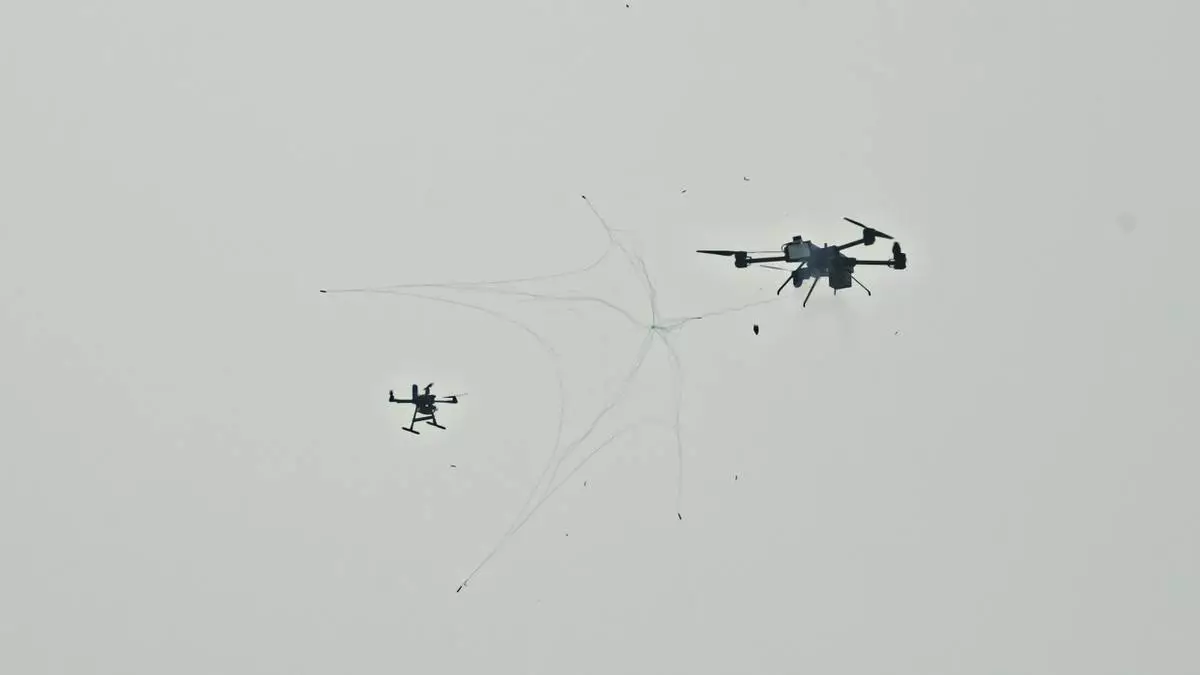
ARGUS A1-Falke® designed to capture, recover, and secure uncooperative drones.
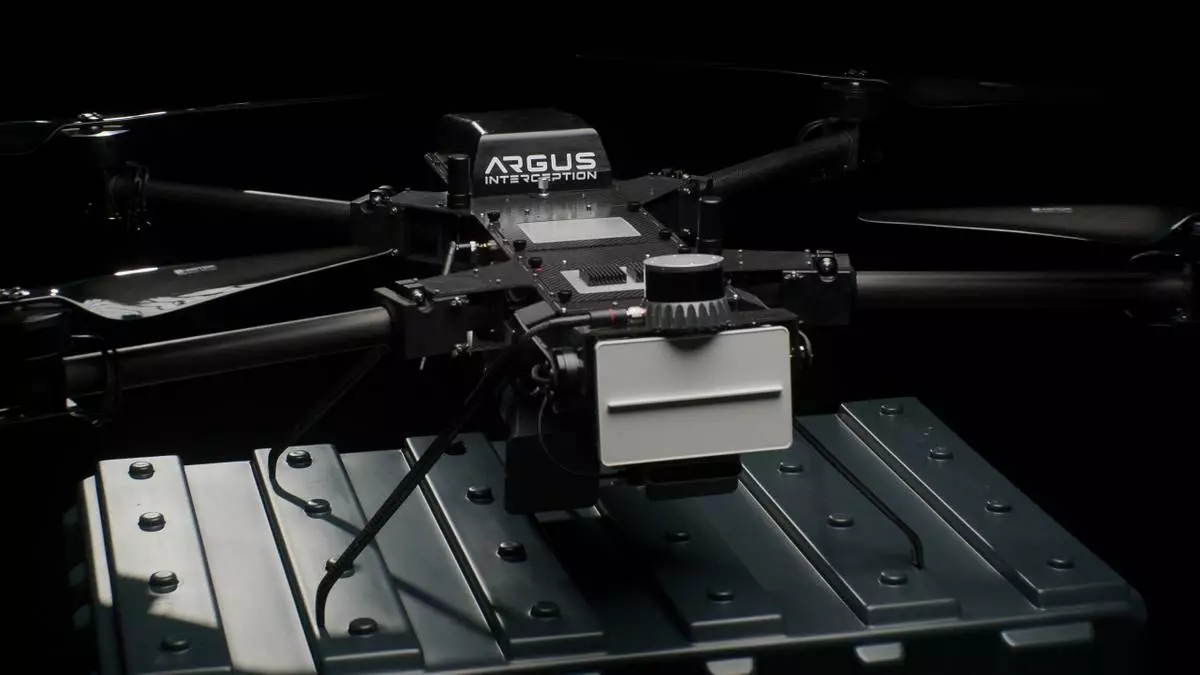
ARGUS counter-UAS interception drone equipped with Ouster digital lidar.
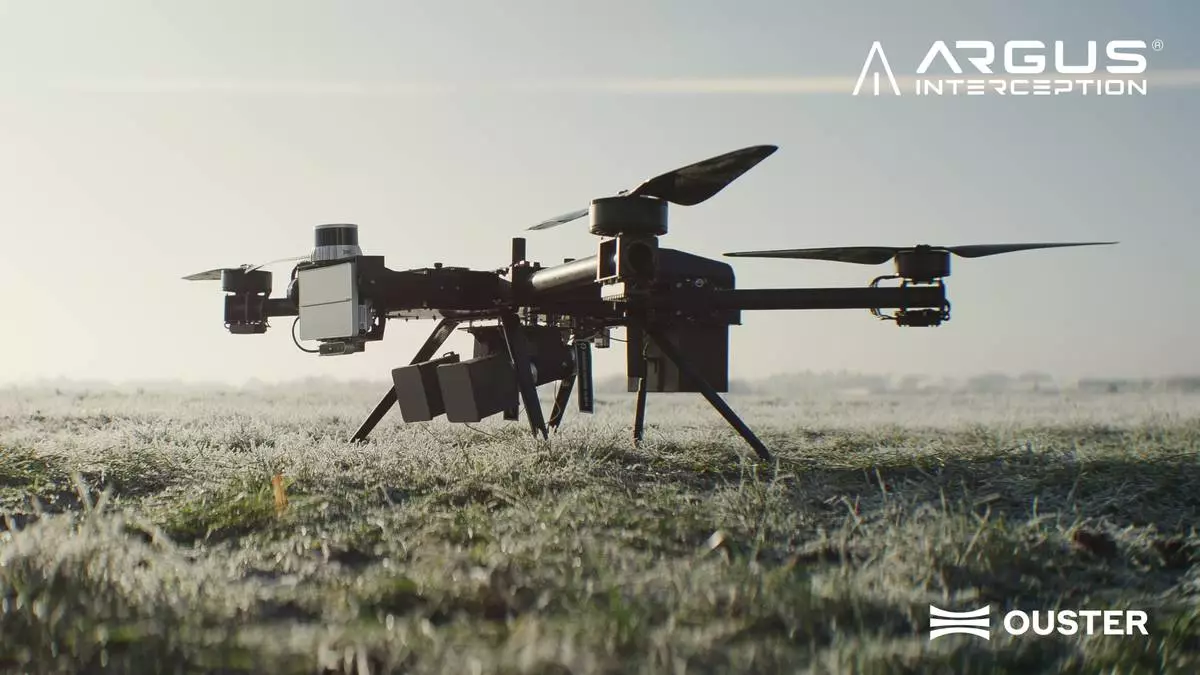
ARGUS A1-Falke® net-based interceptor equipped with Ouster digital lidar.