KYIV, Ukraine (AP) — Russia fired more than 100 drones and two ballistic missiles at Ukraine overnight, the Ukrainian air force said Tuesday, as the country’s foreign ministry noted that Moscow’s recent threat to hit Kyiv especially hard from the air brought nothing new.
Russia on Monday urged foreign citizens, including members of diplomatic missions, to leave the Ukrainian capital as quickly as possible and told residents to steer clear of military and government facilities. It said that “systemic strikes” on Kyiv were being prepared.
Russia's Foreign Minister Sergey Lavrov told U.S. Secretary of State Marco Rubio by phone Monday that the U.S. should evacuate its diplomatic staff from Kyiv, a foreign ministry statement said. Rubio didn’t say whether the State Department would take that step, but expressed concern during a trip to India that the “terrible” war in Ukraine could escalate further.
The Trump administration has tried for more than a year to stop the fighting that broke out after Russia’s February 2022 invasion. But its efforts yielded no significant breakthrough and are now on ice as Washington focuses on the Iran war.
There were no announcements of diplomatic departures from Kyiv. The European Union, French and Polish delegations publicly said that they would not leave.
The level of security threats posed by Russia to Kyiv and other Ukrainian cities “remains the same as in previous years and months,” Ukraine’s foreign ministry said in a statement late Monday.
Russia has continuously launched missile and drone attacks on the capital for more than four years, it pointed out, adding that Ukraine was prepared to assist diplomatic missions seeking additional security measures.
Russia said its biggest missile attack of the year last weekend was a response to Friday’s deadly Ukrainian drone strike on what Moscow said was a college dormitory in Starobilsk, a city in Ukraine’s Russia-occupied Luhansk region.
But the Ukrainian General Staff said that its strike in Starobilsk hit the local headquarters of the Russian military’s special drone unit.
Ukrainian President Volodymyr Zelenskyy noted that sophisticated American-made air defense systems that Ukraine needs to stop Russian ballistic missiles are in short supply due to the Iran war.
“Unfortunately, there has been no progress for a long time with America on expanding the production of anti-ballistic capabilities,” Zelenskyy said on social media late Monday, adding that Kyiv is working with Europe to improve its own anti-ballistic capabilities in sufficient quantities.
He noted that Ukrainian battlefield gains in recent months have enabled it to “stabilize” the 1,250-kilometer (780-mile) front line in eastern and southern Ukraine, suggesting that Kyiv's forces are holding their own against Russia's bigger army.
Russia’s spring offensive is floundering as Ukraine’s midrange drone strikes disrupt its rear supply lines, according to the Institute for the Study of War.
Moscow’s warning of major strikes aims to distract public attention from its “poor battlefield performance” and an economic pinch caused by war costs and international sanctions, the Washington-based think tank said late Monday.
Hatton reported from Lisbon, Portugal. Elise Morton in London contributed.
Follow the AP’s coverage of the war in Ukraine at https://apnews.com/hub/russia-ukraine
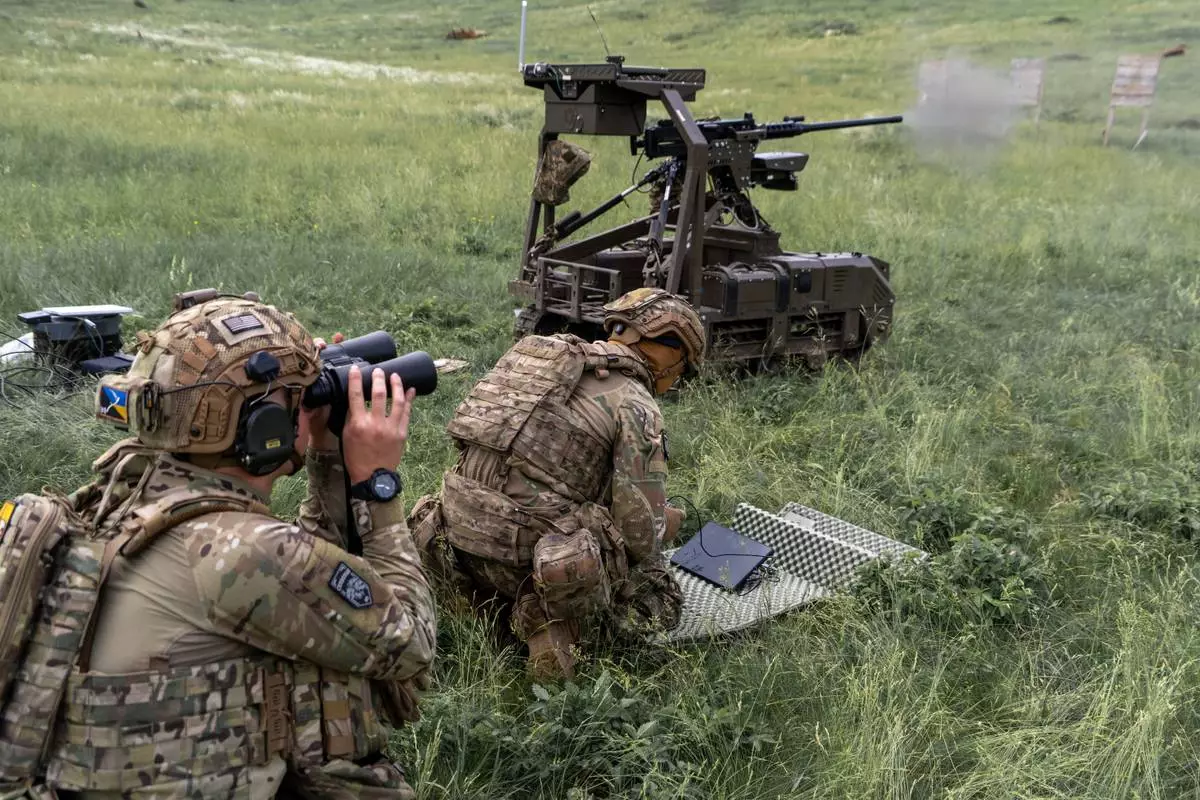
Ukrainian servicemen of the Cerberus Ground Unmanned Systems Company of the 60th Separate Mechanized Brigade, Third Army Corps, conduct a drill with a combat ground drone during a training at the polygon in Kharkiv region, Ukraine, Sunday, May 24, 2026. (AP Photo/Andrii Marienko)

A Ukrainian serviceman of the Cerberus Ground Unmanned Systems Company of the 60th Separate Mechanized Brigade, Third Army Corps, conducts a drill with a combat ground drone during a training at the polygon in Kharkiv region, Ukraine, Sunday, May 24, 2026. (AP Photo/Andrii Marienko)
BUENOS AIRES, Argentina & SANTIAGO, Chile & SINGAPORE--(BUSINESS WIRE)--May 26, 2026--
Alipay+, a leading global payment gateway under Ant International that connects 150 million global merchants and 2 billion consumer accounts, is rolling out cross-border mobile payment services for global travellers in Latin America in collaboration with PVS, a fintech company specialized in developing customized payment solutions in the region.
This press release features multimedia. View the full release here: https://www.businesswire.com/news/home/20260526146133/en/
This partnership enables users of Alipay+’s partner payment apps, including 50 e-wallets and banking apps, and over 10 national QR schemes, to make seamless QR payments at PVS merchants. The collaboration aims to support global travellers, especially those from Asia who are increasingly exploring multiple destinations and planning longer stays in the region, with convenience, transparency, security and zero currency exchange pains. Coverage begins with Chile and Argentina and will expand to other markets.
Through one single integration, businesses large and small can receive payments in local currency with minimal friction from leading wallets and banking apps in Asia and Europe. Merchants will also be able to leverage cross-border digital user engagement and marketing opportunities, as Alipay+ rolls out more AI-powered travel solutions for its ecosystem.
“At PVS, we are proud to partner with Alipay+ to offer Asian and European travellers visiting Latin America a payment experience that is familiar, secure and transparent, through the wallets they already know and trust,” said Lucio Colunga, CEO, PVS. “This partnership also reinforces our commitment to connecting local businesses with international consumers, helping merchants capture new growth opportunities across the region.”
“This landmark partnership builds on Ant International’s technology capabilities, risk solutions and marketing tools with PVS's deep local expertise, fast-growing networks and regulatory know-how,” said Weixiao Jiang, General Manager for North Asia and the Americas, Alipay+, Ant International. "We are deeply committed to expanding public and private partnerships to contribute to the regional digitalization and AI agendas.”
With an average of over 20 million transactions daily, Ant International is a leading global digital payment, digitisation and financial technology provider. It supports financial institutions and merchants of all sizes across Asia, Europe, Middle East and the Americas with a comprehensive suite of solutions, ranging from payment and account services to digitisation, embedded finance, treasury management and other AI-powered financial innovations.
For example, Alipay+ NFC (near-field communication) enables cross-border transactions through its partnership with Mastercard. Starting with AlipayHK, GCash and Kakao Pay, users can now make NFC payments at over 150 million Mastercard-enabled merchants worldwide, including across Argentina, Brazil, Mexico and other Latin American markets.
In Latin America, Ant International is expanding partnerships with more global and local payment service providers, as well as fintech companies and digital platforms to provide cross-border payment and credit services for SMEs and individuals. This includes Ant International's collaboration with R2, a leading embedded lending infrastructure company headquartered in Mexico, to expand SME financing across the region.
In May 2025, Ant International became the Argentina National Football Team’s official sponsor for the Asia region (excluding the Middle East).
About Alipay+
Ant International's Alipay+ is a unified wallet gateway with cross-border payment and digitisation services that help connect global merchants to consumers. Consumers enjoy seamless payments a broad choice of deals and the convenience of digital services using their preferred payment app/e-wallet while travelling abroad. Many small and medium-sized businesses already use Alipay+ digital tools to enhance efficiency and achieve omni-channel growth.

Facilitated by Alipay+ and PVS, travellers from Asia and Europe can now use their familiar home e-wallets and banking apps to make QR code payments at PVS merchants, starting with initial rollouts in Chile and Argentina.