The U.S.-Israel war against Iran since February 28 has killed nearly 2,400 people, injured more than 32,000 others, and displaced 3.2 million people, according to the data released by the World Health Organization (WHO) on Thursday.
The U.S.-Israeli military strikes have not only caused heavy casualties in Iran but have also severely damaged civilian infrastructure.
Volker Turk, the United Nations High Commissioner for Human Rights, recently said that the United States and Israel were increasingly targeting densely populated areas of Iran and attempting to destroy Iran's civilian infrastructure.
Iran's Ministry of Health reported that more than 300 medical facilities have been damaged, making life even harder for residents facing medical emergencies.
Meanwhile, the hidden psychological damage caused by the war also warrants attention. The Iranian Red Crescent Society has established specially trained teams to address the rising number of Post-Traumatic Stress Disorders (PTSD) cases.
According to the WHO data, the U.S.-Israeli military operations have also killed more than 1,700 people and injured nearly 6,000 in Lebanon. In addition, Israel has reported 24 deaths and more than 7,000 injuries.

US-Israeli strikes kill nearly 2,400, displace 3.2 million in Iran: WHO
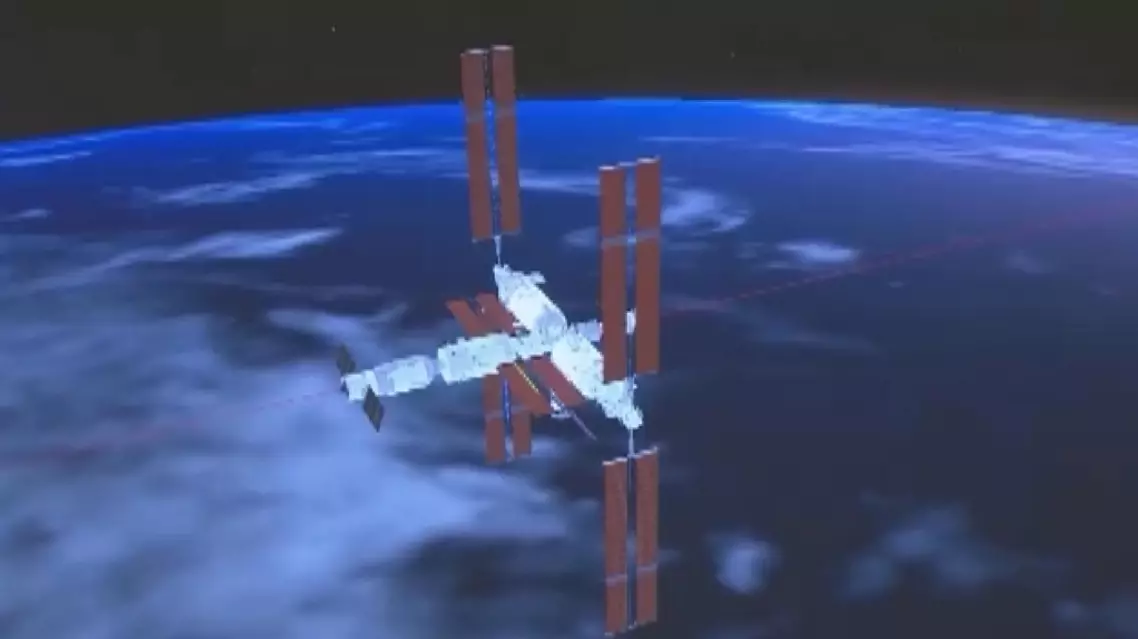
The crew of China's Shenzhou-21 space mission have brought back a trove of valuable scientific samples, including highly anticipated artificial embryo samples, for further research into the effects of the space environment on human development.
The three astronauts of China's Shenzhou-21 mission returned to Earth safely on Friday evening aboard the Shenzhou-22 crewed spaceship, wrapping up a 210-day stay in orbit that set a new record for the longest single-crew mission aboard China's space station.
The trio consisting of Zhang Lu, Wu Fei and Zhang Hongzhang are all in good health, said the China Manned Space Agency (CMSA), noting that the Shenzhou-21 spaceflight mission is a complete success.
At 19:20 (Beijing Time), the Beijing Aerospace Control Center issued a return command via the ground station, and in response the orbital capsule of the Shenzhou-22 spaceship separated from the return capsule.
The brake engine then ignited, and the return capsule separated from the propulsion capsule. The return capsule touched down at 20:11 at the Dongfeng landing site in north China's Inner Mongolia Autonomous Region, the CMSA said, while by 20:59, the Shenzhou-21 crew had all left the return capsule.
Wu Bin, an expert in charge of astronaut training with the China Astronaut Research and Training Center, explained how the three astronauts would be taken care of subsequently, especially how the project on gravity readaptation would be carried out given that they had been in orbit for almost seven months.
"After returning, we began gravity readaptation for the astronauts inside the capsule, including some health checks to facilitate their recovery. Once inside the medical and health supervision vehicle, nearly 30 procedures across nine categories are carried out to help the astronauts readapt to gravity and promote body recovery. In addition, a relatively systematic and comprehensive physical health examination will be conducted. Sampling for microorganisms and others will also be carried out there. The astronauts will have a meal inside the vehicle. Once they are in the appropriate condition, they will be transported via helicopter for further transfer," said Wu. The Shenzhou-21 crew achieved new results in an array of scientific experiments and technological tests covering microgravity fundamental physics, space material science, space life sciences, aerospace medicine and new space technologies.
"This time, the samples brought back by the Shenzhou-22 spaceship include biological materials and experimental samples from the combustion field. They involve a total of 23 scientific experiment projects, weighing approximately 41.14 kilograms -- every kilogram of them is truly precious. What we need to recover on site are the biological samples from nine projects in the life sciences field," said Sun Zhongjian, engineer at the Technology and Engineering Center for Space Utilization under the Chinese Academy of Sciences.
"Among the samples we have brought back this time are the artificial embryo samples that have drawn a great deal of public attention. The astronauts have already recovered biological samples that are active and morphologically stable. After returning to Earth, these samples will undergo further biological analyses. Through these analyses, we will study the effects of the space environment on the post-implantation development of human embryos, which will also lay the groundwork for future research on human embryonic growth in the space environment," Sun said.
Shenzhou-21 astronauts return to Earth with critical scientific samples