The Chengdu 500-kilovolt three-dimensional double-loop power grid was fully completed and put into operation in Sichuan Province on Friday, marking the first such power network in southwest China.
With a total investment of more than 10 billion yuan (about 1.46 billion U.S. dollars), the grid consists of 15 500-kilovolt substations. This upgrade has transformed Chengdu's power network from a single-line structure into a double-loop system that enables both independent operation and mutual support.
When a particular node on a transmission channel becomes congested or fails, electricity can be flexibly rerouted through the loop network, creating a more optimized and secure power grid.
The grid will also be connected to the clean energy base in western Sichuan via the Sichuan-Chongqing ultra-high-voltage alternating current (UHVAC) transmission line, with an aim to enhance power supply capacity for downtown Chengdu and surrounding areas.
"The three-dimensional double-loop grid can efficiently bring in clean electricity from western Sichuan and distribute it flexibly through the 15 substations. With its operation, the main grid's carrying capacity could be increased to more than 25 million kilowatts, providing reliable power support for the high-quality development of this megacity and the construction of the Chengdu-Chongqing economic circle," said Zhou Jian, deputy director of the electric power dispatching and control center of State Grid Sichuan Electric Power Company.
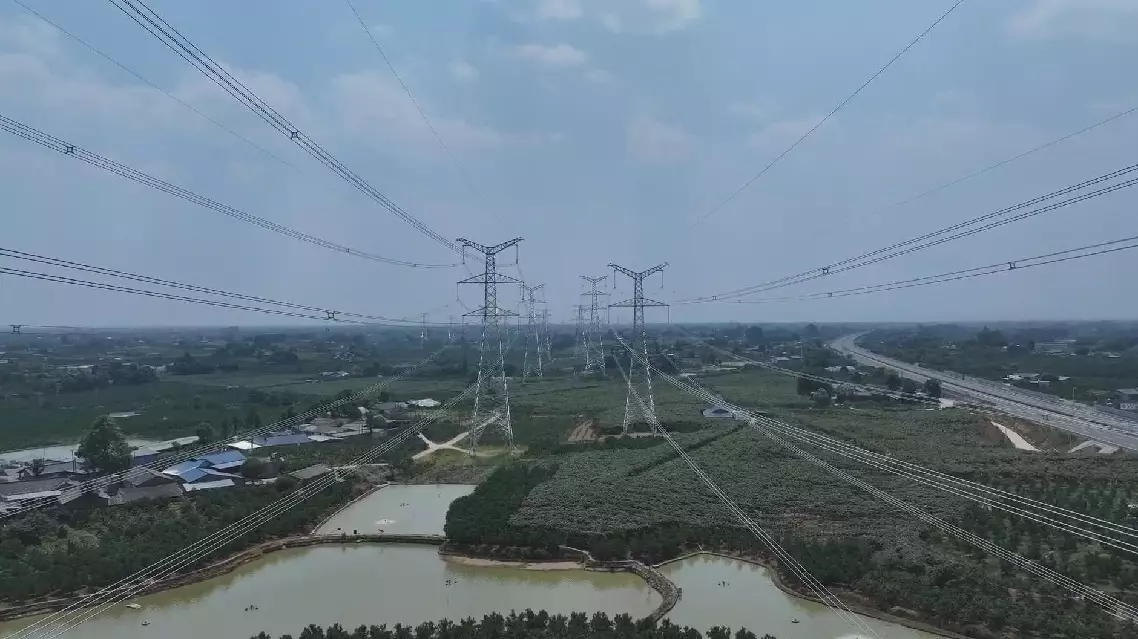
Southwest China's 1st 500-kV three-dimensional double-loop grid operational
Saudi Arabia and Pakistan have reaffirmed that they will not seek normalization of ties with Israel, rejecting U.S. President Donald Trump's call for the two countries to join the Abraham Accords.
Saudi Arabia's position on the Palestinian issue remains unchanged, a Saudi source told Al Arabiya TV on Monday.
The source affirmed the need for "an irreversible pathway to a Palestinian state".
The remarks came after U.S. President Donald Trump urged Muslim-majority and regional countries to normalize relations with Israel and join the Abraham Accords before the U.S. reaches a peace agreement with Iran.
Saudi Arabia has repeatedly said it would not normalize relations with Israel without the establishment of a Palestinian state.
Pakistani Defense Minister Khawaja Asif said on Tuesday that Pakistan will not join any agreement to normalize ties with Israel, adding that the country will not accept any deal that "conflicts with its fundamental ideologies".
Trump on Monday urged Saudi Arabia, Qatar, Egypt, Jordan, Turkey and Pakistan -- countries involved in mediating U.S.-Iran talks -- to immediately join the Abraham Accords, warning that otherwise they should not participate in the mediation.
He added that if a U.S.-Iran deal is reached, Iran should also join the agreement.
The Abraham Accords, brokered by the United States in 2020 during Trump's first term, were established between the Israeli government and Arab countries including the United Arab Emirates, Bahrain, Sudan and Morocco, aimed at rapidly advancing the normalization of relations between Israel and Arab countries.
Before the outbreak of the latest round of Israeli-Palestinian conflict in October 2023, the United States had been pushing for normalization between Saudi Arabia and Israel.
After the conflict erupted, Saudi Arabia suspended normalization talks with Israel.

Saudi Arabia, Pakistan reject Trump's Abraham Accords demand