Skip to Content Facebook Feature Image

Pope amplifies criticism of Iran war and says 'God does not bless any conflict'

News

Pope amplifies criticism of Iran war and says 'God does not bless any conflict'
News

News

Pope amplifies criticism of Iran war and says 'God does not bless any conflict'

2026-04-11 02:08 Last Updated At:02:20

ROME (AP) — Pope Leo XIV amplified his condemnation of the U.S.-Israeli war with Iran on Friday, saying that “God does not bless any conflict” and certainly doesn’t side with those who drop bombs.

Leo spoke during a gathering of top bishops of the Chaldean Catholic Church in Iraq, an Eastern Rite Catholic church whose clerics are in Rome to elect a new patriarch.

Leo said they were signs of hope “in a world marked by senseless and inhuman violence," especially in the lands of early Christianity that have been "desecrated by the blasphemy of war and the brutality of business, with no regard for people’s lives.”

He told them that no cause can justify the spilling of innocent blood, and he urged them “to proclaim clearly that God does not bless any conflict; to cry out to the world that whoever is a disciple of Christ, the Prince of Peace, never stands on the side of those who yesterday wielded the sword and today drop bombs.”

To drive the message home, the Vatican posted the quote on Leo's official @Pontifex handle on X.

Leaders have used religion to justify their actions in the war. U.S. officials and especially Defense Secretary Pete Hegseth have invoked their Christian faith to justify the conflict and cast the U.S. as a Christian nation trying to vanquish its foes.

After issuing muted appeals for peace and dialogue during the first weeks of the conflict, Leo stepped up his criticism of the Trump administration starting on Palm Sunday, when he said God doesn’t listen to the prayers of those who make war.

This week, he said President Donald Trump’s threat to annihilate Iranian civilization was “truly unacceptable” and called for dialogue to prevail.

The Vatican is particularly concerned about the spillover of Israel's war against Hezbollah in Lebanon, given the plight of Christian communities in the south.

Leo on Saturday will preside over a special vigil prayer for peace in St. Peter's Basilica. The vigil was organized before the announcement of high-level talks between the U.S. and Iran, which are expected to start Saturday in Pakistan.

Despite the pope's increasingly critical tone, both the Holy See and the U.S. government appeared eager Friday to tamp down suggestions of frayed relations. Those suggestions were fueled this week by a news report of an allegedly contentious meeting in January between the Pentagon and the Vatican’s outgoing ambassador to Washington, Cardinal Christophe Pierre.

The Jan. 22 meeting occurred well before the war, but after the Chicago-born Leo had issued a strong but veiled criticism of U.S. military intervention in a major foreign policy address to diplomats accredited to the Holy See.

In a rare official comment on a media report, the Vatican on Friday said Pierre’s attendance at the Pentagon meeting was part of his “regular duties and provided an opportunity to exchange views on matters of mutual interest.” The suggestion that the meeting was acrimonious “does not correspond to the truth in any way,” the statement said.

The U.S. Embassy to the Holy See quickly thanked the Vatican for its statement.

The Chaldean Catholic Church represents more than a million Aramaic-speaking Christians who are primarily from Iraq. Its top clerics are electing a patriarch to replace Iraqi Cardinal Louis Sako, 76, who had led the church since 2013.

Leo on March 11 announced Sako’s retirement, on the same day he accepted the resignation of a U.S.-based Chaldean bishop, Bishop Emanuel Shaleta. Shaleta had pleaded not guilty a day earlier to 16 felony counts alleging he embezzled $270,000 from his California parish.

In his comments to the Chaldean bishops Friday, Leo made several references to the challenges they have faced in recent years.

He thanked Sako for his “ significant contributions ” but said now was a time for “spiritual renewal,” with newfound adherence to faith, preservation of tradition and observation of obedience and chastity.

“I urge you to be attentive and transparent in the administration of goods, sober, measured, and responsible in the use of mass media, and prudent in public statements, so that every word and action may contribute to building up — and not to harming — ecclesial communion and the church’s witness,” he said.

Associated Press religion coverage receives support through the AP’s collaboration with The Conversation US, with funding from Lilly Endowment Inc. The AP is solely responsible for this content.
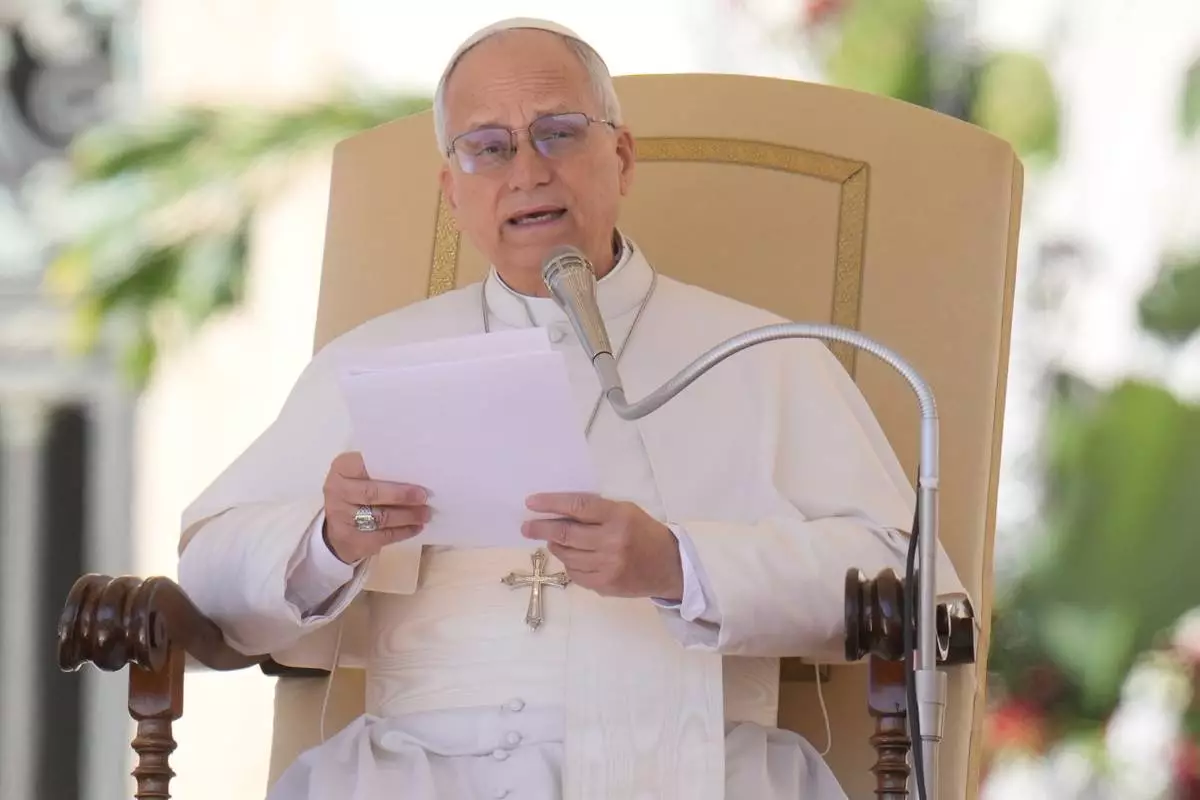
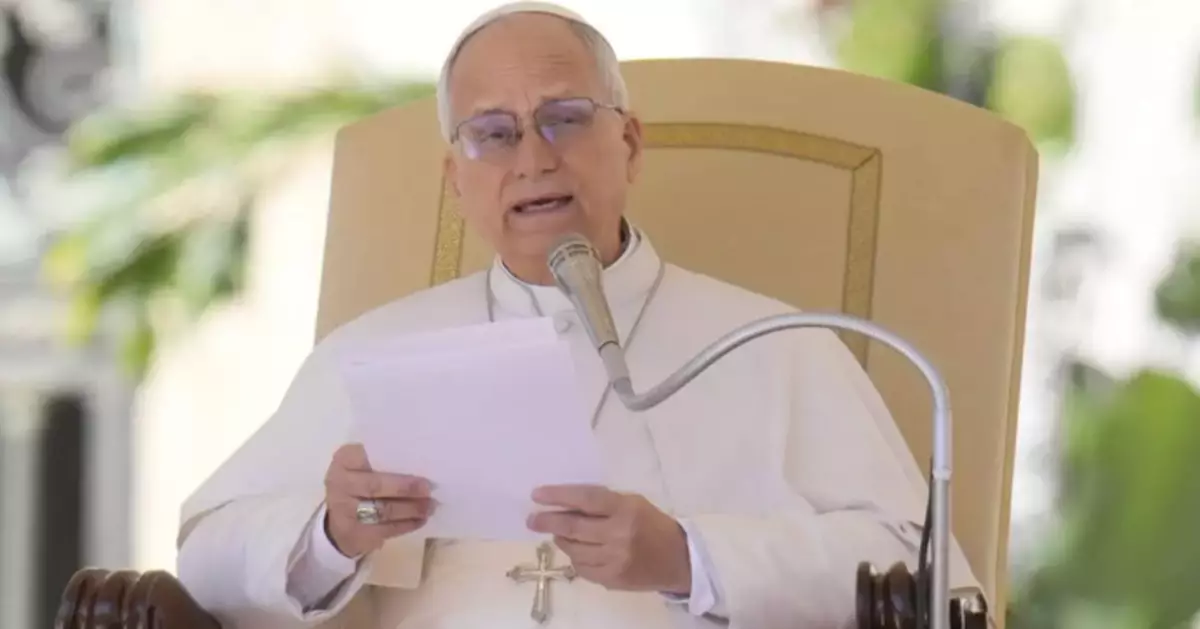
Pope Leo XIV delivers his speech during his weekly general audience in St. Peter's Square, at the Vatican, Wednesday, April 8, 2026. (AP Photo/Gregorio Borgia)
Pope Leo XIV delivers his speech during his weekly general audience in St. Peter's Square, at the Vatican, Wednesday, April 8, 2026. (AP Photo/Gregorio Borgia)
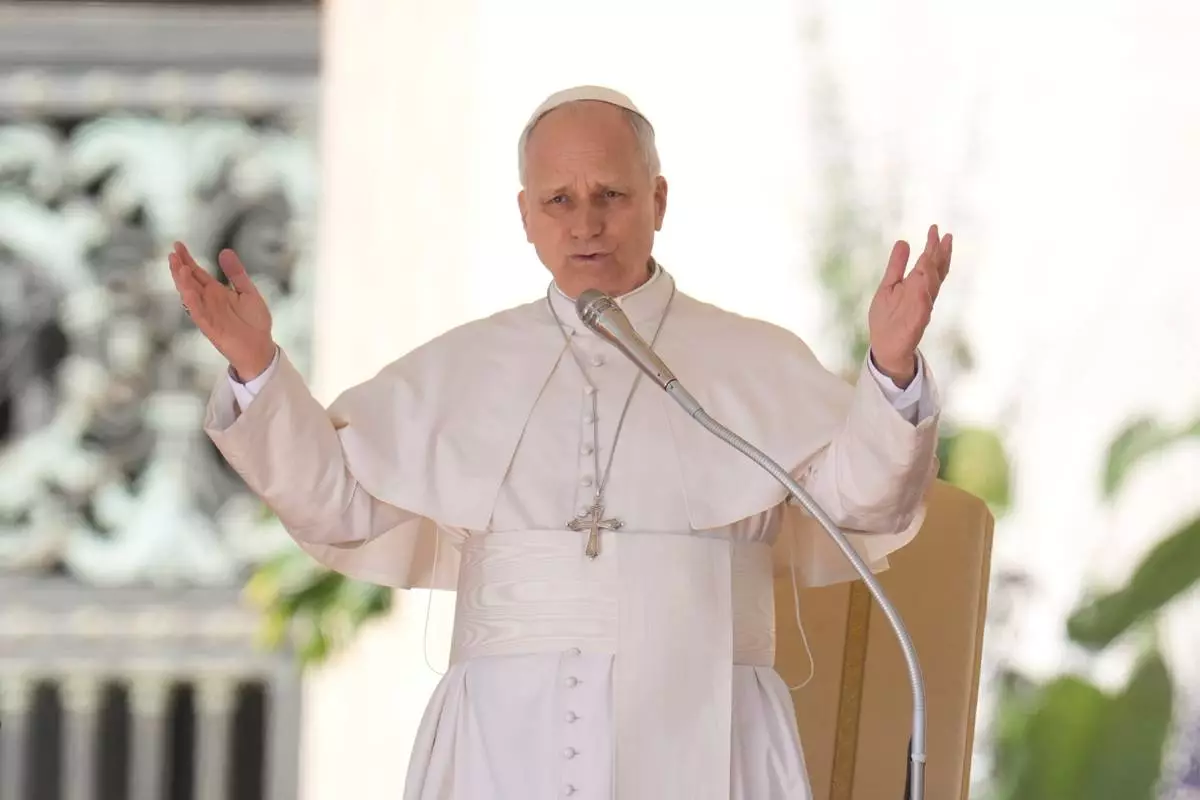
Pope Leo XIV blesses faithful as he starts his weekly general audience in St. Peter's Square, at the Vatican, Wednesday, April 8, 2026. (AP Photo/Gregorio Borgia)
Pope Leo XIV blesses faithful as he starts his weekly general audience in St. Peter's Square, at the Vatican, Wednesday, April 8, 2026. (AP Photo/Gregorio Borgia)
WASHINGTON (AP) — Since the ceasefire between Iran and the U.S. was announced, leaders in President Donald Trump's administration have been quick to say Iranian military and arms capacity have been all but wiped out during weeks of fighting.

But there is also an acknowledgment that Tehran retains some capabilities, whether to strike back or defend itself.

Gen. Dan Caine, chairman of the Joint Chiefs of Staff, this week said the U.S. military has hit more than 13,000 targets. He listed high percentages for attacks or destruction to Iran's air defenses, navy and weapons factories.

However, the totals stop short of Iran’s military capabilities being “decimated” as the Republican president has asserted.

Independent data from Armed Conflict Location & Event Data, a U.S.-based group that tracks conflicts around the world, shows Iranian strikes persisted at a relatively steady and uninterrupted pace since the war began Feb. 28 through Wednesday.

Here's a look at what the U.S. says has been targeted, has been degraded or remains from Iran, by the numbers:

Caine told reporters on Wednesday at the Pentagon that many of Iran's air defenses have been destroyed with the U.S. striking more than 1,500 air defense targets, more than 450 ballistic missile storage facilities and 800 one-way attack drone storage facilities. He said, “All of these systems are gone.”

Defense Secretary Pete Hegseth similarly claimed that “Iran no longer has an air defense” and that “we own their skies” before conceding soon afterward that Iran “can still shoot — we know that.”

Hegseth later elaborated, saying that while the Iranians may “have a system here or there,” they no longer had an air defense “system that’s capable of defending their skies.”

Neither Caine nor Hegseth said what the remaining 20% of Iran’s air defenses looked like or which parts of the country have the ability to carry out the sporadic fire they described.

Caine offered no new details about what kind of weapon the Iranians used to shoot down a U.S. F-15E Strike Eagle last week. It was the first time an American military jet was shot down during the war, showing Tehran’s continued ability to hit back despite assertions from the Trump administration.

Trump described it on Monday as a “handheld shoulder missile, heat-seeking missile.”

Caine also told reporters that the military has sunk much of the Iranian fleet and 150 Iranian ships “are at the bottom of the ocean."

White House press secretary Karoline Leavitt went further, telling reporters Wednesday that the Iranian navy was “completely annihilated.”

However, Caine also noted that only half the paramilitary Revolutionary Guard’s small attack boats — ships the government used to swarm and harass warships and merchants in the Strait of Hormuz — have been sunk.

Caine also said that after more than 700 strikes, the military believed it has destroyed more than 95% of Iran's naval mines.

Since the U.S. has not said how large Iran's stockpile was before the war, it's unknown how many naval mines make up the remaining 5%. Semiofficial news agencies in Iran published a chart Thursday suggesting the Revolutionary Guard put sea mines into the Strait of Hormuz, a crucial trade route for oil, during the war.

The message is likely designed to be a pressure tactic as Iran, Israel and the United States head into negotiations this weekend in Pakistan. Independent analysts say they have seen no change in merchant traffic through the strait since the tenuous ceasefire began this week.

Caine said Wednesday that the military “destroyed Iran’s defense industrial base” while pointing to the fact that the U.S. and allies attacked “approximately 90% of their weapons factories.”

He also said, “nearly 80% of Iran’s nuclear industrial base was hit, further degrading their attempts to attain a nuclear weapon.”

While he noted that Iran was no longer able to produce certain components like solid rocket motors, he stopped short of saying that Iran could not eventually rebuild or get weapons in other ways or that the factories attacked had actually been destroyed or rendered unusable.

Trump acknowledged this possibility when he warned countries against arming Iran.

“A Country supplying Military Weapons to Iran will be immediately tariffed, on any and all goods sold to the United States of America, 50%, effective immediately,” Trump said in a social media post on Wednesday.

Meanwhile, Israel’s military pointed to how many drones or missiles it has been able to stop from landing. It said it had an interception rate of more than 90% through its aerial defense systems.

Over the decades, Israel has developed a sophisticated system capable of detecting incoming fire and deploying only if a projectile is headed toward a population center or sensitive military or civilian infrastructure.

Israeli leaders say the system isn’t 100% guaranteed but credit it with preventing serious damage and countless casualties.

Associated Press writer Sam Mednick in Tel Aviv, Israel, contributed to this report.

Workers remove debris at Tehran's Sharif University of Technology complex that Iranian authorities say was hit early Monday by a U.S.-Israeli strike, in Tehran, Iran, Monday, April 6, 2026. (AP Photo/Francisco Seco)

Workers remove debris at Tehran's Sharif University of Technology complex that Iranian authorities say was hit early Monday by a U.S.-Israeli strike, in Tehran, Iran, Monday, April 6, 2026. (AP Photo/Francisco Seco)

Recommended Articles