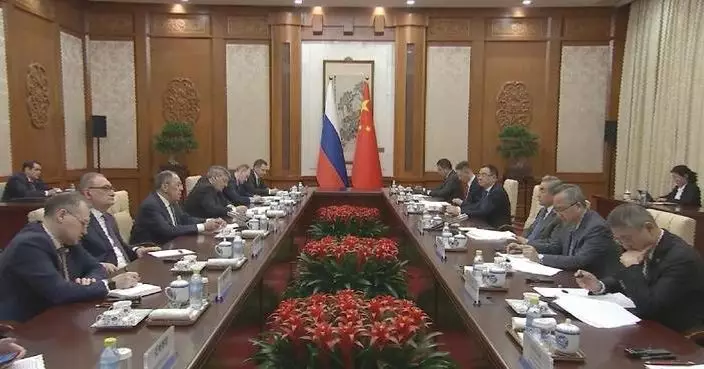
The newly launched China (Inner Mongolia) Pilot Free Trade Zone (FTZ) will combine the region's abundant wind, solar, and coal resources with its industrial advantages and institutional innovation to build a modern industrial system with local characteristics, an official said on Friday.
China launched the pilot FTZ on Friday, aiming to develop the region into a high-level FTZ within three to five years, featuring streamlined investment and trade, a robust innovation ecosystem, competitive industrial clusters, and vibrant international exchanges.
According to an overall plan, the pilot FTZ will support the full utilization of Inner Mongolia's existing strengths to promote the transformation and upgrading of traditional sectors such as dairy and grassland industries, said assistant minister of commerce Yuan Xiaoming at a press conference in Beijing.
The FTZ will also encourage innovation-driven growth in strategic emerging sectors including new energy, new materials, aerospace and aviation, and biomedicine, the official said.
"For example, Inner Mongolia accounts for 57 percent of China's exploitable wind resources and 21 percent of its solar resources. Building on this, we need to further improve grid absorption capacity, unlock the potential of green electricity utilization, and refine the electricity market standards system. The overall plan proposes measures such as improving green power consumption policies, carrying out green electricity certificate trading, and improving equipment recycling standards to boost the development capacity of the FTZ's energy sector," Yuan said.
The plan also sets tasks for building edge computing centers, developing and applying large language models, and expanding application scenarios for green computing power to help the Inner Mongolia FTZ provide fast and efficient computing services to a wider region.
In the meantime, the FTZ will actively explore new driving forces such as bio-manufacturing to develop new quality productive forces adapted to local conditions, according to the official.
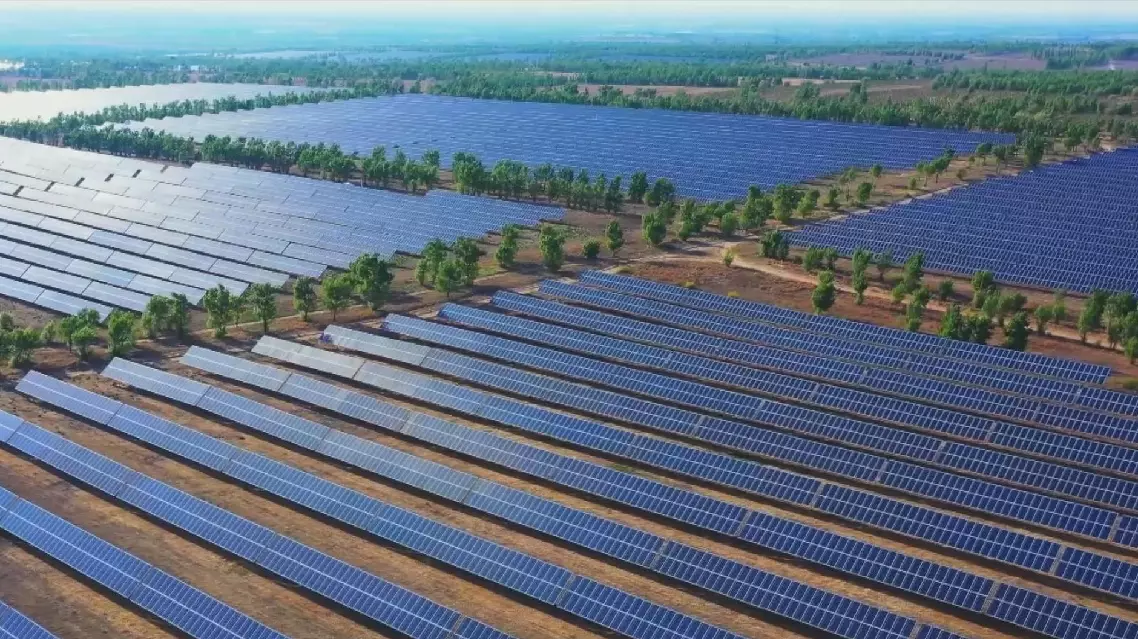
Inner Mongolia FTZ to leverage its energy resources for industrial development: official
The International Monetary Fund (IMF) has lowered its global economic growth forecasts for 2026 to 3.1 percent in the World Economic Outlook (WEO) report published on Tuesday, while keeping its projection for 2027 at 3.2 percent.
This marks a deceleration from the estimated 3.4 percent growth achieved in 2025. Before the outbreak of the Middle East conflict, the bottom-up forecasts for global growth would have been 3.4 percent in 2026 and 3.2 percent in 2027.
The forecast incorporates the impact of the war and assumes that it will be limited in duration, intensity and scope, with disruptions fading by mid-2026.
Under the reference forecast, global headline inflation is expected to increase to 4.4 percent in 2026 and decline to 3.7 percent in 2027.
If the conflict and the ensuing spike in oil prices last longer, global economic growth in 2026 will fall to 2.5 percent, while global inflation will climb to 5.4 percent, according to the report.
In extreme cases, global economic growth in 2026 could drop to two percent, the report warned.
To be specific, the U.S. economy is projected to grow by 2.3 percent in 2026 and 2.1 percent in 2027, although higher trade barriers introduced since April 2025 are expected to continue to weigh on activity.
In the euro area, growth is projected to decline from 1.4 percent in 2025 to 1.1 percent in 2026 before edging up to 1.2 percent in 2027. The forecasts for 2026 and 2027 are each 0.2 percentage point lower than those compared in the January 2026 WEO Update.
The 2026 growth forecast for emerging market and developing economies is revised down by 0.3 percentage point, to 3.9 percent, while the outlook for advanced economies remains broadly unchanged. With risks still tilted to the downside since the January 2026 WEO Update, the IMF suggested a comprehensive policy package combining domestic measures with coordinated international actions to strengthen resilience and foster adaptability.
It also stated in the report that "trade restrictions play a limited role in correcting imbalances but can worsen output," and urged countries to cooperate and take coordinated actions to restore stability to international economic relations.
IMF lowers global growth forecast for 2026 to 3.1 pct