As spring reaches its peak, the city of Heze in east China's Shandong Province is awash in the vibrant colors of blooming peonies, drawing crowds of visitors and generating billions in revenue for the local economy.
Local authorities have introduced special trains and bus routes to accommodate the surge of visitors eager to experience the spring spectacle, with the flowering season expected to last until late April.
The "Peony Express" train, designated G2097, departs from Qingdao City, also in Shandong, and arrives in Heze after a journey of just over three hours.
"We had planned this trip for a long time. It turned out we arrived right on time for the Peony Festival and also caught this special train. We feel very lucky," said a passenger surnamed Wang.
Inside the train, passengers can admire peony-themed decorations, learn about the flower's history, and participate in activities such as intangible cultural heritage paper-cutting, dough figurine making, and tasting peony-flavored pastries.
"We carefully organized the G2097 peony sightseeing train based on the train schedule and passenger flow patterns. We also introduced convenience measures, passengers holding train tickets from any station in Shandong Province to Heze East or Heze Railway Station within two days can enjoy discounted admission to designated peony gardens," said Xue Ping, Deputy Station Master of Heze East Railway Station.
Upon arrival, visitors can transfer to designated "peony bus routes" that connect the railway station directly to major peony gardens, ensuring a seamless travel experience.
"To handle the surging passenger flow during the bloom season, we have added nearly 700 extra bus trips and opened six peony sightseeing routes, including two free ones. These services will run until the end of the flowering season," said Ding Suimin, deputy general manager of Heze Public Transport Group.
One of the most popular destinations is the Caozhou Peony Garden, the city's main peony viewing area. Heze boasts more than 1,300 peony varieties across nine color families and 10 flower types. Particularly notable is a cluster of nearly 1,000 "space peonies," grown from seeds that traveled aboard the Shenzhou-3 spacecraft in 2002. After more than two decades of cultivation, these flowers have grown stronger, with visibly more vibrant petals.
Beyond flower viewing, tourists can enjoy local opera performances, hear legends of peony fairies, and appreciate Gongbi-style paintings of peonies. The city has developed a full industrial chain around peonies, including peony oil, peony facial masks, and creative cultural products such as the "Dandanzai" mascot.
According to the Heze Municipal Bureau of Culture and Tourism, from April 1 to 9, the city's five major peony scenic spots received 404,000 visitors, a year-on-year increase of 26.9 percent.
The peony industry has become a pillar of Heze's economy. The city is home to more than 120 peony-related enterprises, producing over 260 products. Last year, the industry generated more than 13 billion yuan (about 1.9 billion U.S. dollars) in output value and employed 500,000 people. During the 2025 peony season, Heze welcomed over 9.9 million tourists, a 14.8 percent year-on-year increase.
The peony blooming season in Heze is expected to last until late April. With convenient transport options and a rich cultural experience, the city invites visitors to witness the splendor of spring and the blossoming of a thriving floral economy.
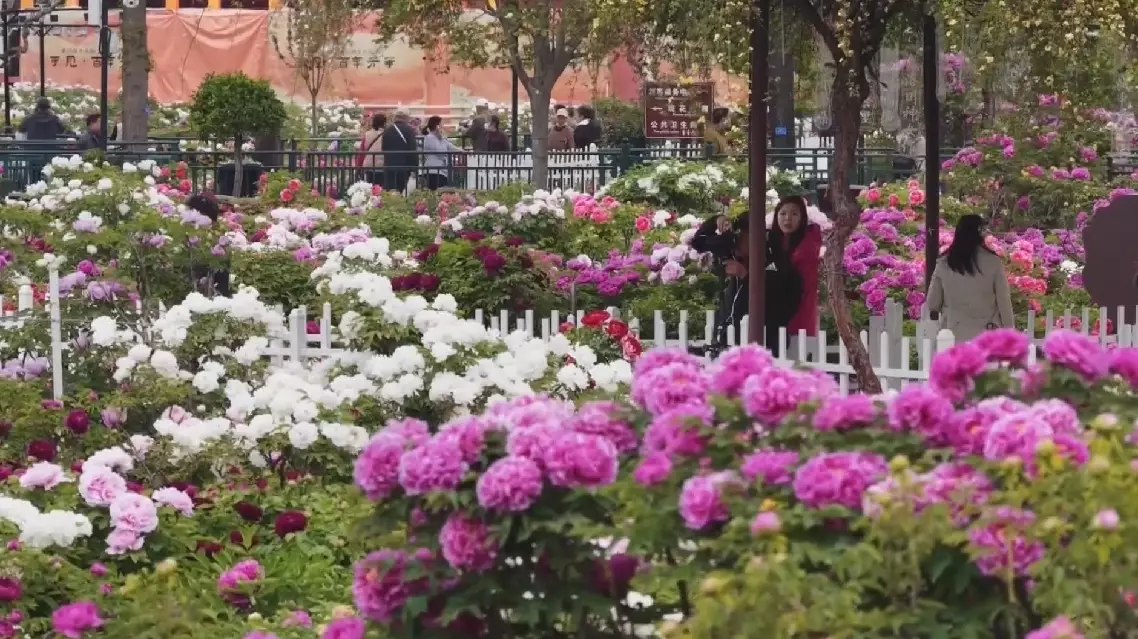
Peony bloom draws millions to China's Heze via "Peony Express", boosting local economy