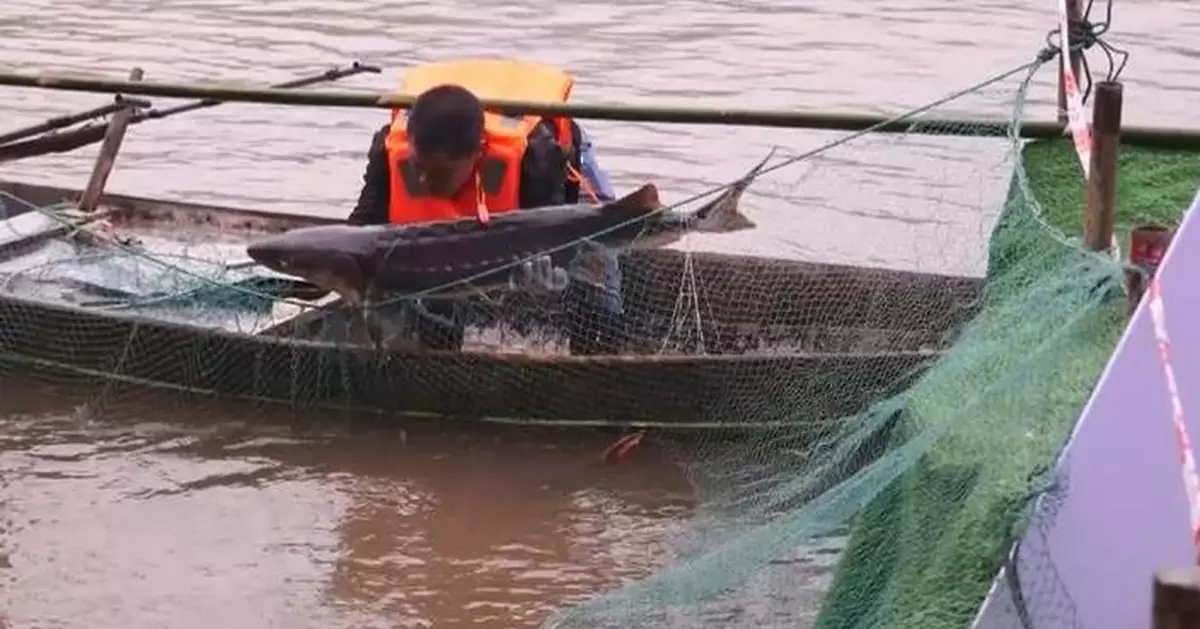
In a significant development for the conservation of the critically endangered fish species of Chinese sturgeon, fertilized eggs and newly hatched larvae from artificially conserved broodstock released in late March have been successfully spotted in regular monitoring conducted in historical spawning grounds in the upper reaches of the Yangtze River and the lower tributary Jinsha River, the Ministry of Agriculture and Rural Affairs announced on Saturday.
This marks the first time that artificially released Chinese sturgeon have achieved natural reproduction in these vital historical spawning areas, offering a promising path for the rare species' recovery.
Concurrently, 38 Chinese sturgeon released in previous years, including three that have reached sexual maturity, were also spotted in monitoring in these historical spawning grounds.
In a related development, researchers have initiated a new natural breeding experiment in the Chishui River section of Chishui City, southwest China's Guizhou Province. Twenty pairs of broodstock, mature male and female sturgeon capable of reproduction, have been released into pre-established natural spawning grounds.
The Chinese sturgeon, a national first-class protected animal and a flagship species of the Yangtze River ecosystem, was declared extinct in the wild in 2022 due to habitat destruction and overfishing.
However, in 2025, researchers achieved a major breakthrough in Guizhou's Chishui River -- an undammed tributary of the upper Yangtze River -- by successfully facilitating natural reproduction from artificially released broodstock for the first time.
So far this year, efforts continue to advance the natural breeding experiment to rescue this precious species. The release of 20 pairs of adult sturgeons marked yet another attempt following the successful trial in 2025, primarily aimed at observing whether Chinese sturgeon can successfully spawn and survive in a natural environment. The number of broodstock released earlier this year has doubled compared to last year.
"The Chinese sturgeon is a flagship species of the Yangtze River ecosystem. The successful achievement in realizing natural reproduction of Chinese sturgeon in the wild signifies continuous improvement of the ecological environment in the Chishui River. It also provides crucial support for the reconstruction of wild populations of Chinese sturgeon and the protection of biodiversity in the upper reaches of the Yangtze River," said Liu Fei, an associate researcher with the Institute of Hydrobiology, the Chinese Academy of Sciences.
Researchers say they believe that the continuous advancement of Chinese sturgeon natural breeding experiments in the Chishui River is expected to bring a turning point for the rescue efforts of this rare species.
"We will continue to do a good job in subsequent monitoring, improve spawning ground modification and hydrological regulation, and integrate multiple forces to advance the Chinese sturgeon rescue operation, in striving to achieve stable recovery of the Chinese sturgeon's natural population in the Yangtze River basin as soon as possible," Liu said.
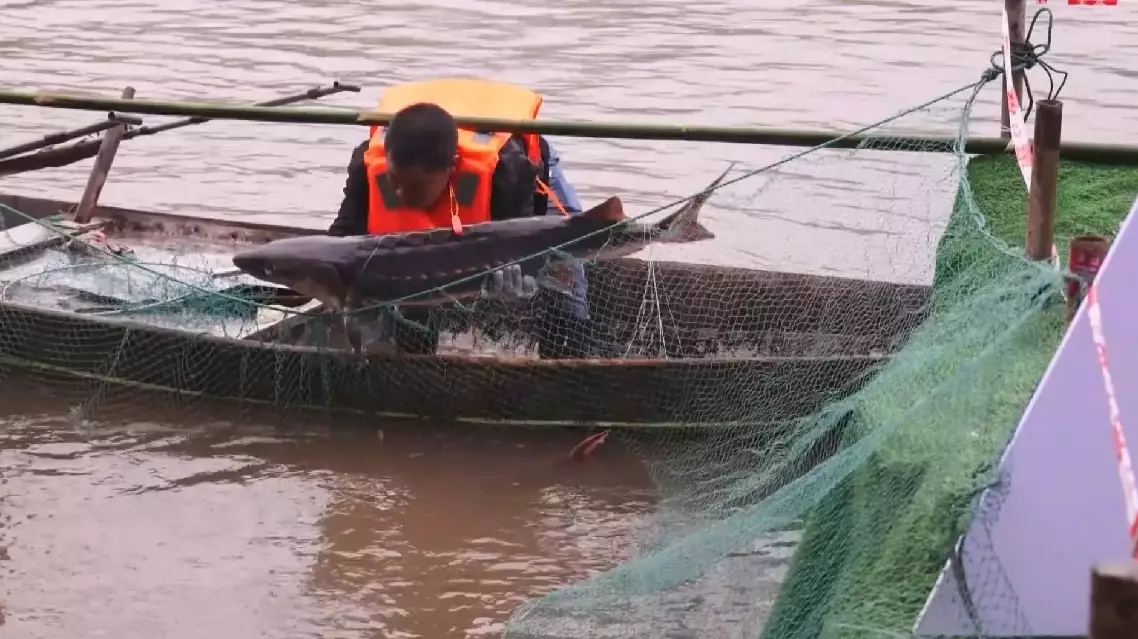
Fertilized eggs, larvae of rare Chinese sturgeon spotted in historical spawning grounds