U.S. stocks and global gold prices plummeted while crude futures surged after U.S. President Donald Trump announced a naval blockade of the Strait of Hormuz on Sunday.
Trump said in a post on Truth Social that the U.S. Navy would begin blocking ships trying to enter or leave the Strait of Hormuz, after peace talks with Iran failed to produce a deal.
U.S. stocks market reacted strongly to his announcement, with futures of Dow Jones Industrial Average, S&P 500 and Nasdaq Composite Index nosediving by over 1 percent.
Meanwhile, global gold prices also tumbled. June gold futures on the New York Mercantile Exchange fell below 4,700 U.S. dollars per ounce, with losses at one point exceeding 2 percent.
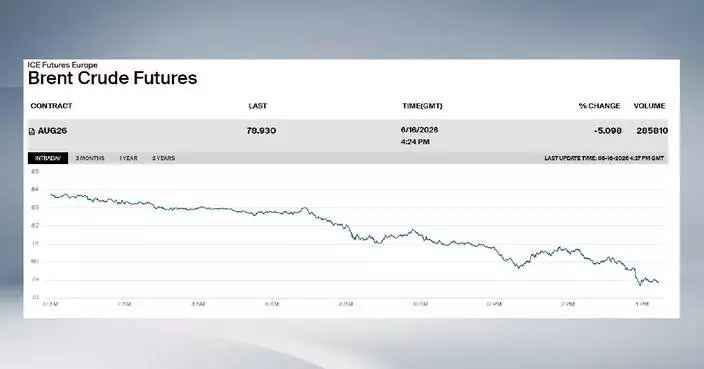
The oil prices, on the contrary, rose significantly. As of 6:50 a.m. Beijing time on Monday, the West Texas Intermediate futures for May delivery soared 8.13 percent to settle at 104.42 U.S. dollars a barrel on the New York Mercantile Exchange. Brent crude futures for June delivery increased 7.52 percent to settle at 102.36 U.S. dollars a barrel on the London ICE Futures Exchange.
U.S. media reported that the failure of Iran-U.S. peace talks concerns the market, as the war could last longer than expected, which will further push up the oil prices and put more pressure on global economy.

US stocks, gold prices plunge as crude futures surge after Trump announces blockade of Strait of Hormuz

US stocks, gold prices plunge as crude futures surge after Trump announces blockade of Strait of Hormuz
China sees improving investment structure in the first five months of this year, with infrastructure deployment being accelerated and investment in emerging industries maintaining relatively rapid growth, National Bureau of Statistics spokesman Fu Linghui said at a press conference Tuesday in Beijing.
Driven by China's construction of a comprehensive, multi‑dimensional transportation system, investment in transport, storage and postal services rose 7.1 percent year on year in the January–May period.
Within that category, investment in water transport and air transport increased 23.3 percent and 21.7 percent, respectively.
In terms of digital infrastructure investment, the construction of computing-power networks and next-generation communications facilities progressed in an orderly manner, with investment in the information transmission sector up 30.4 percent year on year.
From January to May, investment in intellectual property products increased 9.3 percent year on year, contributing 1.1 percentage points to overall investment growth.
Rapid advances in artificial intelligence and new energy also drove strong investment growth in related industries. Investment in integrated-circuit manufacturing, lithium-ion battery manufacturing, and information services all registered relatively fast increases.
"Looking ahead, investment headroom in China remains broad. Advancing new urbanization, rural revitalization, the development of new quality productive forces, and the upgrading of public services all require continued investment support, laying a solid foundation for high-quality development," said the spokesman.
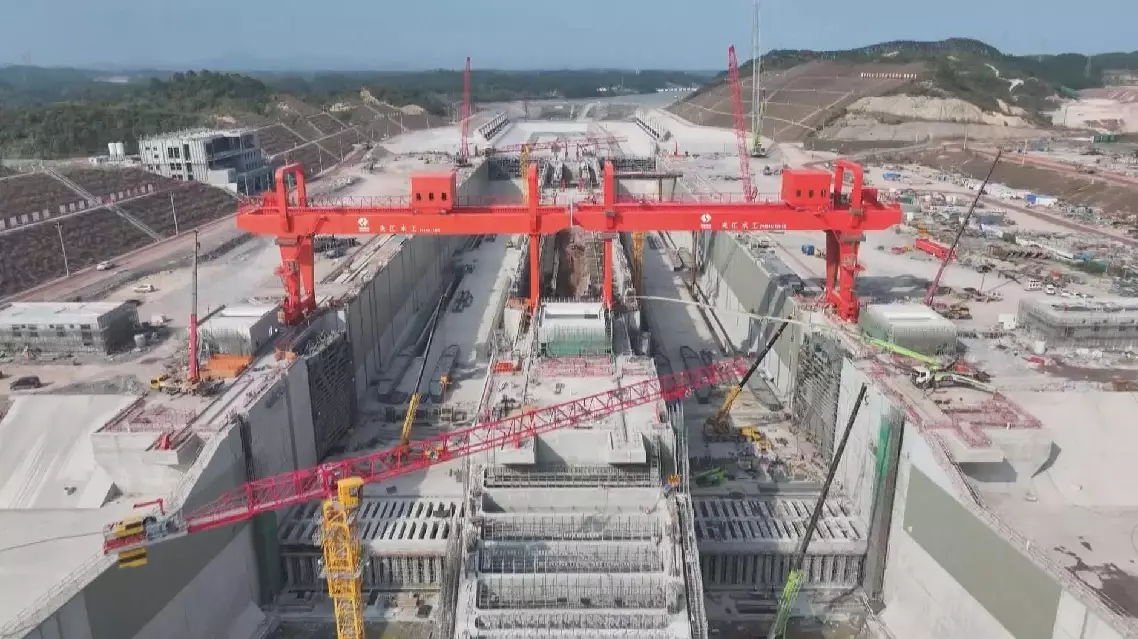
China sees improving investment structure in 1st 5 months