The United States and Iran launched a new round of strategic maneuvering over the Strait of Hormuz, a vital chokepoint for the global energy market, on Sunday after peace talks between the two sides in Islamabad, Pakistan ended without a deal.
A few hours after U.S.-Iran talks concluded without reaching an agreement on Sunday, U.S. President Donald Trump announced that the U.S. Navy would begin blocking ships trying to enter or leave the Strait of Hormuz.
"Effective immediately, the United States Navy, the Finest in the World, will begin the process of BLOCKADING any and all Ships trying to enter, or leave, the Strait of Hormuz," Trump said in a post on Truth Social.
"I have also instructed our Navy to seek and interdict every vessel in International Waters that has paid a toll to Iran," Trump continued, adding that "no one who pays an illegal toll will have safe passage on the high seas".
"We will also begin destroying the mines the Iranians laid in the Straits," he added.
On peace talks, Trump said that the meeting "went well", with most points agreed to, but "the only point that really mattered, NUCLEAR, was not". In a statement on Sunday evening, U.S. Central Command said the blockade would apply to "all maritime traffic entering and exiting Iranian ports" from 10:00 Eastern Time (14:00 GMT) on April 13. That includes "vessels of all nations entering or departing Iranian ports and coastal areas", including those on the Gulf and the Gulf of Oman.
After Trump's statement on Strait of Hormuz naval blockade, Iran's Islamic Revolutionary Guard Corps Navy Command warned that any erroneous move by the enemy in the Strait of Hormuz will have deadly consequences.
It issued the warning in a post on social media platform X, sharing "drone surveillance footage of the real situation in the Strait of Hormuz".
The IRGC's Navy said all movements and non-movements in the Strait of Hormuz are under complete control of the Iranian armed forces, adding that, "Any erroneous maneuver will trap the enemy in deadly whirlpools in the Strait".
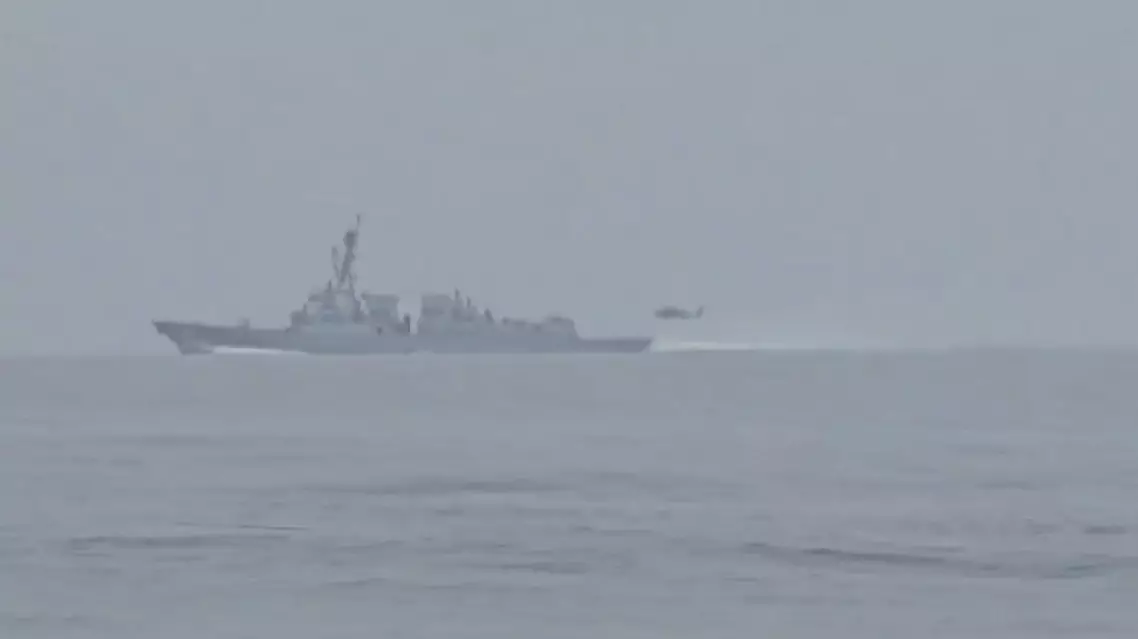
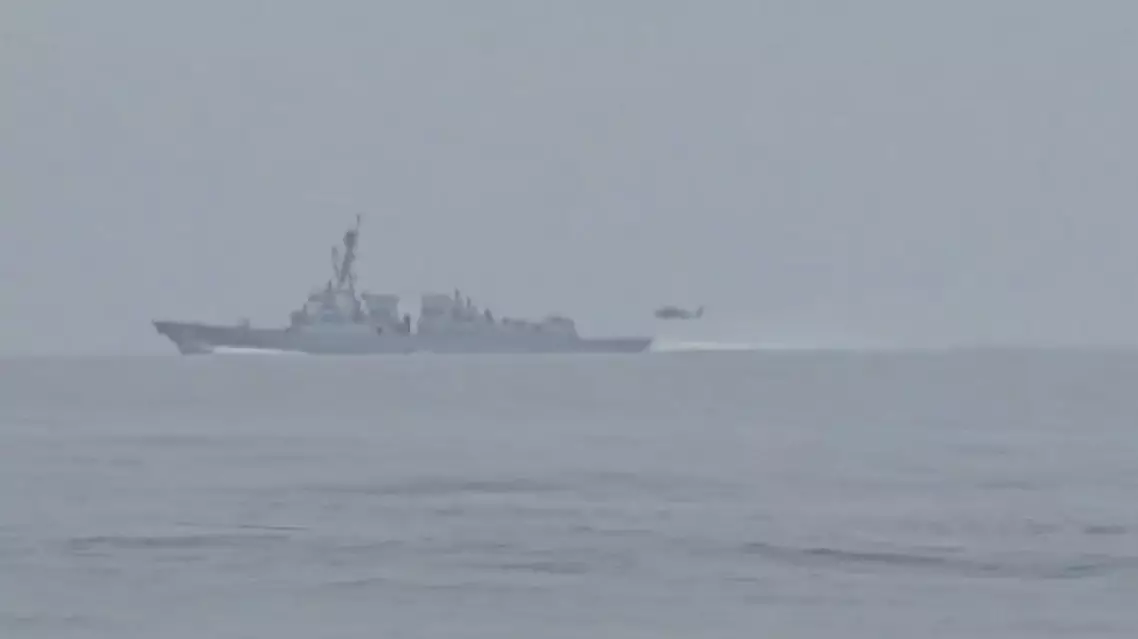
In an exclusive report on Sunday, Iran's state-run Press TV said the U.S. military's attempt to sail two destroyers through the Strait of Hormuz on Saturday "ended as a failed propaganda stunt timed to coincide with (Tehran-Washington) talks in Islamabad."
The Press TV identified the U.S. destroyers as USS Michael Murphy and USS Frank E. Peterson, saying they were forced to retreat by Iran's naval forces.
Also on Sunday, the IRGC said in a statement that any military vessels that intend to approach the Strait of Hormuz under any title or pretext will be considered a ceasefire violation and will be dealt with severely.
Meanwhile, Iran is pushing ahead with a new parliamentary plan on banning fleets of hostile countries from passing through the Strait of Hormuz.
Iran's navy chief Shahram Irani dismissed Trump's threat to impose a naval blockade on the Strait of Hormuz as "utterly absurd and ridiculous". He said Iranian naval forces are closely monitoring the movements of U.S. forces in the region.
According to British sources, the UK will not participate in any blockade of the Strait of Hormuz. A British government spokesperson said that the UK will continue to support freedom of navigation and the opening of the Strait of Hormuz, adding that ships crossing through the Strait of Hormuz "must not be subject to tolling". In this regard, the UK is collaborating with countries such as France to form a wide coalition to protect freedom of navigation.
On Feb. 28, Israel and the United States launched joint attacks on Tehran and several other Iranian cities, killing Iran's then Supreme Leader Ali Khamenei, along with senior military commanders and civilians. Iran responded with waves of missile and drone strikes targeting Israel and U.S. assets in the Middle East, and tightened control over the Strait of Hormuz by restricting passage by vessels belonging to or affiliated with Israel and the United States.
A two-week ceasefire between Iran and the United States took effect on April 8, followed by the holding of lengthy talks between the Iranian and U.S. delegations in Islamabad, which failed to lead to an agreement.
Iran, US exchange fresh warnings on Strait of Hormuz after talks fail
Iran, US exchange fresh warnings on Strait of Hormuz after talks fail