China's Ministry of Foreign Affairs on Monday dismissed accusations by the Philippines over alleged cyanide use in the South China Sea, calling them a self-staged farce not worth rebutting.
Guo Jiakun, a spokesman of the ministry, made the rejection at a regular press briefing in Beijing.
"I would like to stress that Ren'ai Jiao is part of Nansha Qundao and belongs to China. The Philippines illegally grounded its vessel on Ren'ai Jiao and has caused great damage to the eco-environment there, which has been confirmed by relevant reports. The Philippine side illegally harassed the Chinese fishing boats conducting normal fishing, grabbed the fishermen's living supplies, and staged this so-called cyanide stunt. There is no credibility whatsoever to their story," Guo said.
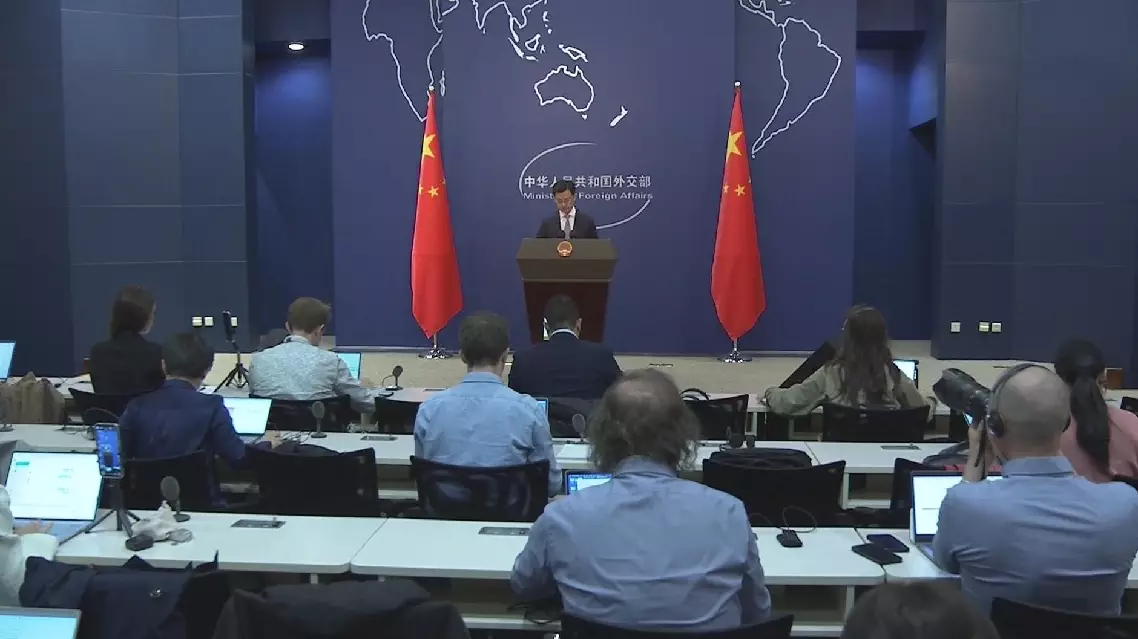
China rejects Philippines' cyanide allegation in South China Sea
Israelis have welcomed the Israel–Lebanon negotiations in Washington,United States, though many remain uneasy about how the talks will affect Hezbollah.
Israel-Lebanon direct talks at the ambassador level are underway on Tuesday at the U.S. State Department in Washington, D.C. The meeting marked the first major high-level engagement between the governments of Israel and Lebanon since 1993.
Lebanese Ambassador to the U.S. Nada Hamadeh and Israeli Ambassador to the U.S. Yechiel Leiter took part in the talks, along with U.S. Secretary of State Marco Rubio and other U.S. officials.
Israel and Lebanon laid out different expectations on Monday, with Israel insisting on Hezbollah's disarmament and a peace agreement, and Lebanon voicing hope for a ceasefire and the launch of direct negotiations.
This divide was underscored when Hezbollah leader Naim Qassem rejected direct talks with Israel and vowed continued resistance, urging the Lebanese government to withdraw from the Washington negotiations. His remarks came as the Israeli military reported striking about 150 Hezbollah targets in southern Lebanon in the past 24 hours and expanding ground operations against the group.
"It's a good thing that we started negotiating with Lebanon because we are not in a conflict with Lebanon," said Eli, a Tel Aviv resident.
"I think that if it comes to a ceasefire and it is something that will save lives in this situation here, it's always a good thing," said Ido, another resident.
It may be in the interest of both nations to reach an agreement but Israelis fear that when it comes to Lebanon, it is not the local government or even the armed forces who call the shots.
"Obviously, we want to get rid of Hezbollah, we want to dismantle the threat, but we need to live peacefully beside Lebanon which is a different thing," said Ido.
The talks took place while cross border fire still raged on.
Hezbollah entered the U.S.-Israeli war with Iran on March 2, launching rockets from southern Lebanon toward Israel for the first time since the 2024 ceasefire. Israel responded with a ground offensive amid an intensified military campaign targeting multiple areas across the country, killing more than 2,000 people.
At least 35 people have been killed in Israeli attacks on Lebanon in the past 24 hours, the Lebanese Health Ministry said Tuesday in a daily update.
For many in Israel, pursuing negotiations while continuing military pressure on Hezbollah is seen as the right strategy.
"By attacking Hezbollah and weakening it, maybe it will allow the government of Lebanon to implement what will be agreed upon," said Eli.

Israelis welcome talks with Lebanon, expressing concern over Hezbollah