WASHINGTON (AP) — Democratic Rep. Eric Swalwell of California announced Monday he will resign from Congress following sexual assault and misconduct allegations that prompted loud bipartisan calls for him to step down.
The decision caps a swift political fall for the seven-term lawmaker, who had been seen as one of the leading candidates in California’s gubernatorial race before dropping out Sunday after the allegations surfaced, claims he has continued to deny.
The San Francisco Chronicle, followed by CNN, first reported allegations that Swalwell had sexually assaulted a woman twice, including when she worked for him. CNN also reported that three other women alleged various kinds of sexual misconduct by Swalwell — including sending them unsolicited explicit messages or nude photos.
“I am deeply sorry to my family, staff, and constituents for mistakes in judgment I’ve made in my past,” Swalwell said on social media. “I will fight the serious false allegation made against me. However, I must take responsibility and ownership for the mistakes I did make.”
The House Ethics Committee had begun an investigation into whether Swalwell engaged in sexual misconduct toward an employee working under his supervision, the panel announced Monday. Other lawmakers were pushing for a quick vote to expel him from Congress.
Another lawmaker, Republican Rep. Tony Gonzales of Texas, said Monday that he would file his "retirement from office" when Congress returns Tuesday. Gonzales, who had already said he would not seek reelection, gave no further details on his plans to step down.
Gonzales had acknowledged an affair with a staff member who later died by suicide and was also facing renewed calls for an expulsion vote in the wake of the allegations against Swalwell.
Several Democrats had quickly called on Swalwell to resign in the days after the allegations came to light, including prominent allies such as Arizona Sen. Ruben Gallego. California Sen. Adam Schiff, who withdrew his endorsement for Swalwell's gubernatorial bid, told reporters Monday that “the whole thing is just shocking and deeply upsetting.”
“I think he made the right decision to resign,” Schiff said.
Swalwell wrote in the statement posted to social media that he was “aware of efforts to bring an immediate expulsion vote” and that it was “wrong” without due process.
“But it's also wrong for my constituents to have me distracted from my duties. Therefore, I plan to resign my seat in Congress,” Swalwell wrote. He did not provide a timeframe, saying only that he would work with his staff in the coming days to ensure their work can continue.
Swalwell, an Iowa native, was elected in 2012 and represents a House district east of San Francisco. He launched a presidential run in April 2019 but shuttered it a few months later after failing to catch on with voters.
Swalwell was one of Donald Trump’s top Democratic antagonists in Congress, serving as a prominent member of the House Judiciary and Intelligence committees during the president’s first term and as one of several Democratic prosecutors for Trump’s second impeachment after the Jan. 6, 2021, attack on the Capitol.
He was removed from the intel committee by then-House Speaker Kevin McCarthy in 2023 based on his contact with a suspected Chinese spy, Christine Fang.
Fang was reported to have come into contact with Swalwell’s campaign as he was first running for Congress in 2012 and participated in fundraising for his 2014 campaign.
Federal investigators alerted Swalwell to their concerns and briefed Congress about Fang in 2015, at which point Swalwell says he cut off contact with her. He was not accused of wrongdoing and a House Ethics Committee investigation that was opened in 2021 closed two years later without any action.
Swalwell’s planned departure from the House will trigger a special election in his district, which he won by over 30 percentage points in 2024. In California, the governor is responsible for calling a special election, which he must do “within 14 calendar days of the occurrence of the vacancy,” according to state election law.
The future of the House Ethics probe is uncertain, as the panel often ends its investigations when lawmakers resign. The Ethics Committee said the mere fact that it is investigating the allegations against Swalwell, and publicly disclosing its review, does not itself indicate that any violation has occurred.
—
Associated Press reporter Mary Clare Jalonick in Washington contributed to this report.

California gubernatorial candidate, Rep. Eric Swalwell, D-CA appears at a town hall meeting in Sacramento, Calif., Tuesday, April 7, 2026. (AP Photo/Rich Pedroncelli)
BEIRUT (AP) — Jawad Younes, 11, and his cousins were playing soccer in the lot between their houses, as they often did. His little brother, 4-year-old Mehdi, had joined them but grew tired, so Jawad took him home and handed him off to their mother before returning to the game. Minutes later, an Israeli strike came.
The target was Jawad's uncle's home. The blast shook neighboring buildings and threw Jawad's siblings at home to the ground. As their mother, Malak Meslmani, scrambled to help them up, she could think only of Jawad.
“I was pulling my children off the floor in the house, but as I was running to pick them up, I screamed, ‘Jawad,’” she said. ”My heart told me.”
Her son was instantly killed in the March 27 Israeli strike in Saksakieh. So was one of his cousins — so close they were more like brothers. Several other children were wounded.
Jawad's uncle also was killed. He was an interior design engineer; Jawad wanted to be an engineer like him. Meslmani called him a civilian. But like many Shiite families in southern Lebanon, the family were loyal supporters of the militant group and political party Hezbollah, which formed in the 1980s to fight Israel’s occupation of the area.
Jawad and his cousin are among 172 children killed — of more than 2,100 people in all — by Israel's strikes in the six weeks of renewed war between the country and Iran-backed Hezbollah.
Israel has often struck alleged Hezbollah militants or officials in their homes without warning, frequently in areas far from the front line when they are with their families, in apartment buildings surrounded by uninvolved neighbors. The Israeli military rarely names the targets of its strikes but says it takes measures to minimize civilian casualties — including children — and blames Hezbollah members for mixing with the general population. The families of children killed accuse Israel of committing war crimes because of the large number of civilian casualties.
At least two Israeli civilians — both adults — and 13 soldiers have been killed in the current war with Hezbollah, according to figures from Israel. One of the civilians was killed by mistaken Israeli fire.
In response to questions from The Associated Press, the Israeli military didn't deny that children have been killed in its Lebanon strikes but said it has targeted Hezbollah facilities and militants. The army says it's killed hundreds of Hezbollah operatives but has provided little evidence to support the claim.
Under international law governing armed conflict, it's never legal to directly target civilians, but collateral damage — harm to civilians when striking a military target — is allowed if it is proportional to the anticipated military gains of any given strike.
The Israeli military told AP in a statement that its strikes follow the law, including “the principles of distinction, proportionality, and the taking of precautions.”
Charles Trumbull, an assistant University of South Carolina law professor who studies the law and ethics of armed conflict, said it's difficult to assess whether the proportionality threshold was met without knowing the strike targets and whether the military knew children were present.
“To the extent that they knew that children were likely to be harmed or killed in these strikes, and as an ethical matter, absolutely I think that should affect the calculus,” he said. “Just because certain strikes might not violate the law on conflict doesn’t mean that they’re not concerning or problematic or that they are morally justified.”
At 2 a.m. March 12, Taline Shehab — who would have turned 4 last month — was sleeping when missiles tore into an apartment above hers in the family's building in Aramoun, about 20 km (12 miles) south of Beirut, causing it to collapse. Taline and her father died; her mother was critically wounded.
Aramoun is a religiously mixed area that was generally considered safe, though it had been targeted by airstrikes in the previous Israel-Hezbollah war, in 2024.
Taline’s father, Mohamad, was a drone operator and video producer who often worked with the Lebanese army and on high-profile television productions. He and his wife, Nathalie, ran a fashion company; Taline appeared regularly on its social media.
“They were a very close family. Their daily life revolved around their daughter,” said Ali Shehab, Mohamad's brother.
Taline “was full of personality,” he said. “She was very attached to her father. She loved being around him" and "didn’t like to share him with anyone.”
He comforts himself with the thought that “maybe Mohammed and Taline, because they are so attached to each other, God chose them both.”
Dr. Ghassan Abu Sitta, who's worked extensively in Gaza and Lebanon and runs an initiative treating some of the most seriously war-wounded children at the American University of Beirut Medical Center, said that, like Taline, most of the cases he has seen are “children being crushed underneath the rubble of their own homes.”
Ten-year-old Zeinab al-Jabali used to tag along wherever her father went: the corner store, the mountains around their village in Lebanon’s Bekaa Valley.
Now, he sleeps in the Beirut hospital where doctors are treating his wife and three older daughters, all wounded in the strike that killed Zeinab.
War has shadowed most of Hassan al-Jabali’s life. In 1982, his brother — then 10, like Zeinab — was killed by an Israeli missile.
Al-Jabali made a living selling mouneh, or preserved foods such as raisins and dried herbs, and worked for his cousin's factory producing laban, or yogurt.
On March 5, al-Jabali’s wife and daughters were preparing for iftar, the meal ending the daily fast during the holy month of Ramadan, at his wife’s sister’s house when the airstrike hit it.
Al-Jabali acknowledged his brother-in-law — who was killed — “in the past was with the resistance,” referring to Hezbollah.
“But they struck him at home, in a house full of children, full of girls,” said al-Jabali, who heard the blast from elsewhere in the village and found a scene of carnage when he rushed to check on his family.
He said his wife still doesn’t know Zeinab is dead; he’s afraid the grief would endanger her recovery.
In response to questions about the strikes that killed Jawad, Taline, and Zeinab, the Israeli military didn't give details about the intended targets beyond that they were related to Hezbollah.
The military's statement said Israel regrets any civilian harm but that it's operating against Hezbollah, “which attacked the State of Israel under Iranian backing.”
Many Lebanese have blamed Hezbollah for pulling their country into the war when it fired missiles across the border March 2, two days after the U.S. and Israel attacked Iran. But for others, the devastation from Israeli strikes has strengthened their support.
“We are now holding onto the resistance more than any time before,” said Meslmani, Jawad's mother.
Despite Israeli army notices for residents in large swathes of southern Lebanon to flee, many in their town of Saksakieh stayed. Displaced people from farther south took refuge there. Life felt almost normal before the strike that killed Jawad.
Now, Meslmani visits his grave in a small cemetery overlooking a mountain vista, where she can hear warplanes roar overhead.
“I remember everything," she said. "How he used to eat and drink, how he used to play, how he would get dressed and fix his beautiful hair.”
Since he was killed, the planes no longer bother her.
“The most precious thing, my heart, is gone," she said. "What more can they do?”
Associated Press journalists Malak Harb in Beirut and Koral Saeed in Abu Snan, Israel, contributed to this report.
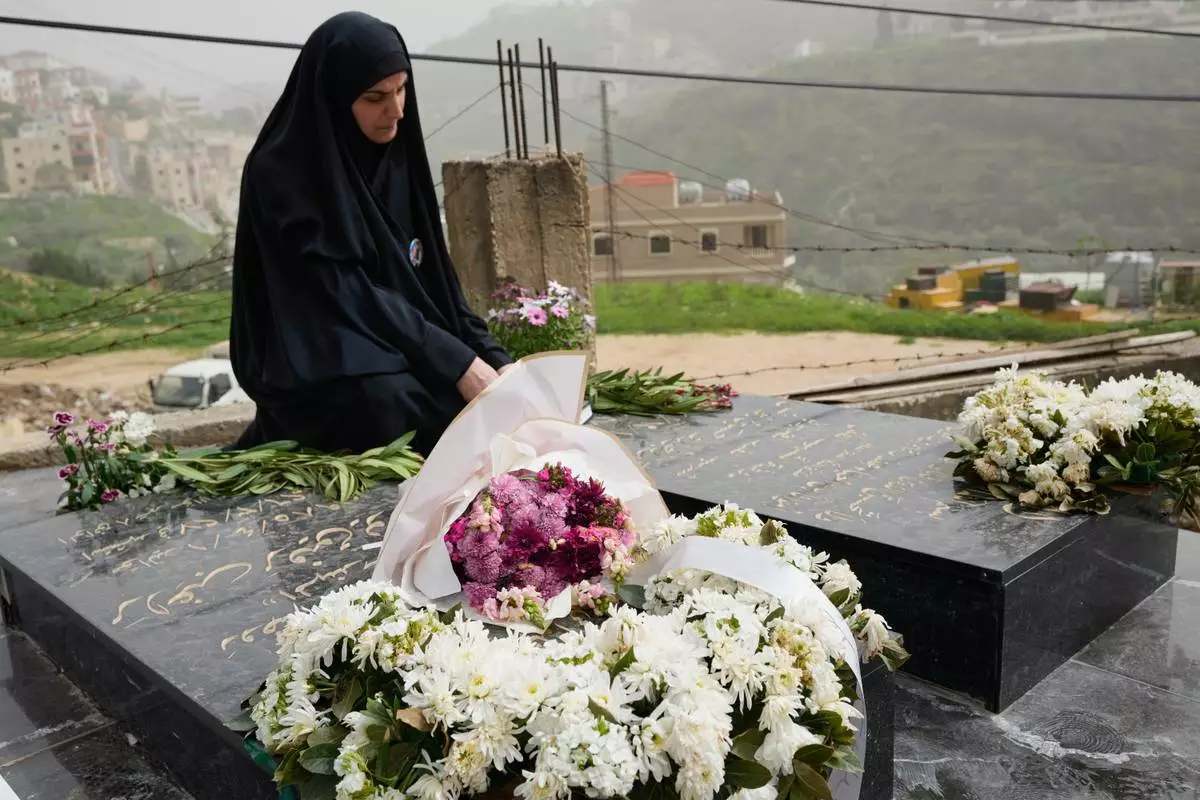
Malak Meslmani, the mother of Jawad Younes, 11, who was killed on March 27, 2026 in an Israeli airstrike, visits her son's grave in Saksakieh village, south Lebanon, Friday, April 3, 2026. (AP Photo/Hussein Malla)
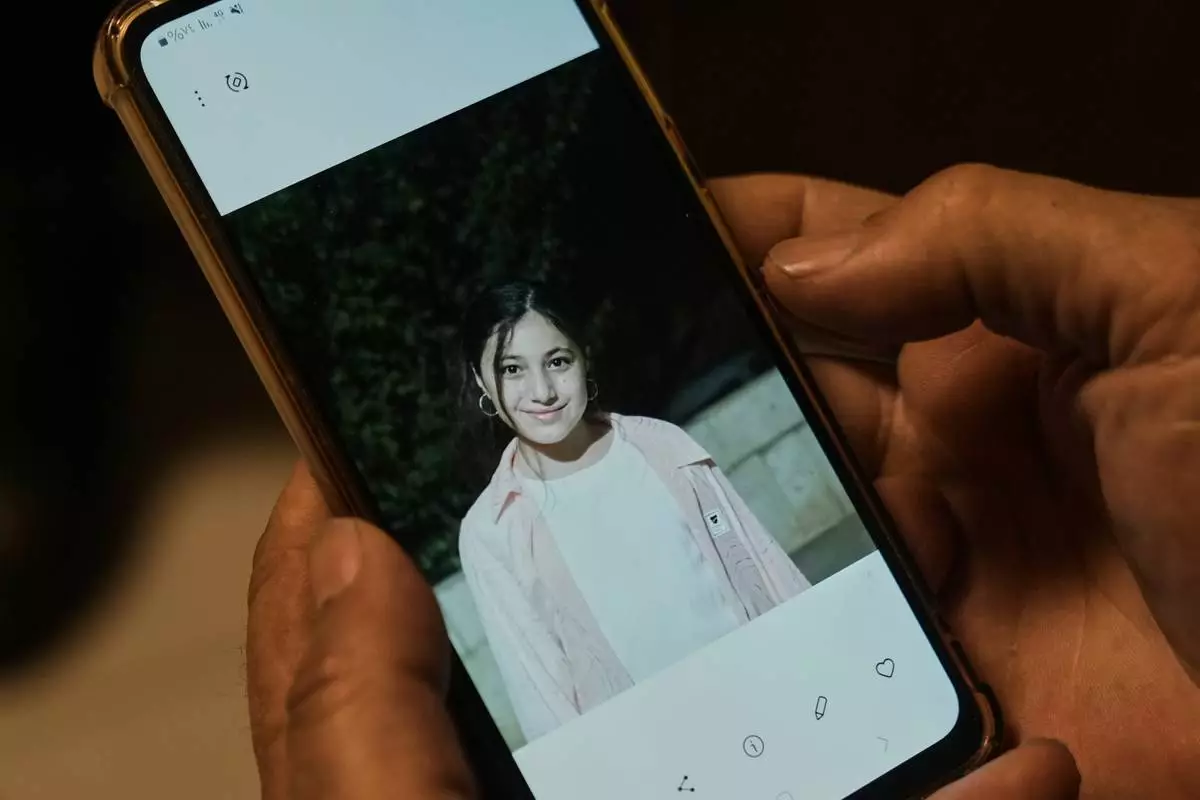
Hassan, the father of Zeinab al-Jabali, 10, who was killed on March 5, 2026, in an Israeli airstrike that hit her house in Libbaya village, east of Lebanon, shows a picture of his daughter, Zainab, during an interview at the office of doctor Ghassan Abu Sitta Fund, in Beirut, Lebanon, Thursday, March 19, 2026. (AP Photo/Bilal Hussein)
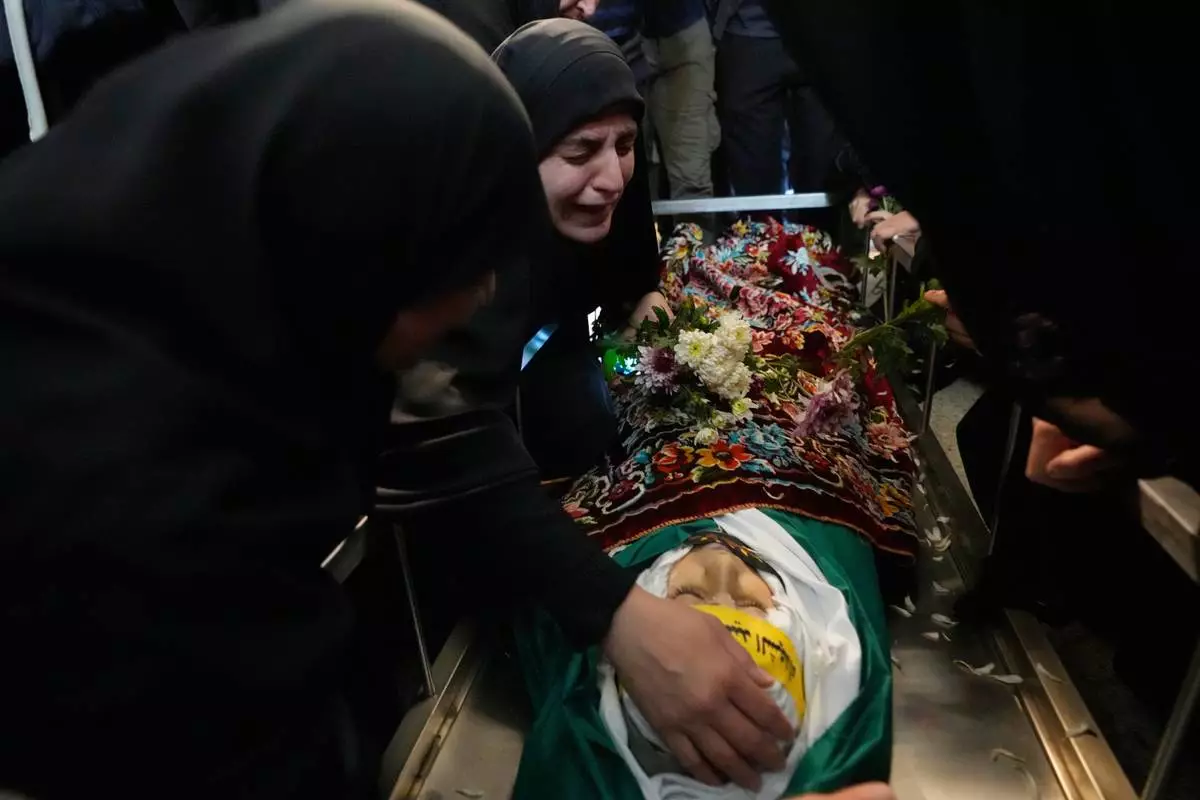
FILE — Malak Meslmani, center, the mother of Jawad Younes, 11, who was was killed in an Israeli airstrike, mourns over her son's body during his funeral procession in Saksakieh village, south Lebanon, Saturday, March 28, 2026. (AP Photo/Hussein Malla, File)