A senior Iranian official said Monday that the United States has learned nothing from its past wars and has been misjudging the current situation, emphasizing the U.S. blockade of the Strait of Hormuz would only hurt its own interests.
In an interview with China Media Group (CMG) on Monday, Ibrahim Aziz, chairman of the National Security and Foreign Policy Committee of Iran's Parliament, said that for a long time, the United States has always had strategic misjudgment toward Iran.
He said that during the over 40 days of war launched by the United States and Israel against Iran, Washington has failed to achieve any of its stated goals, and its military actions ended up harming regional and even global interests.
"The United States continues to misread the situation and make wrong decisions. It cannot take any real action -- any so-called 'blockade' is more of a grandstanding. We are certain that such actions will bring no benefit to the U.S. and ultimately will only hurt itself," Aziz said.
He further stated that the Strait of Hormuz has never belonged to the United States, and that countries in the region must work together to counter the U.S. dangerous moves and safeguard regional interests.
He said Iran has issued a warning that it will respond seriously to any aggressive and deceptive actions by the United States or Israel.
"Iran's policy in the Strait of Hormuz is clear. Any action that threatens Iran's security will be met with a proportional response. Any act against Iranian vessels will draw a corresponding response. Any harm to Iran's national interests will inevitably create security vulnerabilities that could endanger the safety of the American people," he said.
Aziz said Iran's armed forces are now fully prepared -- if the enemy engages in any further reckless behavior, Iran will respond decisively.
"I believe that if the U.S. government is wise, it will not take another risk. There is no doubt that if it does, it will suffer a major defeat and will reap what it has sown," he said.
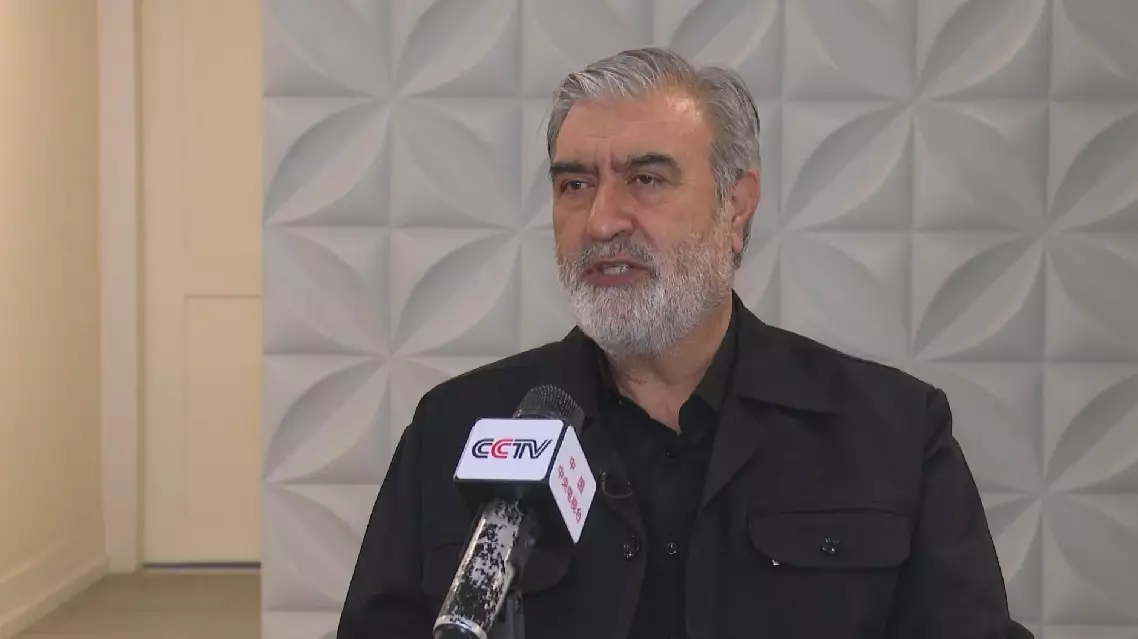
US military intervention in Strait of Hormuz will backfire: Iranian senior official
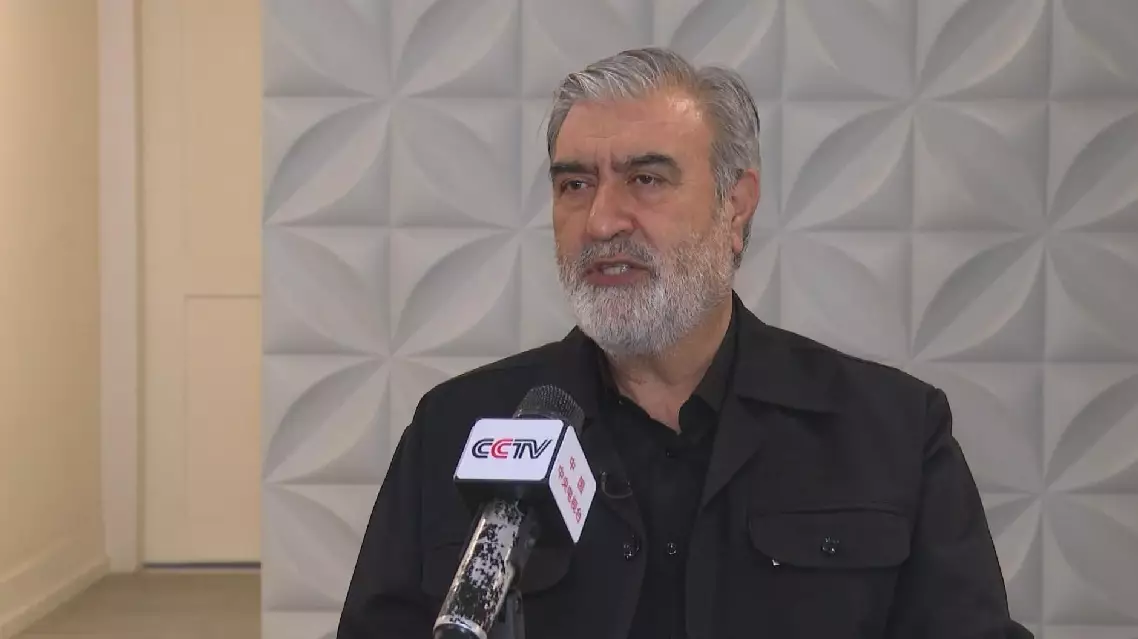
US military intervention in Strait of Hormuz will backfire: Iranian senior official
Hezbollah leader Naim Qassem on Monday rejected direct talks with Israel and vowed continued resistance, just a day before Lebanon and Israel are due to hold their first direct negotiations in decades in Washington with U.S. officials participating.
His declaration came as Israel continued strikes across Lebanon on Monday. The Israel Defense Forces (IDF) said in a statement on Monday evening that the Israeli air force struck about 150 Hezbollah targets in southern Lebanon in the past 24 hours and said it would continue striking Hezbollah targets.
Meanwhile, its 98th Division was expanding ground operations against Hezbollah in southern Lebanon, the IDF said.
Earlier in the day, the Israeli military said five rockets were fired from Lebanon into northern Israel, triggering air defense systems. State-funded radio network Israeli Army Radio reported that debris from an interception injured one person.
Ahead of talks schedule on Tuesday in Washington between Israel and Lebanon, Hezbollah leader Naim Qassem made a televised speech on al-Manar TV, saying that Hezbollah would not be disarmed and called on the Lebanese government to withdraw from the Washington talks.
Qassem said that Israel has been trying to weaken Lebanon to achieve its "Greater Israel" ambitions, and that U.S. efforts to bolster the Lebanese army to disarm Hezbollah and push the Lebanese army to fight its people were destined to fail.
He stated that the "U.S.-backed Israeli aggression" was against Lebanon as a whole, not just Hezbollah, and he urged the Lebanese government to its military and security forces to respond instead of exerting political pressure on the "resistance forces".
He asserted that national unity would be undermined by any forces within Lebanon that submit to the will of the United States.
Qassem also said that Hezbollah had shown patience over the past 15 months while Israel violated the ceasefire agreement, but that diplomatic efforts had proven futile.
He accused Israel of failing to uphold a November 2024 ceasefire agreement, alleging more than 10,000 violations. Hezbollah responded with a counter attack on March 2, aiming to force Israel to abide by the ceasefire and thwarting its "major aggressive plans," Qassem said.
He laid out five conditions to end the conflict: a complete halt to attacks by land, sea and air; immediate withdrawal from occupied Lebanese territory; the release of prisoners; the return of displaced people; and reconstruction with international support.
The Israeli strikes on Lebanon have killed 2,089 people and wounded 6,762 since March 2, the Lebanese health ministry said on Monday.
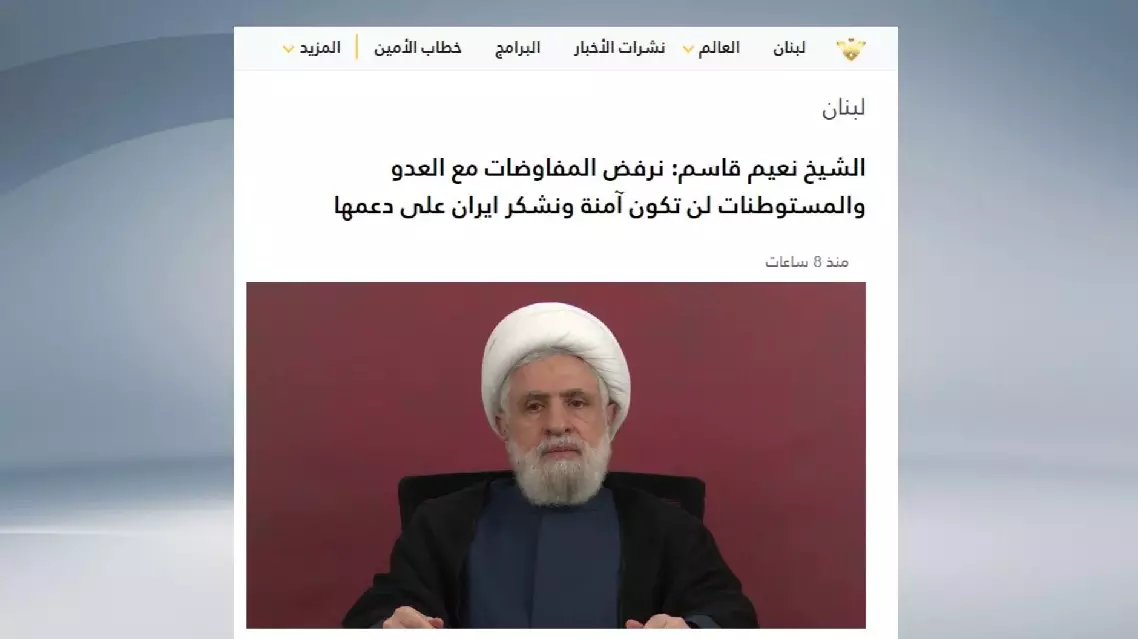
Hezbollah leader rejects Israel talks, vows continued resistance ahead of Washington negotiations as strikes continue